Think again

You’ve been wrong all along—10 facts that prove how little we really know


Published on February 5, 2026


Credit: Elimende Inagella

You repeat them every day—often without thinking twice. But a surprising number of "facts" we take for granted are just plain wrong. Whether it’s the recommended water intake or the behavior of lightning, prepare for a reality check. These 10 everyday misconceptions will make you rethink everything you thought you knew.

1

You lose most heat through your head

Credit: Ladislav Stercell

You lose heat through any part of your body that’s exposed—not just your head. This myth likely started from an outdated military study in which soldiers in Arctic conditions wore full-body gear but no hats, for some reason.

Heat loss is driven by surface area and exposure. If you're unlucky enough to be naked in freezing weather, you'll lose heat evenly across your body—not primarily from your scalp.

2

Water conducts electricity

Credit: Leo Rivas

Pure water is actually a very poor conductor of electricity. It’s the impurities in water—like dissolved minerals and salts—that allow it to carry an electric current.

However, since the water we commonly encounter is rarely pure, it readily conducts electricity—making contact between water and electrical sources hazardous.

3

Shaving makes hair grow back thicker

Credit: Supply

Also, nope—it only looks that way. Shaved hair has a blunt edge, which can make it feel coarser or appear darker than unshaved hair.

Hair growth is determined by follicles beneath the skin. Since shaving only trims hair above the surface, it has no effect on thickness, color, or growth rate.

4

Goldfish have a 3-second memory

Credit: Ahmed Zayan

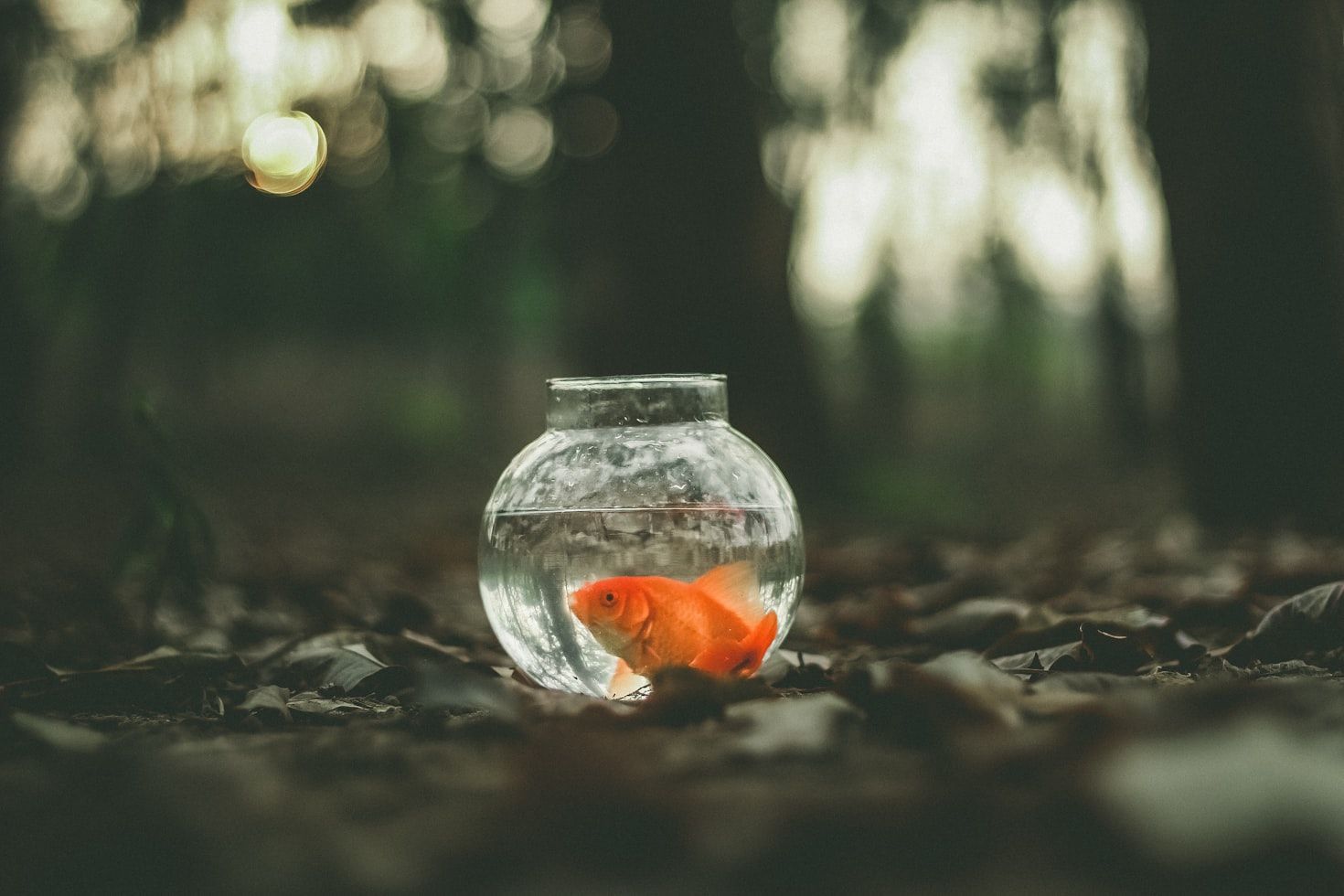
Goldfish can actually remember things for weeks, even months. They’re far smarter than we usually give them credit for.

Moreover, studies have shown goldfish can be trained to respond to feeding times and light cues. So don’t keep yours in a tiny bowl—it’s far too small for their cognitive and physical needs.

5

Lightning never strikes the same place twice
Credit: NOAA

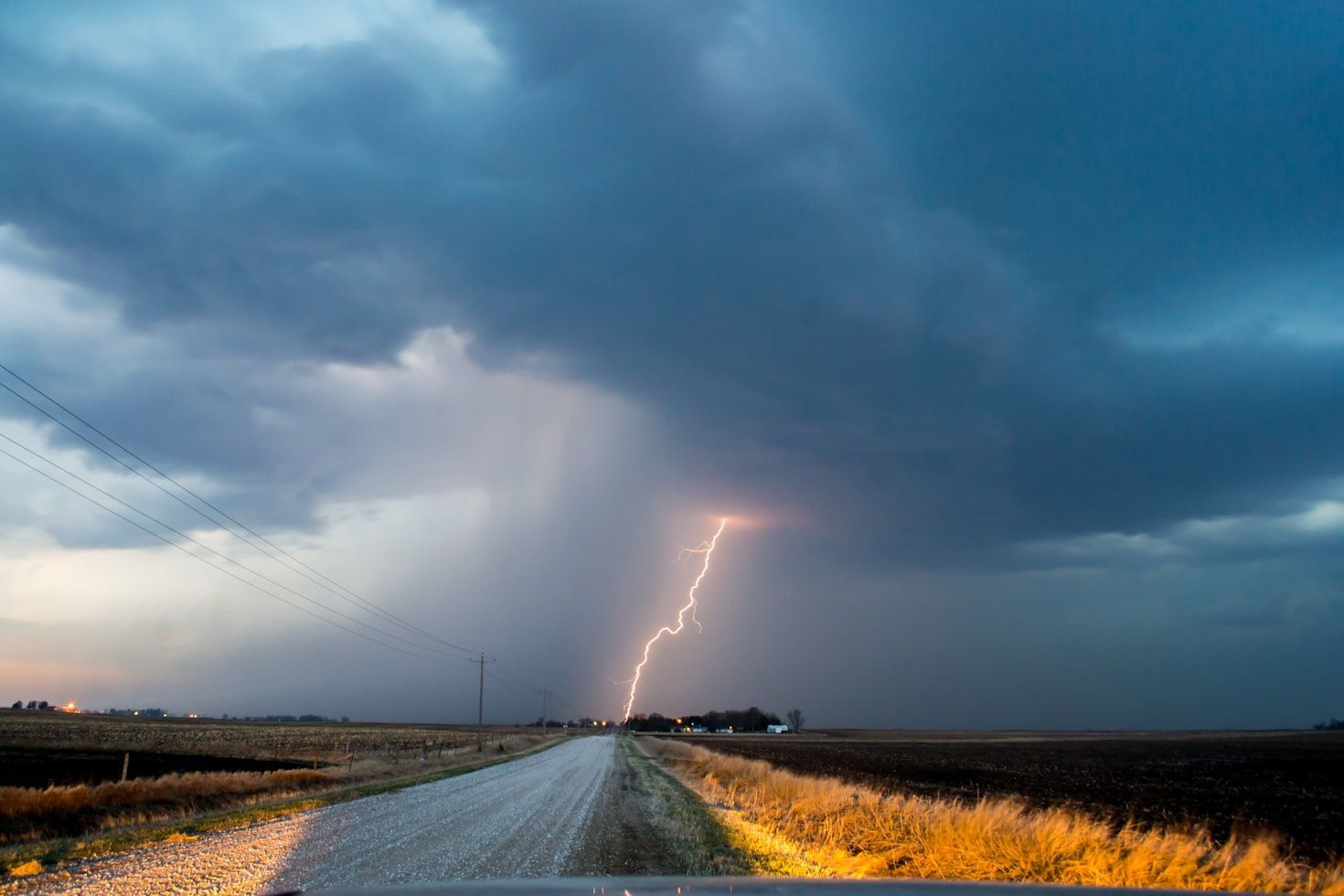
It absolutely does—and often. The Empire State Building gets hit about 25 times a year. This is because lightning follows the path of least resistance, which often means tall, conductive structures get hit repeatedly.

So, if you’re caught in an electrical storm, don’t run toward the last spot that was struck—chances are, lightning will hit there again!

6

Glass is a slow-moving liquid

Credit: C. G.

Glass is an amorphous solid—not a liquid—and despite popular belief, its molecules don’t flow over time.

The myth likely originated from old window panes, which are sometimes thicker at the bottom. This thickness is due to historical manufacturing techniques—not because gravity caused the glass to flow downward.

7

You need to drink 8 glasses of water a day

Credit: Joseph Greve

Hydration needs vary depending on age, activity level, climate, and diet—and they don’t require exactly eight glasses. Food and other beverages also count toward your fluid intake.

In reality, the "8 glasses a day" rule isn’t based on hard science; it’s simply a general guideline to prevent dehydration. Under normal conditions, drinking when you’re thirsty is usually enough to stay well hydrated.

8

Blood is blue in your veins

Credit: Олег Мороз

Blood is always red—it only appears blue through the skin because of how light interacts with tissue and veins.

The only real color difference is that oxygen-rich blood is bright red, while deoxygenated blood is a darker red. Humans and other vertebrates do not have truly blue blood.

9

Gum stays in your stomach for 7 years

Credit: Quinten de Graaf

While it’s true that swallowed gum can’t be digested, it doesn’t stay in your stomach—it passes through the digestive system normally.

The same happens with things like corn kernels or hard seeds. Only when large amounts of gum are swallowed—often along with other indigestible objects—can it lead to blockages or health issues.

10

Waking a sleepwalker is dangerous

Credit: Romain GROSSIER

While a sleepwalker may be confused or startled if awakened, it’s not inherently dangerous and can sometimes be the safest way to prevent accidental injury.

Experts often recommend gently guiding sleepwalkers back to bed, but waking them is also acceptable if there’s an immediate risk of harm.


Linguistic smothies

Twirling, as in twisting and whirling? 10 common portmanteaus


Published on February 5, 2026


Credit: Kim Menikh

We all know that brunch means breakfast plus lunch, or that Eurasia is used to refer to the connected European and Asian continents. But did you know that words like twirl, smog, or Texarkana are in the same category of portmanteaus or blend words?

Portmanteaus (from the French porte-manteau, ‘cloak-carrier’, a suitcase that opens in two equal parts) are terms formed by combining two or more words, their sounds, or their meanings. They were named by Lewis Carrol (the one from Alice in Wonderland) to explain the logic behind some odd words in his poem Jabberwocky: like a porte-manteau that you open in two parts, portmanteaus are opened to reveal two meanings. Let’s explore some common portmanteaus (and also some that are false).

Twirl

Credit: Nihal Demirci

This word is used to talk about anything that spins or rotates, like someone doing a pirouette or moving their thumbs around each other. It is a term common in everyday language, but did you know it’s a blend of two words?

Yes, twirl comes from combining twist and whirl, both in sound and meaning. A twirl, then, is a rotation (twist) that happens rapidly (whirl). Something to think about the next time you find yourself twirling your thumbs.

Popsicle

Credit: Jarritos Mexican Soda

The word ‘popsicle’ was originally the name of an ice pop brand started by Frank Epperson, who forgot a bucket of powdered lemonade on his porch and found it frozen the next morning. But how did the word ‘popsicle’ come to be?

This treat was originally called the "Epsicle ice pop", a combination of Epperson and icicle. Allegedly, Frank’s children started calling it a ‘popsicle’ (pop + icicle) and insisted the name be changed. In time, the brand became so popular that it became the usual term for any ice pop.

Texarkana

Credit: Domino Studio

If you ever find yourself near the Texas-Arkansas border, you might find a city called Texarkana. In fact, you might find two cities called Texarkana, one in each state, both in the Texarkana Metropolitan Area.

It’s not clear who named them, but everyone agrees that Texarkana is a portmanteau for Texas-Arkansas-Louisiana. Both cities claim to have the same birth date, but we can debunk this: Arkansan Texarkana was founded a year before Texan Texarkana.

Contrail

Credit: William Hook

First of all, what is a contrail? Contrails are the line-shaped clouds left by aircraft, missiles, or rockets as a result of engine exhaust vapor combining with low temperatures. The vapor of the engines condenses when it contacts the cold atmosphere, leaving a trail, so condensation + trail: contrail.

Endorphin

Credit: Madison Oren

Sadly for couch potatoes everywhere, it is a proven fact that exercise makes you feel good. This is because, during physical exercise, our brain creates endorphins, which work as painkillers and mood boosters.

Why are these natural painkillers called this way? You might remember the word morphine, the name of a common opiate analgesic. Endorphins are endogenous, meaning they are created by our organism. Combine this word with an old spelling of morphine, endogenous + morphin: endorphin.

Sitcom

Credit: Ben Griffiths

Any sitcom fan might tell you that the appeal of the genre is not about the narrative arcs but the funny situations the characters find themselves in.

This comedic format, originally produced for radio, was first called situational comedy. With time, it was combined into a portmanteau, situational + comedy: sitcom.

Parsnip

Credit: Carl Tronders

Let’s have a look at a false portmanteau. For centuries before sugar was brought to Europe, parsnips were used as a sweetener. Ancient Romans called them pastinaca, now part of their scientific name (pastinaca sativa). How did they come to be called parsnips?

It is a widespread belief that parsnip is a portmanteau for parsley + turnip, since parsnip leaves look similar to parsley, but this is not true. In Old French, parsnips were called pasnaie, a word that Old English adopted as pasnepe. The ending -nepe meant turnip, so in time, pasnepe evolved into parsnip. So, not a blended word, but one that you will find in many portmanteau lists.

Electrocution

Credit: Nikhita Singhal

Being electrocuted is not a pleasant experience, and the origins of the word are as gruesome as the thing described. In the late 19th Century, the state of New York adopted the electric shock as the standard form of capital punishment. Newspapers covering the first execution by this method mixed the words electric + execution, coining the portmanteau electrocution.

Lacking a judicial term to describe accidental deaths caused by electricity, electrocution came to be used for all incidents involving an electric shock.

Smog

Credit: Uvi D

Air pollution is an unfortunate reality in our current world, and words like smog are a byproduct of these environmental issues. The city of London has suffered from bad air quality and fog for many centuries, an issue only worsened by smoke during the Industrial Revolution.

This phenomenon, also called pea soup fog, eventually became known as smog, a portmanteau of smoke + fog. The term not only describes the greyish color associated with it, but also the smell produced by chemical contaminants.

Shepherd

Credit: joseph d'mello

Let’s end our list with a portmanteau nearly as old as the profession it names. In the English language, the word shepherd is recorded as early as the 12th Century, though it had been in use for many centuries before that. Middle English sceepherde comes from Old English scēaphyrde, a portmanteau for scēap (sheep) + hierde (herdsman, someone who keeps domesticated animals).

The original term was only used for animal keepers, but eventually gained the added meaning of ‘leader’ or ‘guide’. Lewis Carroll might have named portmanteaus in the 19th Century, but they have existed since the dawn of time.

Looking for an extra scoop of literary fun?

Learn more with our Word of the day

clamor

/ˈklæmər/