People remember stories

Your knuckles know more than you think: Here’s what they can tell you


Published on April 22, 2026

Image: dianne clifford

You might forget where you left your keys or your glasses, but some things are forever imprinted in your memory one way or another. And for those things you simply can’t seem to remember, some useful mnemonic devices can help you. For example, how can you remember the presidents on our bills? And what about all the spelling rules our language has? Is it "gray" or "grey"? Don’t worry, we’ve got you covered. Keep reading and learn a few tricks.

1

The faces on US bills

Image: Lewis Meyers

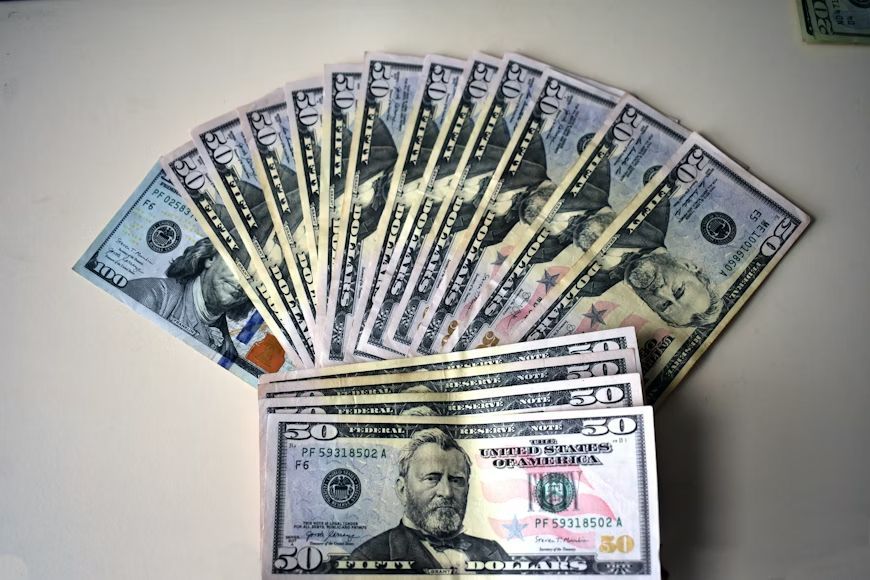
You may handle bills every single day, but can you answer whose face is on each one? You don’t need to remember; this mnemonic device will do it for you: The phrase "When Jeff Left Home, Jack Got Fat" gives you the answer. As you can notice, the first letter of each word stands for the last name of the president or founding father: Washington, Jefferson, Lincoln, Hamilton, Jackson, Grant, and Franklin.

2

Knuckle months

Image: Dan Burton

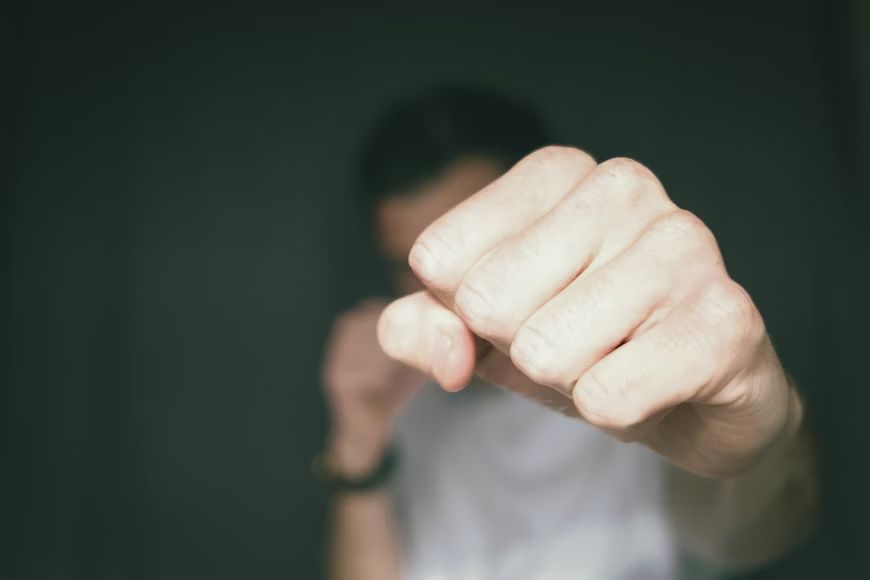
Yes, we keep lots of calendars, but sometimes we have to double-check if a month has 30 or 31 days. Has this happened to you? If it has, next time you’ll want to use your knuckles. The rule is simple: Make two fists and count across your knuckles and the dips between them. Months that land on knuckles have 31 days. The dips are the shorter months, February being the shortest, naturally.

3

"Righty tighty, lefty losey"

Image: Hikmet

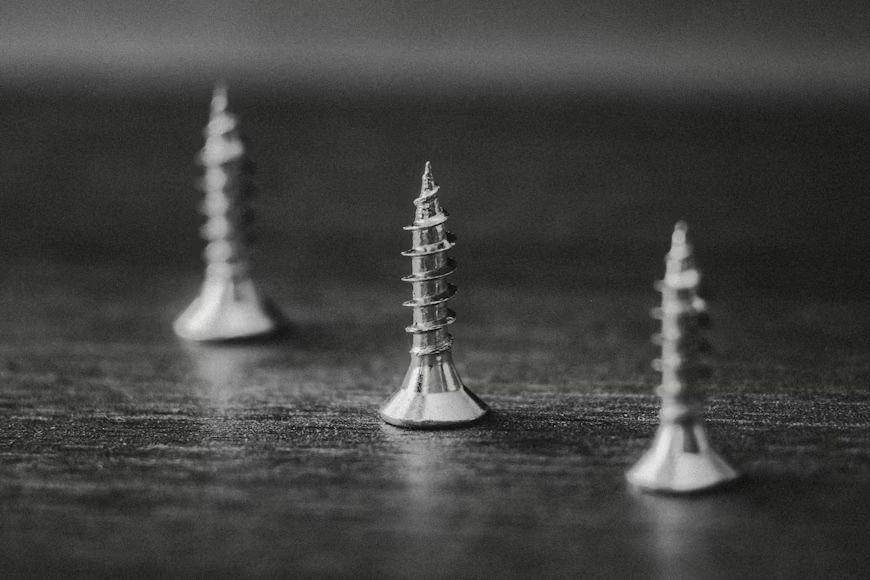
Have you ever had to try a few times before knowing whether you were loosening or tightening that screw? Well, with this rhythmic phrase, you won’t need to do that anymore. If you turn right, you’ll be making it tight. On the other hand, if you turn left, you’ll loosen it.

4

Gray or Grey?

Image: Tyler Lastovich

English spelling keeps everyone on their toes, and certain words have regional rules that make everything worse. Nobody can remember them all, so this device comes in handy. When you don’t know whether it is "gray" or "grey," think of it this way: Gray, with an A as in America. Grey, with an E, as in England.

5

How to spell "necessary"

Image: Mediamodifier

"Necessary": This is another word with a spelling that can create a few problems. And the mnemonic device for this one is picturing a T-shirt. You know how a T-shirt has one "Collar" (that’s one C) and two Sleeves (that’s two S)? That’s it, spelling solved.

6

"HOMES" of the lakes

Image: Condor Wei

Back in school, memorizing the Great Lakes could feel like a geography pop quiz. Simply the word "HOMES" is a trick that many teachers share with their students. Why HOMES? Because each letter represents a lake: Huron, Ontario, Michigan, Erie, and of course, Superior.

7

"My Very Educated Mother Just Served Us Nachos"

Image: NASA Hubble Space Telescope

Just as with any other long list, remembering the order of the planets in our solar system is no piece of cake. But this fun phrase has the answer to your prayers, it’s not bout nachos, but about the names of the planets in order: Mercury, Venus, Earth, Mars, Jupiter, Saturn, Uranus, and Neptune.

8

"Never eat soggy waffles"

Image: Mae Mu

This one sounds like breakfast advice, but it’s actually a compass lesson. The first letters match the four cardinal directions in clockwise order: North, East, South, West. Many kids learned this one in school, and plenty of adults still repeat it quietly when trying to picture a map in their heads.

9

Left or right?

Image: Jametlene Reskp

This may sound silly, but many people struggle to point left; most need more than just a second to figure out which one is actually left. But many have discovered something quite useful: hold up both your hands and use your thumb and index finger to do an "L." Can you see which one forms a clear letter? That’s left, of course.

10

"Large Elephants Jump Slowly And Sink Rapidly"
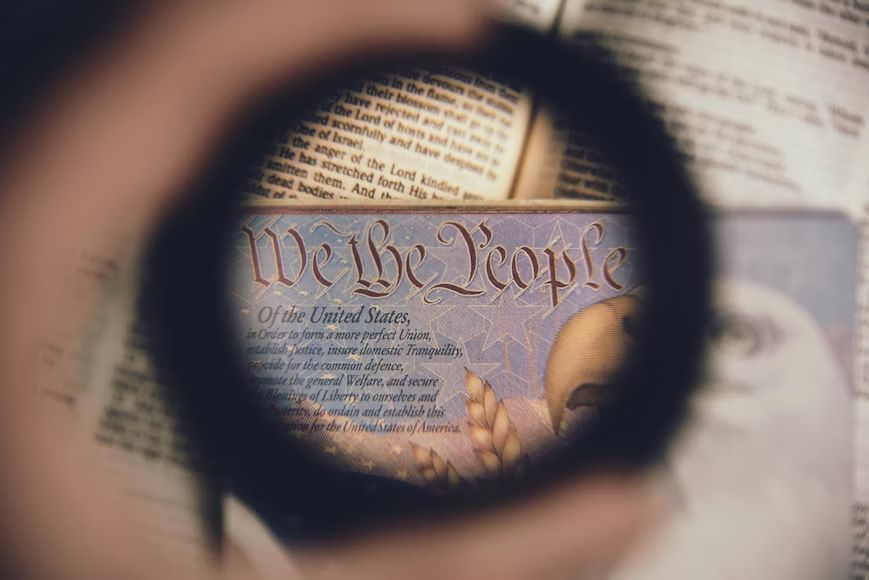
Image: Anthony Garand

Is this connected to the Constitution? Yes, it is. Civics teachers sometimes lean on this unusual sentence to remember the seven articles of the US Constitution. Each word stands for one: Legislative, Executive, Judicial, States, Amendment, Supremacy, and Ratification. Now you just have to remember this funny phrase.


LINGUISTIC MINEFIELD

Ten Surprising Military Terms That Made It Into Sports


Published on April 22, 2026


Image: Riley McCullough

Military terminology often infiltrates our everyday language, and sports are no exception. From strategies to equipment, the lexicon of warfare has found its way onto the field, court, and pitch. We can blame the Ancient Greeks for this connection, where many feats of athleticism - like javelin throwing or chariot racing - were clearly inspired by war and military tactics.

Although we can be certain that there is no comparing the realities of war to sports, no matter how rough the plays, the association is deeply embedded in our language. Here are ten curious instances where military terms have made it into sports!

1

Counterattack

Image: Chino Rocha

In many sports, a "counterattack" is a swift offensive maneuver launched in response to an opponent's attack, exploiting vulnerabilities in their defense. This term mirrors military counter-offensives, aiming to turn the tide of battle in one's favor by thwarting an enemy offensive and recovering lost ground in the process.

A saying attributed to Napoleon Bonaparte illustrates the vital importance of this strategy both in war and sports: "The greatest danger occurs at the moment of victory."

2

Fore

Image: Courtney Cook

In golf, "fore" is a warning shouted by players to alert others of an errant shot heading their way. The most accepted etymology for this term claims that it comes from "beware before," a term artillerymen used to shout to warn fellow soldiers standing nearby that they were about to shoot their cannons.

Its modern usage in golf serves basically the same purpose, as it allows nearby players to react quickly and seek cover to avoid being struck by a stray ball.

3

Bomb

Image: Vince Fleming

In volleyball, a "Filipino bomb" or just a "bomb" is a powerful, high-speed serve aimed at overwhelming the opposing team's defense, also called a spike. As its name suggests, the term originated among volleyball players in the Philippines, in the 1910s.

Like its military counterpart, this aggressive tactic seeks to create chaos and disrupt the opponent's strategy.

4

Blitz

Image: Geoff Scott

In football, a "blitz" refers to a defensive strategy where additional players rush the quarterback to disrupt the offense.

Meaning "lightning" in German, the term is a reference to the blitzkrieg tactics developed by the German forces during World War II, where a quick combined arms attack would be used to disrupt enemy lines and rapidly advance positions on the battlefield.

5

Air Raid

Image: Keith Johnston

In football, an "air raid" refers to a series of aerial attacks, typically involving long, high passes aimed at breaching the opposing team's defense. This term quite plainly draws parallels to military airstrikes aimed at penetrating enemy lines.

Coaches such as Mike Leach and Hal Mumme have popularized this offensive scheme since the late 80s, but the term has been applied to similar tactics since at least the 1940s.

6

Minefield

Image: Pedro Henrique Santos

In motorsports, a "minefield" often describes a very difficult track or even a section of a track that is littered with debris, oil slicks, or other hazards, making navigation treacherous for drivers. This term mirrors the dangers of navigating an actual minefield, where caution and precision can make the difference between life and death.

7

Full Court Press

Image: Markus Spiske

In basketball, employing a "full court press" means aggressively defending the opposing team from one end of the court to the other, effectively "surrounding" the opposing team and blocking action.

Reminiscent of military encirclement strategies, this tactic aims to apply relentless pressure on the offense. Perhaps not coincidentally, the strategy was first applied by college coaches whose previous experience was with military sports leagues.

8

Dud

Image: Jose Francisco Morales

During World War I, baseball lingo and military lingo happened to live in extremely close quarters, as baseball was one of the most popular sports among North American troops stationed in the European trenches at the time.

This led to many baseball terms being applied to the battlefield, and also a few military terms being introduced into baseball. For example, the term "dud" was often used to describe a bad pitch, a term originally used for ammunition that failed to detonate upon impact.

9

Sniper

Image: gerhard crous

In hockey, a "sniper" refers to a player known for their exceptional accuracy and ability to score goals with precise shots. Much like a military sniper who carefully selects and executes their targets from a distance, a hockey sniper strategically positions themselves to take advantage of scoring opportunities, often trying to catch the goaltender off guard.

10

Neutral Zone

Image: Martin Reisch

In American football, the "neutral zone" is the area between the offensive and defensive lines before the play begins.

Like many terms in gridiron football, it has a military origin. In fact, it is directly borrowed from military demilitarized zones, which represent an agreed buffer area between opposing forces where neither side holds dominance.

Looking for an extra scoop of literary fun?

Learn more with our Word of the day

wrinkle

/ˈrɪŋk(ə)l/