The wonders of human language

You might be surprised by these linguistic facts


Published on September 7, 2026
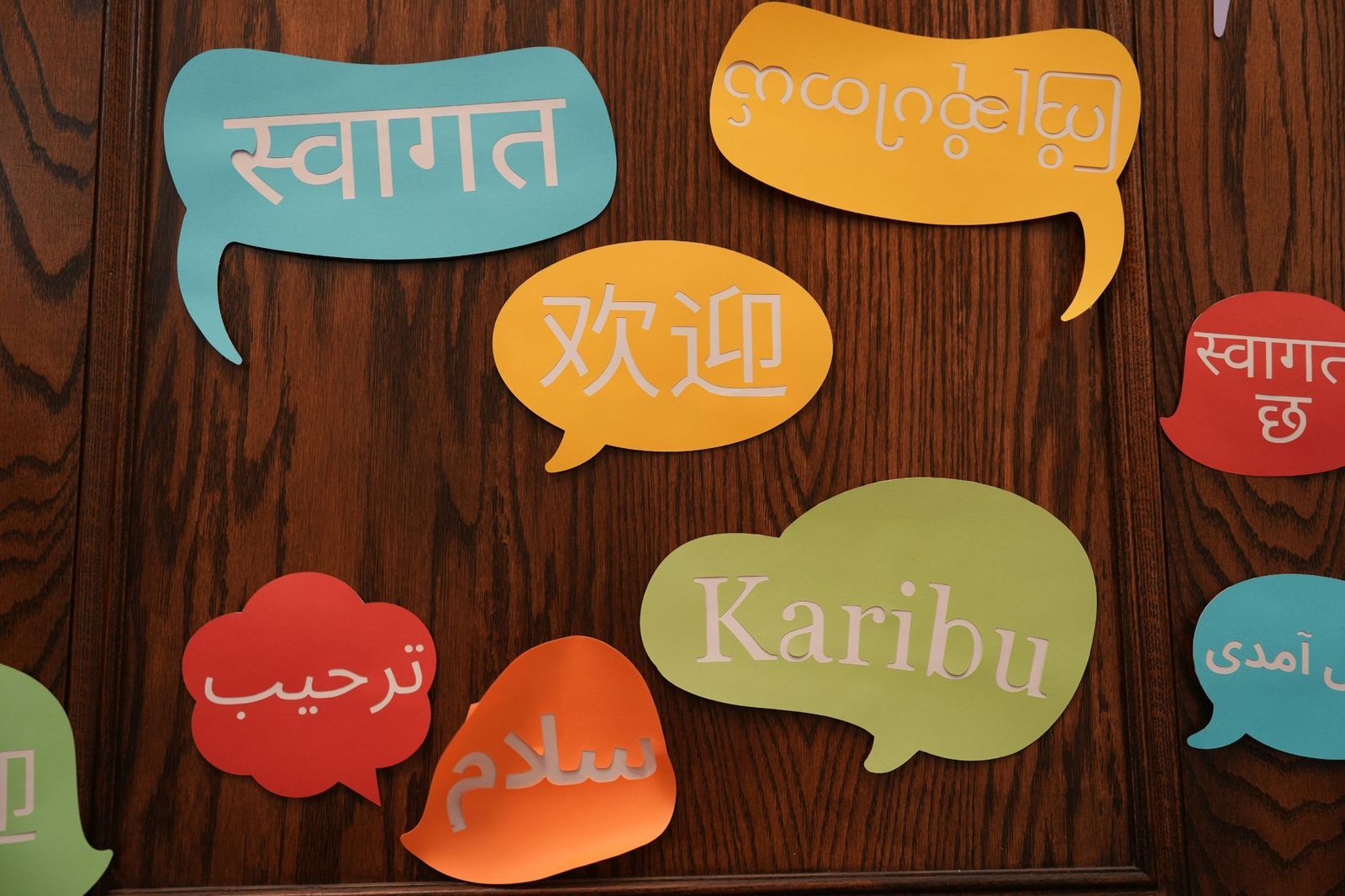

Image: zhendong wang

If languages and grammar are not your thing, linguistics might seem complex and boring, but nothing could be further from the truth. While some areas of linguistics require prior knowledge, many linguistic concepts and ideas relate to everyday life and can be understood by anyone. Here are some simple linguistic facts that might surprise you!

1

The "most difficult language" doesn’t exist

Image: jason hu

People like to list languages such as Mandarin, Japanese, or Hungarian as "the most difficult languages in the world", but this is not true. Think about the ease with which babies pick up a language, becoming fluent at a similar rate, no matter the place. The difficulty of a language lies not in its structure, but in its similarities or differences with your own language. Mandarin might be extremely difficult for an English speaker, but quite manageable for someone who speaks Cantonese. So, there isn’t a "most difficult language", but a "most difficult language for you".

2

You can’t really learn new things about your native language

Image: Unseen Studio

This might come as a shock, but you already know everything about your native language. Native speakers learn by imitation, not through methodical study, so they don’t rationalise their language; they simply speak. They might later approach the language from an academic perspective and put a name to different structures and concepts, but they will not learn anything that is actually new.

3

Each language is a new worldview

Image: Song_about_summer

This might seem obvious, but most people don’t think about it. While differences in grammar and structures are evident, it is common for language learners to approach vocabulary as a set of labels: If I’m learning Spanish, I take an apple and label it "manzana". But languages are not labels, but a way of seeing the world, such as cultures near the North Pole having dozens of words for snow or languages in hierarchical societies changing according to the people speaking. While at a basic level we can often find one-to-one translations, the more we learn about a new language, the more we adopt a new worldview.

4

Your family has a unique dialect

Image: Ekaterina Shakharova

Does your family have certain words or phrases that mean something unique to you? It might be a funny mispronunciation that stuck, or a phrase that you use in a specific circumstance, sometimes passed down for a few generations. This is called a "familect", and it happens in most families, but also in tight-knit friend groups. The repetition and preservation of this private code reinforces familial bonds and identity, functions as an emotional anchor, and provides a sense of belonging.

5

Polyglots have multiple personalities

Image: Prostock-studio

Each language carries a worldview, so it is not surprising that our personality changes slightly when we change languages. We don’t become someone different, but we adapt to the cultural norms and values attached to that language. People who speak more than one language also tend to link specific interests, knowledge, and memories to each language, and specialists have noted that not only do our tone and volume change with each new language, but that we are most likely to swear or discuss sensitive or taboo subjects in a second or third language, as they provide an emotional distance impossible to avoid in our native tongue.

6

There is a right and a wrong way when it comes to English adjectives

Image: sulit.photos

English is a fairly flexible language, meaning that many of its components can be placed in a different order without the sentence becoming unnatural or impossible to understand. But this flexibility does not apply to adjectives, at least when we have to use many of them in a row. English speakers naturally place adjectives in a specific sequence: opinion, size, age, shape, color, origin, material, and purpose. While this is done subconsciously, changing this order results in unnatural-sounding phrases, such as "a red new nice car".

7

Sign languages are unique

Image: LightField Studios

Have you ever wondered why people refer to sign language as ASL or "American Sign Language"? Not only are there multiple sign languages, classified in families in the same way spoken languages are, but each one is a language of its own, with unique grammar, rules, and vocabulary. This way, American Sign Language (belonging to the French Sign Language family alongside its Russian, Brazilian, or Italian counterparts) is not a signed version of American English, but a distinct, unique language with more than half a million native speakers.

8

The sad reality of feminine words

Image: Casimiro PT

Languages change and shift with use and time, which causes some words to gain positive meanings, but also others to become negative. This downgrading of a word’s meaning is called "pejoration" and is connected to many factors, one of them being whether the term is considered masculine or feminine. English is not a gendered language, but it has gender-specific pairs, such as "master/mistress", "fox/vixen", "bachelor/spinster", or "governor/governess". While initially mistress, vixen, spinster, and governess were merely counterparts to the male-specific term, over time they developed a negative connotation, while the masculine term remained positive or neutral.

9

Babies have accents

Image: Colin Maynard

Babies typically start using meaningful words around the 12-month mark, so it is natural to think that, before that, babies "don’t speak". While they don’t use meaningful spoken language, they communicate from birth with cries, sounds, and gestures, and these communications have an accent. How is this possible? Third-trimester babies in utero have fully functional hearing and recognize sound patterns, pitch, and intonation. Once they are born, their cries, and later their babbles, mimic the intonation, pitch, and rhythmic patterns of the language of their environment.

10

Animal sounds change from one language to another
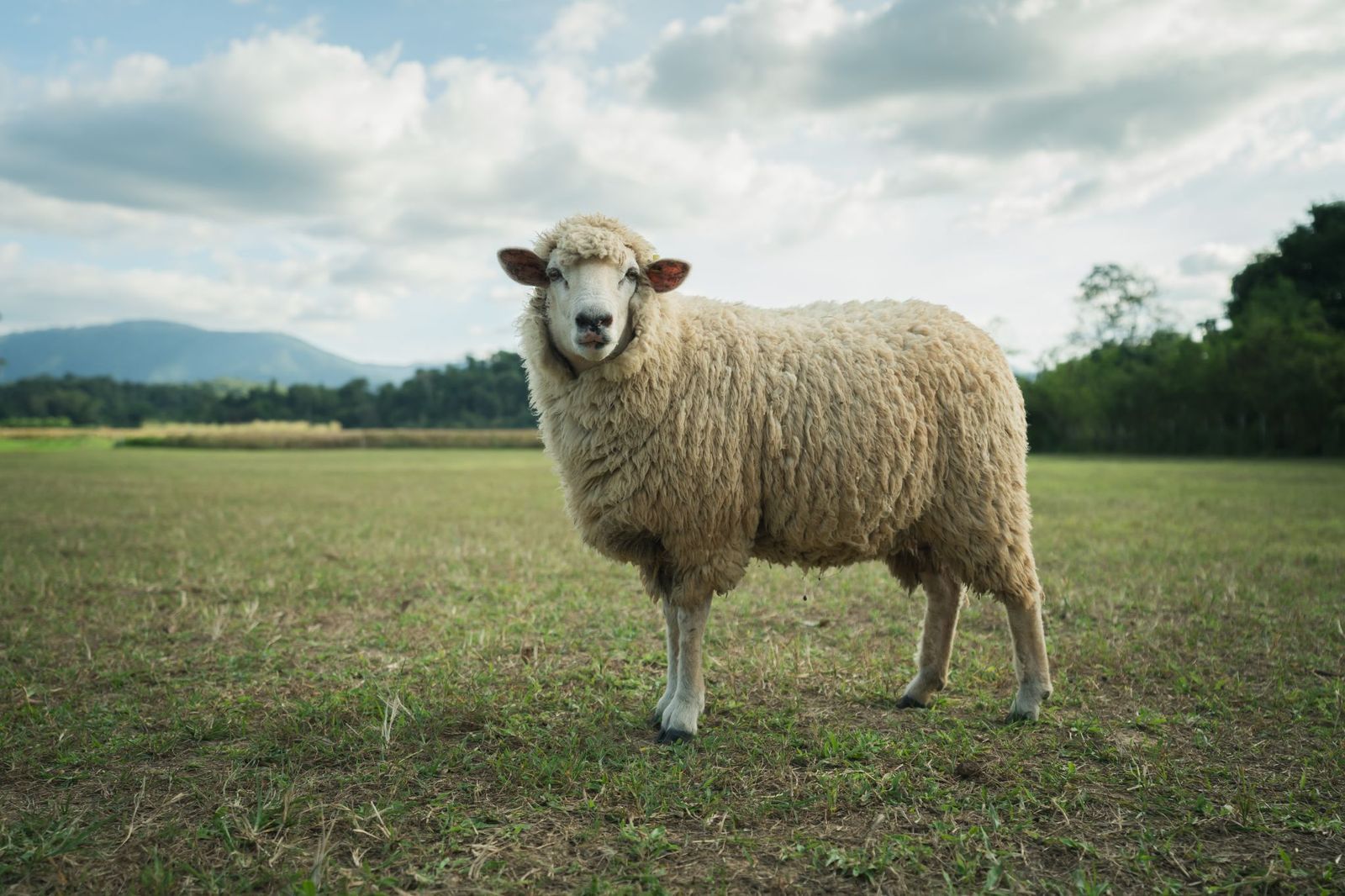
Image: BaLL LunLa

What sound does a sheep make? Well, a sheep from where? English-speaking sheep go "baa", but Korean-speaking sheep go "me-e". While sheep don’t care about linguistic differences, humans adapt animal sounds to the available sounds and phonetic rules of their language. This happens not only with animals, but with all kinds of sounds, such as machines, strikes and collisions, physical and natural phenomena, human sounds, and more.



The etymological twist: 10 common words that used to mean the opposite


Published on September 7, 2026


Image: Snapwire

Language is a moving target. What we consider a precise definition today is often just the latest stop on a centuries-long journey of semantic drift. A 17th-century scholar would likely be horrified by how we use words like sophisticated or anecdote. Etymology is like a fossil record of human behavior, class struggles, and cultural priorities. Here are 10 common words that have undergone radical transformations.

1

Geek

Image: Andrea Piacquadio

Before it was a badge of honor for Silicon Valley billionaires, a geek was a social pariah of the most literal kind. In the early 20th century, the term referred to a specific type of carnival performer, a side show "freak" whose primary act involved biting the heads off live chickens or snakes.

The word likely stems from the Low German geck, meaning "fool" or "simpleton". It wasn’t until the mid-20th century that the meaning drifted toward social awkwardness and, eventually, an obsessive devotion to technical or niche subjects. Today, the geek has moved from the dirt of the carnival floor to the top of the global economy, but the word’s gruesome origins remain a hidden layer of its history.

2

Sophisticated

Image: Vika Glitter

In a modern context, being sophisticated is an aspiration, it implies refinement, worldliness, and complexity. However, for most of its history, the word was pejorative. Derived from the Greek sophistēs (the Sophists, a group of philosophers often accused of using clever but fallacious reasoning), a sophisticated thing was something that had been corrupted or adulterated.

In the 1600s, you might have been accused of "sophisticating" wine by watering down or adding lead to sweeten it. To be sophisticated was to be "unnatural" or "adulterated". It wasn’t until the 19th century that the complexity of being sophisticated began to be viewed through a positive lens, evolving into the mark of high culture we recognize today.

3

Handsome

Image: Alexa Popovich

We currently use the term handsome to describe a person, usually a man, with pleasing, symmetrical features. But the word’s roots are purely functional. In the late 14th century, a handsome object was simply something that was hand-some, meaning "easy to handle" or "handy".

Over time, the utility of an object became associated with its quality. If a tool was handsome, it was well-made and fit for its purpose. This led to the word describing things that were "generous" or "substantial" (for example, a "handsome reward"), and eventually, by the late 16th century, it settled into its current role as a physical descriptor for an attractive person.

4

Anecdote

Image: Engin Akyurt

An anecdote is now a brief, often amusing story about a real person or incident. But in its original Greek, anekdota, it literally meant "things unpublished".

The term gained fame through the 6th-century historian Procopius, who wrote a public history of the Emperor Justinian and his court. At the same time, he also wrote a "Secret History" filled with scandalous details that he didn’t dare release while the subjects were still alive. These unpublished secrets were the original anecdotes. The meaning eventually shifted from secrets to short, private narratives, and finally to the casual stories we share at parties today.

5

Brutalize

Image: Alexa Popovich

This word is currently the subject of a massive linguistic tug-of-war. Most people today use brutalize to mean "to treat someone in a brutal or violent way". However, its original 18th-century meaning was the exact opposite: "to become a brute" or "to make someone brutal".

The original logic was that the person committing the violence (or the person exposed to it) was being stripped of their humanity and turned into a beast. If you were brutalized by war, it didn’t mean you were hurt; it meant you had been made a savage by experience. While the modern "attacked violently" definition is now widely accepted, purists still argue that the word should describe the state of one’s character, not just the physical assault.

6

Nostalgia

Image: Ante Majic

We think of nostalgia as a bittersweet, sentimental longing for the past. But in the 17th century, it was a terrifying medical diagnosis. Coined by a Swiss medical student, the term combined the Greek nostos (homecoming) and algos (pain).

It was considered a physical "disease of the imagination" that primarily affected soldiers fighting far from home. Symptoms included persistent melancholy, heart palpitations, and even death. It was treated as a literal sickness, sometimes cured by sending the soldier home, but occasionally met with more gruesome 17th-century medical interventions. Only in the 20th century did it soften into the purely emotional, non-lethal state we discuss today.

7

Backlog

Image: cottonbro studio

In the modern office, a backlog is a source of stress, a pile of unfinished tasks or orders. But in the 1600s, a backlog was a luxury. It was literally the "back log," the largest, thickest piece of wood placed at the back of the fireplace to reflect heat forward and keep the fire burning through the night.

Because it was so large, the backlog was the last thing to burn. Over time, the concept of something "kept in reserve" or "accumulated at the back" moved from the fireplace to the ledger book. By the 1880s, the "unburned" log had become the "unfinished" work.

8

Manipulate

Image: Polina Tankilevitch

To manipulate someone today carries a heavy connotation of deception or unfair control. Yet, the word began as a neutral, even positive, term for manual dexterity. Rooted in the Latin manus (hand), it originally meant "to treat or operate with the hands."

It was a term used by scientists and doctors to describe the skillful handling of tools or physical objects. It wasn't until the mid-19th century that the word jumped from the physical to the psychological, describing the skillful (but often dishonest) handling of people or information for one’s own advantage.

9

Condominium

Image: quang vinh

Long before it was a type of real estate, a condominium was a system of government. Coming from the Latin con- (together) and dominium (right of ownership), it referred to "joint sovereignty" over a territory by two or more states.

For instance, a piece of land ruled by both England and Egypt would be called a condominium. It wasn't until the 1960s that the term was co-opted by the American real estate market to describe a building where individuals own their units but share the common areas—a miniature, domestic version of "joint sovereignty."

10

Scavenger

Image: Denitsa Kireva

Few words have tumbled as far down the social ladder as scavenger. In the Middle Ages, a scavager (from the Old French escauwer, "to inspect") was a respected customs official. Their job was to inspect imported goods and collect "scavage," a tax on foreign merchants.

As part of their duties, these officials often had to oversee the cleaning of the streets where the merchants set up shop. Eventually, the name for the official (scavager) was applied to the laborers who actually did the cleaning. From there, it became a general term for anyone who picked through trash, and finally, it was adopted by biology to describe animals that feed on carrion.

Looking for an extra scoop of literary fun?

Learn more with our Word of the day

paean

/ˈpiən/