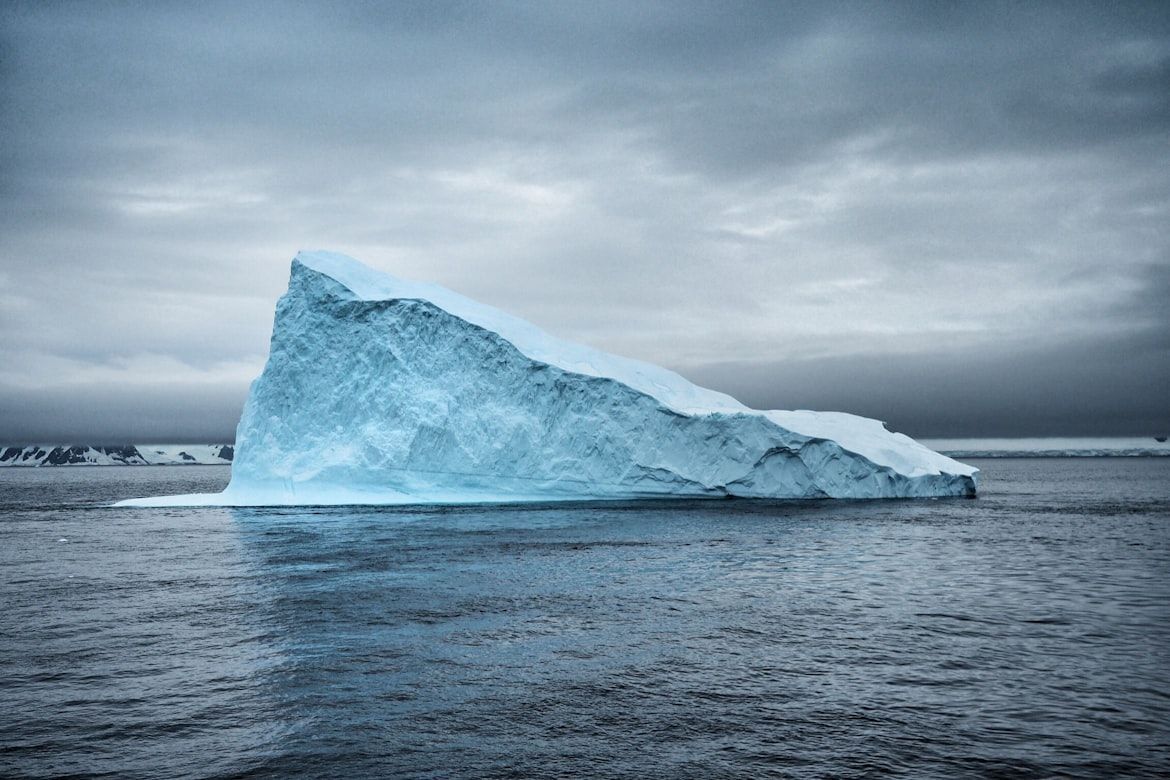
Snowy sayings

You won't believe the real roots of 10 winter idioms you use every day!


Published on March 11, 2026


Image: Aaron Burden

You might not realize it, but the world around us shapes the way we speak. And the seasons are no exception. Have you ever wondered why we say someone is "snowed under" or that they suddenly get "cold feet"? These expressions aren’t random. Today, we’re exploring the origins and meanings of 10 popular winter idioms.

1

Cold feet

Image: Tristan Hess

You’ve thought it through, made your decision, and planned everything. But then nerves take over, and you hesitate. That’s when we say you’re getting "cold feet," and it’s something we’ve all felt at some point.

The expression comes from Germany, though its exact origins are debated. One theory comes from war, describing soldiers ready to fight but unable to charge because their feet were frozen. Another comes from a 19th-century German novel, where a poker player backs out of a game before losing, claiming he couldn’t focus because of his "cold feet."

2

Walk on thin ice

Image: Pix Tresa

If you’ve ever been in a risky situation where a small mistake could lead to disaster, you might say you’ve "walked on thin ice," even if you’ve never been near snow.

The phrase originally described the real danger of walking on thin ice over water in frozen regions. By the mid-19th century, it became a metaphor, used to describe any situation where one is in danger.

3

Give someone the cold shoulder

Image: Obie Fernandez

If your friend ignores your calls or says they won’t be home when you plan to visit, they might be giving you the "cold shoulder." One of the most widely accepted origins of this idiom comes from the Middle Ages. Back then, if an unwelcome guest arrived, hosts couldn’t just shut the door. Instead, they would serve a cold shoulder of beef, mutton, or lamb, instead of a warm, welcoming meal. Unbelievable!

4

A snowball’s chance in hell

Image: benjamin lehman

If you applied for a job that’s completely unrelated to your experience and you’re totally unprepared, we might say your odds are "a snowball’s chance in hell." This idiom, used to express extreme improbability or near-impossibility, emerged in the United States around the 1880s. One of its earliest recorded uses appeared in The Detroit Free Press, describing the slim prospects of a political candidate.

5

Put something on ice

Image: Scott Rodgerson

If you’re working on a project but your creativity is running low and progress stops, it might be time to "put it on ice." This popular idiom simply means to pause something or set it aside for a while. Its origins are quite literal: before modern refrigerators, people stored food with blocks of ice to preserve it for later use.

6

Tip of the iceberg

Image: Spitfire Photography

Imagine your friend is telling you about all the problems they’re facing. You’re shocked by what’s already happened, and then they say, "Wait, that’s just the tip of the iceberg." Oh no! This means things will get even worse.

The idiom is used metaphorically to describe a small, visible part of a larger, hidden problem. But what’s especially interesting is its root: while the exact moment it emerged is unknown, it’s believed to have gained popularity in the first half of the 20th century, shortly after the famous sinking of the Titanic.

7

When hell freezes over

Image: David Tovar

If "a snowball’s chance in hell" means that something is extremely unlikely, then "when hell freezes over" goes even further, indicating absolute impossibility.

The phrase imagines the logical absurdity of a vast place that is completely on fire, suddenly freezing over. It first emerged in the late 19th century, and according to written records, its popularity grew around the 1920s, becoming a widely recognized idiom in everyday English.

8

Be left out in the cold

Image: Ilona Frey

Do you remember Kevin, the main character in Home Alone? Even though he was inside the house, he was essentially "left out in the cold." But how? The expression is used to describe someone who has been forgotten, excluded, or ignored, just like poor Kevin in the movie.

While the exact origins of the phrase are unknown, it likely comes from the literal idea of leaving someone outside, exposed to the cold, without shelter or warmth, highlighting the feeling of being left out.

9

Snowed under

Image: Vitaly Gariev

When work piles up, deadlines loom, and your stress levels rise, we might say you’re "snowed under." This expression, used to describe someone who is overwhelmed, dates back to around 1880. Its origins are literal, referring to the terrible experience of being buried under a heavy snowfall, unable to move, and suffering in the cold.

10

Winter is coming

Image: Andre Taissin

When exam season rolls around, and students face a heavy workload, they might say, "Winter is coming." This expression, used to warn of future challenges, originally refers to the real hardships that winter brings to animals and plants.

Although it has been around for a long time, it gained huge popularity in recent years thanks to the hit TV series Game of Thrones, based on George R.R. Martin’s A Song of Ice and Fire books.


GRAB SOME POPCORN

Do You Remember The Catchy Taglines Of These 10 Unforgettable Movies?


Published on March 11, 2026


Image: Myke Simon

Allow us to take you on a trip to the past, to a bygone era before the dawn of streaming services and on-demand content. Going to the movies wasn’t limited to just paying a ticket and watching a particular film: Back in the day, seeing the posters on the walls of the lobby and getting psyched about upcoming releases was also very much part of the experience of going to your local movie theater.

While today we might play that exciting movie trailer on an endless loop on YouTube, advertisement agencies always relied on drawing audiences through catchy and flashy campaigns. And an integral part of these strategies was sometimes what made a movie either a hit or a failure: an exciting tagline. We have gathered the phrases that helped transform the ten films in this list into the iconic pieces of pop culture we now hold sacred.

1

Alien

Image: Mark Harkin

Ridley Scott’s 1979 film redefined the concept of space for audiences around the world. We stopped seeing the outer limits of our galaxy as "the Final Frontier" to be explored, and we now learned to fear that cold vacuum of endless silence.

Part of that dread definitively came from the movie’s legendary tagline. The poster showed a glowing alien egg over a pitch-black background, and unveiled a phrase that still makes us feel uneasy: "In space, no one can hear you scream."

2

Taxi Driver

Image: Waldemar

Whenever someone mentions Martin Scorsese’s cult neo-noir, Robert DeNiro’s iconic "You talkin’ to me?" line usually comes to mind. And while this phrase is certainly legendary, Taxi Driver had a less-know tagline that also perfectly captures the essence of the film.

The 1976 original poster shows DeNiro’s character of Travis Bickle standing in the middle of a deserted New York City sidewalk, while the tagline reads: "On every street in every city in this country, there’s a nobody who dreams of being a somebody."

3

Ghostbusters

Image: Erik Mclean

We can guarantee that this tagline has been ringing in your head ever since you read the name Ghostbusters on this list. You might even be humming this movie’s unforgettable theme track: After all, Ghostbuster’s iconic "Who ya gonna call?" tagline is on the centerstage of Ray Parker Jr.’s song.

What’s interesting is that, while this tagline closed the film’s trailer, it is curiously absent from the original 1984 poster, being instead replaced with a much more generic: "They are here to save the world." Nevertheless, "Who ya gonna call?" became an integral part of the Ghostbuster’s mythos, and is still constantly quoted almost 40 years after the film’s release.

4

The Naked Gun

Image: Krists Luhaers

Leslie Nielsen’s 1988 "The Naked Gun" is not only remembered as a hilarious satire of police movies but also as a groundbreaking comedy film that paved the way for future parodies. The movie perfectly mixes slapstick gags with an amazing self-awareness of the ridiculousness the crime genre has to offer.

Appropriately, the movie’s tagline mocked the film industry's tired, old tropes and cliches: "If you only see one movie this year... you need to get out more often."

5

The Social Network

Image: Alexander Shatov

The most recent movie on this list, David Fincher’s 2010 "The Social Network" delved deeply into the humble (and tumultuous) early years of Facebook. This biographical drama examines Mark Zuckerberg’s founding of the social media site from his Harvard dorm room and his legal battle with friend and co-founder Eduardo Saverin.

The movie’s tagline perfectly summarizes these internal struggles into a single line: "You don't get to 500 million friends without making a few enemies." Actor Jessee Eisenberg's iconic portrayal of Zuckerberg was nominated for an Academy Award for Best Actor.

6

Close Encounters of the Third Kind

Image: Bruce Warrington

Much like "Alien", the 1977 "Close Encounters of the Third Kind" portrayed UFO encounters in a new, more unnerving light. Steven Spielberg’s science-fiction drama chronicles the life of an Indiana electrician who sees his life change after an otherworldly encounter.

The film’s poster shows a dark, deserted highway lit by the blue light emanating from an undisclosed energy sphere half hidden behind the horizon. The movie’s tagline is located in the middle of the frame, a short but extremely effective reminder of the uneasiness this movie brings: "We are not alone."

7

The Fly

Image: Jin Yeong Kim

David Cronenberg’s remake of the 1958 science fiction horror film "The Fly" was both an homage and a sharp turn from the original: Jeff Goldblum’s spine-chilling fly hybrid is still regarded as one of the most terrifying monsters in film history.

In that regard, the movie’s tagline highlights the primal fear that the monster produces in a simple but unnerving phrase: "Be afraid. Be very afraid." Right next to the tagline, The poster shows the now-iconic "telepod" lit by a blinding light, from which only a human hand and insect leg can be seen.

8

Apollo 13

Image: Brian McGowan

This movie is the only one in this list that features a real-life quote as its tagline. "Houston, we have a problem", the now-iconic distress call spoken by astronaut Jim Lovell (played by Tom Hanks) offered audiences a direct connection to the real Apollo 13 mission.

Ron Howard’s 1995 drama echoed through the American public and is now considered one of the best films of all time. In 2023, it was selected for preservation by the Library of Congress.

9

Jaws & Jaws 2

Image: Kelsey K

We decided to include two amazing taglines in this entry because we couldn’t possibly decide between them. The first Jaws film had an unforgettable poster that showed Bruce the shark (yeah, his name is Bruce) looming underwater, complemented by the now-legendary tagline: "You’ll never go in the water again!"

By the time the second Jaws film was released, the first film had already cemented itself as a smashing hit. Logically, the executives behind the sequel decided to directly reference its predecessor: The movie’s tagline cleverly states: Just when you thought it was safe to go back in the water...

10

Jurassic Park

Image: Chan Chai Kee

We end this list with another classic Spielberg film. The first Jurassic Park film took audiences on a thrilling, unprecedented ride, revered to this day as a timeless masterpiece.

In 1993, the advertising campaign for the movie both made groundbreaking promises and played with people's expectations. The movie posters show the classic Jurassic Park logo over a black background, alongside the enigmatic tagline "An adventure 65 million years in the making."

Looking for an extra scoop of literary fun?

Learn more with our Word of the day

remit

/rəˈmɪt/