Time-related expressions to expand your vocabulary
Why is a March hare bad? 10 time-related phrases explained
Published on February 5, 2025
 Image: Icons8 Team
The creation of new phrases, proverbs, and sayings is one of the most colorful aspects of language development. However, for this to happen, an essential ingredient is key: time. Therefore, through this article, we aim to offer curious readers interesting facts about the origins of figurative expressions related to this specific aspect of life. Continue reading to discover 10 popular idioms about time.
In the nick of time
 Image: Djim Loic
We use the expression In the nick of time to describe something that happens just in time, right before the critical moment. The origin of the phrase can be traced back to the 1500s, when the word nick meant "the precise moment of an occurrence or an event."
In the 16th century, a tally, or 'nick-stick,' was used to keep track of time, points in sporting events, commercial transactions, and official government bookkeeping records. The first written record of the complete phrase, as we use it today to express relief that something happened before a disaster, dates back to the mid-17th century.
May-December romance
 Image: LuisSteven
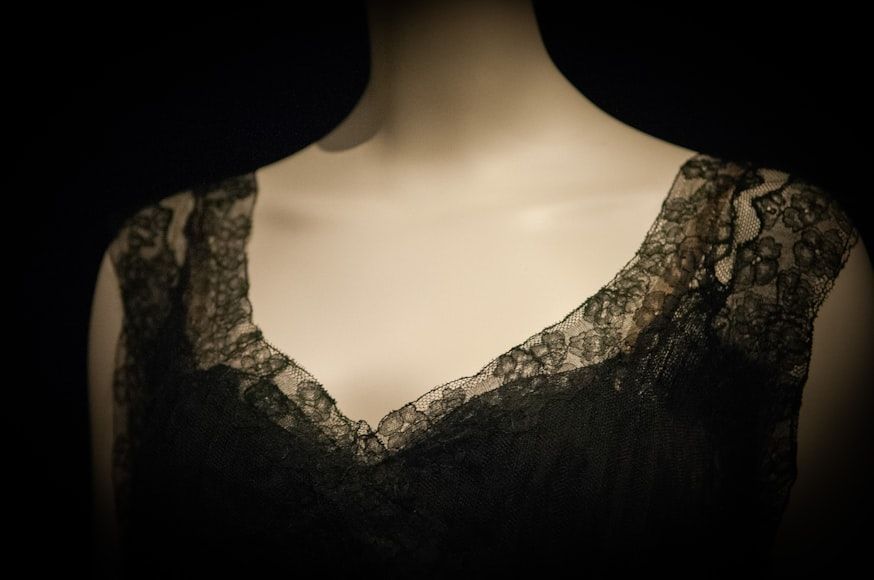
A May-December romance occurs between two people with a wide age difference. Why these months? May is the peak of spring, when the weather is warm and pleasant, and flowers bloom—metaphorically representing youth and femininity. December, on the other hand, marks the beginning of winter and is often associated with decay, thus symbolizing aging men.
The expression first appeared in the 14th century in The Merchant's Tale, one of the Canterbury Tales written by English poet and author Geoffrey Chaucer. In this story, a mature man, Mr. January, is determined to marry a young woman named May in order to leave an heir. Years later, when Britain adopted the Gregorian calendar and January 1st was established as the beginning of the year, the phrase evolved to use December, symbolizing the end of an era—and ultimately, the end of a life.
Better late than never
 Image: Andy Beales
According to the Cambridge Dictionary, this expression means that "it is better for someone to arrive or do something late than not to arrive or do it at all." You probably didn't need the dictionary definition for this one, as it is one of the most popular and widely used idioms in everyday language.
What you might not know is that it has a very ancient origin and is actually a translation of an old Latin proverb. How did it make its way into English? Well—surprise, surprise!—it was by the hand of Chaucer and his Canterbury Tales. He wrote it, as early as the Middle Ages, as follows: "for bet than never is late." Over time, the wording changed slightly. Today, we know the phrase as "better late than never," though it retains the same metaphorical meaning.
Once in a blue moon
 Image: VanFulpen
Once in a blue moon is an idiomatic phrase used to describe something that very rarely happens. Although it’s just a theory, the Oxford English Dictionary suggests that the color blue might have been an arbitrary choice. First recorded in the 16th century, saying the moon was blue was a way of indicating that something could not be true.
However, blue moons do occur—though only under extremely rare atmospheric conditions, such as the eruption of a volcano or a forest fire. So, while the color mentioned may have been random in its origin, the phrase as we use it today makes perfect sense.
A stitch in time saves nine
 Image: Kateryna Shevchenko
Have you ever left an important issue unattended, only for it to get increasingly worse? It happens! That's why this proverb has been popular since at least the 18th century. A stitch in time saves nine means that if you address a problem immediately, it may save a lot of extra work later.
According to the Oxford Dictionary, the number nine here has no particular significance but was chosen because it sounds similar to the word time. Another explanation is that, when a piece of clothing has a tear, it is best to repair it as soon as possible to prevent the tear from getting bigger and requiring more stitches.
A movable feast
 Image: Towfiqu barbhuiya
For those of us who love punctuality and like to keep an orderly schedule, a movable feast can be a nuisance. As can be inferred, this expression describes an event that can happen at any time or place and may change without notice.
Its origin, however, is related to religious celebrations. In a religious context, a movable feast refers to a holy day—such as Easter—that doesn’t occur on the same calendar date each year.
Over time, it became part of colloquial language, and today, we use it to refer to any event that doesn't have a set time or date. Ernest Hemingway's memoir, A Moveable Feast, likely contributed to the adoption of the phrase into our everyday vocabulary.
The witching hour
 Image: ulleo
In its literal sense, this expression refers to the popular superstition that witches and other supernatural forces are most active at midnight. Although its traditional use originates in folk tales, one of the earliest written references dates back to the early 17th century and appears in one of William Shakespeare's iconic plays. Prince Hamlet declares: "‘Tis now the very witching time of night, when churchyards yawn and hell itself breathes out contagion to this world."
In modern times, however, this expression has taken on a more colloquial meaning and is used to describe any situation that may be problematic or unpredictable. All those who have raised children are familiar with this particular time of day: whenever a baby starts fussing and crying for no apparent reason, everyone knows that the witching hour—a.k.a. bedtime—has arrived.
Don’t give the time of day
 Image: Ben_Kerckx
Have you ever felt that someone was ignoring you, not paying the slightest attention, or blatantly disrespecting you? In those cases, the idiom Don't give the time of day comes into play. While it might seem to have a literal meaning—that it refers to someone who can't even take a second to tell you the time—it actually has a twist.
A long time ago, the expression "good time of day" was widely used as a greeting, a way to say hello to someone. In fact, the first written records of this now-outdated form of greeting can be found in some of Shakespeare's plays. Considering this meaning, it makes much more sense that the idiom carries such a negative connotation.
A month of Sundays
 Image: Kyrie kim
This idiom is used to express that something is going to take a very—very—long time. Note that a month’s worth of Sundays amounts to about 30 or 31 weeks. Nowadays, Sunday marks the end of the weekend, and for many, it is a day full of contradictions. On one hand, it means we can rest; on the other, it signals the start of the workweek and the return to duties.
But decades ago, for most people, Sundays were a very long, seemingly endless period of time. For this reason, it is believed that this expression may refer to the traditionally slow passage of Sundays, often due to religious restrictions on activity or entertainment. Imagine a whole 30 weeks of total boredom and tedium—that’s what this phrase represents!
Mad as a March hare
 Image: Vincent van Zalinge
Mad as a March hare is an idiomatic English phrase that means to be completely crazy. It is similar to another well-known expression, mad as a hatter, which originated from Lewis Carroll's character, the Mad Hatter, in Alice's Adventures in Wonderland. In this case, the madness derives from the belief that hatters suffered from the effects of mercury poisoning due to the fumes released in the manufacture of felt hats.
The March hare version, however, refers to the way hares leap about during the breeding season in Europe. It is said that the behavior of these animals during the month of March is completely erratic, including boxing other hares and jumping for no particular reason.