English is funny

Why do we say “double U” when it clearly looks like a “double V”?


Published on April 17, 2026
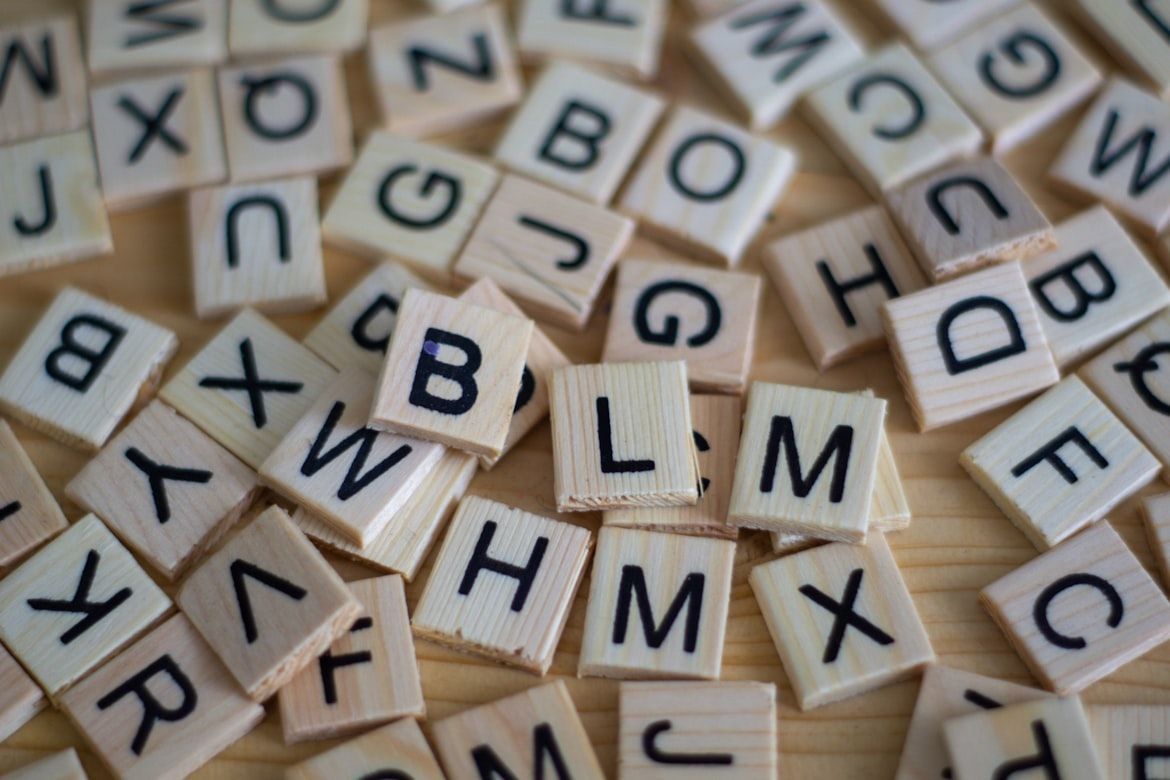

Image: Sven Brandsma

English is a wonderful language, full of quirks that defy logic. For example, why does "colonel" sound like "kernel"? And what’s the deal with "knight" starting with a silent "k"? English has picked up all sorts of odd habits over the centuries. Did you know about these 12?

1

Colonel

Image: Bruce Warrington

Let’s get this one off the table first. The word "colonel" comes from the Italian colonnello, but the French changed it to coronel, adding an "r" sound. English later adopted the French pronunciation but kept the Italian spelling.

That’s why we say "kernel" but write "colonel": it is a mix of Italian spelling and French pronunciation.

2

Knight

Image: Matt Benson

The word "knight" once had a pronounced "k," but over time, English dropped the sound while keeping the old spelling.

This mismatch is common in English, where pronunciation changes but spelling stays the same. "Knight" and "night" are homophones: they sound alike but mean different things.

3

Dust

Image: Niclas Dehmel

In English, "dust" can mean opposite things depending on context. You can dust a shelf to remove dust or dust a cake to add sugar.

It’s a quirky example of a contronym: a word with two opposite meanings. Context is everything!

4

Queueing

Image: Meizhi Lang

The only English word with five (yes, five) consecutive vowels is used to describe a not-so-cherished activity: "queueing". Of those five vowels, the pronunciation of the word only uses three.

5

W

Image: Dimitry B

The letter "W" is pronounced "double U", even though it clearly resembles a double "V".

6

Zoe and Joe

Image: Brooke Cagle

If you take notice, the names "Zoey" and "Zoe" are pronounced in the same way. But "Joey" and "Joe" are not.

7

You

Image: Gift Habeshaw

Even though the plural of "I" is "we", and the plural for "he/she" is "they", there is no plural for "you".

8

Ghoti

Image: Rachel Hisko

The word "ghoti" is a playful take on how weird English spelling can be. Though it looks odd, some argue it could be pronounced "fish."

Here’s how: "gh" as in tough gives the "f," "o" as in women gives the "i," and "ti" as in nation gives the "sh." It’s not a real word, but it highlights just how inconsistent English pronunciation can be.

9

Women

Image: Antonino Visalli

Granted, some letters are pronounced differently from their spelling. But few are so different as the plural word for "woman". The "o" sound is replaced by an "i" when pronouncing "women".

10

Oversight

Image: Jonathan Borba

The word "oversight" is a great example of a contronym: a word that means two opposite things, depending on the context it is used in.

For example, it can be used positively if we say that "the project is under careful oversight". But, it can be used negatively if we say that "the oversight cost us dearly".


LINGUISTIC SURPRISES

Unveiling Meanings: 10 Everyday Words With Lesser-Used Definitions


Published on April 17, 2026


Image: Edho Pratama

You know, dictionaries can be hefty, and today, we're opening the cover to explore why. While some words rarely find their way into our daily conversations, others are more frequent, appearing in everyday talks and being understood by everybody. But wait! Because even these familiar words often carry hidden or rarely used definitions.

If you're curious, join us as we travel through the dictionary to rescue the lesser-known definitions of 10 words you probably use every day!

1

Pine

Image: Tom Pumford

We all know and adore the iconic pine trees, particularly during Christmas, when they become the stars. This type of tree is abundant in certain parts of our country, gracing places like the Rocky Mountains. But there's one lesser-known fact that many people may not be familiar with: the word "pine" can also be used as a verb.

"To pine," according to Merriam-Webster, means "to yearn intensely and persistently, especially for something unattainable." Like everybody, you have probably "pined" for love at some point, but have you ever heard this verb before?

2

Oyster

Image: Annie Spratt

Oysters are not just home to beautiful pearls; there is much more about them. These mollusks also possess a powerful muscle known as the adductor, which allows them to close their shells tightly, offering protection against threatening environments.

Probably because of that fantastic characteristic, the Collins Dictionary mentions the word "oyster" can also be used to describe a "taciturn and reserved person." However, being an oyster isn't necessarily a negative attribute. Quite the contrary, these people are often very good at keeping secrets safe, much like how oysters protect their pearls!

3

Orient

Image: David Monje

Used as a verb to mean "to direct or guide," the word "orient" can also surprise with its different meanings.

As a noun, "orient" denotes eastern regions relative to a specific point. Thus, it's often used to evoke the extensive lands of the Eastern Hemisphere.

But that's not all; "orient" displays its versatility across various grammatical roles. It is not only a verb and a noun, but it also glows as an adjective. In this sense, something "orient" carries a positive connotation, described by Merriam-Webster as "lustrous and sparkling." For example -returning to the fascinating oysters- "orient pearls."

4

Lamp

Image: Arisa Chattasa

We can all agree that the word "lamp" is quite familiar, right? Most of us have some type of lamp in our homes, and there are even some lamp enthusiasts today, determined to collect antique or exotic varieties to illuminate their homes in different ways.

But did you know that the word "lamp" can also be used as a verb, with a pretty aggressive meaning? That's right! According to the Oxford Dictionary, in British English, "to lamp" means "to hit someone very hard." Have you ever witnessed someone being "lamped" in a street fight?"

5

Blink

Image: César Couto

We may not have all the answers, but one thing is clear: a blink is a quick thing. In fact, the expression "in the blink of an eye" captures this perfectly, referring to something that happens suddenly and fast.

In addition to its conventional meaning, the term "blink" has a lesser-known use as a verb, but not in the way you might expect. As Merriam-Webster points out, "to blink" can also mean "to yield or give in." So, if you want to learn all the meanings in the dictionary, don't blink now!

6

Tender

Image: Scott Graham

Ah, the tender instants in life. From petting your dog to holding hands with someone special, these moments move us all, right? However, the word "tender" can also lead to unexpected places. Take, for example, a letter of resignation. But how can that be related to "tender"? Well, let's see.

It turns out that one of the meanings of this word, when used as a verb, is "to give, present, or offer something formally." For example, as we said, to tender a letter of resignation. So, the next time you need to speak formally, remember this word!

7

Bond

Image: Thomas Park

It turns out that the word "bond" represents more than just a social or chemical connection.

Maybe when you read "Bond," it reminds you of the famous shaken, not stirred Martini. But in the world of whiskey, it takes on a different meaning. Merriam-Webster defines "bond" not only as a connection between people or atoms; there is also something called "bonded whiskey," "a 100-proof straight whiskey aged at least four years under government supervision before being bottled."

8

Bicker

Image: Hans Vivek

Commonly used to refer to small discussions about unimportant issues, the word "bicker" also hides other meanings.

According to Merriam-Webster, used as a verb, the word "bicker" can also mean "to quiver or flicker," similar to the dance of a candle flame or the soft movements of tree leaves in the breeze. If you like poetry, you have probably read this word in a poem. If not, why don't you try creating a verse with this beautiful term?

9

Swell

Image: Mike Von

Whether it's an ankle after a tough game or legs after a long flight, both situations may be accompanied by the word "swollen" or "swell."

But wait, there's more about this word. It has another, more glamorous meaning, popular in the early 20th century. According to the dictionary, "swell" can also be used as an adjective to describe something or someone as "stylish." Do you see yourself adding this old-school style to your vocabulary?

10

Jug

Image: Nathan Dumlao

Jugs and vases have been among humans for thousands of years. If you wander through the halls of art and history museums, you will surely find some varieties of jugs. And think about your own house. You probably have one proudly displayed on a shelf or in a corner. Maybe it's a new piece you recently purchased, or perhaps it's a treasure inherited from your grandma.

But the word "jug" can also be used as a verb, did you know that? That's right! "Jug" also refers to a method of cooking, specifically "to stew (something, such as a hare) in an earthenware vessel."

Looking for an extra scoop of literary fun?

Learn more with our Word of the day

wondrous

/ˈwəndrəs/