Why did Harry Truman put "The Buck Stops Here" on his desk?


Published on October 23, 2026

Image: chris276644

American presidents have used the White House to sway public opinion, pass legislation, and define historic eras. Along the way, their public speeches, press conferences, and private correspondence have introduced, popularized, or forever transformed English vocabulary. Here are 10 everyday words, idioms, and expressions you didn’t know were coined by the most prominent leaders of our nation.

1

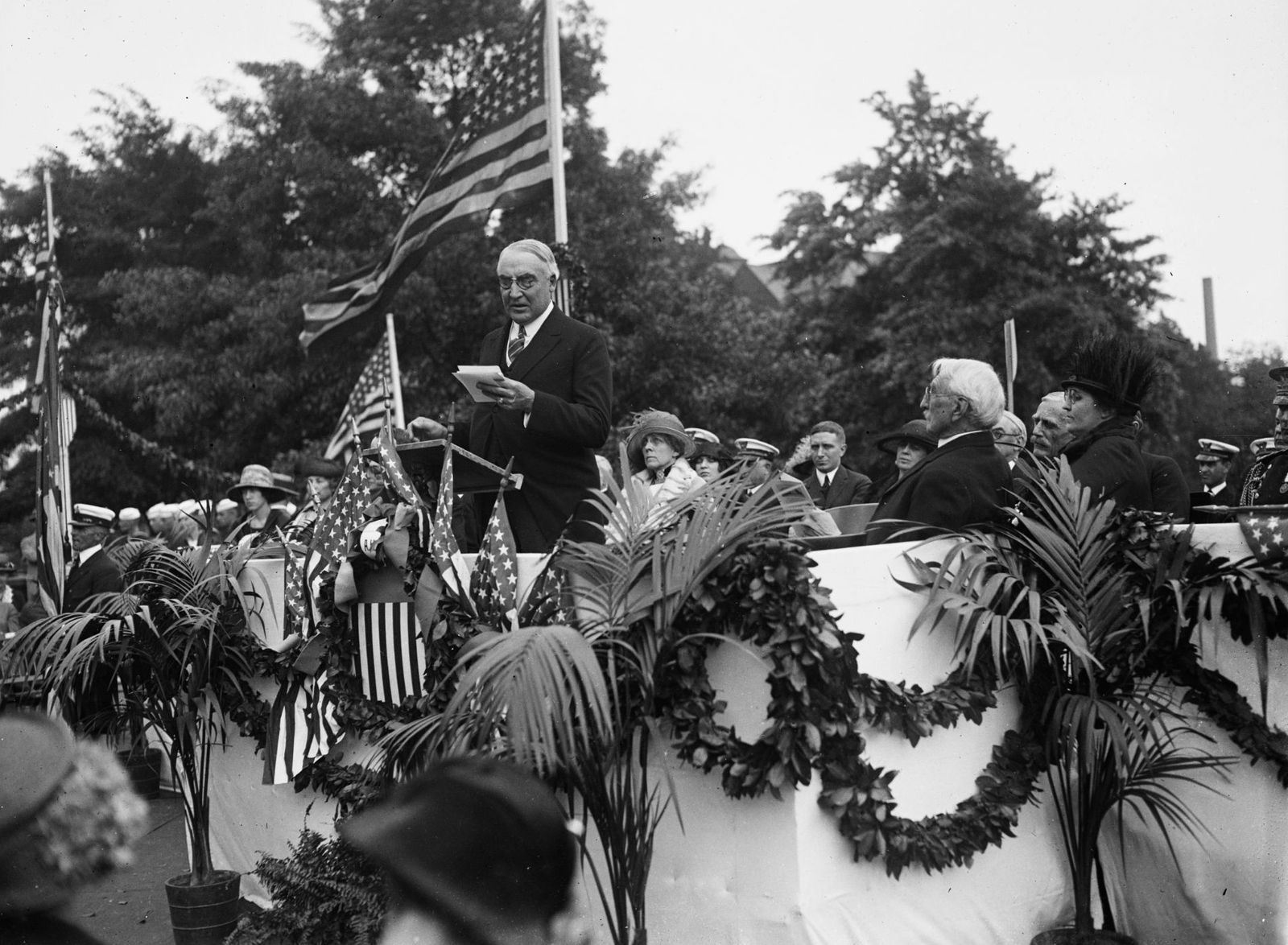
Bloviate — Warren G. Harding

Image: Harris & Ewing, photographer, Public domain, via Wikimedia Commons

Warren G. Harding was known for his overly ornate speeches, a prose style that journalist H.L. Mencken once described as "so bad that a sort of grandeur creeps into it."

Harding frequently relied on a discourse that can be described as "bloviate", a 19th-century Ohio slang term meaning to speak at length in a pompous manner. Although Harding didn’t invent the word, his frequent use of grandiose vocabulary popularized "bloviate" across national politics as shorthand for empty political speeches.

2

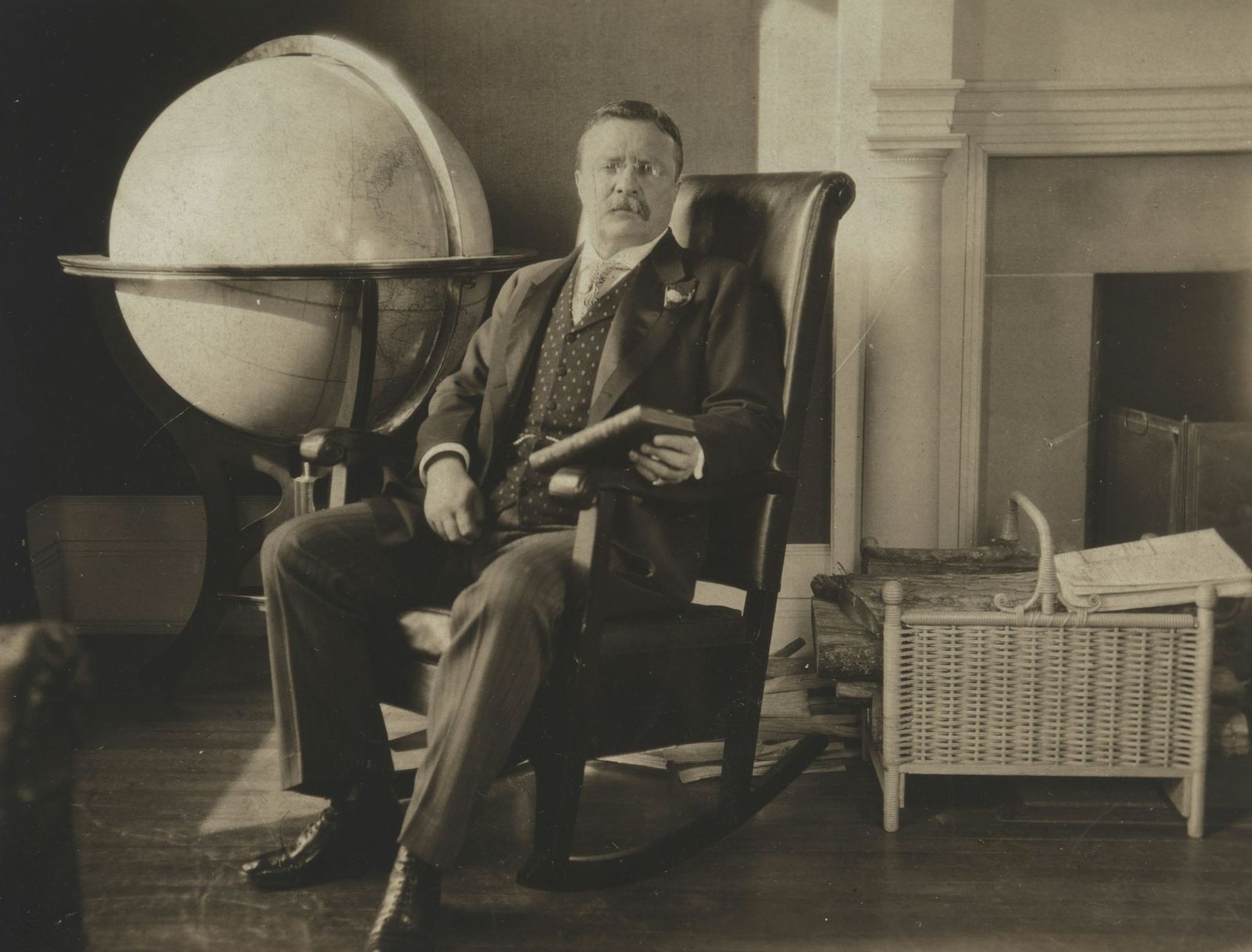
Lunatic fringe — Theodore Roosevelt

Image: Smithsonian

Theodore Roosevelt was a master of colorful speech, coining terms like "bully pulpit" and "muckraker". However, "lunatic fringe" is one of his most enduring linguistic contributions.

In a 1913 essay reviewing an avant-garde art exhibition, Roosevelt said: "There is a lunatic fringe to every reform movement." He used the phrase to describe fanatical adherents whose radical behavior threatened to undermine sensible social progress. Today, the idiom is widely used across politics, sports, and pop culture to designate extremist factions.

3

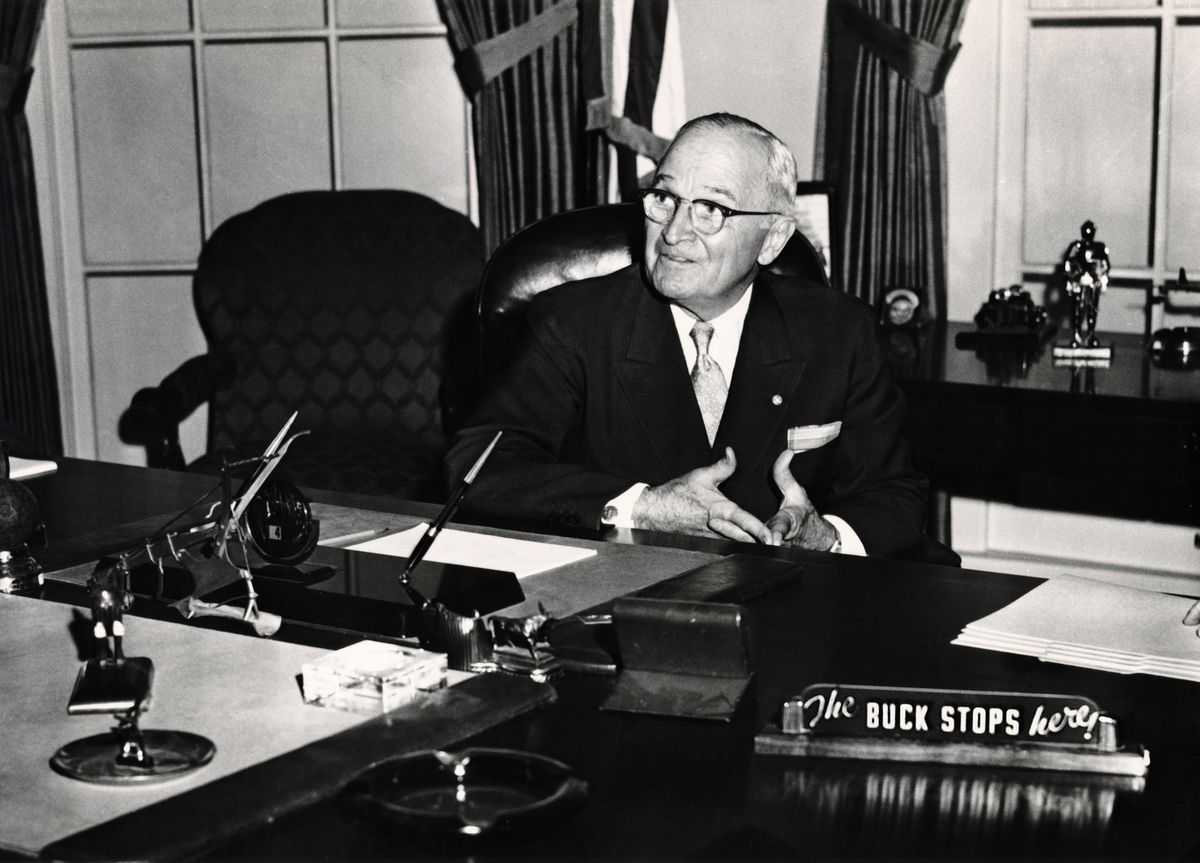
The Buck Stops Here — Harry S. Truman

Image: uncredited photographer, Public domain, via Wikimedia Commons

The phrase "passing the buck" originated in 19th-century poker games, where a buckskin-handled knife was passed around the table to mark whose turn it was to deal. However, President Harry S. Truman transformed the idiom completely.

Truman kept a painted wooden sign reading "The Buck Stops Here" on his Oval Office desk. For the 33rd president, the phrase served as a reminder that while cabinet members could perform delegated tasks, final accountability for nuclear weapons, postwar diplomacy, and executive policies rested entirely on his shoulders.

4

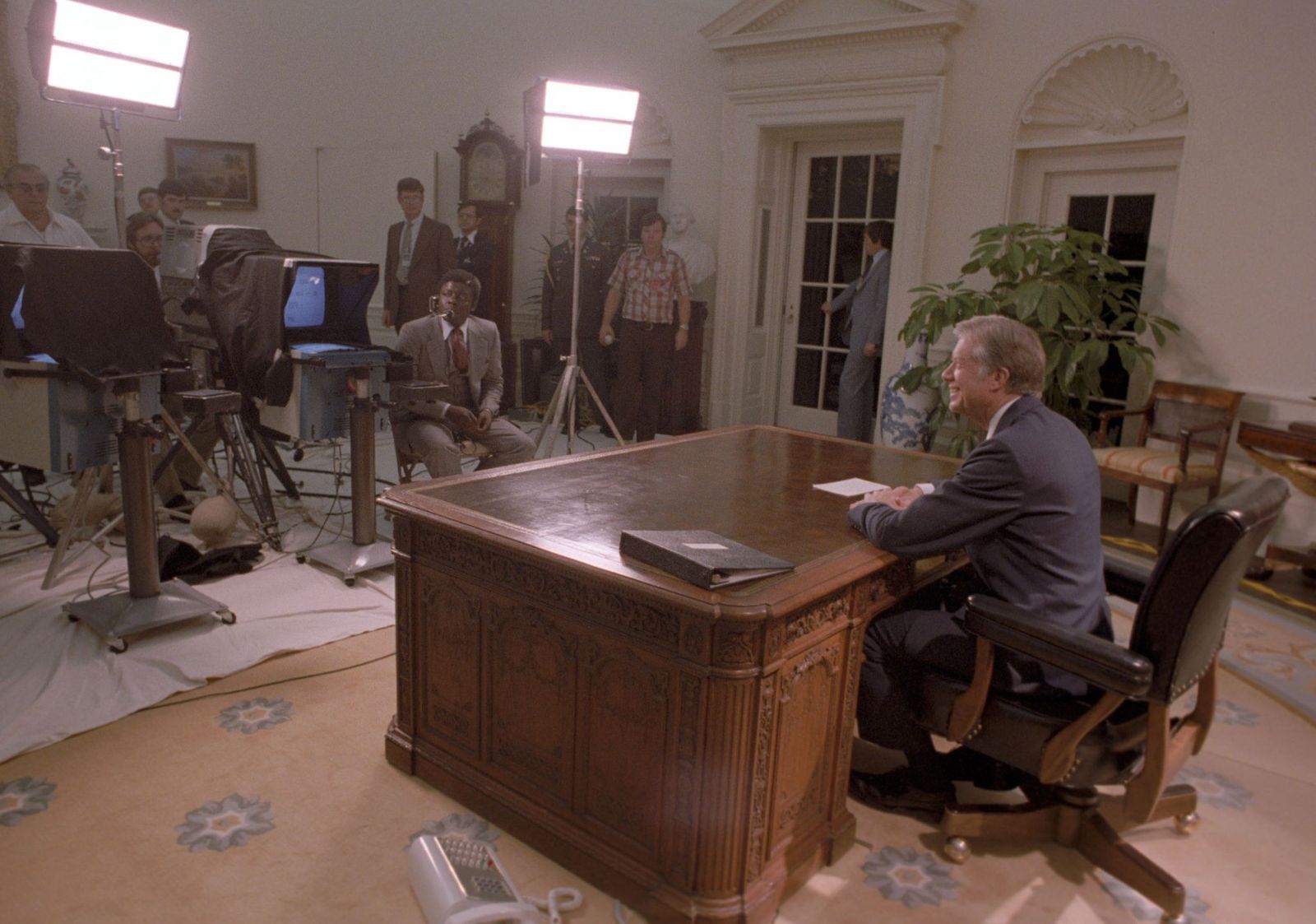
Malaise — Jimmy Carter

Ironically, President Jimmy Carter never actually said the word "malaise" during his famous July 15, 1979 televised address. In an era of high inflation, gas shortages, and geopolitical tension, Carter spoke about a "crisis of confidence" threatening American democracy.

Political opponents and journalists labeled it the "Malaise Speech", borrowing the French medical term for a vague feeling of illness. The label stuck, permanently linking the word "malaise" to Carter’s presidency and 1970s economy.

5

First Lady — Zachary Taylor

Image: Jennie Augusta Brownscombe, Public domain, via Wikimedia Commons

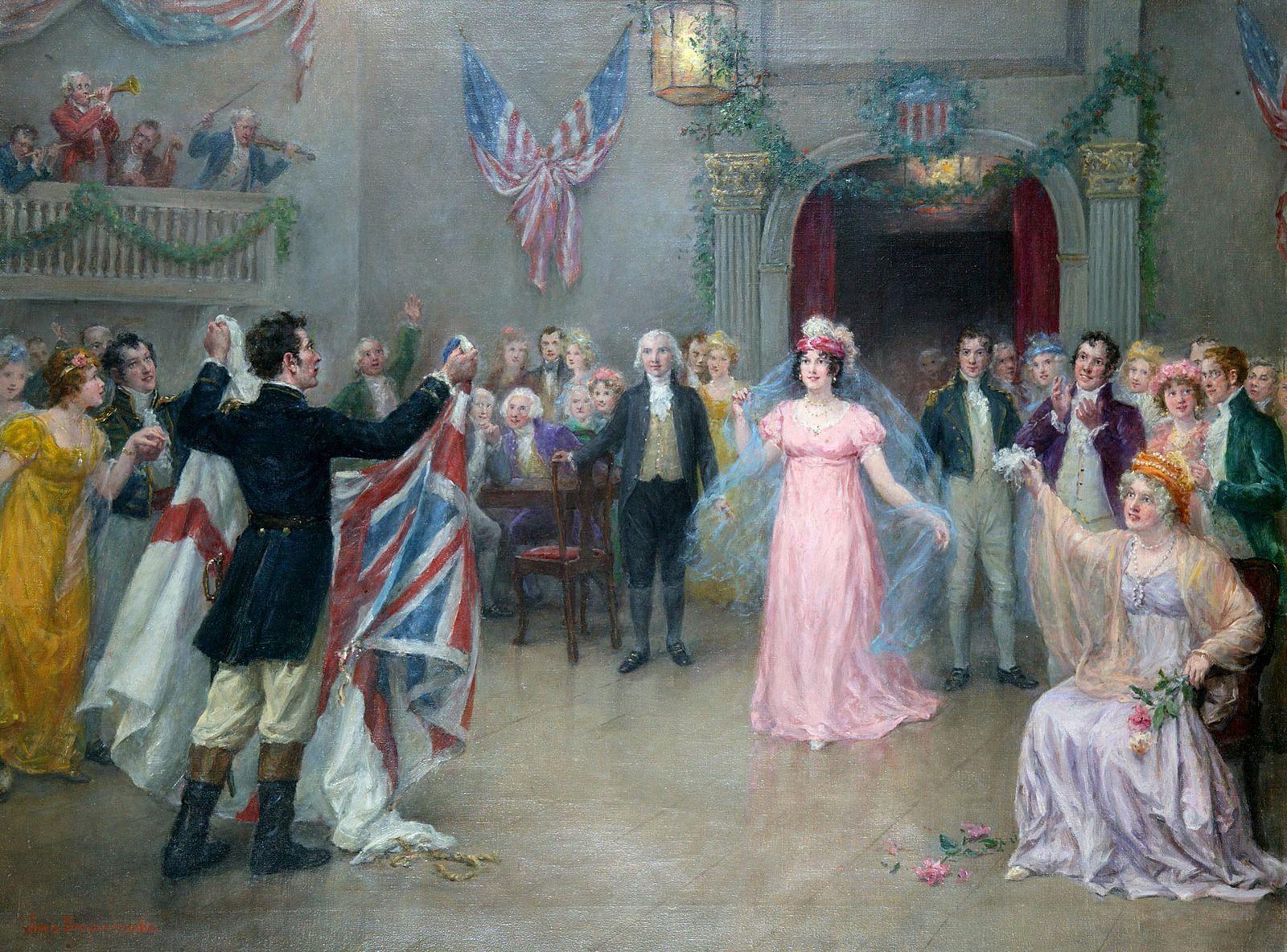
The formal title "First Lady" was first used in 1849 when President Zachary Taylor delivered a eulogy for Dolley Madison, the former president’s wife. Taylor praised Madison as having been "our First Lady for half a century".

The phrase became popular in 1860 when Frank Leslie's Illustrated Newspaper formally referred to Harriet Lane—President James Buchanan's White House hostess and niece—as "the First Lady of the Land".

6

Mulligan — Dwight D. Eisenhower

Image: M/Sgt Al Chang - United States Army Signal Corps, Public domain, via Wikimedia Commons

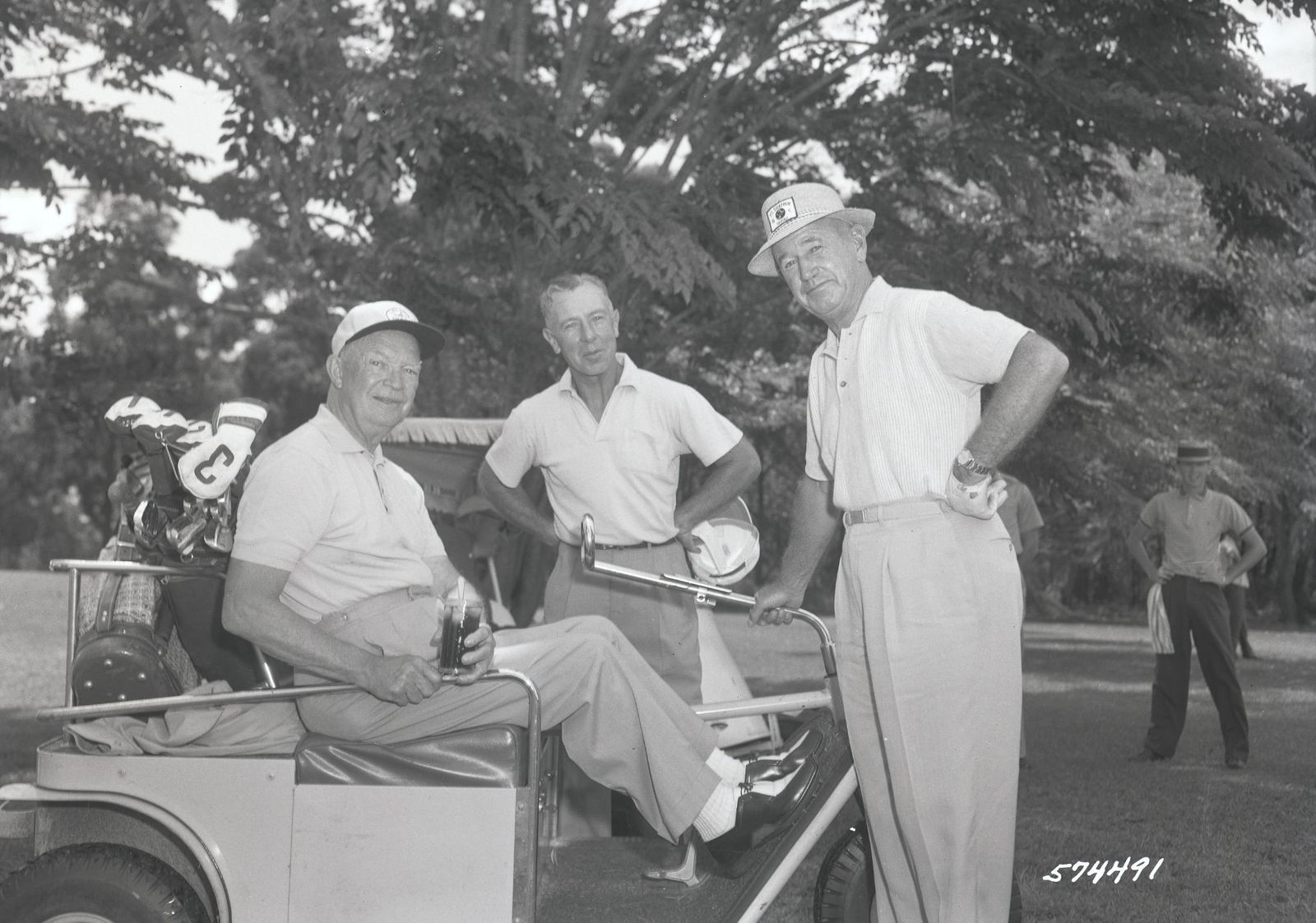
General Dwight D. Eisenhower was an avid golfer who played over 800 rounds during his two terms in office, even installing a putting green on the White House lawn. Ike’s passion for golf helped elevate golf terminology into mainstream political discourse, most notably the word "mulligan", an informal rule allowing a player a free replay after a poor shot. The term originated in Canadian golf circles during the 1920s, but Eisenhower’s public use of the word popularized it as a general metaphor for second chances in government and business.

7

Sugarcoat — Abraham Lincoln

Image: Popular Graphic Arts, Public domain, via Wikimedia Commons

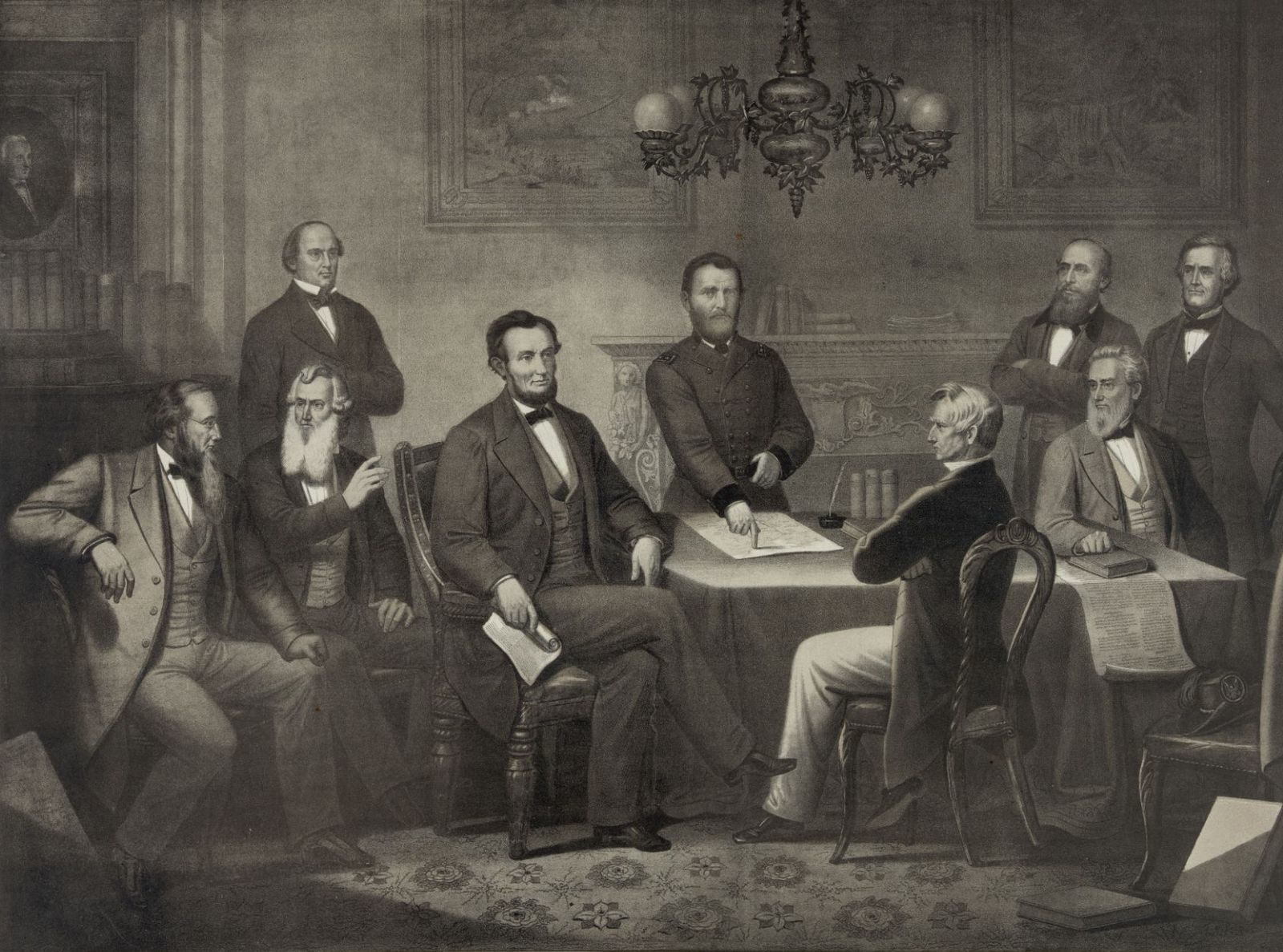
Abraham Lincoln often blended folk wisdom with constitutional philosophy. In his July 4, 1861 message to Congress following the outbreak of the Civil War, Lincoln criticized Southern arguments for secession, writing that rebellion leaders had "sugar-coated" their true intent to dissolve the Union.

The Government Printer, John Defrees, asked Lincoln if he wanted to edit the phrase, calling it unseemly for an official state paper. Lincoln refused, noting that if the public understood what "sugar-coated" meant, it belonged in the message. The phrase passed into common English to describe disguising unpleasant truths.

8

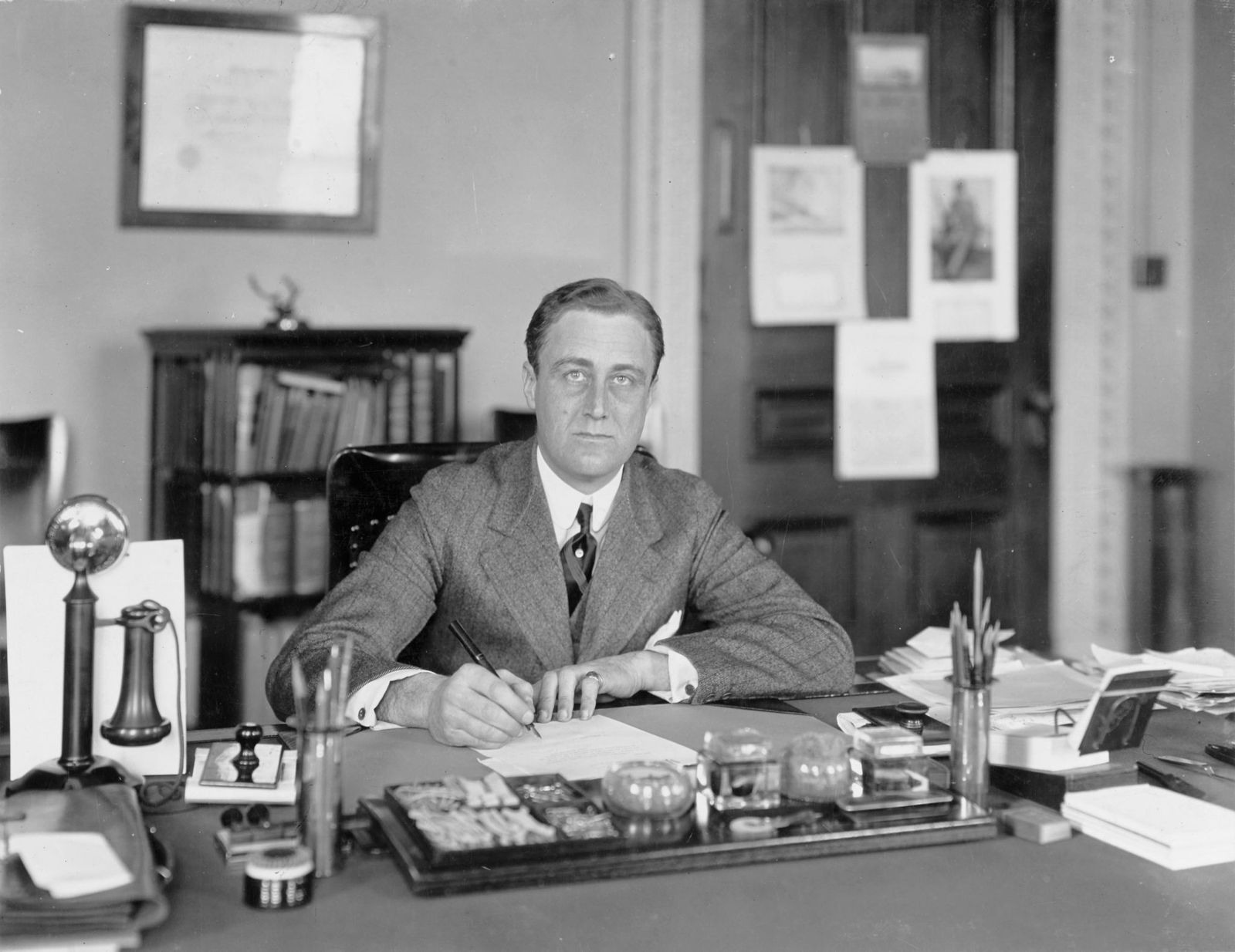
Iffy — Franklin D. Roosevelt

Image: National Archives and Records Administration, Public domain, via Wikimedia Commons

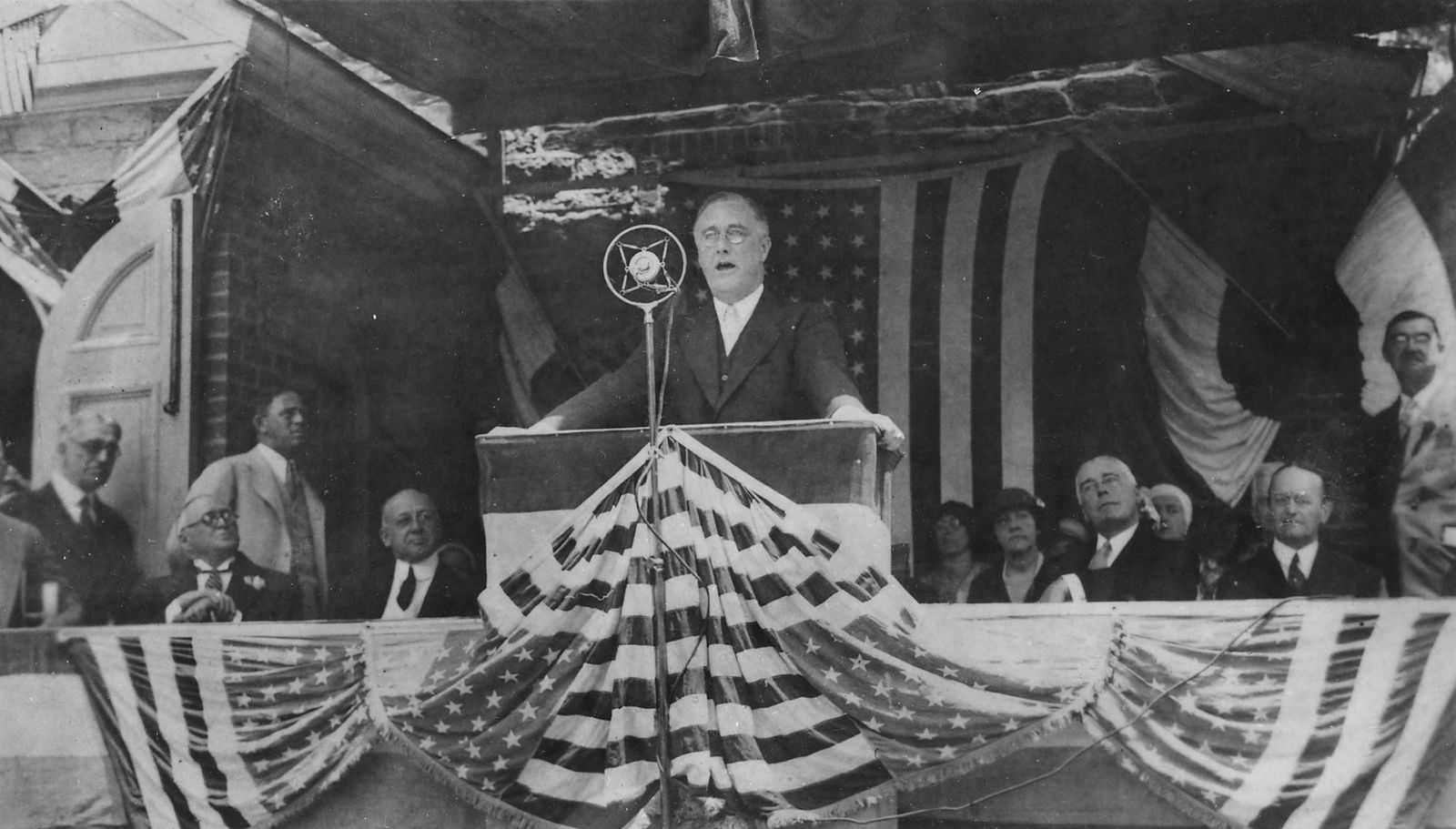
President Franklin D. Roosevelt transformed presidential communication by holding over 800 informal press conferences along with his famous radio "fireside chats".

When reporters attempted to confront him with hypothetical scenarios or speculative policy questions, FDR frequently dismissed them by calling them "iffy questions". Roosevelt popularized "iffy", a 1930s colloquialism derived from the conjunction "if", as a sharp way to describe anything uncertain or questionable due to unproven factors.

9

Usufruct — Thomas Jefferson

Image: Alicia Razuri

Thomas Jefferson brought a vocabulary rooted in classical legal training to early American governance. In a famous September 1789 letter from Paris to James Madison, Jefferson argued against binding future generations with national debt, declaring that "the earth belongs in usufruct to the living".

Borrowed from Roman civil law (usufructus), the term refers to the legal right to use and enjoy another party’s property temporarily without damaging or depleting it. Jefferson used the word to argue that each generation has a responsibility to care for the planet and protect it for the future.

10

Rendezvous — Franklin D. Roosevelt

Image: Naval History & Heritage Command, Public domain, via Wikimedia Commons

The French word rendezvous, meaning "present yourself", entered the English language in the mid-1500s from military vocabulary. Yet, Franklin D. Roosevelt gave the term a prominent place in American democratic speech.

Accepting the presidential nomination at the 1936 Democratic National Convention during the Great Depression, Roosevelt proclaimed: "This generation of Americans has a rendezvous with destiny." The line transformed a simple French loanword into a cry for national resilience that continues to be quoted by political speechwriters today.


Literary beef

Friends and foes in literature: 10 literary allusions


Published on October 23, 2026


Image: Kelly Sikkema

We sometimes fail to remember that literary geniuses are still human and driven by the same impulses that move ordinary people. No matter their style or ideologies, sometimes their motivations are simple: affection for their friends and disdain for their enemies. More than a few literary masterpieces have been influenced in some way by these passions, even if the final result was a work of art. Here are ten rivalries and friendships that left their mark on literature!

1

Lord Byron

Image: Pierre Bamin

The Romantics were known for being dramatic and capricious, and Lord Byron was not an exception. Between his many feuds, he had a particular rivalry with John Keats. Keats despised Byron because of his charisma, nobility, and general snobbery, and Byron despised Keats because he was a struggling, middle-class poet.

After Keats’ death due to tuberculosis, other writers claimed that negative literary critiques had taken a toll on his already fragile health. Byron publicly lamented Keats’ passing, but he later mentioned him in his Don Juan as someone "who was kill'd off by one critique".

2

T. S. Eliot

Image: Annie Spratt

A key figure of the Modernist movement, T. S. Eliot is known for both his literary works and his critical essays. His poem The Waste Land is considered one of the most important literary works of the 20th century, and has served as inspiration for countless authors.

What many people don’t know is that The Waste Land would have looked very different if not for the influence of another writer, Ezra Pound. A mentor and friend to Eliot, Pound was given ample liberty to edit the first draft, so much so that Eliot considered him to be ‘the mother’ of the poem. The Waste Land is dedicated to Pound, whom Eliot calls il miglior fabbro or ‘the best craftsman.’

3

Shakespeare

Image: stefano stacchini

We might think of Shakespeare as one of the greatest literary minds in history, but the Bard had his fair share of detractors in his time. One of the best-known cases is his feud with the writer Robert Greene, who called him "an upstart crow, beautified in our feathers," accusing him of plagiarism and of being bombastic in his writing.

Shakespeare’s answer was twofold: He first wrote Titus Andronicus, one of the goriest, most over-the-top plays of the time. Then, he wrote A Midsummer Night’s Dream, which is plagued with references to several well-known classical authors.

4

Jane Austen

Image: Alexander Grey

All of Jane Austen's novels are filled with pointed social commentary and critiques, but Northanger Abbey stands out for also being a satire of a popular genre of that time: the Gothic novel.

But Austen was not happy with making a parody of the genre. She called out by name several Gothic novels and authors, making it clear that these works were harmful for the readers, especially young, impressionable girls without world experience.

5

Miguel de Cervantes

Image: Mick Haupt

The first part of The Quixote was an instant success upon publication. After a few years without a second part, an opportunist published a sequel under the pseudonym ‘Avellaneda’, something Cervantes was not happy about.

Cervantes then penned a continuation in record time, making clear to the readers that Avellaneda’s work was not part of the original story. How did he accomplish this? By having Don Quixote himself talk about Avellaneda’s work and how it was a poor representation of his character. To ensure it wouldn’t happen again, the story ended with the death of Don Quixote.

6

E.E. Cummings

Image: jaikishan patel

Another key figure in Modernist poetry, E.E. Cummings wrote over two thousand poems in his lifetime, on top of several theater plays. Although he had published several books, in the 1930s, one of his poem collections kept being rejected by editors.

After 14 rejections, Cummings decided to self-publish the book with his mother’s help. The chosen title, No Thanks, was his ironic response to the editors, to whom he dedicated the book. All fourteen editors appear in the dedication, their names forming the shape of a funeral urn.

7

Luis de Góngora and Francisco de Quevedo

Image: Towfiqu barbhuiya

The Spanish literary scene of the 17th century was filled with geniuses, who for the most part couldn’t stand each other. Luis de Góngora and Francisco de Quevedo were two of the most important poets of the time, and they were sworn enemies due to their adherence to opposite poetry styles.

Their literary and personal differences often resulted in satirical poems filled with insults, mocking each other’s writing styles, and resorting to direct attacks about physical characteristics, such as Gongora’s big nose or Quevedo’s limp.

8

Harper Lee

Image: Joshua J. Cotten

To Kill a Mockingbird has often been called one of the Great American novels, garnering critical acclaim and several prizes. Its author, Harper Lee, was from the Southern U.S., and her personal experiences appear throughout the novel.

Not everyone knows about her childhood friendship with Truman Capote, one that they maintained well into adulthood, with Lee even including Capote in her novel. Although she never confirmed it, it is widely believed that Capote was the inspiration for Dill Harris.

9

William Wordsworth and Samuel Taylor Coleridge

Image: Yoksel 🌿 Zok

The first Romantic poets, Wordsworth and Coleridge, were the start of a literary movement that wouldn’t have been possible without friendship. Meeting by chance, they created a bond so strong that Coleridge moved to be close to Wordsworth and his family.

Out of their friendship and common literary ideals, they decided to write together the Lyrical Ballads, a book that is considered the starting point of Romanticism. Sadly, their views started diverging later in life, which created a rift between them.

10

Henry Fielding

Image: Ed Robertson

The 18th century was a great time for the English novel, and it saw the emergence of many authors who are now considered essential to the genre. But like with any era where great minds abound, these geniuses were not necessarily cordial with each other. Henry Fielding, prone to satirical, realistic writing, was not fond of Samuel Richardson, who wrote more sentimental, moralistic novels.

After the publication of Richardson’s Pamela, or Virtue Rewarded, Fielding decided to write his own version of the story, titled Shamela (the full title was An Apology for the Life of Mrs. Shamela Andrews). In it, he told the "true" story of Pamela, parodying Richardson and the morals he preached.

Looking for an extra scoop of literary fun?

Learn more with our Word of the day

wonderment

/ˈwəndərmənt/