Names that lie

Why 'Ladybugs' aren't ladies and 9 other misleading animal names!


Published on February 7, 2025


Image: Jo Taylor

Some animals have commonly been given names that might lead you to believe false things about them. For example, as we all know, guinea pigs are not pigs, sea horses are not horses, and starfish are neither stars nor fish. So, how did these names come to be? While lookalike allegations may justify some, others are simply far-fetched. Is there any truth or reason behind these inaccurate nicknames—like "firefly"? Let’s explore 10 animal names that are, arguably, misnomers.

1

Mountain Chicken

Image: Yaroslav Savateikin

Let’s start with one of the most far-fetched names on this list. Mountain chickens aren’t birds at all—they’re large frogs. And they don’t live in mountains, either. These frogs are found mostly in the Caribbean, inhabiting lowland rainforests and swamps. A more accurate and realistic name for them is "giant ditch frogs," which refers to their large size and their tendency to dwell near water bodies.

So, how did they get this name? The story goes that locals found the frog’s meat similar in taste and texture to chicken. Yes, this now critically endangered species was once considered a delicacy in local cuisines.

2

Red panda

Image: Flickr

You would think that the red panda is just a smaller, red version of the giant panda. After all, they share cute faces, patches around their eyes, and similar snouts and ears. But you’d be wrong—red pandas are not bears.

Here’s the explanation: The word "panda" is believed to derive from the Nepali word ponya, which refers to animals with claws adapted for eating bamboo. This is the biggest trait red and giant pandas have in common: their heavily bamboo-based diets. Red pandas, sometimes nicknamed "firefoxes," belong to a mammal family of their own and are more closely related to skunks than to giant pandas.

3

Titmouse

Image: Matthew Goeckner

Titmouses aren’t rodents—did you know? Instead, they are songbirds known for their gray or bluish-gray feathers. One of the most common species is the tufted titmouse, and you’ll be pleased to know that the plural form is, indeed, "titmice."

The name "titmouse" comes from Old English, where tit referred to a small creature, and mase was a general term for a bird. Over time, mase became obsolete, and "titmase" was transformed into "titmouse" due to the similarity between the words. Arguably, there’s also some physical resemblance between the gray color and beady, round eyes of both titmice and mice.

4

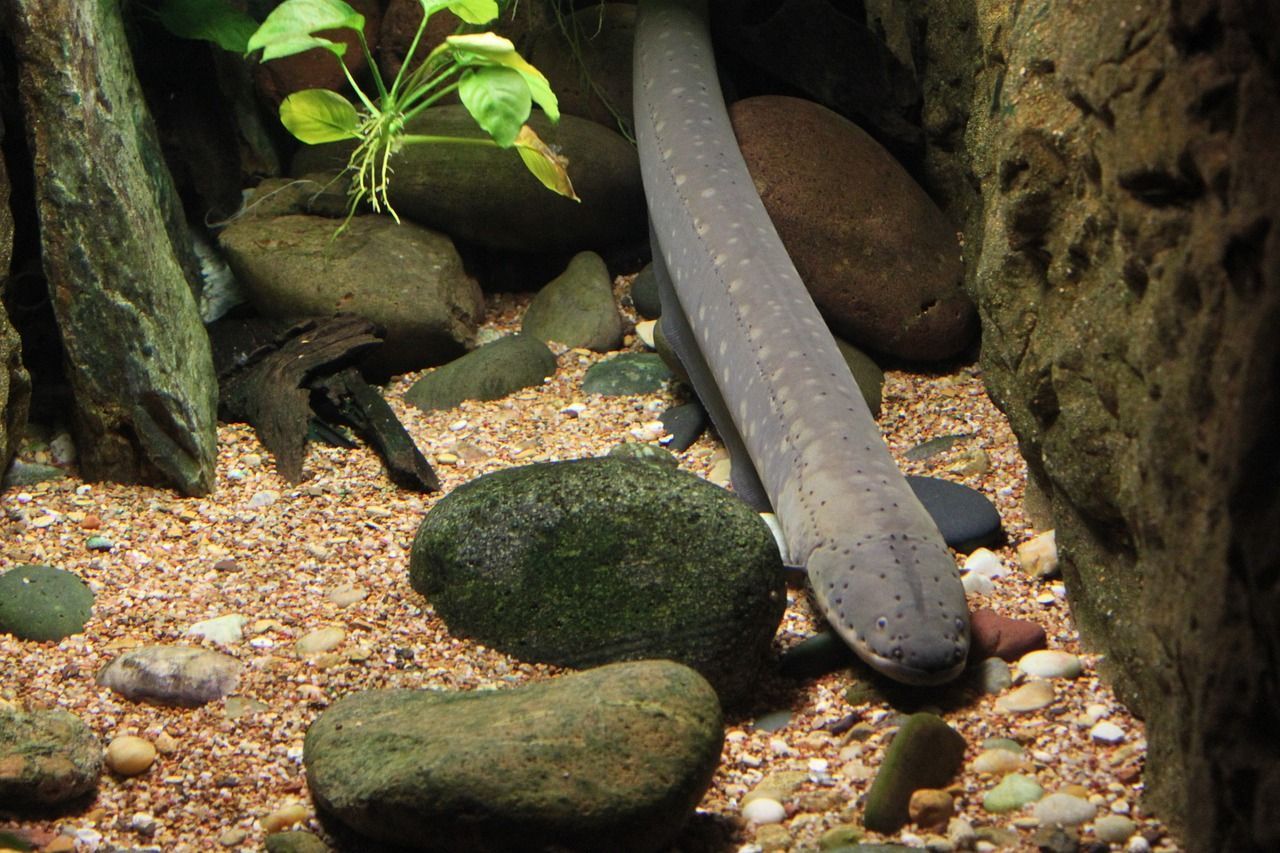
Electric eel

Image: k10legs

Yes, the name "electric eel" is misleading—but not for the reasons you might think. These aquatic animals are indeed capable of generating shocks of electricity, up to ​​860 volts, which they use to stun their prey or defend themselves. However, strictly speaking, they are not eels.

Unlike true eels, which belong to the family Anguillidae, electric eels are part of the knifefish family and are more closely related to catfish. Early European explorers misnamed them based on their elongated, eel-like bodies.

5

Seahorse

Image: Sergiu Iacob

Seahorses are fish, just like salmon or clownfish. Arguably, they look nothing like those species. Instead, for centuries, humans have noticed their resemblance to horses. Seahorses have a distinctive upright swimming posture, elongated heads and necks, and a caudal fin that even resembles a horse’s mane.

Their scientific name, Hippocampus, is borrowed from the Ancient Greek word hippókampos. Interestingly, the term didn’t originally refer to this animal but to a mythological marine creature. In Greek, hippos means "horse," and kampos means "sea monster."

6

Guinea pig

Image: Jack Catalano

Guinea pigs aren’t pigs—nor are they from Guinea, the West African country. Instead, they are rodents native to South America. By now their name has become synonymous with "experiment subject" because of how frequently they were used in scientific research.

There are a couple of theories behind their misleading name. The "pig" part likely comes from the squealing noises they make, which resemble those of piglets. As for "guinea," it might derive from the British coin of the same name, implying they were sold for its equivalent value. Another theory is that European sailors, associating distant Guinea with anything exotic, mistakenly applied the name to these South American rodents.

7

Koala bear

Image: Valeriia Miller

The koala is often called a "koala bear," but it’s not a bear at all. European settlers in Australia gave it this name because its round face and fluffy ears reminded them of bear cubs.

Koalas are, in fact, marsupials. Like kangaroos, they carry their young in pouches. The word koala comes from the Dharug language (an Aboriginal language of Australia) and is believed to mean "no water," referring to the koala's ability to survive on eucalyptus leaves with minimal water intake. Did you know? Eucalyptus leaves are low in nutrients and mildly toxic. As a result, koalas have a slow metabolism and sleep up to 20 hours a day.

8

Firefly

Image: Tony Phan

Fireflies don’t handle fire. They do, however, possess the ability to produce light, a phenomenon called bioluminescence. This light creates the illusion of tiny flames flying through the night. No wonder they have been associated with magic and fascination for centuries.

Despite their name, fireflies aren’t flies—they’re beetles. They produce light through a chemical reaction in their abdomens, which they use to attract mates or communicate. In fact, ​​different firefly species flash in distinct rhythms to help them identify each other.

9

Prairie Dogs

Image: Werner Hilversum

The first time you hear the term "prairie dogs," you might picture packs of dogs roaming freely across the prairies. In reality, these animals are rodents and belong to the ground squirrel family.

The name is believed to have been given by early European settlers due to their high-pitched sounds. Prairie dogs are capable of producing sophisticated and varied calls to communicate with one another, sometimes sounding like man’s best friend. The "prairie" part of their name comes from their habitat—vast grasslands and prairies across North America. These rodents are expert burrowers and typically live in small family groups called "coteries," where members groom and protect each other.

10

Ladybug

Image: Pixabay

It’s not only that ladybugs aren’t all female—they aren’t truly bugs, either. Instead, they are a type of beetle. These round and colorful insects have been widely associated with good luck and fortune for centuries. The reason for this has to do with the story behind their nickname.

The name "ladybug" originated in the Middle Ages, when farmers prayed to the Virgin Mary for help with pests in their crops. The beetles, which helped control aphid populations, were called "Our Lady's birds" or "Our Lady's beetles," later shortened to "ladybirds" or "ladybeetles." Over time, much to the frustration of entomologists, this evolved into the popular term "ladybugs."


COZINESS COMES IN MANY FLAVORS

12 words to express in detail the pleasure of feeling good


Published on February 7, 2025


Image: Gordon Plant

It should come as no surprise that in a world that often moves at a relentless pace, the Danish concept of hygge has garnered international attention for encapsulating the essence of coziness and well-being.

As a term with no direct English equivalent, hygge goes beyond mere physical comfort, encompassing a sense of connection, simplicity, and joy. However, the linguistic treasure of our world offers many more words from various languages that share similarities with hygge, each capturing the beauty of finding solace in life's simple pleasures.

1

Hygge

Image: Gaelle Marcel

Let us begin with the word that started this revolution. Originating from Danish culture, hygge encapsulates an entire philosophy of comfort and well-being. The concept revolves around creating a cozy atmosphere, fostering a sense of warmth and contentment through simple pleasures and genuine connections.

Whether it's the warmth of a shared meal or the embrace of loved ones, hygge is an intentional celebration of life's comforting moments. Beyond its mere definition, hygge has become a global phenomenon, influencing lifestyle trends and prompting individuals to adopt its principles, seeking balance and joy in the middle of life's noise.

2

Mеrак

Image: Amin Hasani

While hygge might be a Danish word, its concept is a worldwide quest. The Serbian word merak refers to a feeling of bliss and the sense of being one with the universe that comes from the simplest of pleasures. It represents the pursuit of small pleasures that add up to a sense of happiness and fulfillment, a call to stop and smell the roses.

Spending time with a loved one, sitting on your balcony and watching the day go by, or any other activity that puts you in the moment.

3

Waldeinsamkeit

Image: Lukasz Szmigiel

The German term waldeinsamkeit describes the peace experienced in the solitude of the woods. A union of wald (forest) and einsamkeit (solitude), this word combines the deep connection between individuals and nature.

It is a term that goes beyond mere solitude and embraces a profound sense of oneness with the woods, allowing for introspection and rejuvenation. Even more, waldeinsamkeit stands as a testament to the German affinity for this type of environment and the spiritual solace derived from the forest.

4

Fjaka

Image: Christopher Jolly

The Croatian term fjaka describes a particular state of mind and being. Originating from the Italian word fiacca, which means "doing nothing", fjaka takes on a unique sense, describing a state of deep relaxation.

It's more than just laziness: It's a surrender to the flow of time, characterized by a sense of peace. Fjaka encourages individuals to take the time to enjoy life and it is an apt description of the Mediterranean philosophy of embracing leisure and finding joy.

5

Tsavt tanem

Image: Tom The Photographer

The Armenian term tsavt tanem has more than one meaning depending on the context of the conversation but, in its most literal sense, it means "let me take your pain". It can be said as a way of transmitting sympathy for someone’s difficult situation and is intended to convey tenderness and empathy.

The concept of hygge is represented here in a more spiritual way, in the form of a person giving comfort to another.

6

Gezelligheid

Image: Samantha Gades

Near the place where hygge was invented, the Dutch have a cozy word of their own: gezelligheid. A similar term to hygge, it means being somewhere with nice people, visiting or doing something with others that makes you feel at ease.

You can often hear Dutch people say that their favorite bar is very gezellig. And like hygge, it can be used at any time of the year but is more closely related to fall and winter.

7

Gemütlichkeit

Image: Alisa Anton

The German language also has a cozy word quite similar to the previous one: gemütlichkeit. This one translates simply as "coziness," but it means much more. It’s a warm feeling of comfort in a friendly atmosphere.

A similar meaning in American English could be found in "homey", in the sense that it refers to everything that reminds us of home.

8

Ikigai

Image: Stan B

This Japanese term goes a little deeper than hygge. It translates into "a reason for life," and refers to the broader actions that bring us happiness. For example, does your job fill you with passion and purpose? That is Ikigai. Do your friends fill your life with joy? That is Ikigai as well.

This concept has great importance to the Japanese and it has more to do with a process than with an end in itself. It is considered to be the thing that gets you out of bed each morning.

9

Fredagskos

Image: Haley Powers

One of the closest linguistic cousins to hygge, not only geographically but conceptually, the Norse word fredagskos translates as "Friday coziness", referring very specifically to that Friday feeling we all know and cherish.

Conceptually, fredagskos is about pure indulgence. Take winter as the perfect excuse to trade a night out for a Friday night in: treat yourself to your favorite comfort food on the sofa or curl up and watch TV with a hot chocolate.

10

Nestle

Image: Kelly Sikkema

Nestle is a verb that transmits a similar vibe to the concept of hygge. We can nestle against someone for comfort, we can nestle a baby in our arms, or we can also nestle in our bed.

The verb itself comes from the Old English nestlian, which means "to build a nest". That idea eventually evolved into the current meaning of "lying close to somebody or something" in search of warmth and comfort.

11

Nuzzle

Image: Fatty corgi

In a similar but not identical realm to nestle, the word nuzzle may be something a pet does more than an individual, but it still does the trick. It means "to affectionately rub your nose and face against someone," and it does transmit a warm and fuzzy feeling.

Nuzzling is a natural physical expression of love and even watching videos of pets and animals nuzzling conveys a warm feeling that can be very easily associated with coziness.

12

Canoodle

Image: Chayene Rafaela

Canoodling is the pleasure we get from enjoying each other’s company. It can be a canoodle with a good friend: whispering, giggling, and just being together. Or, you can also be canoodling with your partner, watching a movie on a cold evening.

The warmth of being close to someone you care deeply about transmits a feeling that can also be compared to the cozy comfort that is conveyed in the very concept of hygge.

Looking for an extra scoop of literary fun?

Learn more with our Word of the day

contented

/kənˈtɛn(t)əd/