Names that lie

Ladybugs, titmice & beyond: 10 animal species with misleading names


Published on February 7, 2025


Image: Jo Taylor

Some animals have commonly been given names that might lead you to believe false things about them. For example, as we all know, guinea pigs are not pigs, sea horses are not horses, and starfish are neither stars nor fish. So, how did these names come to be? While lookalike allegations may justify some, others are simply far-fetched. Is there any truth or reason behind these inaccurate nicknames—like "firefly"? Let’s explore 10 animal names that are, arguably, misnomers.

1

Mountain Chicken

Image: Yaroslav Savateikin

Let’s start with one of the most far-fetched names on this list. Mountain chickens aren’t birds at all—they’re large frogs. And they don’t live in mountains, either. These frogs are found mostly in the Caribbean, inhabiting lowland rainforests and swamps. A more accurate and realistic name for them is "giant ditch frogs," which refers to their large size and their tendency to dwell near water bodies.

So, how did they get this name? The story goes that locals found the frog’s meat similar in taste and texture to chicken. Yes, this now critically endangered species was once considered a delicacy in local cuisines.

2

Red panda

Image: Flickr

You would think that the red panda is just a smaller, red version of the giant panda. After all, they share cute faces, patches around their eyes, and similar snouts and ears. But you’d be wrong—red pandas are not bears.

Here’s the explanation: The word "panda" is believed to derive from the Nepali word ponya, which refers to animals with claws adapted for eating bamboo. This is the biggest trait red and giant pandas have in common: their heavily bamboo-based diets. Red pandas, sometimes nicknamed "firefoxes," belong to a mammal family of their own and are more closely related to skunks than to giant pandas.

3

Titmouse

Image: Matthew Goeckner

Titmouses aren’t rodents—did you know? Instead, they are songbirds known for their gray or bluish-gray feathers. One of the most common species is the tufted titmouse, and you’ll be pleased to know that the plural form is, indeed, "titmice."

The name "titmouse" comes from Old English, where tit referred to a small creature, and mase was a general term for a bird. Over time, mase became obsolete, and "titmase" was transformed into "titmouse" due to the similarity between the words. Arguably, there’s also some physical resemblance between the gray color and beady, round eyes of both titmice and mice.

4

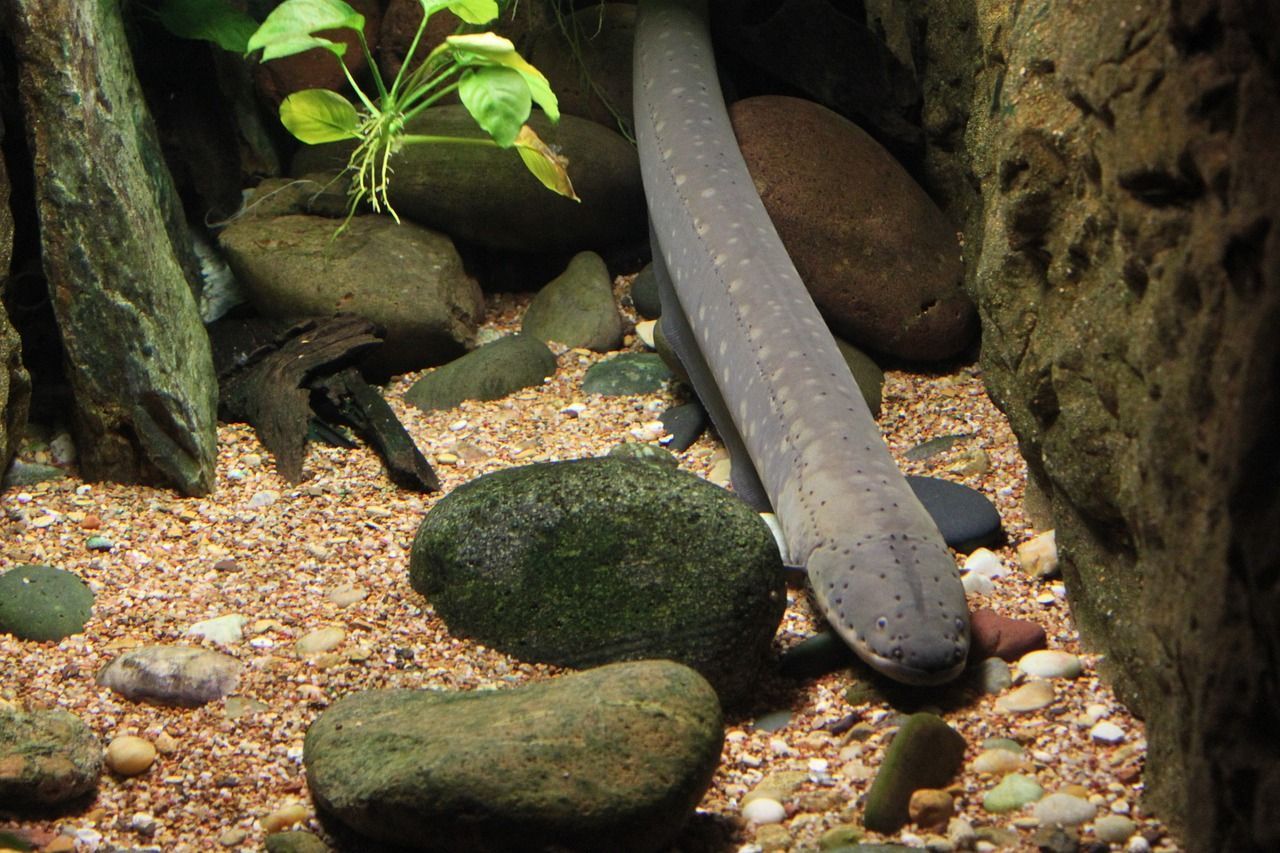
Electric eel

Image: k10legs

Yes, the name "electric eel" is misleading—but not for the reasons you might think. These aquatic animals are indeed capable of generating shocks of electricity, up to ​​860 volts, which they use to stun their prey or defend themselves. However, strictly speaking, they are not eels.

Unlike true eels, which belong to the family Anguillidae, electric eels are part of the knifefish family and are more closely related to catfish. Early European explorers misnamed them based on their elongated, eel-like bodies.

5

Seahorse

Image: Sergiu Iacob

Seahorses are fish, just like salmon or clownfish. Arguably, they look nothing like those species. Instead, for centuries, humans have noticed their resemblance to horses. Seahorses have a distinctive upright swimming posture, elongated heads and necks, and a caudal fin that even resembles a horse’s mane.

Their scientific name, Hippocampus, is borrowed from the Ancient Greek word hippókampos. Interestingly, the term didn’t originally refer to this animal but to a mythological marine creature. In Greek, hippos means "horse," and kampos means "sea monster."

6

Guinea pig

Image: Jack Catalano

Guinea pigs aren’t pigs—nor are they from Guinea, the West African country. Instead, they are rodents native to South America. By now their name has become synonymous with "experiment subject" because of how frequently they were used in scientific research.

There are a couple of theories behind their misleading name. The "pig" part likely comes from the squealing noises they make, which resemble those of piglets. As for "guinea," it might derive from the British coin of the same name, implying they were sold for its equivalent value. Another theory is that European sailors, associating distant Guinea with anything exotic, mistakenly applied the name to these South American rodents.

7

Koala bear

Image: Valeriia Miller

The koala is often called a "koala bear," but it’s not a bear at all. European settlers in Australia gave it this name because its round face and fluffy ears reminded them of bear cubs.

Koalas are, in fact, marsupials. Like kangaroos, they carry their young in pouches. The word koala comes from the Dharug language (an Aboriginal language of Australia) and is believed to mean "no water," referring to the koala's ability to survive on eucalyptus leaves with minimal water intake. Did you know? Eucalyptus leaves are low in nutrients and mildly toxic. As a result, koalas have a slow metabolism and sleep up to 20 hours a day.

8

Firefly

Image: Tony Phan

Fireflies don’t handle fire. They do, however, possess the ability to produce light, a phenomenon called bioluminescence. This light creates the illusion of tiny flames flying through the night. No wonder they have been associated with magic and fascination for centuries.

Despite their name, fireflies aren’t flies—they’re beetles. They produce light through a chemical reaction in their abdomens, which they use to attract mates or communicate. In fact, ​​different firefly species flash in distinct rhythms to help them identify each other.

9

Prairie Dogs

Image: Werner Hilversum

The first time you hear the term "prairie dogs," you might picture packs of dogs roaming freely across the prairies. In reality, these animals are rodents and belong to the ground squirrel family.

The name is believed to have been given by early European settlers due to their high-pitched sounds. Prairie dogs are capable of producing sophisticated and varied calls to communicate with one another, sometimes sounding like man’s best friend. The "prairie" part of their name comes from their habitat—vast grasslands and prairies across North America. These rodents are expert burrowers and typically live in small family groups called "coteries," where members groom and protect each other.

10

Ladybug

Image: Pixabay

It’s not only that ladybugs aren’t all female—they aren’t truly bugs, either. Instead, they are a type of beetle. These round and colorful insects have been widely associated with good luck and fortune for centuries. The reason for this has to do with the story behind their nickname.

The name "ladybug" originated in the Middle Ages, when farmers prayed to the Virgin Mary for help with pests in their crops. The beetles, which helped control aphid populations, were called "Our Lady's birds" or "Our Lady's beetles," later shortened to "ladybirds" or "ladybeetles." Over time, much to the frustration of entomologists, this evolved into the popular term "ladybugs."


WORDS THAT CAN BE MEASURED IN TEMPERATURE

Seasonal Words: 12 Terms that have Winter All Over


Published on February 7, 2025


Image: Aaron Burden

Most words can be used at any time of the year that we think is suitable. There is nothing wrong with discussing summer activities during winter time or vice-versa. But, as it is, some words tend to naturally appear more often in certain moments because of their very nature. Think of the term "chocolate egg" and when is that concept most often heard: Easter, of course, will come to mind.

Seasonal words are those expressions that come up more often during a certain time of the year. Read on and find twelve words that might make an appearance here and there, but take center stage during the coldest months of the year.

1

Blizzard

Image: Zac Durant

Let us start with a chilly one. The word "blizzard," originating from the mid-19th century, describes a formidable snowstorm characterized by intense winds and low visibility due to blowing snow.

It comes from the German word blitz, meaning lightning, combined with the suffix "-ard," often used to signify something hard or harsh. This term gained prominence due to its association with winter's most ferocious weather conditions, commonly experienced in colder regions. The biting winds and heavy snowfall during winter create the perfect environment for blizzards to form.

2

Eggnog

Image: Jill Wellington

What's better after a chilly blizzard than a warm eggnog? An "eggnog" is a festive concoction synonymous with winter gatherings, carrying the spirit of the season in a creamy, spiced drink.

Originating in medieval Britain, this beverage initially blended ale or wine with eggs and spices, evolving into the creamy dairy-based treat we enjoy today. The term's etymology likely comes from nog, an Old English word for strong ale. Its popularity surges during winter due to its comforting warmth and association with holiday festivities, becoming a staple of seasonal celebrations.

3

Avalanche

Image: Nicolas Cool

A word that, fortunately, is almost exclusively relegated to winter months, "avalanche" is a term that resonates with both awe and danger. An avalanche is a mass of snow, ice, and debris coming down a mountainside.

Originating from the French word avalanche, this fearsome term gained notoriety in the 18th century due to its occurrence in alpine regions. Its prevalence during winter emerges from the season's snowfall patterns, where heavy accumulations on steep slopes become unstable under various triggers like temperature changes or disturbances, leading to these dramatic and often hazardous events.

4

Frost

Image: Osman Rana

A word thrown around quite a lot during winter time, "frost" is used to describe a delicate yet transformative phenomenon referring to the ice crystals that form when water vapor freezes onto surfaces, creating intricate patterns.

The word comes from the Old English term forst which is the freezing of water droplets. Its prevalence during winter is a direct consequence of the season's plummeting temperatures, causing moisture in the air to crystallize and settle on objects.

5

Snowball

Image: Kelly Sikkema

A quintessentially fun winter word, especially if one is on the delivering end, "snowball" embodies the playful essence of winter. It is used to describe a compacted sphere of snow molded by hand.

This word gains prominence during winter due to its association with outdoor activities and the creation of snow-based games. From joyous snowball fights to crafting snowmen, the term "snowball" echoes the cheer and friendship that can bring warmth to the coldest months.

6

Sled

Image: Patrick Robert Doyle

A sled is a vehicle designed to glide over snow or ice, typically used for transportation or recreation during winter. Its origins come from Old English and Dutch roots, with sledde and slee respectively, describing a vehicle or platform on runners.

The word "sled" becomes omnipresent during winter due to its integral role in snowy activities, ranging from childhood fun to practical modes of transportation in snowy regions to competitive and even Olympic sports.

7

Igloo

Image: Marc Wieland

One of the most wintry terms on this list and one of those words that we learn early in life through animated cartoons, "igloo" resonates with landscapes of the Arctic, signifying a traditional Inuit dwelling constructed from blocks of compacted snow.

Originating from the Inuit language, the word iglu means "house" or "dwelling". It describes ingenious architecture adapted to survive harsh winter conditions. Its prevalence during winter arises from its association with snowy environments and the brilliance of using snow as a building material.

8

Earmuffs

Image: Jad M.

Much like eggnog, "earmuffs" is a warm word that is mostly used in the cold winter months. In its essence, "earmuffs" are protective coverings for the ears against cold weather. Its name comes from the simple combination of "ear" and "muffs," with "muffs" referring historically to a warm covering for the hands.

Originating in the late 19th century, earmuffs gained popularity due to their practicality in shielding ears from winter's biting cold. Their frequent mention during winter arises from their essential role in ensuring warmth and comfort during chilly temperatures.

9

Hibernate

Image: Daniele Levis Pelusi

A verb that most of us never get to see in action –at least in the wild– but we almost surely know what it means, thanks in no small part to nature documentaries, "hibernate" comes from the Latin word hibernare. This is a state of inactivity, particularly associated with animals seeking refuge from the winter cold by slowing down bodily functions.

The term becomes more prevalent during winter as conversations about animal behavior, survival strategies, and even human tendencies to "hibernate" indoors during the cold months often bring forth this term.

10

Mittens

Image: Valeriia Miller

Another word from the realm of clothing, "mittens" are protective hand coverings with a joined thumb and a separate compartment for the other fingers.

The word comes from the Old French word mitaine. Their design maximizes warmth by allowing fingers to share heat, unlike gloves that separate fingers, making them more prevalent during winter.

11

Snowflake

Image: Damian McCoig

Another intrinsically wintry word, "snowflake" is the delicate crystalline form of frozen water vapor in an amazingly geometrical shape.

As the cold moves in, conversations often revolve around the enchanting imagery of these intricate formations, bringing up their role in the winter landscapes as a symbol of the season's icy beauty.

12

Christmas

Image: Rodion Kutsaiev

Even in the Southern Hemisphere, where the Christmas season comes in the warmest summer months, the spirit of winter is all over the holiday, which shows just how strong the bond between Christmas and winter is.

Being one of the most festive of words to be connected with the wintry season, the term itself comes from the Old English Cristes mæsse, meaning "Christ's mass" and the event works as a sort of closure for the year, enwrapped in white snow, warm beverages, and hearty meals.

Looking for an extra scoop of literary fun?

Learn more with our Word of the day

metamorphose

/ˌmɛdəˈmɔrˌfoʊz/