Why was Lucy in the sky?

Who was Johnny B. Goode? Meet the characters behind 12 famous songs


Published on November 15, 2025
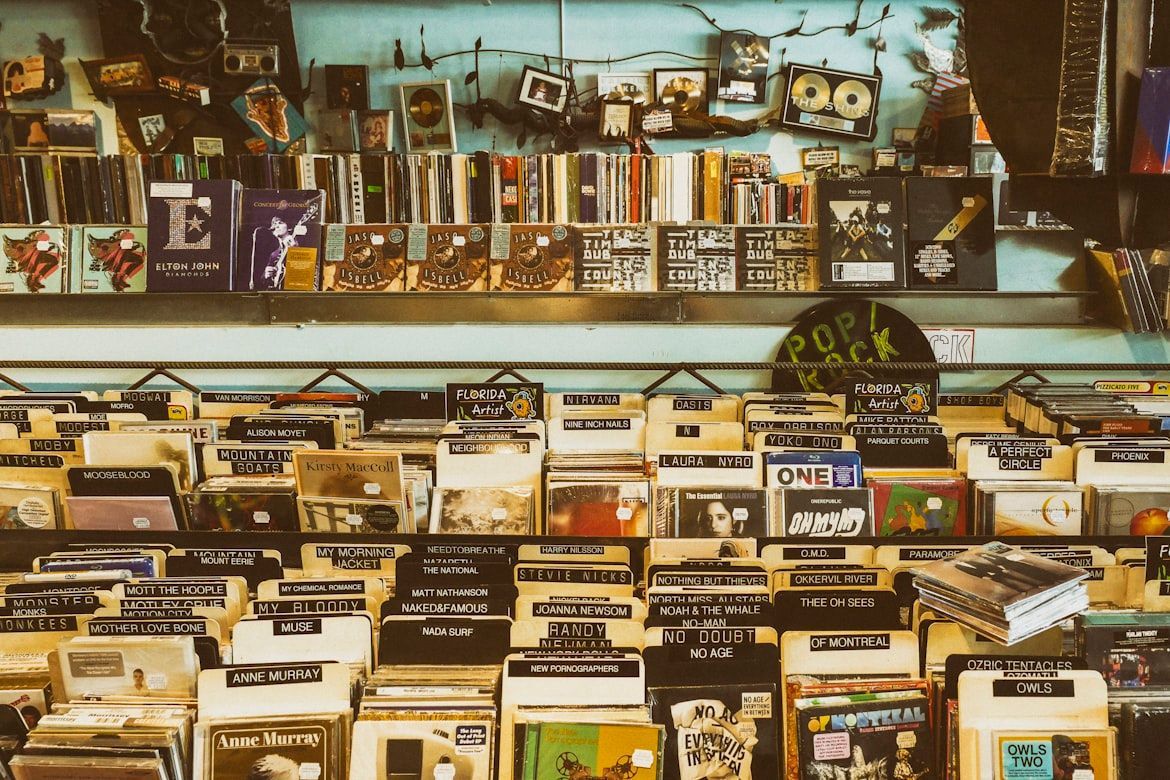

Image: Mick Haupt

From Johnny B. Goode to Billie Jean, there are countless songs with names in the title. Many hits are built around real (or fictional) people, right there in the title. From classic rock ballads to catchy pop tunes, names have a way of sticking in our heads. Here are 12 famous songs that feature people’s names—and the stories behind them.

1

Johnny B. Goode – Chuck Berry

Image: Provincial Archives of Alberta

2

We’ll start the list with one of the most classic and famous examples of a song that made a name famous.

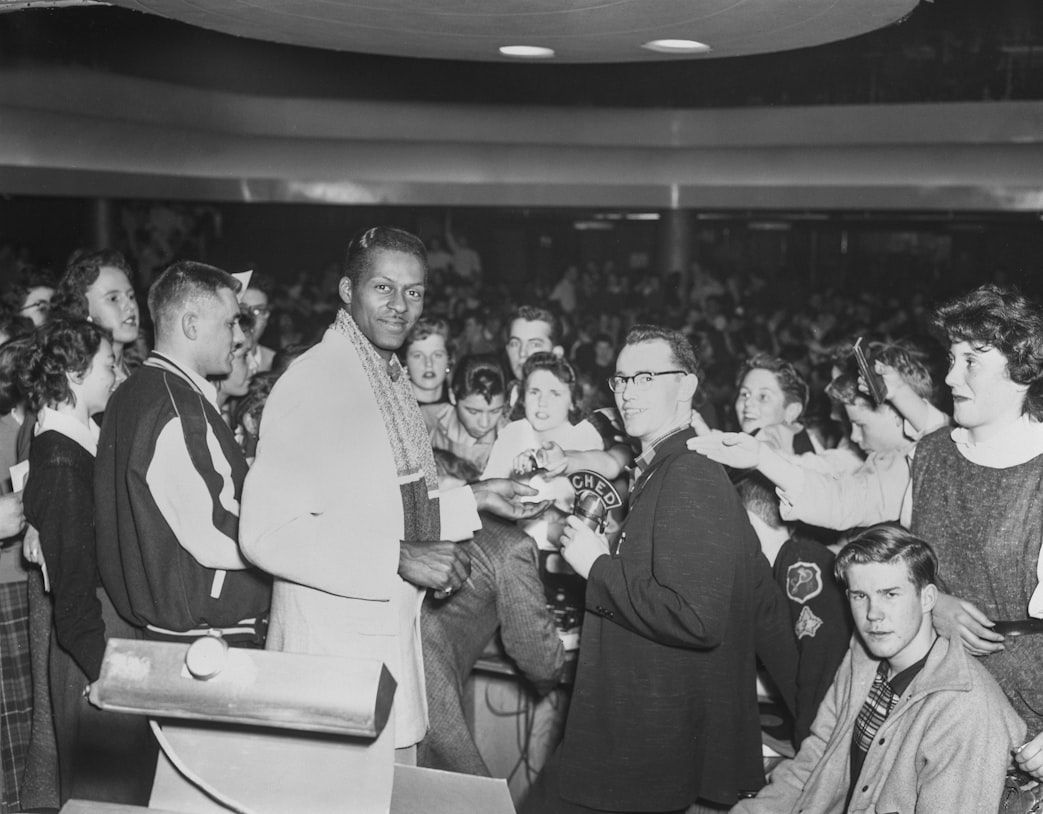
This 1958 rock ‘n’ roll classic tells the story of a country boy with dreams of guitar stardom. While partially autobiographical, Chuck Berry drew inspiration from his pianist, Johnnie Johnson.

3

Billie Jean – Michael Jackson

Image: Call Me Fred


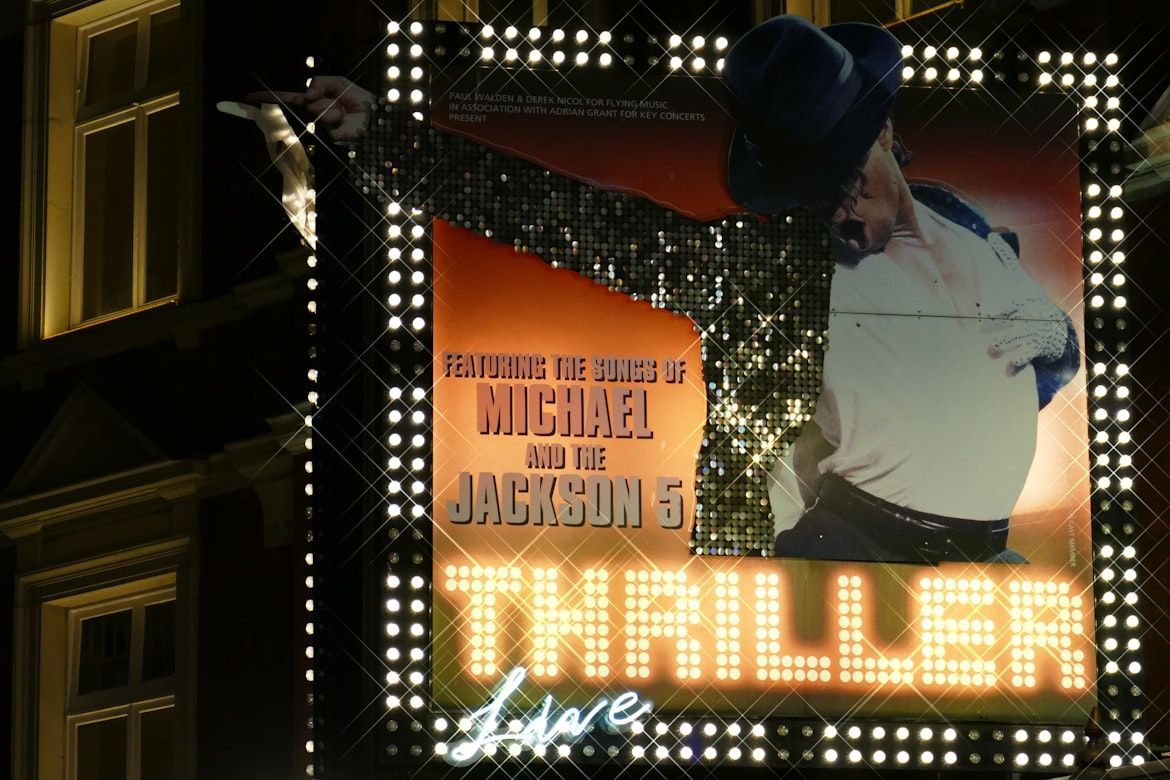
Who was the Billie Jean Jackson sang about? Released in 1983, "Billie Jean" tells a haunting tale of a woman who falsely claims the singer fathered her child.

Though the name Billie Jean is fictional, the track was inspired by Jackson’s real experiences with obsessed fans. It helped cement his status as the King of Pop.

4

Poor Edward – Tom Waits

Image: Andrew Faires

5

This eerie ballad from Tom Waits’ 2002 album Alice recounts the tragic legend of Edward Mordake, a man said to have a second, sinister face on the back of his head.

With bleak instrumentation and haunting vocals, Waits creates a mood of gothic melancholy. "Poor Edward" is part of a larger suite of songs inspired by surreal tales and stage productions, both on Alice and on Blood Money, which was released at the same time..

6

Stagger Lee – Nick Cave and the Bad Seeds

Image: Steven Erixon

Nick Cave’s 1996 version of "Stagger Lee" is a violent, profane, and theatrical reimagining of a classic American folk tale. The song is based on the real-life 1895 murder committed by "Stag" Lee Shelton.

The story has been told in many forms, but Cave’s rendition stands out for its raw, menacing tone.

7

Hey There Delilah – Plain White T’s

Image: Kelly Sikkema

Released in 2006, this acoustic ballad became a massive hit for the Plain White T’s. The song was written for Delilah DiCrescenzo, a college athlete whom the lead singer met just once.

Though they never dated, the song’s heartfelt lyrics and stripped-down style resonated widely. It’s a tender expression of long-distance longing and romantic idealism.

8

Jolene – Dolly Parton

Image: Wes McFee

9

In "Jolene", Dolly Parton pleads with a beautiful woman not to steal her man. The 1973 country hit is simple yet emotionally rich, showcasing Dolly’s storytelling ability and vocal strength.

The name Jolene was inspired by a young fan, while the song’s scenario was drawn from real-life jealousy. It remains one of the most covered songs in country music.

10

Roxanne – The Police

Image: Maximilien T'Scharner

11

"Roxanne", released in 1978, is about a man who falls for a sex worker and pleads with her to change her ways. Sting was inspired by the red-light district in Paris and the idea of romantic obsession.

With its reggae-influenced rhythm and unforgettable vocal delivery, the song became a defining moment for The Police and a staple of late-’70s rock.

12

Layla – Derek and the Dominos

Image: Marcus Neto

13

Eric Clapton wrote "Layla" in 1970 as a passionate, anguished declaration of love for Pattie Boyd, who was married to his friend George Harrison.

The song blends hard rock with a tender piano outro, capturing both emotional turmoil and yearning. "Layla" became one of Clapton’s signature tracks.

14

Rosanna – Toto

Image: Mick Haupt

Released in 1982, "Rosanna" was a huge hit for Toto and won the Grammy for Record of the Year. The song blends rock, jazz, and pop influences, with standout performances—especially the iconic shuffle rhythm on drums.

Though often linked to actress Rosanna Arquette, who was dating a band member at the time, the band says the name was mostly coincidental.

15

Sweet Caroline – Neil Diamond

Image: Phillip Blocker

16

This sing-along anthem was inspired by Caroline Kennedy, though Neil Diamond later admitted that the name fit the song more than it directly inspired the lyrics.

Released in 1969, the song has become a staple at sports events and celebrations. Its catchy chorus and feel-good vibe turned it into a massive hit.

17

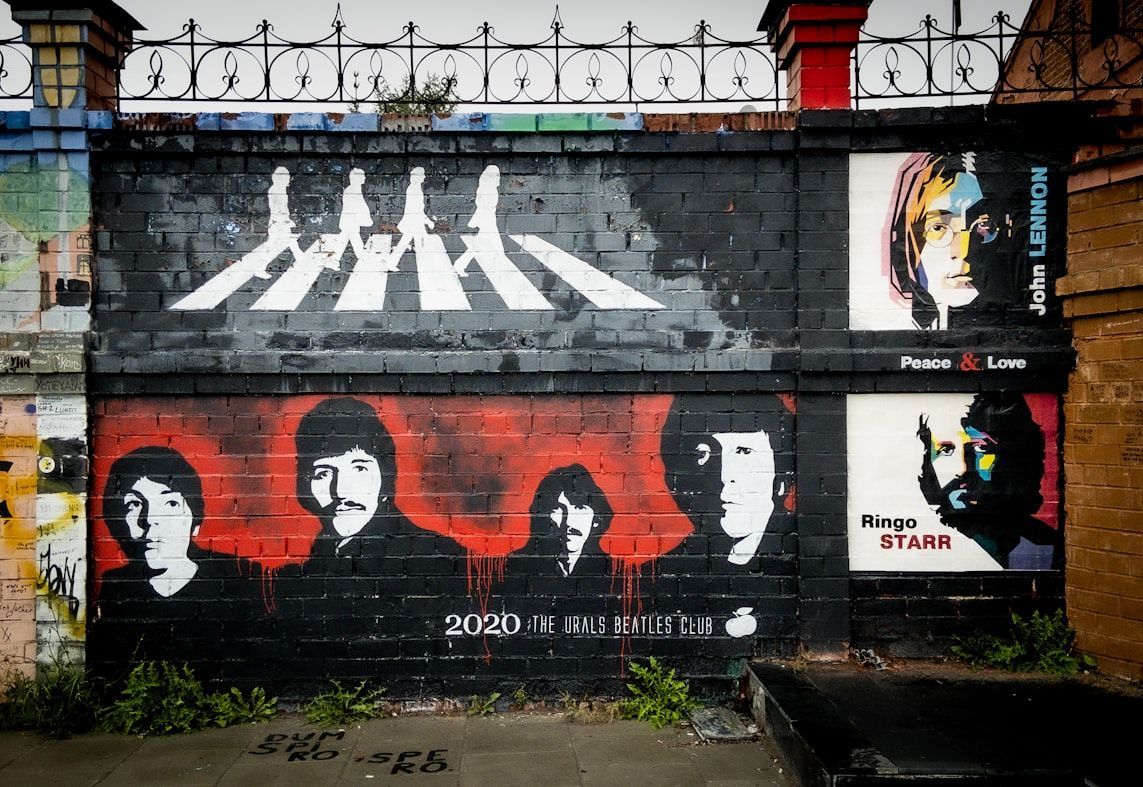
Eleanor Rigby – The Beatles

Image: Fedor

18

This haunting Beatles song from 1966 tells the story of a lonely woman whose name was found on a gravestone. With its string arrangement and somber tone, it marked a shift from the band’s earlier pop sound to more mature, introspective themes.

"Eleanor Rigby" is a poignant look at isolation and anonymity in modern life, all wrapped into just over two minutes.

19

Daniel – Elton John

Image: Dominik Scythe

20

"Daniel" is a touching ballad about a war veteran seeking peace away from the spotlight. Released in 1973, the lyrics—written by Bernie Taupin—capture the sorrow of a younger brother watching his hero leave.

Elton John’s gentle vocals and the song’s soft melody made it a fan favorite, even though its full story is often misunderstood due to a missing final verse.

They saw the future

From the Titanic to smartphones: 10 predictions that actually came true


Published on November 15, 2025


Image: Rawpixel.com

What if we told you someone described the Titanic disaster 14 years before it happened? Or that a famous American writer predicted the exact day of his own death? And decades before the first iPad or smartphone existed, some people had already imagined them with astonishing precision. Coincidence? Genius? Or something else entirely? From the sinking of the Titanic to the Moon landing and the rise of social media, here are 10 predictions so accurate that they'll make you wonder whether the future can sometimes be seen before it happens.

1

The sinking of the Titanic- Predicted in 1898

Image: K. Mitch Hodge

We all know the story of the RMS Titanic, the "unsinkable" ocean liner that struck an iceberg and sank on its maiden voyage on April 15, 1912, claiming the lives of more than 1,500 people. But here's a lesser-known and shocking fact: 14 years before the disaster, someone had already written an incredibly similar story.

In 1898, American author Morgan Robertson published the novella Futility (later retitled The Wreck of the Titan). It tells the story of the Titan, a gigantic, supposedly "unsinkable" luxury liner that strikes an iceberg in the North Atlantic and sinks. 14 years later, the Titanic met almost the same fate. The parallels are so striking that Robertson's novel is still regarded as one of history's most astonishing coincidences.

2

The rise of smartphones- Predicted in 1926

Image: Napoleon Sarony, Public domain, via Wikimedia Commons

The Serbian-American inventor Nikola Tesla didn't just revolutionize electricity; he also made one of the most amazing technological predictions in history.

In 1926, 68 years before the first smartphone, Tesla gave an interview to Collier's magazine in which he described what sounds remarkably like today's connected world. He predicted that wireless technology would eliminate distance, saying the Earth would one day be "converted into a huge brain." Then he added an even more startling prediction: "The instruments with which we shall be able to do this will be incredibly simple compared with our present telephone. A man will be able to carry one in his vest pocket."

3

Online learning and Wikipedia- Predicted in 1988

Image: Sergey Zolkin

Today, finding an answer takes just a few seconds. But before Google, before Wikipedia, and even before the internet reached most homes, someone had already described almost exactly how we would search for information.

That someone was Isaac Asimov, the American science fiction writer and professor. In a 1988 interview on PBS's A World of Ideas with Bill Moyers, Asimov predicted that every home would one day have a computer connected to "enormous libraries," where anyone could ask a question and instantly receive an answer. He also described an "interconnected encyclopedia" that many people now compare to Wikipedia.

4

Moon landing- Predicted in 1865

Image: NASA

More than five decades later, the 1969 Apollo 11 Moon landing remains one of the greatest feats in human history. But as if the incredible achievement of reaching the moon wasn't enough, there's something that makes it even more spectacular: Someone described key parts of the lunar mission more than 100 years before it happened.

In 1865, French writer Jules Verne published From the Earth to the Moon, a science fiction classic that turned out to be prophetic. In it, Verne placed the launch in Florida, the same state NASA would later use for its missions. He also chose aluminum for his spacecraft because it was lightweight and durable, decades before it became the backbone of the aerospace industry. And, just like Apollo 11, his spacecraft carried three crew members. For a novel written more than a century before, the similarities are hard to ignore.

5

Skype & video calling- Predicted in 1911

Image: Hc Digital

Today, video calls are such a normal part of life that we take them for granted. But not long ago, the only option was a landline, and seeing the person you were talking to sounded like something out of a science fiction movie.

But some writers didn't just imagine the future; they came incredibly close to predicting it. One of them was Hugo Gernsback, the Luxembourgish-American inventor, writer, and publisher often called the "Father of Science Fiction." In his 1911 novel Ralph 124C 41+, Gernsback described a device called the "Telephot," a combination telephone and television that let callers see both the face and surroundings of the person on the other end of the line. More than a century later, it's hard not to compare that with FaceTime, Zoom, or Skype.

6

Social media- Predicted in 1999

Image: Mariia Shalabaieva

Love it or hate it, social media has become one of the biggest forces in modern life. Today, we use it to get news, find jobs, stay in touch with family, and organize our lives. But just a few decades ago, the idea that billions of people would do all of that online seemed almost impossible.

Bill Gates, however, imagined it perfectly. In 1999, just a year after Google launched, Gates published Business @ the Speed of Thought: Succeeding in the Digital Economy, where he made a series of predictions that would later come true. He wrote that "private websites for your friends and family will be common, allowing you to chat and plan events," an unsettlingly accurate description of Facebook, which wouldn't launch until 2004. He also predicted that people would find jobs online by sharing their interests, skills, and qualifications, a couple of years before LinkedIn debuted in 2002.

7

News on iPads - Predicted in 1968

Image: Detail .co

For millions of people in the world, one of the first things to do each morning is check the news on their phones or tablets. Today, that's completely normal; in the 1960s, however, it seemed unimaginable.

While it’s hard to believe, that's exactly what Arthur C. Clarke described in his 1968 novel 2001: A Space Odyssey. In this story, the English author introduced a device called the "Newspad," on which astronauts read news from Earth. But Clarke didn't just predict a tablet-like device; he also described how users would tap headlines to expand articles and read them comfortably on a screen. In other words, he was able to envision much of today’s experience more than 40 years before the iPad debuted in 2010.

8

Airplanes and GPS - Predicted in the 17th century

Image: See page for author, CC BY 4.0, via Wikimedia Commons

We've already seen predictions that came true years, and even decades later. But this next one was written about 300 years before the technology it described existed.

Who did it? Robert Boyle, the Irish chemist known as the father of modern chemistry and the scientist behind Boyle's Law. In the 1660s, Boyle wrote a private scientific wish list that has been preserved by the Royal Society for its importance. Among its 24 visionary goals was "The Art of Flying," based on his belief that air obeyed physical laws humans could eventually master, something accomplished with the airplane more than two centuries later. He also described "a practicable and certain way of determining longitudes," a problem that wouldn't truly be solved worldwide until the age of satellite navigation and GPS, almost three centuries after Boyle first imagined it.

9

Halley's Comet & Mark Twain’s death- Predicted in 1909

Image: Pach Bros, NY, Public domain, via Wikimedia Commons

For more than 2,000 years, astronomers have tracked Halley's Comet, and thanks to that work, today we know it returns about every 75 to 76 years. The last time it appeared was in 1986, and it's expected back in 2061. Predicting a comet's return is science, but predicting your own death is something else.

And that's exactly what Mark Twain, the "father of American literature," did. Twain was born Samuel Langhorne Clemens in 1835, the year when Halley's Comet lit up our sky. 74 years later, in 1909, he famously said, "I came in with Halley's Comet in 1835. It is coming again next year, and I expect to go out with it." On April 21, 1910, the day after the comet reached its brightest point, Mark Twain died.

10

The Cold War- Predicted in 1840

Image: Vitaliy Andreev

The Cold War lasted more than 44 years, pitting the United States and the Soviet Union against each other in a global struggle for power. But astonishingly, one thinker foresaw this rivalry more than a century before it began.

While traveling through the United States, French political philosopher Alexis de Tocqueville published an impressive prediction in Democracy in America (1835–1840): "There are at the present time two great nations in the world... I allude to the Russians and the Americans... Each seems called by some secret design of Providence one day to hold in its hands the destinies of half the world." More than 100 years later, those two nations would fight to dominate the second half of the 20th century almost exactly as he had anticipated.

Looking for an extra scoop of literary fun?

Learn more with our Word of the day

encumbrance

/ɪnˈkəmb(ə)rən(t)s/