Fancy names for fancy drinks

Who was Bloody Mary? Join us in exploring 10 drinks’ names


Published on December 30, 2024


Image: Timothé Durand

Nobody thinks twice about the contents of a drink if the name is Gin & Tonic. But what if you never had a Bloody Mary before, and are offered one? According to history, many popular cocktails were created during the Prohibition era when illegal alcohol was not the most palatable drink, and masking its flavor with other ingredients became a necessity. And, since these concoctions needed an appealing name, creative barmen and barwomen came up with many of the denominations we know today. Featured here are 10 of the most popular ones. Have you tried any of these?

1

Manhattan

Image: Johann Trasch

While the real origin of this cocktail consisting of rye, sweet vermouth, and bitters is probably lost to time, the most popular legend is that the Manhattan was specially invented for a banquet hosted by Lady Randolf (mother of Winston) Churchill at the famous Manhattan Club in New York in the late 1800s.

But, when this supposed party took place, Lady Randolph was pregnant with Winston and living in England. So, even if it is a cool story, it is probably not true.

2

Mint Julep

Image: Alex Block

These days, it refers almost exclusively to a cocktail of bourbon whiskey flavored with sugar and mint but, the word julep was originally borrowed from French to refer to a sweet-tasting or sweetened drink. Before then, it had Persian roots, and its original pronunciation, "gulab" essentially means sweetened rosewater.

The term was translated to "julab" in classical Arabic and then into Latin as "julapium." Eventually, the word would morph into "julep."

3

Tom Collins

Image: Gabriel Gurrola

To explain the origin of the Tom Collins cocktail, we must first introduce his brother, John: A John Collins is a mixture of London dry gin, lemon, sugar, and soda. If you replace the London gin with Old Tom gin, you have prepared a Tom Collins.

The Collins surname of this drink is said to come from a 19th-century headwaiter known as John Collins, who worked at Limmer's Hotel and Coffee House and is thought to be the inventor of the drink. As for the Tom part, its origin is lost to the ages.

4

Mojito

Image: Mauro Lima

There are two leading theories as to where the name of the Mojito comes from. The first one holds that the name relates to mojo, a Cuban seasoning made from lime and used to flavor dishes.

Another theory is that the name Mojito is simply a derivative of mojadito, which is a Spanish word for "lightly wet", which would be the diminutive of "mojado" (wet).

5

Negroni

Image: Allan Francis

As the legend goes, a certain Count Negroni of Florence, Italy, once requested a drink that would stand apart from all the Americanos ordered at his usual neighborhood cafe.

The bartender answered his request with a cocktail composed of equal parts gin, sweet vermouth, and Campari, and he garnished the result with a telltale orange slice. Unfortunately for the count, the drink became as popular as the Americano, losing the desired exclusivity.

6

Daiquiri

Image: Deeliver

This classic cocktail is named after the Cuban village of Daiquirí and, as the story goes, it was invented by local American mining engineers around the time of the Spanish-American War when they ran out of gin and had to use the local rum instead. The cocktail usually consists of sugar, rum, lime juice, and simple syrup.

The daiquiri is identified with revered author Ernest Hemingway, who drank this beverage during his stay in Cuba.

7

Martini

Image: Thomas Hetzler

James Bond's drink of choice is typically made with gin or vodka and vermouth. There are many stories about the origin of the cocktail and its name. The bartender professor Jerry Thomas of San Francisco, has claimed that it was invented by a stranger on his way to Martinez, California. Another story says it's named after Martini & Rossi Vermouth, because that brand was first used in the drink Gin and It, with one half gin and one half Martini & Rossi Vermouth.

Another story claims that it was named after a British army rifle, the Martini and Henry, which is known for its kick, like the drink. And the last one, says that it was created at the Knickerbocker Hotel in the early 1900s, by a bartender named Martini di Arma Tiggia that mixed a martini using only a dry gin and dry vermouth.

8

Margarita

Image: Luke Bender

The most widely accepted theory about the origin of the Margarita name says that bartender Carlos "Danny" Herrera supposedly thought up this drink around 1938 in Tijuana, Mexico. He created it for Marjorie King, an aspiring actress who he said was allergic to "everything except tequila."

After crafting something for King to drink, Herrera reportedly dubbed the drink margarita, which is a Spanish twist on Marjorie's name.

9

Old Fashioned

Image: Bon Vivant

Apparently, in the late 1800s, it became popular to introduce liqueurs into cocktail recipes. And the older, more basic recipes that omitted them, and in particular this classic mix of whiskey and bitters, became known as "old fashioned" cocktails.

People ordering drinks in this fashion wanted to stick to the basics and eventually the modifier "old-fashioned" became the name for this classic cocktail with a lot of variations. The classic version uses a bit of sugar or simple syrup, a splash or two of aromatic bitters, perhaps an ice cube, and rye whiskey.

10

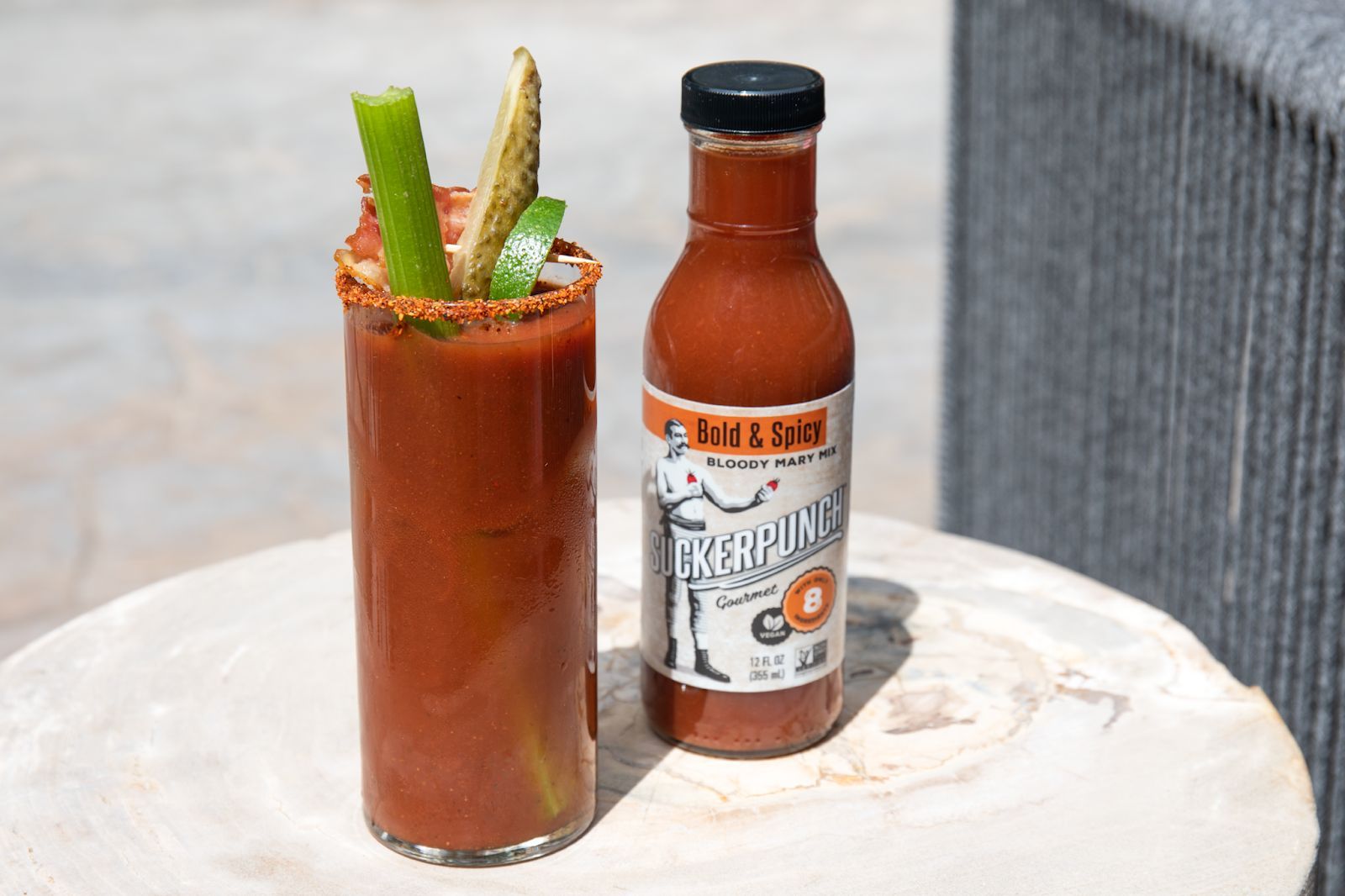
Bloody Mary

Image: SuckerPunch Gourmet

The most popular tale about this drink’s name links it to the English monarch Mary Tudor, whose nickname was, wait for it, "Bloody Mary", because of how many Protestant heretics she condemned to death.

Another theory suggests that the drink was concocted by a bartender at a Paris bar, where a patron who drank it dubbed it the Bucket of Blood, after a Chicago nightclub, with the name later developing into Bloody Mary.


HARVEST SOME KNOWLEDGE!

Howdy, Folks! Did You Know These Ten Bountiful Farming Idioms?


Published on December 30, 2024


Image: Frances Gunn

A quote often attributed to American author Herman Melville says: "They say you can’t make a living on farming, but doing anything else isn’t really living at all." We are pretty certain that anyone who has tasted the joys of farm life will at least partly agree with this mentality. Life in the countryside can surely be hard work, but the feeling of waking up to the first light of dawn shining over golden fields of hay can’t be compared to anything else.

Farms are truly the backbone of many nations, and their influence can even be seen in the way we speak. We have compiled ten of our favorite idioms based on farm life for your enjoyment. So make hay while the sun shines and take a look!

1

Have a cow

Image: Ryan Song

The year was 1990 and a family of animated yellow characters was taking the world by storm. At the peak of their popularity, The Simpsons were featured in any promotional object you could think of: coffee mugs, frisbees, and, most importantly for this story, t-shirts. Bart Simpson t-shirts were a staple of the early 90s, usually featuring the laidback enfant terrible saying his now iconic phrase: "Don’t have a cow, man!"

Whenever someone says this idiom, it usually means that someone is overreacting and should calm down. While its exact origins are not clear, they can be traced to at least the 1950s.

2

Don’t look a gift horse in the mouth

Image: Marylou Fortier

If, for whatever reason, someone decides to show their affection by gifting you an equine companion, you’ll be glad to have this idiom to teach you the proper etiquette for receiving such a gift. Don’t worry, no need to thank us.

This idiom means that you shouldn’t show ingratitude or a lack of appreciation after receiving a gift. Curiously, its first usage comes from the writings of St. Jerome, on which a Latin version of this idiom can be found. Apparently, the practice of looking into a horse's mouth was done in order to determine its age.

3

When pigs fly

Image: Oliver Sharp

While it is fairly common, most people fail to address how heartbreaking this idiom is. After all, how adorable would a little piggy flying around be? But alas, that’s what this idiom mercilessly describes: a complete impossibility.

This idiom can be traced back to at least the 17th century: its first recorded use comes from a 1616 dictionary by lexicographer John Withals. Most famously, English author Lewis Carroll included it in his iconic book Alice in Wonderland.

Image: Anna Kaminova

4

Talk the hind leg off a donkey

A brief disclaimer: no donkeys were hurt in the making of this article.

Sometimes that chatty coworker who doesn’t seem to be able to stop talking seems like a menace. Well, if we take this idiom at face value, the danger of amputation seems to be a real possibility of being caught in an endless monologue about past holidays.

However, this idiom, which obviously means to talk incessantly, might actually be less violent than what it sounds. Some believe that it comes from Ireland, and that it originates from the fact that donkeys don’t usually sit down on their rear ends. In that sense, the phrase, which is a direct Gaelic translation, would actually mean talking so much that you made an exhausted donkey sit down.

5

A hard row to hoe

Image: Ray Shrewsberry

We won’t blame you if you, like us, are not particularly proficient in using farm tools. Having said that, you are probably familiar with this idiom, which is defined by the Cambridge Dictionary as "a difficult situation to deal with."

Its origins date back to 19th century America, where a big portion of the population was a farmer or worked on farms. Interestingly, folk hero Davy Crockett used this idiom in his Tour to the North and Down East, written in 1835. In it, he states: "I never opposed Andrew Jackson for the sake of popularity. I knew it was a hard row to hoe, but I stood up to the rack."

6

Happy as a pig in the mud

Image: Crispin Jones

7

We understand if you aren’t as happy in the mud, but it can’t be denied that pigs seem to love it. The idiom’s meaning is fairly self-explanatory: it simply means to be extremely happy, enjoying a situation that brings joy to your heart.

Other variants for this idiom exist, and some can be traced as far back as the 19th century. According to these other versions, pigs are also happy in clover, puddles, or muck

8

Take the bull by the horns

Image: Anand Thakur

An idiom that means to face a difficult situation in a brave manner, to take the bull by the horns certainly sounds like the most dangerous idiom in this list. At the very least, this idiom does give a certain wild and exciting sense to that task you keep pushing back.

The origins of this idiom are certainly debatable. Many believe that it comes from Spanish matadors, although wrestling down a bull by the horns doesn’t seem like a standard matador practice. Most agree that it likely originated in American barnyards, and from a 19th century sport called "bulldogging."

Image: Timothy Eberly

9

Bet the farm

This idiom brings to mind the image of an Old West poker table, on which a farmer decides to bet his entire farm on that poker of aces that certainly can’t lose. And while that might certainly be the case, the truth is that the origins of this idiom are uncertain.

Some believe that the meaning of this idiom, which is to take a substantial risk, comes from the fact that farm life involves a great deal of risk-taking itself. For farmers, choosing the best time to grow a crop or when to harvest it might mark the difference between profitability and financial ruin.

10

Beef Up

Image: Daniel Quiceno M

"Beef up" is a pretty common idiom that means to build up or increase something. You might be wondering what, for example, an airport that recently strengthened security has to do with adding cuts of cow’s meat. However, when put into context, this idiom is fairly straightforward.

Apparently, the phrase "beefing up" comes from American college students from the 1940s, who exercised in order to increase their mass. Therefore, to beef up would literally mean adding more muscle (or strength) to something.

11

Bring home the bacon

Image: Michelle @Shelly Captures It

We’ll end this article with a tasty entry. Bacon is definitively a breakfast staple and, according to this idiom, a synonym for bringing money home. Nowadays, someone who can "bring home the bacon" is someone able to provide for themselves or their family.

Etymologists are not entirely sure about the origins of this phrase, but most agree that it originated in a 1906 telegram sent to boxer Joe Gans by his mother, in which she urged her son to "bring home the bacon" and win a difficult fight. Apparently, sports journalists were fascinated by this idiom and they quickly popularized it throughout their articles.

Looking for an extra scoop of literary fun?

Learn more with our Word of the day

omit

/oʊˈmɪt/