Exploring the world
Who got to the Americas first? The unique journeys of 10 iconic explorers
Published on December 25, 2024
 Image: Nathan Hurst
Nowadays, you can buy your ticket, take a plane, and fly almost anywhere in the world. But this was not always the case. Throughout history, some people have dedicated their lives to exploring unknown parts of the Earth, getting on big ships, and setting sail with little more than hopes and a few wild theories. Today, we're revisiting the journeys of 10 iconic explorers who changed the course of history, making huge contributions to culture, trade, and science. Let's start this adventure!
Leif Erikson
 Image: Tim Foster
Let's travel more than 1000 years into the past to talk about Leif Erikson, one of the earliest renowned explorers in history.
Erikson, a Norse born around 970 CE in what is now Iceland, is recognized as the first European to set foot on mainland America. That's right! Archaeological evidence suggests he had been here almost 500 years before Christopher Columbus. Impressive, isn't it?
In the 11th century, Erikson explored the coasts of North America and is thought to have established a Norse settlement in an area known as Vinland, which many historians believe was located in present-day Newfoundland, Canada.
Marco Polo
 Image: Egor Myznik
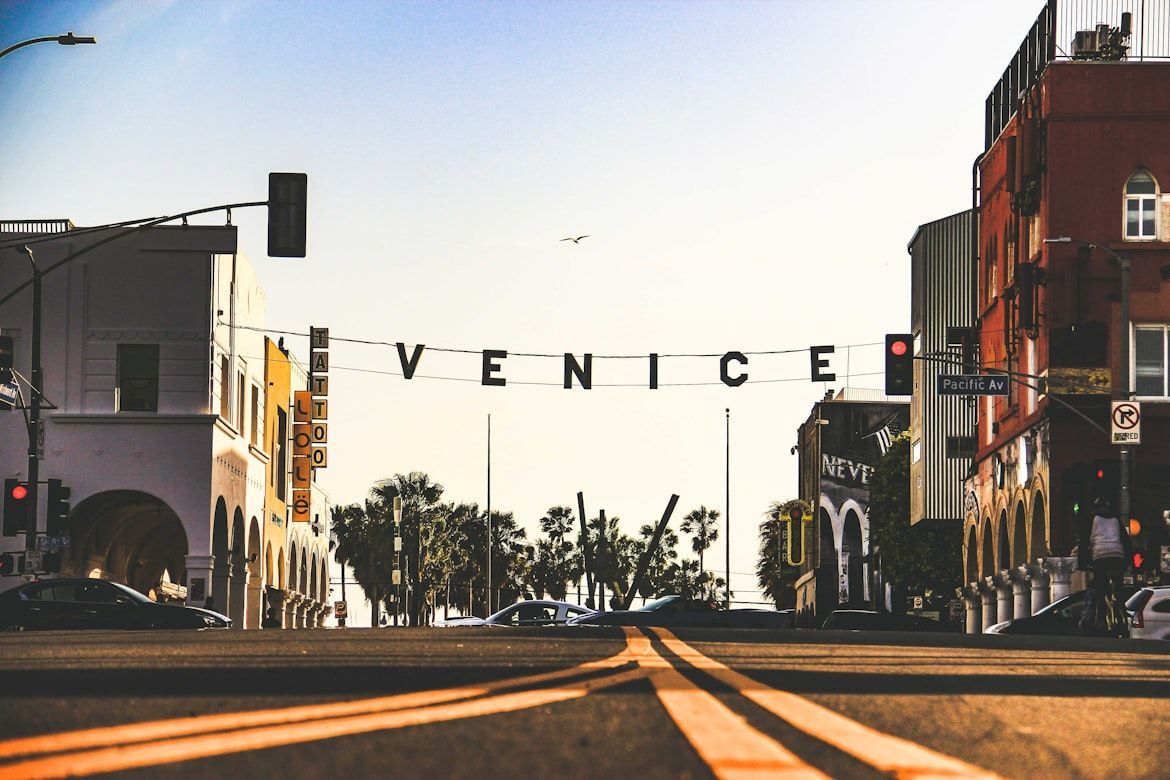
Do you remember what you were doing when you were 17? Most of us were in high school, but that was not the case for Marco Polo, who, at the age of 17, was starting an epic journey from Venice, Italy, to China!
Marco Polo's expedition to Asia began in the year 1271. Although trade had provided Europe with some knowledge about Asia, their understanding of "the East" was quite limited- at that time, Europeans weren't even aware of the existence of the Americas!- In this context, Marco Polo's journey was not only important but also innovative and risky.
Together with his father, he traveled overland along the Silk Road and reached the Chinese Empire in 1275. But that's not all: he spent 17 years there! You can read everything he saw, learned, met, and experienced there in the famous The Travels of Marco Polo.
Christopher Columbus
 Image: Kevin Olson
Sometimes, mistakes or unforeseen events end up bringing big changes. That's what happened when the famous Christopher Columbus reached the Caribbean coast, thinking he had arrived in Asia.
As you probably already know, the Genoese set sail from Spain in 1492 in search of a westbound route to Asia. However, a few months after setting sail, Columbus and his ships arrived not in Asia but in the Caribbean on October 12, 1492. Unaware of his amazing finding, Columbus made 3 more voyages to the "New World."
Vasco da Gama
 Image: Vidar Nordli-Mathisen
The Age of Exploration wouldn't have been the same without the iconic Vasco da Gama. Born around 1460 in Portugal, he's famous for nothing less than being the first European to reach India by sea.
At that time, trade between Europe and India was only by land, with many intermediaries involved. Therefore, establishing a safe sea route for trade was a crucial achievement at the time.
Da Gama set sail from Lisbon, Portugal, in 1497. He skirted the coasts of Africa and successfully reached India in 1498. But this major feat didn't end there; da Gama made two more voyages in 1502 and 1524, expanding Portugal's power over the region.
John Cabot
 Image: Dmitrii Eliuseev
In 1497, another European set sail in search of Asia, but he ended up exploring the coasts of North America instead.
John Cabot was born in Venice as Giovanni Caboto around 1450. In 1497, he was sent by the English crown to seek a westbound route to reach Asia, but just like Columbus, he encountered America. He arrived in Newfoundland, Canada, without being fully aware of where he was, and he claimed part of present-day Canada and the United States for England.
Cabot is considered the first European to explore the coasts of North America since the Norse voyages, which marked the beginning of England's exploration and land claims in the New World.
Ferdinand Magellan
 Image: Delaney Van
Ferdinand Magellan is a familiar name, right? He was born around 1480 in northern Portugal and would become one of the most famous explorers in history.
In 1519, he set sail from Spain towards the West in search of the "Spice Islands," which was the name for present-day Indonesia. Along the way, he discovered a passage connecting the Atlantic Ocean to another body of water that he named "The Peaceful Sea," known now as the Pacific Ocean. That passage would later take his name: the Strait of Magellan.
In 1521, he and his crew reached The Philippines. Although he lost his life there, the expedition continued and returned to Spain in 1522, completing the very first successful circumnavigation of the globe!
Francis Drake
 Image: Vincent Yuan
More than 50 years after Magellan, Sir Francis Drake also completed the feat of circumnavigating the globe, becoming the first Englishman to achieve this.
He and his 5 ships began their voyage from Plymouth, England, in 1577. They crossed the Atlantic to what is now the east coast of Argentina. Drake traveled through South America, facing Spanish troops settled in the area.
In 1578, they were crossing the Strait of Magellan. But, before they reached the Pacific, a huge storm hit Drake's crew. Only his ship was able to make it through. With just one vessel, he sailed along the west coast of the Americas, reaching modern California to claim that territory for England. The voyage continued to the Philippines, then crossed the Indian Ocean, the coasts of Africa again, and finally returned to Plymouth in 1580.
James Cook
 Image: Suhash Villuri
Undoubtedly one of the greatest explorers and navigators of the 18th century, James Cook was born in 1728 in Yorkshire, England. But Cook was not just an explorer; he was also an artist! From a young age, he developed skills in navigation and cartography, mapping large areas with incredible accuracy.
On the first of his major voyages, from 1768 to 1771, he traveled the South Pacific, becoming one of the first Europeans to circumnavigate New Zealand and make a detailed map of the entire region.
On a second voyage, from 1772 to 1775, he traveled South and crossed the Antarctic Circle! On his third and last voyage, from 1776 to 1779, he reached the Hawaiian Islands, making detailed maps of the area and contributing enormously to the geographic knowledge of the Earth and the Pacific Ocean, specifically.
Lewis and Clark
 Image: Tommy Bond
In 1803, the United States doubled the size of its territory thanks to what we know as the Louisiana Purchase. With so much new territory in our country, someone had to explore it properly. President Thomas Jefferson entrusted this job to Meriwether Lewis and William Clark.
The Lewis and Clark Expedition, also known as the Corps of Discovery, began in St. Louis, Missouri, in 1804. They traveled up the Missouri River, crossed the Rocky Mountains, and reached the Pacific Ocean! Then, they successfully returned to Missouri in 1806.
These two explorers traveled enormous distances and examined key areas in our territory, discovering new routes and thus helping to improve the country's understanding and knowledge of its lands.
Neil Armstrong
 Image: NASA
Our adventure has now reached the 20th century, specifically the year 1969. Since we had already explored almost every corner of the Earth, we humans decided to look up and go for interstellar conquests.
In those years, there was an explorer who, instead of setting sail on tumultuous seas, boarded a spacecraft to cross outer space and reach the Moon!
We're talking about the American Neil Armstrong, astronaut, engineer, and naval aviator. His most famous mission was Apollo 11, thanks to which he became the first human being to set foot on the Moon. You know: "That's one small step for [a] man, one giant leap for mankind."