Behind the scenes

Which of these everyday phrases from the showbiz world do you use?


Published on January 30, 2025


Image: Kyle Head

Show business has a way of slipping into our everyday conversations without us even realizing it. And there’s a reason: nothing captures the drama, fun, or urgency in life quite like actors and their lingo. For those of us with a little more life experience, these phrases might even bring a smile or a memory. Let’s take a closer look at 10 classic showbiz expressions that have made their way into our everyday vocabulary. Ready for your close-up?

1

The show must go on

Image: Pietro Tebaldi

Resilience in a few words: no matter what life throws at us, the show must go on. How many times have you said that?

Originally, this expression came from the world of performance, where, no matter the mishap or problem, performers kept it going.

In real life, we tend to use it to encourage others to keep pushing forward, even when things get tough. A little rain can’t cancel a parade, right? This is not exclusive to performers; we’ve all had to perfect our perseverance!

2

Running the show

Image: Gordon Cowie

Are you chill and easygoing, or are you the bossy type? Depending on your answer, you’ll connect with this expression. To "run the show" means you’re the one calling the shots. Why? Well, think of the director’s role: they are the ones making the calls, and they have the final say in everything.

And what about everyday life? You probably know that person who is always in charge of making family gatherings happen, taking control of the food, the drinks, and the music. If you don’t know them, you’re probably the one doing it! We won’t deny it—running the show is fun and empowering, and it feels good to be that go-to person. Just don’t forget to delegate!

3

A star-studded event

Image: Claudio Schwarz

Can you think of the last wedding you attended, with everyone from your high school friends to your dearest cousins? Well, you’ve got yourself a star-studded event! Can you guess what that means?

Coming from Hollywood and the red carpet world, when something is "star-studded," it means all the big names are out in full force. Of course, in the industry that’s all about red carpet premieres and award shows, we’re talking about celebrities. But in our lives, it could be a memorable party or a big celebration with all our favorite people. In short, it’s all about who is in that room and making everyone feel like a star.

4

Stealing the show

Image: Oscar Keys

If a place is full of stars (or star wannabes, for that matter), there is always someone trying to be the center of attention or becoming so without any intention whatsoever. And that happens in every circle, right?

The phrase "steal the show" refers to someone or something that grabs all the attention, even if they weren’t meant to. This phrase can apply to anything from a spontaneous speech at a family gathering to a pet making an unscheduled appearance during a Zoom call. It’s usually someone or something delightful that pulls focus. And let’s be honest, sometimes that unplanned star is the best part of the show!

5

Get the show on the road

Image: Jack Anstey

Some projects demand a thorough plan, calculated steps, and well-thought-out decisions. But at some point, every project demands that we get the show on the road too. If you’ve ever heard someone say "Let’s get the show on the road," they’re telling you it’s time to stop planning and start doing!

The world of acting and performing has always been related to traveling. Companies take their shows to different places and stages, and that is where this expression most likely comes from—traveling performers who needed to pack up and move on to the next town.

These days, it’s often used when we’re about to embark on a new project or adventure. It refers to that point when we just have to dive in and figure things out along the way.

6

Kicking things off

Image: Maxime Horlaville

This phrase does not come from the drama world but from the sports world, though it’s fairly common in show business too. Because getting things started is necessary in every field, right?

When you "kick something off," you get the ball rolling, starting something with energy and purpose. For example, at a family reunion, someone might say, "Let’s kick this off with a toast!" And then a joyful dinner unfolds.

A good kick-off helps set the stage for everything that follows, giving a positive tone to the day or event. After all, how you start often shapes how things end, don’t you think?

7

Living up to the hype

Image: Jarritos Mexican Soda

This expression is quite common among young people who are always talking about a new interest they picked up thanks to a TikTok video, where things get "hyped" every day.

When something has been "hyped up," the expectations can really be sky-high. It can refer to anything—a new movie, restaurant, concert, Amazon product, or whatever!

People talk it up so much that it becomes almost impossible for the real thing to meet all those hopes. If it does, great! But more often than not, it’s tough to "live up to the hype." The buildup makes it hard for reality to match our excitement. The trick? Keep an open mind, and you might just be pleasantly surprised!

8

Break a leg!

Image: Jakob Owens

This one you know. We all do, because it has become so popular that it no longer belongs exclusively to the showbiz world. We use it with our sons when they face an exam or with that friend who is about to go into a job interview.

"Break a leg" is a funny thing to say when you actually want someone to have good luck. In showbiz, wishing someone "good luck" was considered a jinx, so this odd phrase became the way to wish someone well without tempting fate.

Of course, nobody wants anyone to really break a leg—quite the opposite, indeed! Everyone could use a bit of good luck, and here’s the perfect way to wish for it.

9

In the limelight

Image: Sean Lee

This is closely related to "stealing the show" or, better said, it’s a consequence of it. When you steal the show, you are "in the limelight." So, you can imagine what it means.

To be "in the limelight" means you’re the center of attention, whether you want to be or not! The term comes from the old days of theater, where a special lime-based light was used to highlight the main performer on stage.

These days, we use it to describe anyone in the public eye, from celebrities to people suddenly thrust into the spotlight. And this can go both ways: it can be either a blessing or a curse. Even if you get your ten seconds of fame, not everyone wants to be in the spotlight all the time!

10

Craving the limelight

Image: Alexander Dummer

To close things up, let’s take the perspective of someone who wishes they were under the spotlight all the time, in every scenario. That person "craves the limelight." Because some people don’t just end up in the limelight—they crave it!

If you "crave the limelight," you actively seek attention and love being the center of it all. These are the folks who enjoy being on stage, making speeches, or just being the life of every party.

We’re not the ones to judge—there’s nothing wrong with a little attention. But when someone constantly seeks the limelight, it can become a bit much for those around them. You know, all in the right measure!
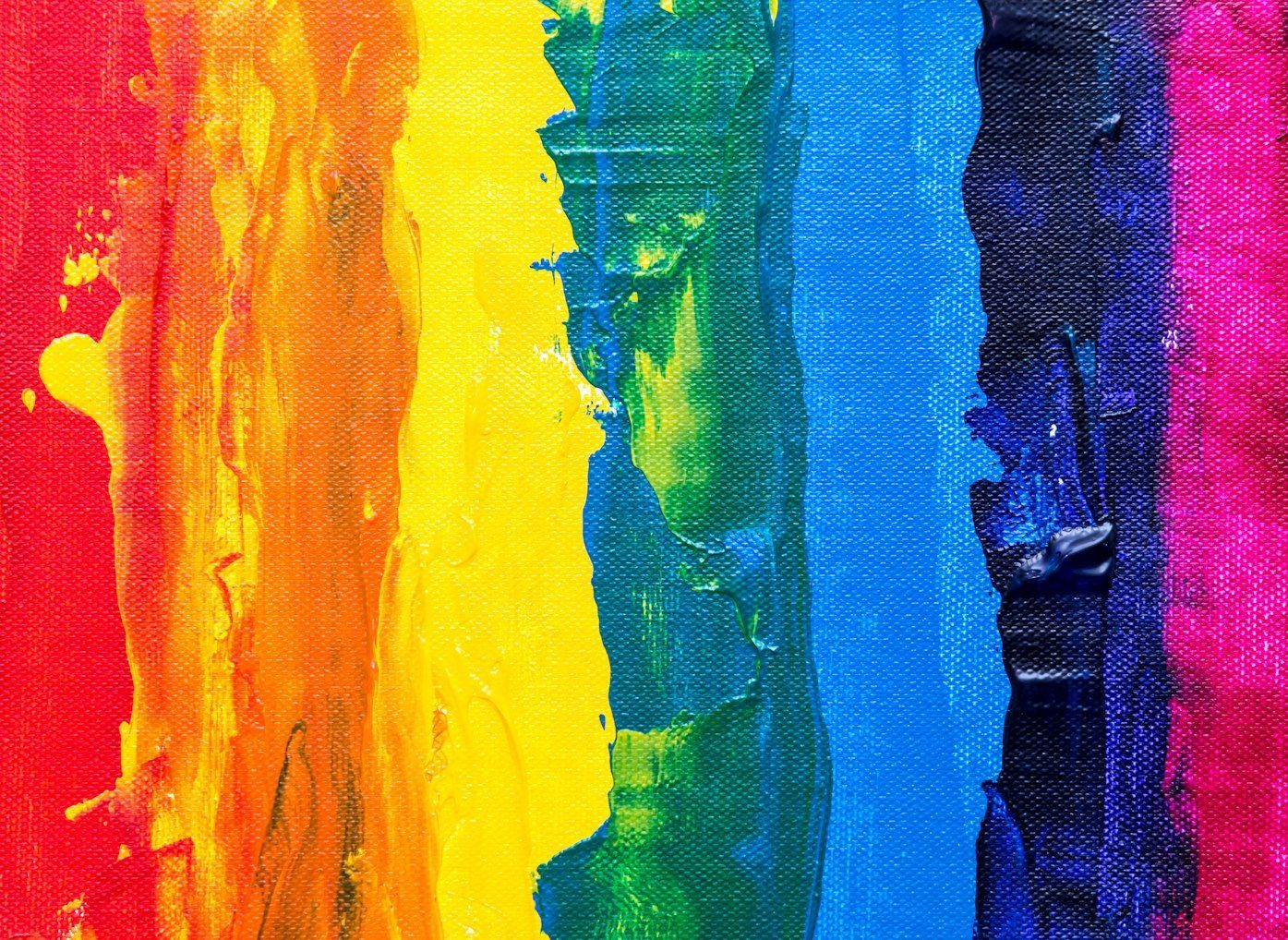

An evolving palette

A rainbow of history: 10 colors that have changed their meaning over time


Published on January 30, 2025


Image: Steve Johnson

What would life be like without color? Since ancient times, humanity has been captivated by colors, making great efforts to replicate them—first on the rough walls of caves, then on canvases, and eventually on everything we create. Though colors are simply _tricks of the light_—wavelengths in the electromagnetic spectrum—we’ve assigned deep meanings to them. These hues, in both bold contrasts and subtle shades, have shaped our cultures throughout history. Yet, just like language, their meanings have evolved. From pink once symbolizing masculinity to the concept of color as camouflage, the story of color is rich and ever-changing.

1

Red

Image: Joia de Jong

Red is, in more ways than one, the first color. In most languages, it is the first color named after black and white. It also happens to be the earliest pigment used by humans in art—prehistoric cave paintings from 75,000 years ago already feature red ochre, a pigment derived from clay. Red is also the first color a baby sees in the womb, and in nature, it frequently serves as a warning signal, used by animals and plants to deter predators.

Given its significance, it’s no surprise that red is one of the most popular colors in the world, carrying diverse meanings across different cultures. In many Asian cultures, red is associated with happiness and good fortune, while in most Western countries, it is strongly linked to love, passion, and danger. Throughout the twentieth century, it has also been adopted by various political movements as a symbol of strength and independence.

2

Blue

Image: Mo

In ancient times, blue was not recognized as a distinct color in many languages, including Greek, Chinese, and Hebrew, where it was seen as an extension of green. And even today, languages like Korean and Thai still blur the line between blue and green.

Nowadays, blue is the most popular color worldwide, often associated with calmness due to its connection with the sky and water. Curiously, its calming effects seem to extend beyond symbolism; studies from Japan and Scotland have shown that blue streetlights can reduce crime rates. Also, blue can convey a sense of sadness, as seen in the phrase "feeling blue," a connection likely rooted in its association with water and, by extension, tears.

3

Pink

Image: Carlota Vidal

Though pink has been described in literature since ancient times —a famous passage from Homer describes a _"rosy-fingered" dawn_— it didn’t have a proper name until the late 17th century. Nowadays, its soft hue is strongly associated with femininity, but this was not always the case.

In the 19th and early 20th centuries, pink was actually considered more suitable for boys, viewed as a youthful version of masculine red, while blue was linked to girls due to its association with the Virgin Mary. Although its gender associations have since reversed, pink remains widely associated with charm, tenderness, and romance, according to various surveys.

4

Black

Image: Jimmy Ofisia

While black might sometimes be described as the absence of color, in practice it has always been an important part of humanity’s palette. In fact, black has a long history, dating back to prehistoric cave paintings, where it was derived from charcoal, burnt bones, and manganese oxide.

While black often symbolizes death, fear, or sadness, it has also represented mystery and divine wisdom. By the 1300s, it was associated with authority and status, worn by royalty, clergy, and officials throughout Europe. In the 1800s, it gained favor among poets and businessmen, and since then, it has remained one of the most popular colors in fashion, likely due to its versatility and association with elegance.

5

White

Image: photo nic

Surprisingly, for many centuries white was a somewhat dangerous color due to its most popular pigment—Lead White—being derived from basic lead carbonate, a highly toxic compound. Despite this, the pigment was used extensively in paint and even cosmetics until it was finally banned in 1978.

Historically, white has symbolized purity and virtue, particularly in religious and cultural ceremonies. Roman brides wore white tunics over 2,000 years ago to signify virginity, and Queen Victoria’s white wedding gown in 1840 set the trend for modern bridal wear. However, in many Asian cultures, white represents mourning and is worn at funerals instead of weddings.

6

Green

Image: Becca Lavin

Green is commonly associated with nature, but it has a darker side, linked to concepts like envy, illness, and poison. One of its most infamous examples is Scheele’s Green, a pigment invented in 1775 by Swedish chemist Carl Wilhelm Scheele, which contained arsenic. This toxic pigment was used in various applications, including wallpaper, and it is believed to have contributed to the death of Napoleon Bonaparte, whose room was decorated with it.

Historically, green symbolizes not only the natural world but also wisdom. The ancient Egyptians associated green with the god Thoth, who guided souls to eternal life and knowledge, a connection later adopted by the Romans with their god Mercury. The word "green" itself derives from the Proto-Indo-European word "ghre," meaning "grow," highlighting its connection to nature and growth.

7

Purple

Image: Daiga Ellaby

Purple has long been associated with royalty and wealth, primarily due to the exorbitant cost of the dye used to create it. This tradition dates back to the Byzantine Empire, where Tyrian purple, derived from sea snails, required over 250,000 snails to produce just one ounce of dye. This tedious process made purple fabrics accessible only to the elite, and in some cases, sumptuary laws further restricted its use among non-nobility.

It wasn’t until the invention of a synthetic purple dye in 1856 that the color became widely available. Today, purple is the second most favorite color among women worldwide and is a fashionable hue worn year-round. Interestingly, despite its associations with wealth and power, the color appears in very few national flags, including those of Dominica, Spain, El Salvador, Nicaragua, and Mexico.

8

Orange

Image: Rachid Oucharia

Curiously, oranges are not named after the color; rather, the color takes its name from the fruit! Before the 1500s, the color orange didn’t have a name and was referred to as yellow-red or saffron. This color was often reserved for nobility, and it is said that Dutch farmers bred orange carrots—previously, most carrots were actually purple—as a tribute to the House of Orange, one of the most powerful royal families in Europe during the 16th and 17th centuries.

Today, orange is recognized for its high visibility, making it a practical choice for safety equipment like life jackets, construction barriers, and road signage. One famous example of this application is the Golden Gate Bridge, painted in a shade known as "International Orange" to ensure strong contrast against blue skies. In India and the Middle East, orange is also associated with mourning and sacredness.

9

Khaki

Image: Jasmine Yu

Khaki is often utilized by militaries around the world for uniforms, particularly in arid regions where it blends seamlessly with sandy or dusty terrain. The term itself has been part of the English language since 1848, derived from an Urdu word meaning "soil-colored," and was originally introduced as a military color by the British Army.

Its practicality was recognized in the early 19th century as a response to the limitations of bright colors, like the traditional red coats, which were impractical for camouflage in combat. Today, khaki has also become a staple in civilian smart casual fashion, being associated with adventure and outdoorsmanship, and with the word itself often referring to a specific type of khaki-colored chino trousers.

Looking for an extra scoop of literary fun?

Learn more with our Word of the day

vivid

/ˈvɪvəd/