Wacky history

Lost your dog? Don't cross the border! 10 weirdest wars ever


Published on August 3, 2025


Image: Museums Victoria

Not all conflicts are fought for power or territory—some "wars" erupted over pies, buckets, and even unsuspecting animals. Human history, it seems, can be incredibly unpredictable. From bizarre misunderstandings to centuries-long stalemates over trivial disputes, here are 10 of the strangest "wars" ever fought.

1

The Pastry War

Image: The Now Time

In 1838, French pastry chef Remontel demanded compensation after his shop in Mexico was looted by soldiers. France sent warships to collect, escalating into an all-out war.

When Mexico refused to pay, France blockaded Veracruz and bombarded the city. The war only ended when Britain mediated, leading to Mexico paying 600,000 pesos to avoid further conflict.

2

The Toledo War

Image: Alex Boyd

A land dispute over a strip of land called the Toledo Strip caused Ohio and Michigan to nearly go to war in the 1830s. The states armed militias but only exchanged minor skirmishes.

The conflict only ended when the federal government intervened, awarding Ohio the disputed land and giving Michigan the Upper Peninsula as compensation.

3

The War of the Stray Dog

Image: Alexandra Mirgheș

In 1925, a Greek soldier chased his stray dog across the Bulgarian border and was shot, sparking hostilities. In response, Greece invaded, capturing several villages before the League of Nations intervened.

Greece was ordered to withdraw and pay reparations to Bulgaria. Despite its absurd start, the conflict helped prove the effectiveness of international diplomacy in averting larger wars.

4

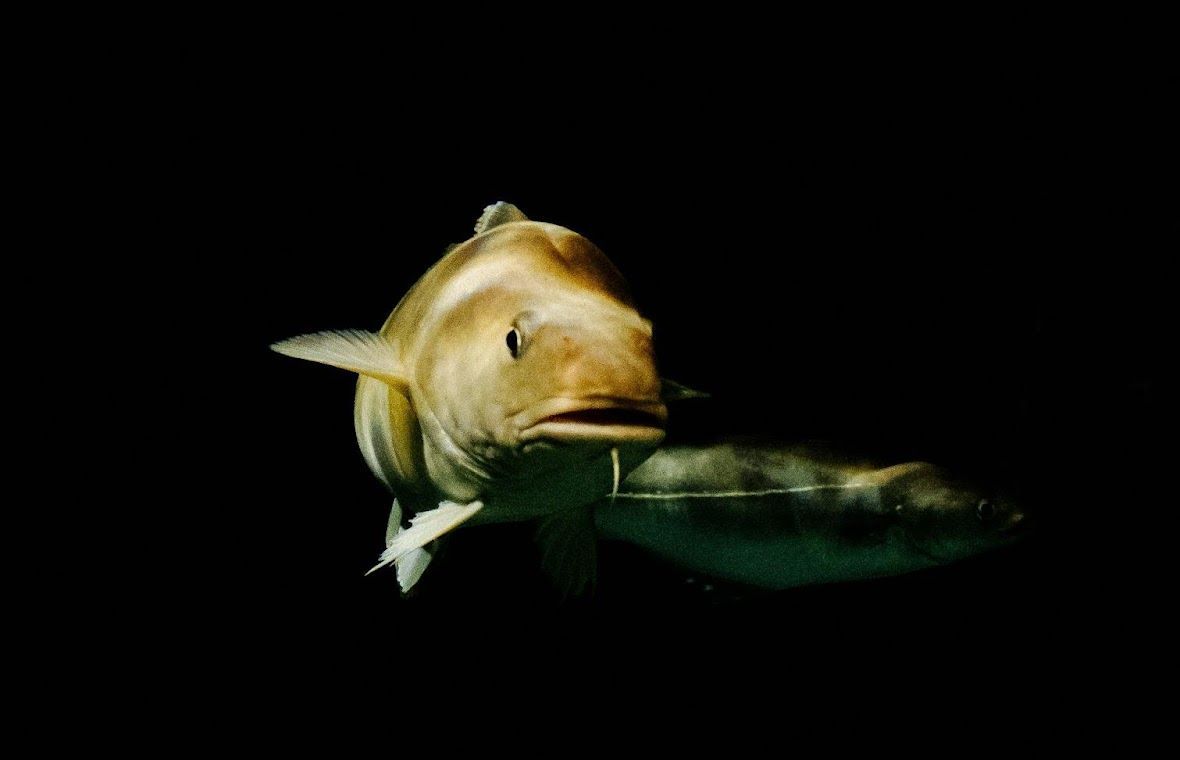
The Cod Wars

Image: Ricardo Resende

A 20th-century conflict, the Cod Wars were disputes between Iceland and the UK over fishing rights in the North Atlantic. Iceland extended its fishing boundaries several times, angering British trawlers.

Despite no deaths, the confrontations involved ramming ships and cutting nets. Iceland eventually prevailed, asserting control over its waters and reshaping international fishing agreements.

5

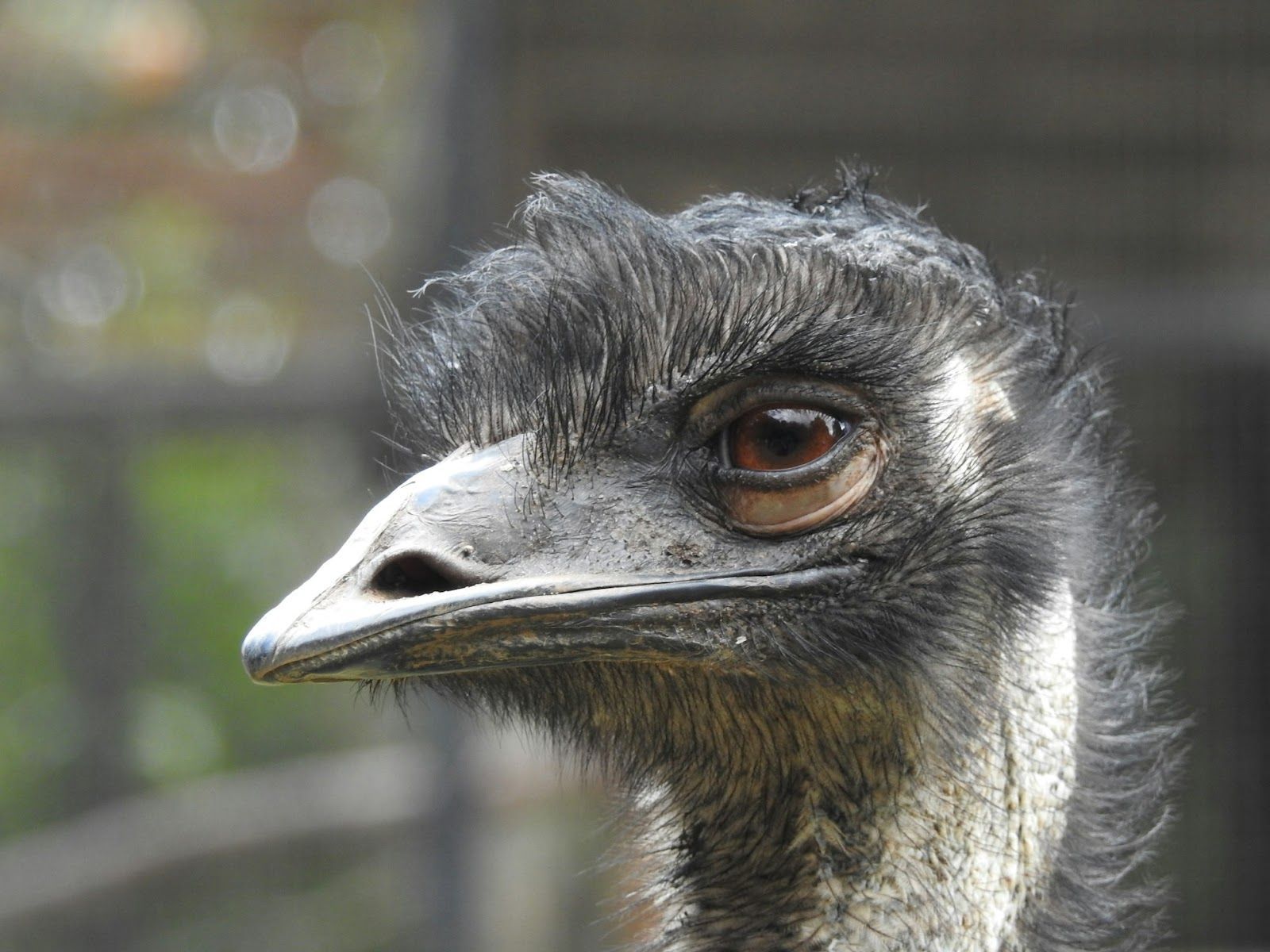
The Emu War

Image: Sharon Co Images

In 1932, Australia deployed soldiers to manage an emu overpopulation wreaking havoc on crops. Using machine guns, they expected an easy victory but were surprisingly outwitted by the agile birds, accomplishing nothing.

The campaign failed spectacularly, and emus remains a humorous symbol of nature’s resistance to human efforts, even to its military might! The government later turned to fencing to manage the problem without making fools of themselves.

6

The War of the Bucket

Image: Pavlo Semeniuk

In 1325, rival Italian city-states Bologna and Modena clashed when Modenese soldiers stole a bucket from Bologna's city well. A large battle ensued, resulting in well over 2,000 deaths.

Eventually, Modena triumphed, and the bucket is still displayed as a trophy in the city. While the origins of the conflict might seem bizarre, it highlights the intense (and sometimes absurd) rivalries between independent cities in medieval Italy.

7

The Pig War

Image: Christopher Carson

In 1859, on the still undefined U.S.-Canada border, a stray pig innocently crossed the border to eat vegetables from a neighboring farm, prompting an angry farmer to shoot it. This led to a feud with his neighbor that escalated into a military standoff between American and British forces, which lasted months.

The "war" only ended when the border issue was peacefully resolved through international arbitration. Fortunately, there were no casualties, except for the poor pig.

8

The Three Hundred and Thirty-Five Years War

Image: Clark Young

This conflict between the Netherlands and the Isles of Scilly began during the English Civil War. According to local historians, the small archipelago declared war on the Netherlands but never bothered to sign a peace treaty afterward.

Despite no fighting, it technically lasted over 300 years due to the forgotten declaration of war. In 1986, a peace treaty was finally signed, bringing an end to one of history’s most prolonged and bloodless "wars."

9

The Whisky War

Image: martin bennie

Since the 1970s, Denmark and Canada have engaged in a playful "war" over Hans Island, with each side leaving flags and bottles of whisky or schnapps during their visits.

The dispute was finally resolved in 2022, with the island being split between the two nations. This resolution also resulted in Canada and Denmark sharing a land border, meaning neither country borders just one other—the United States in the case of Canada, and Germany in the case of Denmark.

10

The Kettle War

Image: Maria Angelova

In 1784, the Holy Roman Empire and the Dutch Republic clashed over trade rights, with the Dutch winning the conflict by firing only one shot. The only casualty? A kettle of soup.

Apparently, when the bullet ricocheted off the metal container, the captain became so nervous that he immediately surrendered. While this incident wasn’t the last conflict between the two states, it remains a humorous example of history’s quirks.


COSMIC LEXICON

Discover Ten Astronomical Terms You've Likely Never Heard Before!


Published on August 3, 2025


Image: Guillermo Ferla

Have you ever dreamed of traveling to space? Just imagine the variety of peculiar objects, scenarios, and environments awaiting there, some of them being completely unimaginable here on Earth.

While we are all familiar with stars, planets, moons, comets, and eclipses, there is a fascinating lexicon of lesser-known astronomical terms you have probably never heard of. Today we'll unveil 10 of these terms, each of which names amazing phenomena that will leave you speechless!

1

Magnetar

Image: Bryan Goff

Isn't it amazing to look up and see the beautiful stars that light up our night sky? But wait, because you haven't heard of magnetars yet!

A magnetar is a star, but not just any star. It's a type of neutron star born from the remnants of a huge supernova explosion. A magnetar differs from other celestial bodies due to its exceptionally potent magnetic field beating that of Earth by trillions of times. This immense magnetic capacity enables it to emit electromagnetic radiation, including X-rays and gamma rays, and also initiate intense seismic events known as starquakes.

2

Quasar

Image: Viktor Forgacs™️

Yes, this word might sound like a delicacy from French cuisine or the name of a precious gem, but that is not what's going on here.

Short for "quasi-stellar radio source," a quasar is an incredibly luminous and energetic object that stands out at the center of some galaxies, powered by huge black holes. With its intense energy and luminosity, a quasar becomes a cosmic force that emits stunning amounts of electromagnetic radiation.

Nowadays, quasars are observed in distant parts of the universe, far away from Earth, offering scientists precious data about black holes and the early stages of galaxy formation.

3

Absolute Zero

Image: Doug Walters

Are you a winter or a summer person? Well, regardless of your preference, Absolute Zero would freeze the bravest of winter lovers.

Absolute Zero represents the theoretical lowest possible temperature. This concept plays a crucial role in understanding the behavior of matter in extreme environments, such as those of outer space.

So, do you want to know what the coldest possible temperature is? It is an incredible -460 degrees Fahrenheit (or -273.15 degrees Celsius), also called 0 Kelvin, which results in particles reaching a state of minimal motion. You can be sure that weird things happen at such temperatures!

4

Syzygy

Image: NASA

While it may look like we accidentally dropped something on the keyboard, that is not the case. "Syzygy" is a real astronomical term that refers to the phenomenon of alignment of 3 celestial bodies.

It might not sound like the kind of word you'd expect to hear from a scientist, but this funny term is often used to describe the alignment of the Earth, Moon, and Sun. When these three align perfectly in a straight line, astronomers describe them as being "in syzygy."

If you stay updated on this month's astronomical events, you might "casually" drop this word into conversation with friends!

5

Achondrite

Image: OLHA ZAIKA

You may be familiar with meteorites, but have you ever heard of achondrites?

Achondrites are the lesser-known members of the meteorite family, distinguished by a specific characteristic: the absence of chondrules, which are small spherical grains found in other types of meteorites, a feature that makes them special and rare.

Achondrites are thought to originate from celestial bodies like planets or moons. Therefore, they could contain key information about those 'parent' celestial bodies and the events that shaped them.

6

Aphelion

Image: NASA

As you probably already know, Earth's orbit around the Sun isn't perfectly circular. At certain points, we are closer to the radiant star, while at others, we travel to more distant places. The term "aphelion" denotes the specific moment of a celestial body's orbit at which it reaches its greatest distance from the Sun.

Want to know how far away from our beloved Sun we can be? When Earth reaches its aphelion, something typically occurring in July, it's positioned an average of 94,506,364 miles from the Sun, although this distance may fluctuate due to various factors. In any case, don't forget to wear sunscreen!

7

Perihelion

Image: Melissa van Niekerk

Of course, celestial bodies' orbits not only have a point farthest from the Sun but also a point closest to it. The "perihelion" marks the opposite of the aphelion. That means it's the point where a celestial body is nearest to the Sun.

When Earth is at its perihelion, it is approximately 91,404,095 miles from the Sun, which occurs in the month of January. While it might not appear significant at first glance, the variance in Earth's distance from the Sun between aphelion and perihelion is around 3 million miles! You know, in the expanse of space, distances aren't exactly just around the corner.

8

Astronomical unit

Image: NASA

We have already identified the farthest and closest points to the Sun, so why not find the average? That's precisely what's been done, resulting in a measurement known as the Astronomical Unit.

So, the Astronomical Unit represents the average distance between the centers of Earth and the Sun, translating to about 92,955,807 miles.

Now, let's do some math (don't worry if numbers aren't your thing, we've got it covered). Based on the provided information, when Earth is at its perihelion, it's approximately 0.983 Astronomical Units (AU) from the Sun. In comparison, at aphelion, it's about 1.017 AU from the yellow dwarf.

9

Facula

Image: Braňo

Have you had the chance to take a look at NASA's photos of the Sun? Of course, these images have the power to astonish anyone as they show the glorious beauty of our nearest star. But if you take a closer look at those pictures, you'll notice lighter and brighter spots present in the photosphere (the visible "surface" of the Sun, a layer about 250 miles thick). Each one of these marks is called a facula.

In addition to their luminosity, these spots shine with intense heat, quite warmer than the surrounding areas, and they are found in regions with extremely powerful magnetic fields.

10

Planetoid

Image: NASA

As you can infer from the end of the word, planetoids are celestial bodies that orbit the Sun, similar to planets but smaller. We can think of them as the little babies in the cosmic family.

That's right, it's another name for minor planets or dwarf planets, such as the well-known Ceres and Pluto. And don't forget, asteroids are part of this category, too.

Planetoids differ from planets in several key aspects: they have a less structured composition and also have more irregular orbits. In addition, because of their smaller size (which can vary from just a few yards to several hundred miles in diameter), planetoids also possess less gravitational pull.

Looking for an extra scoop of literary fun?

Learn more with our Word of the day

alter

/ˈɔltər/