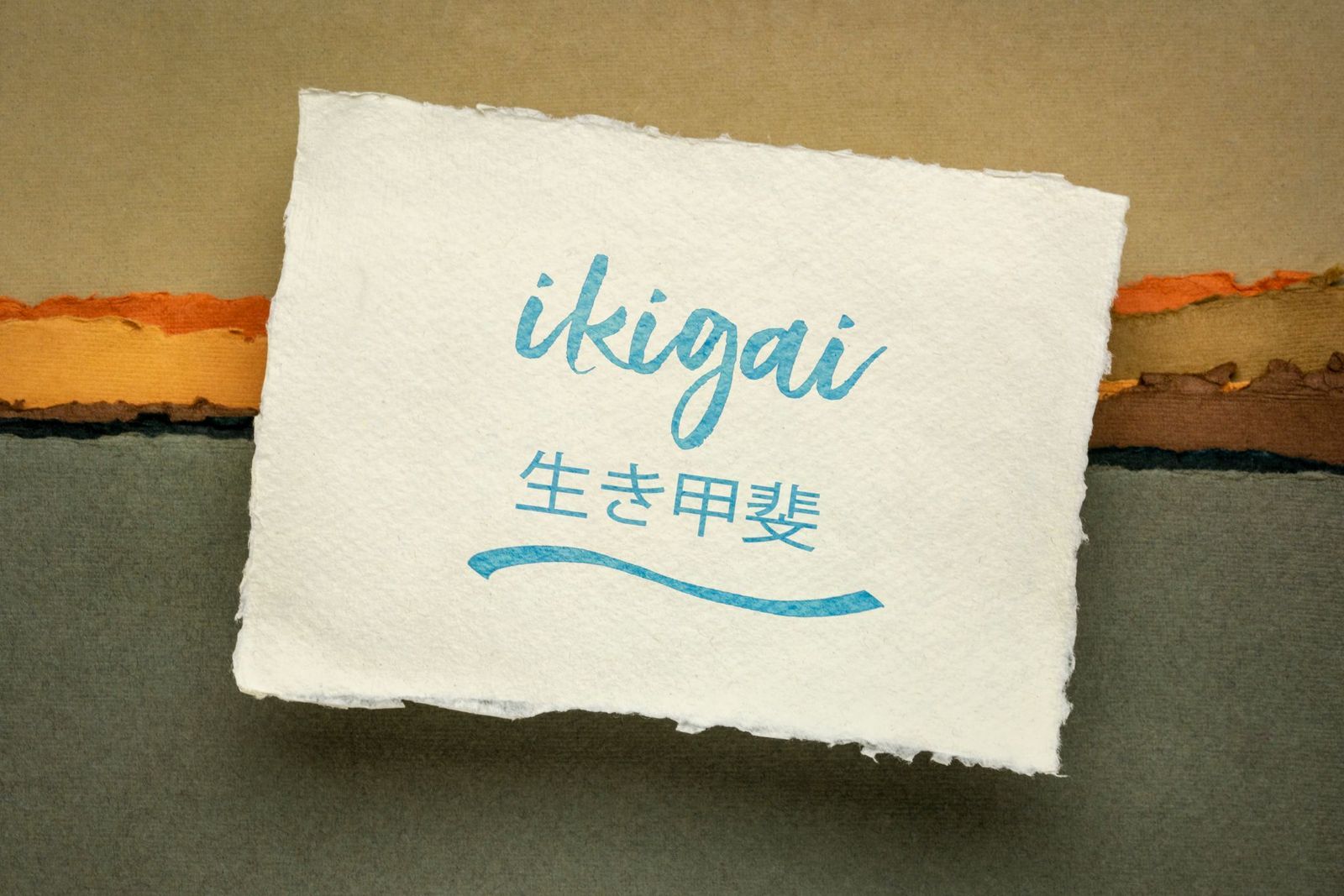
What is your Ikigai? 10 foreign words that celebrate life's pleasures


Published on August 4, 2026

Image: 9dream studio

In English, we often rely on the single, broad term "happiness" to describe everything from winning the lottery to eating a piece of pie. Yet, around the world, different cultures have come up with precise words to capture the different flavors of joy. From the quiet peace of dawn in Scandinavia to the musical ecstasy of the Middle East, here are 10 foreign words that describe unique types of happiness.

1

Hygge (Danish)

Image: Olena Rudo

Pronounced hoo-ga, this Danish word has captured global attention over the past decade. Hygge is a psychological state of warm, cozy contentment.

It’s the feeling of sitting around a wooden dining table illuminated by soft candlelight, sharing a cup of coffee with close friends. Hygge encourages us to forget about life’s superficial distractions and savor the present moment with warmth, safety, and human connection.

2

Ikigai (Japanese)

Image: marekuliasz

Originating from Okinawa, an island known for its high concentration of centenarians, ikigai (pronounced ee-kee-guy) translates to "a reason for being". It represents the sweet spot where your passions, talents, values, and practical skills overlap.

Unlike grand notions of success, ikigai is often quiet and deeply personal. It’s the joy that motivates you to get up in the morning, whether that reason is tending to your garden, perfecting a craft, or caring for your family. It’s happiness not as a distant goal, but as a daily practice.

3

Gökotta (Swedish)

Image: javi_indy

It’s no surprise that the Scandinavian culture has a specific word for outdoor bliss. Gökotta (pronounced yoh-koh-tah) literally translates to "cuckoo-dawn". It describes the deliberate act of waking up early in the morning, often at the break of dawn in spring, specifically to go outside into nature.

Gökotta reminds us that peace and renewal are often waiting for us in the quietest hours of the morning, as long as we are willing to wake up early enough to catch them.

4

Schadenfreude (German)

Image: Gorgev

Who said happiness can’t be a little mischievous? Schadenfreude (pronounced shah-den-froy-duh) combines the German words for "damage" (Schaden) and "joy" (Freude). It describes the secret, malicious pleasure a person feels when watching someone else suffer a minor, non-tragic mishap.

Whether it’s smirking when a politician stumbles on stage or watching an arrogant rival lose a game, schadenfreude captures a raw side of human psychology that almost everyone has experienced but rarely admits to.

5

Firgun (Hebrew)

Image: PeopleImages

On the opposite side of schadenfreude is the Hebrew concept of firgun (pronounced feer-goon). This informal term, which entered modern Hebrew in the mid-20th century, describes genuine, unselfish joy felt for another person’s accomplishments or good fortune.

To practice firgun means celebrating someone else’s promotion, engagement, or success without envy or resentment. It’s an empathetic form of happiness that strengthens community ties.

6

Arbejdsglæde (Danish)

Image: voronaman

While many societies view labor as a tedious chore, the Nordic countries have a different view. The Danish word arbejdsglæde (pronounced ah-beyds-gleh-theh) combines arbejde (work) and glæde (joy).

This term describes the satisfaction derived from a job well done. It stems from the feeling of enjoying your colleagues and having a healthy work-life balance. Also, knowing that your daily efforts contribute meaning to the world.

7

Tarab (Arabic)

Image: MAYA LAB

In Arab musical tradition, tarab (pronounced tah-rab) refers to a transcendent state of emotional ecstasy induced by listening to moving music.

It describes the moment when a performer’s vocals or instrumental mastery captivates the audience, filling the room with an overwhelming wave of emotion. In other words, tarab highlights music as a vehicle for profound joy.

8

Ayodele (Yoruba)

Image: Anatoliy Cherkas

In the Yoruba language of West Africa, Ayodele (pronounced ah-yoh-deh-leh) is both a traditional given name and a statement meaning "joy has come home".

The term conveys the happiness felt when a baby is born. This new child is more than an addition to the family; it’s an entity that carries warmth, light, and a renewed purpose.

9

Waldeinsamkeit (German)

Image: DimaBerlin

Rooted in German Romanticism, Waldeinsamkeit (pronounced valt-ayn-zahm-kayt) joins Wald (forest) and Einsamkeit (solitude). It describes the feeling of bliss experienced when wandering alone through the woods.

It’s all about a restorative connection with the natural world. Stepping away from the buzz of city life to walk beneath a canopy of green leaves allows the mind to slow down, reset, and experience a quiet, elemental happiness.

10

Joie de vivre (French)

Image: frantic00

Perhaps this is the most famous expression of happiness. The French phrase joie de vivre (pronounced zhwah duh veev-ruh) translates literally to "the joy of living".

It represents an infectious love for existence itself. Someone who has joie de vivre finds delight in a fresh baguette, a good conversation, or a casual afternoon walk. It’s a philosophy that treats living as an art form worthy of celebration.


DECODING DNA

10 Surprising Facts About Genetics and DNA


Published on August 4, 2026


Image: Sangharsh Lohakare

Genetics can both fascinate and befuddle us with its complexity, but understanding its mechanisms just might be the key to deciphering the building blocks of our entire existence. From genes that are shared between different species to viruses that insert themselves into our DNA, here are 10 things you—likely—didn’t know about genetics and DNA.

1

Human DNA Could Stretch to the Moon and Back

Image: Ganapathy Kumar

We vastly underestimate the amount of DNA we carry around in our cells. If you were to unravel all the DNA molecules in your body and lay them end to end, they would stretch an astonishing 10 billion miles—enough to reach the moon and back over 40 thousand times! However, despite the vast amount of DNA in our bodies, if we were to gather and weigh all of it together, it would surprisingly amount to only around 8 ounces.

2

You Share A Lot Of DNA with Bananas

Image: Harshad Khandare

Surprisingly, humans share about 50% of their DNA with bananas! But this shouldn’t be too surprising given the fact that all life on Earth evolved from a single organism, roughly 3.5 billion years ago. Every living creature on our planet has the same type of DNA, undergoing almost identical processes in order to live and reproduce.

3

Some Animals Can Regenerate Lost Body Parts

Image: Pedro Lastra

Certain species, like salamanders and starfish, possess remarkable regenerative abilities, allowing them to regrow lost limbs. Other species like axolotls or jellyfish can even go further, regenerating anything from parts of their brains to crucial internal organs, or even recovering from being cut in half! Understanding the genetic mechanisms behind this ability holds promise for regenerative medicine and even tissue engineering.

4

You Inherit More DNA from Your Mom

Image: Hillshire Farm

Surprisingly, we inherit slightly more DNA from our mother’s side. While everyone receives 50% of DNA from each parent, a small portion of mitochondrial DNA, which is passed down exclusively from mother to child, contributes to this imbalance. Mitochondrial DNA also allows for tracing the ancient relationships of human populations, and for this reason, it is extensively studied in anthropology and evolutionary biology.

5

DNA Can Store Digital Data

Image: Pietro Jeng

Scientists have already successfully stored digital data within DNA molecules, and many believe the technique has potential as a long-term storage solution. Its vast storage capacity and durability make it very attractive to store digital information, but the technology is still in development.

6

DNA Can Be Altered by Environmental Factors

Image: George Prentzas

DNA is sort of a blueprint that determines most of our traits and characteristics, but it is far from having the last say on how particular traits or genes will express themselves. Environmental factors can modify gene expression without changing the underlying DNA sequence, potentially impacting health and development. This is the reason that even identical twins have noticeable differences, like unique fingerprints.

7

Trauma Can Sometimes Be Passed Down In Your DNA

Image: Transly Translation Agency

Studies have shown that certain environmental factors experienced by parents, like exposure to stress or traumatic events, can leave chemical marks on DNA that are passed down to offspring. This phenomenon is called transgenerational epigenetic inheritance, and though it seems to contradict some of the tenets of Darwinian ideas, it is now widely accepted as one of the many mechanisms of genetic inheritance in most living organisms.

8

Genetic Mutations Can Make You Immune To Certain Diseases

Image: Fusion Medical Animation

Rare genetic mutations can give natural immunity to certain diseases. In time, if these genes can be distributed sufficiently within a given population this can even lead to collective immunity. For example, there is a genetic mutation called CCR5-delta 32 that provides natural immunity to the Human Immunodeficiency Virus (HIV) by altering the structure of a specific protein these viruses use to infect cells. Studying these unique phenomena can be promising for developing cures and more effective treatments.

9

We Carry A Lot Of 'Junk' DNA

Image: Sangharsh Lohakare

A significant portion of the human genome consists of non-coding DNA, often referred to as "junk" DNA because it does not code for proteins. However, recent research suggests that this non-coding DNA plays important roles in gene regulation and genome stability, challenging the notion of it being just 'junk'.

10

DNA Can Be Transferred Between Species

Image: Belinda Fewings

Horizontal gene transfer is a very weird phenomenon where genetic material is transferred between completely different species, bypassing traditional vertical inheritance from parent to offspring. Although the mechanism behind this process is poorly understood, scientists believe that it played a significant role in the evolution of many organisms. In fact, certain types of viruses force this to happen in order to encode themselves into the DNA of their hosts and reproduce.

Looking for an extra scoop of literary fun?

Learn more with our Word of the day

accede

/ækˈsid/