What is the longest place name in America? Meet 10 word giants


Published on July 11, 2026


Image: vvoe

In casual conversation, you’d probably never use most English words that go past 15 or 20 letters. They are usually scientific or medical terms built by stacking smaller words together. Yet, exploring these linguistic giants is a fun way to learn how our language handles specialized vocabulary. Let’s take a look at some of the longest words in the English-speaking world, starting with one so ridiculously big it stretches the definition of what a word can be. Can you guess what it is?

1

Methionylthreonylthreonylglutaminylarginyl…

Image: Andrey_Popov

To kick off the list, we have to look at a number that looks like a typo, but is entirely accurate: 189,819 letters. This is the full chemical name for the human muscle protein known commonly as titin.

Because proteins are complex chains of amino acids, their formal chemical names must list every single component in order. This particular sequence starts with methionylthreonylthreonylglutaminylarginyl… and keeps going for thousands of syllables. If you wanted to print it out, it would easily fill more than 50 pages. Want to try reading it out loud? You might want to clear your schedule, because it would take more than three hours.

2

Taumata…

Image: Michal Durinik

The longest place name in English belongs to a 1,001-foot-high hill located in Hawke's Bay, New Zealand. It boasts a staggering 85 letters: Taumatawhakatangihangakoauauotamateaturipukakapikimaungahoronukupokaiwhenuakitanatahu.

Derived from the Māori language, this long title translates to a poetic statement: "the place where Tamatea, the man who had big knees, the climber of mountains, the slider, the land-swallower that traveled about, played the nose flute that he had to the loved ones". Unsurprisingly, locals and tourists alike usually save their breath and refer to it simply as "Taumata".

3

Chargoggagoggmanchauggauggagoggchaubunagungamaugg

Image: Wangkun Jia

Not to be outdone, the United States has its own geographical giant sitting in Massachusetts. With a total of 49 letters, Lake Chargoggagoggmanchauggauggagoggchaubunagungamaugg is the longest official place name in America.

While the name originates from the language of the Nipmuc people, this huge version is believed to be a humorous invention by a local newspaper editor in the early 20th century. Along with the long spelling, the editor popularized a fake translation: "You fish on your side; I fish on my side; nobody fishes in the middle." Today, it’s also known as Webster Lake by anyone trying to type it into a GPS.

4

Pneumonoultramicroscopicsilicovolcanoconiosis

Image: west_photo

The longest word entered in most standard English dictionaries is Pneumonoultramicroscopicsilicovolcanoconiosis, which is 45 characters long. Found in specialized volumes like Merriam-Webster’s Medical Dictionary, it refers to a severe lung disease caused by the chronic inhalation of fine silicate or quartz dust, typically associated with volcanic activity. Ironically, medical professionals don’t actually use this word in daily practice; they simply call the condition silicosis.

5

Pseudopseudohypoparathyroidism

Image: H_Ko

Pseudopseudohypoparathyroidism, at 30 letters, is a rare medical condition that mimics the physical skeletal traits of another disorder called pseudohypoparathyroidism. Aside from its impressive physical length, it holds a unique distinction in lexicography: it’s the only word in the dictionary that features a repeating consecutive "pseudo".

6

Antidisestablishmentarianism & more

Image: chrisdorney

There’s a unique category of words that almost never appear in real sentences. Because they lack everyday utility, dictionaries acknowledge their existence but choose not to give them formal entries.

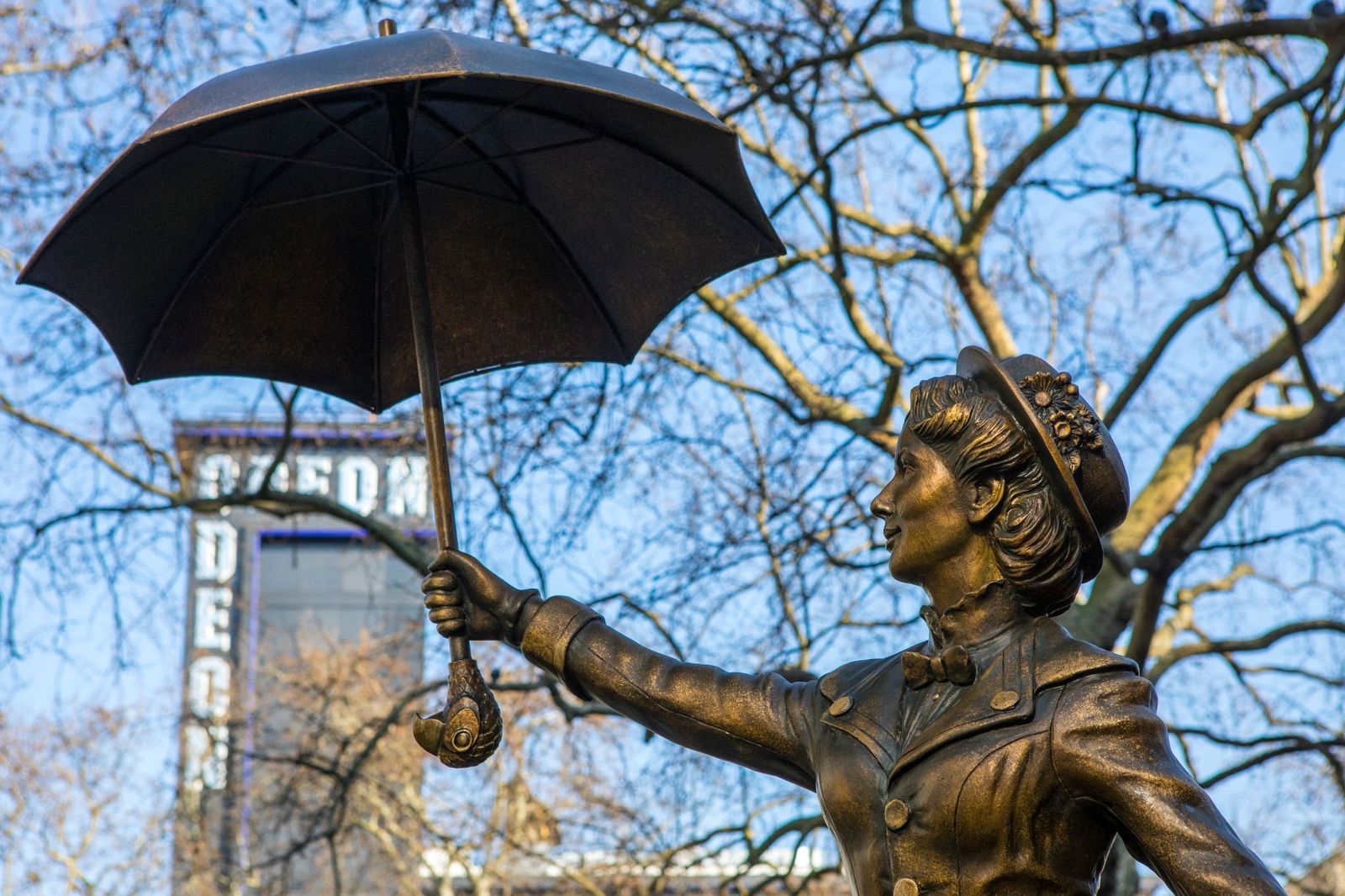
This group includes antidisestablishmentarianism (28 letters), which refers to a 19th-century political movement in Britain. Also, the classic floccinaucinihilipilification (29 letters), a mashup of Latin roots that means the act or habit of judging something to be completely worthless. Finally, the most beloved of this group is supercalifragilisticexpialidocious (34 letters), the iconic nonsense phrase made famous by Walt Disney’s Mary Poppins.

7

Methylenedioxymethamphetamine

Image: BLACKDAY

In the medical world, knowing a term like methylenedioxymethamphetamine (29 letters) is essential. While that mouthful might look unfamiliar at first glance, it refers to a synthetic amphetamine known for its hallucinogenic properties. Because nobody wants to write or say all 29 letters in a casual conversation, people have opted to use its much shorter street name, ecstasy, or its concise chemical acronym, MDMA.

8

Electroencephalographically & more

Image: YAKOBCHUK VIACHESLAV

In the context of a research lab, some specialized technical terms fall into the twenty-to-thirty-letter sweet spot. Some of them are: Electroencephalographically (doing something by means of an electroencephalograph, a medical machine used to read and record brain wave patterns); radioimmunoelectrophoresis (a laboratory technique that uses radioactive labels to analyze specific proteins); laryngotracheobronchitis (a medical condition involving severe inflammation in the larynx, trachea, and bronchial tubes); and hydrochlorofluorocarbon (a type of greenhouse gas).

9

Counterrevolutionaries & more

Image: Casimiro PT

These are long but feel more recognizable. At 22 letters, we can find terms like counterrevolutionaries (individuals who fight to overthrow a newly established revolutionary government), deinstitutionalization (the social and political process of moving patients out of asylum institutions), and otorhinolaryngological (anything relating to the medical specialty of the ear, nose, and throat).

10

Incomprehensibilities & more

Image: Pornpimon Ainkaew

If you’re looking for everyday 21-letter words, terms like incomprehensibilities (things that are impossible to understand) will do the trick. Also, this tier features medical terms like pseudohermaphroditism (a condition involving ambiguous external genitalia) and psychoneuroimmunology (the branch of medicine that studies how a person’s emotional state impacts their immune system).


ENJOY THE HOLIDAYS

Discover 10 Traditions From Around The World To Help You Welcome The New Year!


Published on July 11, 2026


Image: Myriam Zilles

A new year is almost upon us, and with it comes the promise of resolutions, wishes, and good times with friends and family. We would like to take this opportunity to wish you a lovely new year, and we can’t think of a better way to do that than to explore ten different and exciting New Year’s Eve traditions from all over the world. Looking for a fun, new way of celebrating this year? Keep on reading and enjoy our list!

1

Grapes, anyone?

Image: Nataliya Melnychuk

Want to make sure the twelve months of the next year meet your expectations? Spanish people might be able to help: they have a hundred-year-old tradition to make sure the upcoming year is filled with good fortune. And what’s that method, I hear you ask? Grapes, of course!

The Twelve Grapes is a tradition that dates back to at least the end of the 19th century, and it consists of eating a grape for each of the midnight bell strikes on December 31st. Most people make twelve wishes, one for each grape eaten. This tradition has expanded to several other Spanish-speaking countries and communities.

2

We hope you brought a sweater!

Image: Daniel Born

This one is only for those not afraid of the cold. A rather recent Russian tradition (that goes back approximately 25 years) involves two divers planting an underwater New Year’s tree below the icy waters of the frozen Lake Baikal. These two adventurers dive for more than 100 meters in waters with a temperature of 24.8 F, after which they are aptly nicknamed "Father Frost" and "The Ice Maiden".

3

Haud Hogmanay!

Image: Chris Flexen

As anyone who has ever sung Auld Lang Syne can testify, Scotland is synonymous with New Year’s Eve celebrations. Hogmanay is a Scots word that means "last day of the old year", and it has become the name for celebrating the New Year in a Scottish manner. Celebrations usually include the morning of January 1st, and sometimes even January 2nd, which is a Scottish bank holiday.

Customs vary throughout the Scottish regions, although they usually involve celebrating and exchanging gifts with friends and family. Some regions, like Aberdeenshire, participate in a rather extreme local custom. Residents take part in a ceremony down the main street, swinging fireballs made of barbed wire and flammable materials atop their heads. This is a way to ensure that any bad spirit might be burned before the start of the new year.

4

Shh… Quiet Please.

Image: Kristina Flour

If you think back on your last New Year’s Eve celebration (or maybe even your past five), you might remember a night of enjoyable excess: it’s a loud, festive affair, filled with fireworks, laughter, and perhaps a little too much eating and drinking. Which is perfectly fine—a bit of overindulgence is a lovely way to welcome the new year. However, should you want to experience a completely opposite way of celebrating, you can always take a trip to Bali, Indonesia.

Held in March, the Balinese New Year is called Nyepi and it is a day dedicated to silence and meditation. Nyepi is held for 24 hours from 6 a.m., during which Balinese people deeply commit to self-reflection and fasting: most shops don’t open, no people are allowed onto the beaches and streets, and the only airport in Bali remains closed for the day. The only ones exempt from these restrictions are emergency services responding to life-threatening situations.

5

Water fight!

Image: Lucas Mellec

If you happen to travel to a Southeast Asian nation like Cambodia or Thailand during their New Year’s celebrations, a stranger on the street might douse you with water. This might sound rude, but in reality, that well-intended passerby might actually be wishing you good luck and blessings for the upcoming year.

These New Year celebrations, known by Westerners as the Water Festival, traditionally involve sprinkling water as a sign of respect. However, since the new year falls on the hottest month in Southeast Asia, everyone ends up involved in a boisterous and welcomed splashing.

6

We hope those are comfortable!

Image: James Lee

Shortly after Christmas, many department stores in Italy begin to sell a rather specific item: red underwear. According to Italian tradition, wearing red underwear (whichever type you prefer) during New Year’s Eve awards the wearer with good luck and a successful year. Many Italians also believe that, for this tradition to work, the underwear must be new and only worn on New Year’s Eve before being thrown out.

7

A New Year’s wish with many layers

Image: Mockup Graphics

On New Year’s Day, many Greek families hang a few onions on their doors, in a tradition that dates back at least several centuries: In ancient Greece, onions were considered a sign of renewal and a way to increase fertility. Nowadays, Greeks usually hang an onion after attending the New Year’s Day church service as a way to ensure a year filled with the promise of renewal, good luck, and personal growth.

8

Now Boarding…

Image: Sun Lingyan

Tourists arriving in Colombia on New Year’s Eve might be surprised to see that they are not the only ones carrying around luggage. Theirs might be heavier, though, as many people in Colombia carry empty suitcases up and down the street to celebrate the new year. This tradition is followed to ensure travel and leisure and as a happy reminder of the many adventures the new year might bring.

9

Care for a drink of ash?

Image: Kateryna Hliznitsova

Trust us, this one is better than it sounds. Another Russian tradition makes it to this list, and this one involves toasting with a weird component added to your glass. During New Year’s Eve, many Russians write down a wish for the next year on a piece of paper, which they then burn down and mix the ashes onto a champagne glass. Those living in Moscow also toast their glasses when the Kremlin’s Spasskaya Tower rings at midnight, and drink their slightly ashy champagne while thinking of their New Year’s wish.

10

You’ve got mail!

Image: Joshua Hoehne

While not completely restricted to New Year’s celebrations, Chinese people traditionally give out a red envelope as a gift during important celebrations. Since the color red symbolizes happiness and good luck in Chinese culture, these gifts are a way to send your best wishes of fortune to someone. The envelopes (known as hongbao in Mandarin, lai see in Cantonese, and ang pow in Hokkien) are usually filled with money, and decorated with ornate and beautiful Chinese calligraphy.

Looking for an extra scoop of literary fun?

Learn more with our Word of the day

herald

/ˈhɛrəld/