Body language

What is so funny about a funny bone? 10 body terms explained


Published on October 29, 2026


Image: Shutterstock

Body terms often sound so natural that we forget how strange they really are. We have a funny bone, an Adam's apple, an Achilles' heel, wisdom teeth, and even love handles. Yet, when taken literally, these terms create some strange images. Bones can't tell jokes, teeth can't become wise, and there is no Adam stuck in our throat. But like the body, language has its functions, and sometimes it creates memorable expressions that outlast the medical terms themselves. Read on to uncover the stories behind 10 familiar expressions.

1

Funny bone

Image: Shutterstock

Have you ever hit the inside of your elbow just in the right spot and got that weird, tingling pain? That’s your funny bone. Although it isn’t actually a bone at all; it's an ulnar nerve. But it has earned that name because of the shock-like feeling it provokes.

The ulnar nerve travels through a tunnel of tissue called the cubital tunnel, which goes from your neck to your hand. When it reaches the elbow, it runs under a bump of bone inside the elbow, the medial epicondyle, and at that point the nerve is very close to the skin. That’s why bumping on it is one of the most annoying feelings someone can experience.

2

Adam's apple

Image: Shutterstock

The Adam's apple is called that because of the Bible story; it isn’t actually a simple coincidence. It refers to that little ball in your throat when the front of your thyroid cartilage, around your larynx, protrudes outward. The name of this body characteristic goes back to Adam and Eve in the Garden of Eden. As the tale goes, Adam ate the forbidden apple, and part of it got stuck in his throat.

Adam’s apple is more visible in men. When boys reach puberty, they develop a larger larynx that makes their voices deeper over time and can create an Adam’s apple. Women can have it too, although they don’t usually develop a larynx that large. Adam's apple doesn’t have a special function; it only gets more or less visible, depending on how it grows. However, the larynx does; it protects your vocal cords when you sing, whisper, shout, talk, and laugh.

3

Achilles' heel

Image: Shutterstock

The Greek myth tells us that when Achilles was a baby, his sea-nymph mother dipped him into the river Styx to make him immortal. But as she held them by one of his heels, that part of his body remained dry, and so it became his vulnerable spot. Achilles could only be mortally wounded on his heel.

Today, the tendon stretching up the calf for the heel is called the Achilles tendon. But the term "Achilles heel" isn’t commonly used in medicine. It is used in everyday slang to refer to the hidden weakness someone has, mostly when they seem strong, smart, or successful.

4

Charley horse

Image: Shuttertsock

Most of us call a painful leg cramp a "Charley horse" without ever wondering where the strange name came from. Most theories take us back to baseball in the 1880s. Players used it to describe leg injuries that left them stiff and limping. One story credits baseball player Jack Glasscock, who supposedly compared injured players to an old horse named Charley.

Another version involves player Joe Quest and a racehorse named Charley that stumbled and hurt itself during a race. Since then, when one of Quest’s teammates injured his leg, they were compared to that horse. However, it is also said that Quest grew up around an old workhorse named Charley whose stiff legs made him walk with a limp. We may never know which version is true, but all of them involve baseball, a painful limp, and a horse named Charley.

5

Goose bumps

Image: Shutterstock

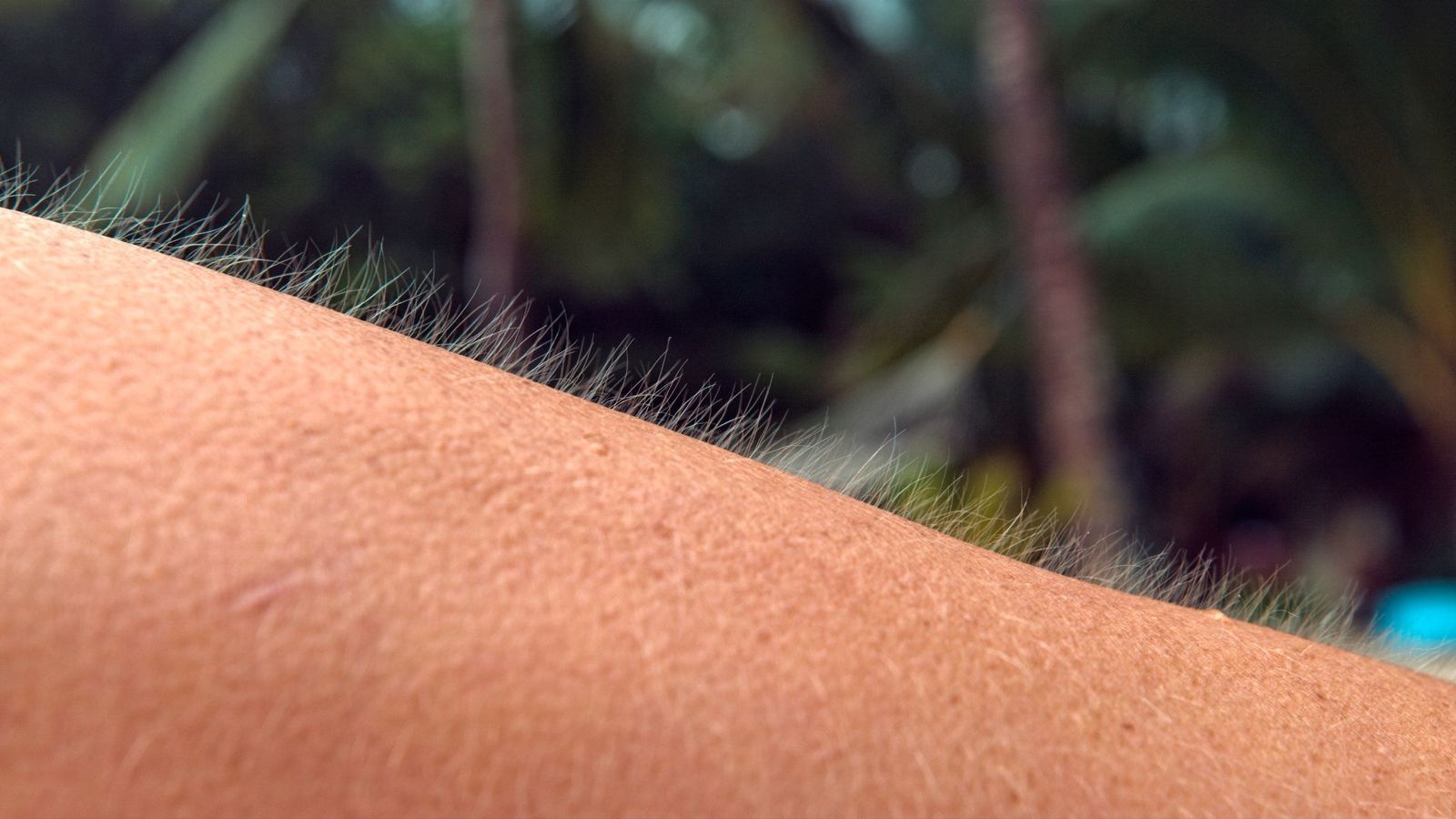
Most people have experienced goosebumps at least once. They may appear during an emotional moment, while watching a horror movie, or simply when we feel cold. But why do such different situations trigger the same reaction? Goosebumps are a physiological response that makes the skin bumpy. They occur when tiny muscles at the base of the hair follicles contract, causing the hairs to stand on end and creating small bumps on the skin.

The word ‘goosebumps’ immediately brings to mind the bumpy skin of a plucked goose. Animals fluff their hair to look bigger to scare enemies or trap more heat for survival. For us, it is an evolutionary leftover from our ancestors that had much more hair and resembled animal functions.

6

Wisdom teeth

Image: Shutterstock

Your wisdom teeth are your last set of adult teeth to grow in. They are called "wisdom teeth" because they usually develop between 17 and 25 years old, those years when maturity is supposed to be consolidated. They don’t serve a specific purpose. Many doctors believe they are vestigial, meaning that they were useful many years ago, but not anymore.

Not everyone develops wisdom teeth. However, when they appear, they often cause lots of pain because they can get stuck in your gums or jawbone and develop infections, cavities, gum disease, and other oral issues. That’s why dentists recommend removing them most of the time.

7

Love handles

Image: Shutterstock

Love handles are a term used to describe the fat around the waist, just above the hips and over the oblique muscles. Love handles became an informal way to call this body part because it seems so easy to grasp or "handle". By the 1950s, the term was already being used in advertising and everyday slang, as the lateral fat someone’s partner could hold, hence the nickname.

Why do we have love handles? Fat can build up in this area because of genetics, hormonal changes, a sedentary lifestyle, or age-related changes. Love handles are also commonly described as a "spare tire" or "muffin top." But the medical term is flank fat, and even people who maintain a healthy lifestyle can store it.

8

Belly button

Image: Shutterstock

Belly buttons can look very different from person to person. They come in different shapes, with some turning inward and others sticking outward. Still, their small, round appearance often resembles a button. Its medical name is the navel, or umbilicus, and it is actually a scar left behind by the umbilical cord.

Before you were born, that cord connected you to your mother and supplied you with oxygen and nutrients. After birth, the cord was cut, leaving a small stump attached to your belly. The stump later dried up and fell off as the area healed. What remained was the small mark we casually call the belly button.

9

Tennis elbow

Image: SShutterstock

Despite the name, you don’t have to play tennis to get tennis elbow. It happens when the tendons on the outside of your elbow are strained by repeating the same wrist or arm movements over and over.

Those tendons are involved whenever you grip, lift, twist, or turn something, so activities such as typing, using a mouse, gardening, painting, lifting weights, or playing an instrument can all put stress on the area. That repeated strain can cause tiny tears in the tendon where it connects to the elbow, resulting in pain and tenderness that can make simple tasks very uncomfortable.

10

Hamstrings

Image: Shutterstock

The "ham" in "hamstring" has actually nothing to do with food. In Old English, the word referred to the hollow behind the knee, while "string" described the cord-like tendons found there. Put the two words together, and you get "hamstring."

The name refers to three muscles that run along the back of each thigh. They help you bend your knee, move your hip, and perform everyday activities like walking. They are easy to injure when stopping suddenly or changing direction quickly. When one is stretched too far, the result is what we commonly call a "pulled hamstring." Warming up, stretching, and paying attention to pain are the keys to protecting the area.


IMPRESS IN BRUTALIST FASHION

Go On An Urban Safari With These 12 Architectural Terms


Published on October 29, 2026


Image: Ricardo Gomez Angel

The realm of architecture is riddled with idioms that describe styles, technical features, concepts, and a million more things that make this ancient combination of art and science what it is.

Knowing a few of these terms can certainly be useful for impressing people in casual conversation but it can also prove valuable in understanding some of the key aspects of architecture. From gables to fenestrations, from Gothic to Brutalist architecture, the myriad of words in this discipline can confuse almost everyone. So, read on and learn about some of them.

1

Baluster

Image: Zibik

Derived from the Italian word balaustro, meaning "wild pomegranate flower", the baluster stands as a vertical pillar, typically slender and often intricately adorned, supporting railings along staircases, balconies, or terraces.

These architectural elements showcase both functionality and aesthetic finesse, adding a touch of elegance to structures. Serving as guardians of safety, balusters seamlessly blend form and function, illustrating the nuanced language that architects use to craft the spaces we inhabit.

2

Finial

Image: Michael Elliott

Coming from the Old French word finir, meaning "to finish", the finial is a crowning jewel, a decorative ornament that graces the summits of structures, be they spires, gables, or sometimes even furniture.

With origins deeply rooted in medieval architecture, finials evolved from functional elements to exquisite expressions of craftsmanship. These sculpted finales, akin to miniature sculptures, punctuate the skyline and rooflines, completing architectural narratives with flair.

3

Cornice

Image: Chuttersnap

The term "cornice" comes as a defining feature, gracing buildings with a touch of grandeur. Originating from the Italian word cornice, meaning ledge, this architectural flourish sits proudly at the meeting point of walls and roofs, marking the transition from structure to sky.

Serving both functional and aesthetic purposes, cornices act as protective overhangs, shielding edifices from the elements while bestowing a visual exclamation point to their design. From the ornate cornices adorning historic buildings to the sleek, modern iterations of contemporary architecture, these elevated ledges narrate the tales of different eras and styles.

4

Dormer

Image: Ries Bosch

A word derived from the Middle Frenchdormeor, meaning "sleeping room", dormers are akin to architectural eyelids, projecting windows vertically from a sloping roof. These structures not only invite natural light into attics and upper spaces but also introduce a captivating aesthetic rhythm to the roofline.

Dormers have adapted to various styles from Gothic to Colonial, each time giving spaces a sense of character and uniqueness.

5

Cantilever

Image: Ricardo Gomez Angel

The term "cantilever" expresses a sort of defiance of gravity, a structural marvel that challenges conventional supports. Derived from the medieval Latin word cantileverium, meaning a "bracket" or "beam", cantilevers extend boldly from a building's main structure, seemingly suspended in mid-air.

These architectural marvels appear in everything from daring modern residences to iconic skyscrapers. Cantilevers not only push the boundaries of design but also serve practical purposes, creating overhangs, balconies, or awe-inspiring architectural feats.

6

Canopy

Image: Sara Sadehloo

Rooted in the ancient Greek word konops, meaning a covering or mosquito net, canopies are architectural appendages that transcend mere utility. These overhead structures, be they stretched over entrances, walkways, or outdoor spaces, offer protection from the elements while bestowing an aesthetic flourish.

From the intricate designs adorning historical structures to the sleek, modern lines of contemporary designs, canopies dually serve as functional guardians and artistic statements.

7

Arcade

Image: David Taljat

An arcade is a series of contiguous arches supported by columns or other vertical elements. It comes from the Italian word arcata which means, quite literally, "arch". These successions of arches, often forming covered walkways or open galleries, can be seen in both ancient structures and modern urban landscapes.

Whether framing crowded shopping malls or adorning historical buildings, arcades seamlessly blend aesthetic charm with functional allure.

8

Gable

Image: Joseph Corl

Gables adorn roofs with a distinct silhouette that speaks to architectural heritage. Derived from the Old Frenchgable or gabulum, meaning "end of a building", a gable is the triangular portion of a wall between the edges of a sloping roof.

Whether gracing the facades of historic cottages or modern structures, gables add a touch of elegance and visual interest to the skyline. These peaked beauties, often embellished with decorative elements, symbolize the meeting point of form and function.

9

Architrave

Image: Nathan Cima

A quite elegant word in itself, an "architrave" is an element that graces the transitions between columns and structures. Derived from the Greek words archi, meaning "chief", and trabe, meaning "beam", the architrave serves as the principal beam resting atop columns, forming an essential part of classical architectural orders.

This horizontal member, though often understated, bears the weight of the entablature, symbolizing the subtle elegance that defines architectural cohesion. Whether in ancient temples or contemporary buildings, architraves showcase a marriage of function and aesthetics, illustrating the enduring influence of classical principles in shaping our built environments.

10

Buttress

Image: J. M Read

A "buttress" is a steadfast guardian, supporting structures with a blend of strength and purpose. Derived from the Old French word bouteresse, meaning a prop or support, a buttress is an external architectural feature designed to counteract the lateral thrust exerted by a building, particularly in the case of large or Gothic structures.

These architectural reinforcements come in various forms, from flying buttresses gracefully spanning cathedral walls to massive earthbound counterparts.

11

Cladding

Image: Scott Webb

In the world of architecture, "cladding" unveils itself as the outer skin, a protective and aesthetic layer that dresses buildings in a myriad of materials. Rooted in the Middle English word "clad," meaning clothed, cladding is the art of enveloping structures to shield them from the elements while shaping their visual identity.

Whether manifesting as sleek glass panels on modern skyscrapers or rustic stone on historic structures, cladding reflects the character and purpose of a building.

12

Fenestration

Image: Kenrick Baksh

"Fenestration" is the art of placement and design of windows and other openings in a building's facade. Coming from the Latin word fenestra, meaning "window", fenestration goes beyond mere openings, including the arrangement, size, and style of windows to shape the visual and functional aspects of a structure.

Whether framing panoramic views in contemporary skyscrapers or punctuating historical buildings with rhythmic precision, fenestration is the orchestration of light, ventilation, and aesthetics.

Looking for an extra scoop of literary fun?

Learn more with our Word of the day

nihilist

/ˈnaɪələst/