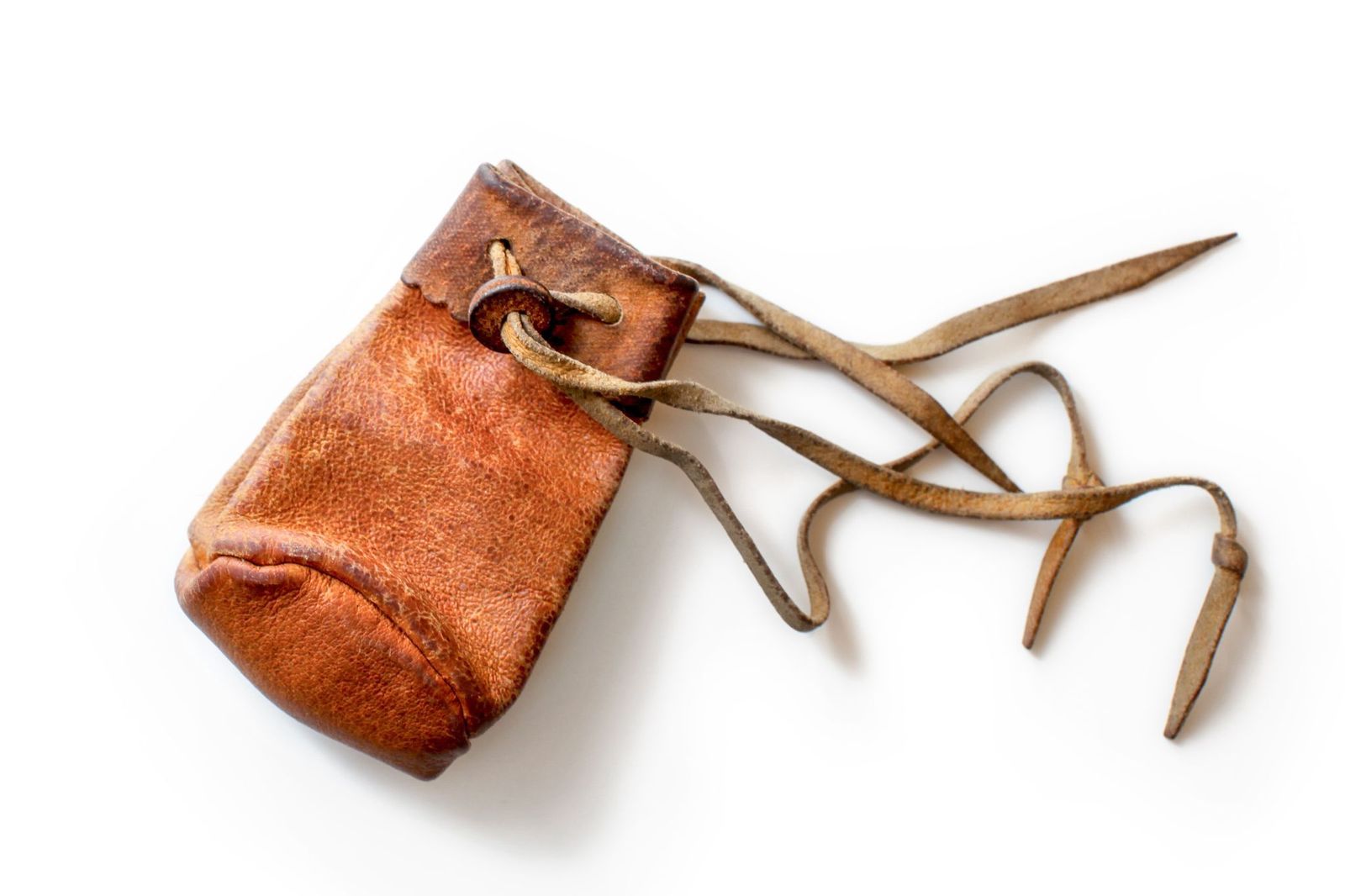
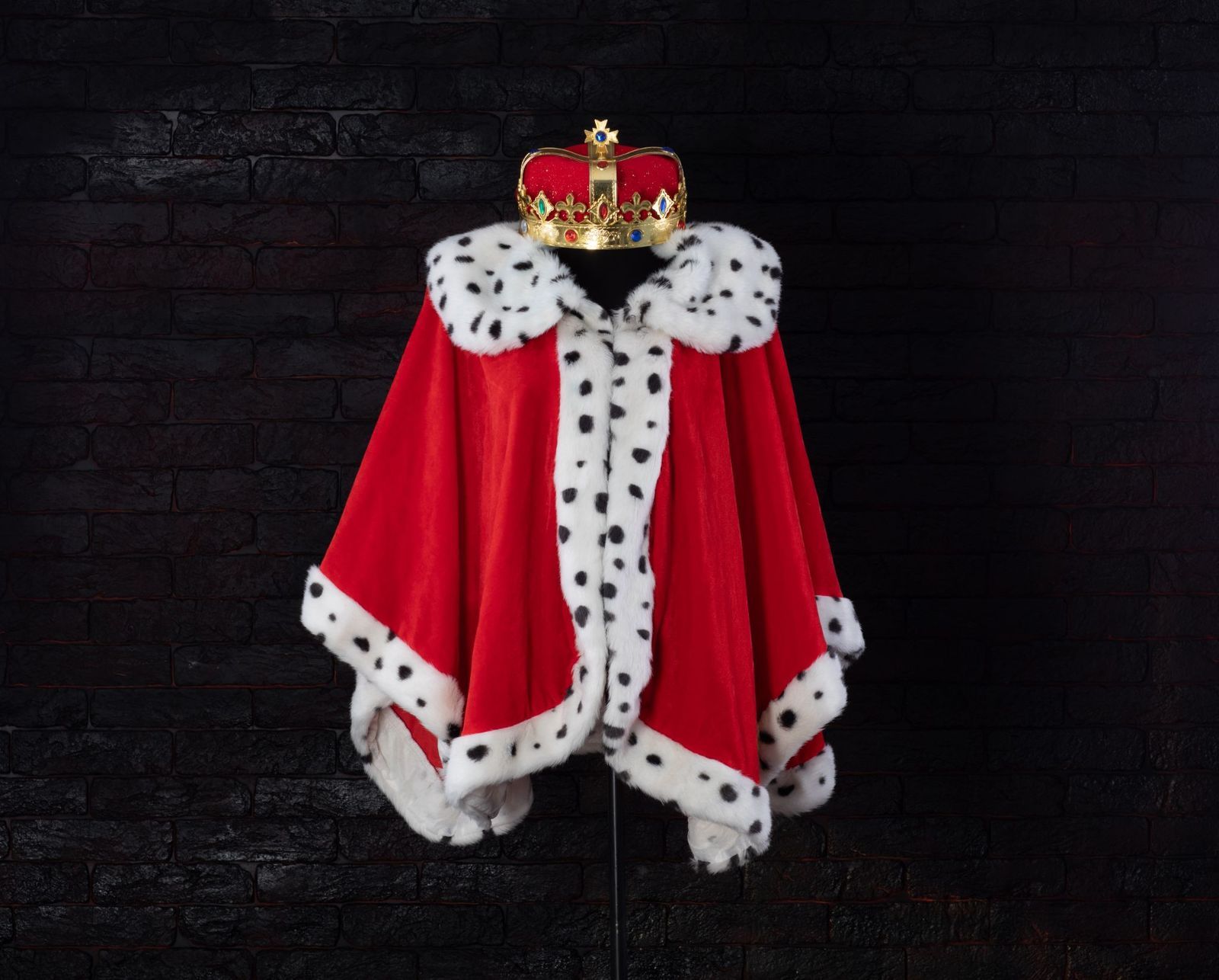
What financial term originally referred to a small leather pouch?


Published on September 6, 2026

Image: Richard OD

Modern financial terminology is deeply grounded in history and physical objects, originating from medieval garments, board games, livestock management, and gambling, long before spreadsheets existed. These 10 terms you use every time you set a budget or swipe a card had a totally different meaning. Prepare to be amazed.

1

Capital

Image: Parilov

Many centuries ago, when bank accounts didn’t exist, wealth was measured in livestock. Ancient pastoral societies counted cattle, goats, and sheep "by the head" (caput in Latin) to calculate an estate’s net worth.

The Latin adjective capitalis referred to things related to the head, eventually evolving into the Italian capitale during the 16th century to describe a merchant’s stock or investment. Although today investors don’t herd cows on Wall Street, the linguistic link between counting livestock "heads" and financial "capital" remains intact.

2

Budget

Image: Lubo Ivanko

In the modern world, "budgeting" means managing a digital spreadsheet, but long ago a budget was a physical container. The word stems from the Latin bulga (a leather knapsack), which entered Middle French as bougette, meaning a small leather pouch or wallet.

In 18th-century Great Britain, the Chancellor of the Exchequer (the chief finance minister) carried a leather bag filled with national revenue statements and expenditure plans to the House of Commons. Opening the bag to present the nation’s finances was described as "opening the budget". Over time, the name transferred from the pouch itself to the financial plans kept inside.

3

Check

Image: kungfu01

The word check traces back to the game of chess. Borrowed through Old French from the Persian word šāh ("king"), placing an opponent’s piece in check was a direct warning that the king was under threat.

From the notion of putting a limit on the king’s movement, the verb check expanded into general English to mean inspecting, halting, or verifying accuracy. By the late 18th century, financial institutions issued written payment orders featuring a counterfoil (a slip retained by the bank to "check" for forgery), giving rise to the modern paper check.

4

Underwrite

Image: KinoMasterskaya

During the 17th century, shipowners and financiers gathered at Edward Lloyd’s coffeehouse in London to negotiate marine insurance for transatlantic trade voyages.

A document would be prepared describing the vessel’s cargo, crew, destination, and risks. Investors willing to take on a portion of the financial risk would literally write their names and the exact financial share they agreed to cover under the proposal text. Consequently, anyone guaranteeing financial risk in exchange for a premium became known as an "underwriter".

5

Blue-chip

Image: Andrew Angelov

In modern stock markets, a "blue-chip" stock stands for a reliable and financially sound company with a long record of stable earnings. However, the metaphor comes straight from high-stakes poker.

By the 19th century, casinos assigned different monetary values to colored gaming chips, reserving white for low values, red for mid values, and blue for the highest value chips. In the 1920s, financial journalist Oliver Gingold of The Wall Street Journal began referring to high-priced stocks as "blue-chip stocks", permanently embedding poker jargon into market terminology.

6

Invest

Image: Peyker

To invest capital today implies buying financial assets with the expectation of generating profit. Historically, however, invest meant to put on clothing. Derived from Latin in- ("into") and vestire ("to dress," the root of vestment and vest), the word described granting power or office to someone by dressing them in official robes.

Italian merchants in the 16th century adapted investire metaphorically to describe "clothing" or "dressing" capital into a new commercial form, such as trade ventures.

7

Fine

Image: Andrii Yalanskyi

A financial penalty imposed for a violation seems harsh, but the original concept of a fine was peaceful resolution. Rooted in the Latin finis (meaning "end", "limit", or "termination"), the word moved through Old French as a term for bringing a dispute to an end.

In Medieval English systems, a fine was a sum paid by a defendant to terminate legal proceedings and settle a feud. Initially, it wasn’t a punishment, but a final settlement payment that concluded a conflict once and for all.

8

Income

Image: LaMerce

Nowadays we view income as money earned from employment or investments, but its original 14th-century meaning had nothing to do with finance. The word was a compound of "in" and "come", denoting a physical arrival or entrance (such as a person entering a room).

In theological contexts, it described spiritual inspirations "coming into" the soul. It was not until the late 17th century that the term narrowed down to mean the monetary inflow generated by an estate or enterprise.

9

Fund

Image: Jr images

A fund represents a foundational reserve of capital. The word stems from the Latin fundus, which referred to the bottom or base of an object, as well as a foundational piece of land.

The word entered English via the French fond (meaning ground, bottom, or stock). In the late 17th century, English financiers Latinized the spelling to fund, using it to mean a solid bottom layer or monetary store upon which financial operations could securely rest.

10

Crash

Image: Ole.CNX

As we know, crash is a sensory word describing the loud, smashing sound of objects colliding violently. Its metaphoric entrance into financial markets occurred during 18th-century speculative panics, particularly the collapse of the South Sea Bubble in 1720 and the Mississippi Scheme in Paris.

People used the word to evoke the sudden, noisy destruction of inflated paper fortunes hitting rock bottom. The term became permanently cemented in global economics after the catastrophic October 1929 "Wall Street Crash".


Reach for the stars

Are you using them correctly? 10 space idioms and their curious origins!


Published on September 6, 2026


Image: Mathew Schwartz

Outer space has fascinated human beings since ancient times. We have studied and explored it so much over the years that space and everything we know about it has even found their way into our everyday language! Today, we're discovering the origins of 10 famous space-related idioms. Get ready for an astral journey!

1

On another planet

Image: Javier Miranda

You forgot your wallet, missed your appointment, and left your phone at home. You're totally on another planet today.

When your friends explain that board game five times and you still don't get it, when you're completely unaware of the latest news, or you just can't focus on what you're doing, we could say you're "on another planet."

This expression gained popularity during the era of space exploration when people began contemplating the possibility of life on other planets, with customs, languages, and ideas entirely different from our own.

2

Promise the moon

Image: nousnou iwasaki

He promised me the moon, but I knew it was too good to be true.

Undoubtedly, the moon plays a starring role in our language. It's not only the main character of poems, but it also features in many idioms we use! But be careful: if someone "promises you the moon," you should be a bit suspicious.

Who could bring down the moon? It’s an impossible mission! That’s why the expression "promise the moon," which became widespread in the mid-1800s, refers to promises that are unrealistic or very difficult to fulfill.

3

Written in the stars

Image: Greg Rakozy

Their love story seemed like it was written in the stars, always meant to be.

In the past, many people believed the position of the stars at the time of one's birth could significantly influence their destiny. Based on this belief, when something is described as "written in the stars," it means it was fated to happen.

A similar concept appears in Shakespeare's famous 16th-century tragedy Romeo and Juliet. In the play, the term "star-crossed lovers" describes Romeo and Juliet, whose tragic end was seen as inevitable, destined by the stars.

4

Lost in Space/space out

Image: Norbert Kowalczyk

She spaced out during the lecture and didn’t hear a word the professor said.

When you can’t concentrate at work, find yourself daydreaming, or are so tired that you’re just staring blankly, you’re "spaced out." It can also describe moments when you’re simply not paying attention.

Someone is spaced out when they're distracted, disconnected, or mentally absent. This expression is believed to have originated in the 20th century, gaining popularity in the 1960s when space exploration was at its height and sci-fi movies and TV series were booming.

5

It's not rocket science

Image: SpaceX

Don't worry! Assembling this furniture is not rocket science; anyone can do it.

When humans began actively exploring space, organizations like NASA emerged. They not only showed us that reaching the moon was possible but also revealed how incredibly difficult and complex rocket science can be. That’s why the popular idiom "it’s not rocket science" is used to suggest that something is simple, straightforward, or doesn’t require much analysis. You know, tasks like making scrambled eggs or brewing your morning coffee really shouldn’t be rocket science!

6

Down to Earth

Image: Alberto Bigoni

She's absolutely down to earth, despite being a successful CEO.

While being "on another planet" or "lost in space" suggests a detachment from reality, being "down to earth" means the complete opposite: having a practical, grounded perspective.

Someone who is down to earth is rational, pragmatic, and realistic. Much like saying someone has their "feet on the ground," the expression is tied to the idea of staying grounded in reality and being firmly aware of everyday human existence.

7

Reach for the stars

Image: Manouchehr Hejazi

She always encouraged her children to reach for the stars.

The famous and celebrated Aeneid by the Roman poet Virgil features the Latin expression ad astra, which translates to "to the stars." In Virgil's work, the expression is associated with high ambitions, the pursuit of greatness, and elevated desires. This is believed to be the origin of the idiom "reach for the stars," which carries the same meaning. When you set high goals or strive for extraordinary achievements, you’re definitely reaching for the stars!

8

Once in a blue moon

Image: Sanni Sahil

I don't usually eat fast food, but once in a blue moon, I'll grab a burger.

Astronomically speaking, each season typically lasts about three months and contains three full moons. However, if a fourth full moon appears within a single season, it’s known as a "Blue Moon."

But here's the thing: a fourth full moon is an extremely rare occurrence! That's why the idiom "once in a blue moon" is used to describe events or situations that happen occasionally, or rather, very rarely.

9

Over the moon

Image: Neven Krcmarek

She was over the moon when she found out she got the job!

When something happens that fills you with happiness or makes you want to jump for joy, you're said to be "over the moon." The origins of this idiom are believed to stem from the old 16th-century nursery rhyme Hey Diddle Diddle, which goes, "Hey diddle diddle, the cat and the fiddle, the cow jumped over the moon. The little dog laughed to see such fun and the dish ran away with the spoon." One of the first appearances of the expression in print can be found in Charles Molloy’s 18th-century play The Coquet: "Tis he! I know him now: I shall jump over the Moon for Joy!"

10

Under the weather

Image: Matthew Henry

I'm feeling a bit under the weather today, so I think I'll stay home and rest.

The position of the Earth relative to the Sun at specific times directly impacts our atmosphere, which in turn drives the seasons and various weather phenomena. The popular idiom "under the weather" is used to describe feeling unwell, whether physically or emotionally.

But what's the origin of this particular expression? It's believed to have arisen in the nautical language in the 19th century: when sailors felt sick or unwell, they were said to be affected by the harsh weather conditions; in other words, they were "under the weather"!

Looking for an extra scoop of literary fun?

Learn more with our Word of the day

ineluctable

/ˌɪnəˈləktəb(ə)l/