Tech, decoded

What does "bandwidth" mean? Tech terms finally explained


Published on June 5, 2026


Image: Marvin meyer

Picture this: you're at dinner with family, and someone says, "Oh, it's slow because of the bandwidth—you should really set up 2FA on that account." Everyone nods. You nod too, mostly to avoid follow-up questions. Sound familiar? Here's the thing: this stuff is actually useful in today's modern life, and you do not need to be a tech expert to get it. Stick with us through these explanations, and you'll walk away with the kind of knowledge that comes in handy more often than you'd think.

1

Bandwidth

Image: Scott Rodgerson

Think of bandwidth like a highway. A two-lane road can only handle so many cars at once—but a twelve-lane highway? Traffic flows freely. Bandwidth works the same way: the higher your bandwidth, the more data your internet connection can handle at the same time, and the faster everything feels. It's why streaming a movie, video-calling the grandkids, and checking email all at once can slow things down.

The average American household now uses about 500 GB of data per month: roughly equal to streaming 166 full-length movies.

2

Encryption

Image: Christopher Gower

Encryption is the process of scrambling data into a secret code that only the intended recipient can decode. Think of it like sending a letter written in a language only you and the receiver know; even if someone intercepts it, it's gibberish to them.

Every time you shop online or log into your bank, encryption is working quietly in the background to protect your information. Military-grade encryption used for online banking would take a regular computer longer than the age of the universe to crack by brute force.

3

Cache

Image: Richy Great

A cache is like your browser's memory for things it's seen before: When you visit a website, your device quietly saves pieces of it—images, buttons, layout—so the next time you go back, it doesn't have to download everything again from scratch. It's the digital equivalent of leaving your reading glasses on the nightstand instead of searching the whole house every morning.

If a website looks funny or outdated, someone might tell you to "clear your cache." That just means wiping that saved memory so your browser fetches a fresh version.

4

Latency

Image: Christin Hume

Latency is the tiny gap between when you do something, like saying a word on a video call, and when the other side hears it. Low latency means things feel instant and snappy. High latency means you're talking over someone on Zoom, and it takes a couple of seconds for the other person to hear it.

The human brain detects audio delay at around 20 milliseconds: about the same time it takes to blink.

5

API

Image: Sweet Life

An API—Application Programming Interface—sounds terrifying, but the concept is simple. Imagine you're at a restaurant. You don't go into the kitchen and cook your food; you tell the waiter what you want, and the waiter brings it back. An API does the same thing between software programs: it carries requests from one app to another and brings back the answer.

Your weather app doesn't collect its own weather data; it asks a weather service through an API.

6

Cloud computing

Image: Growtika

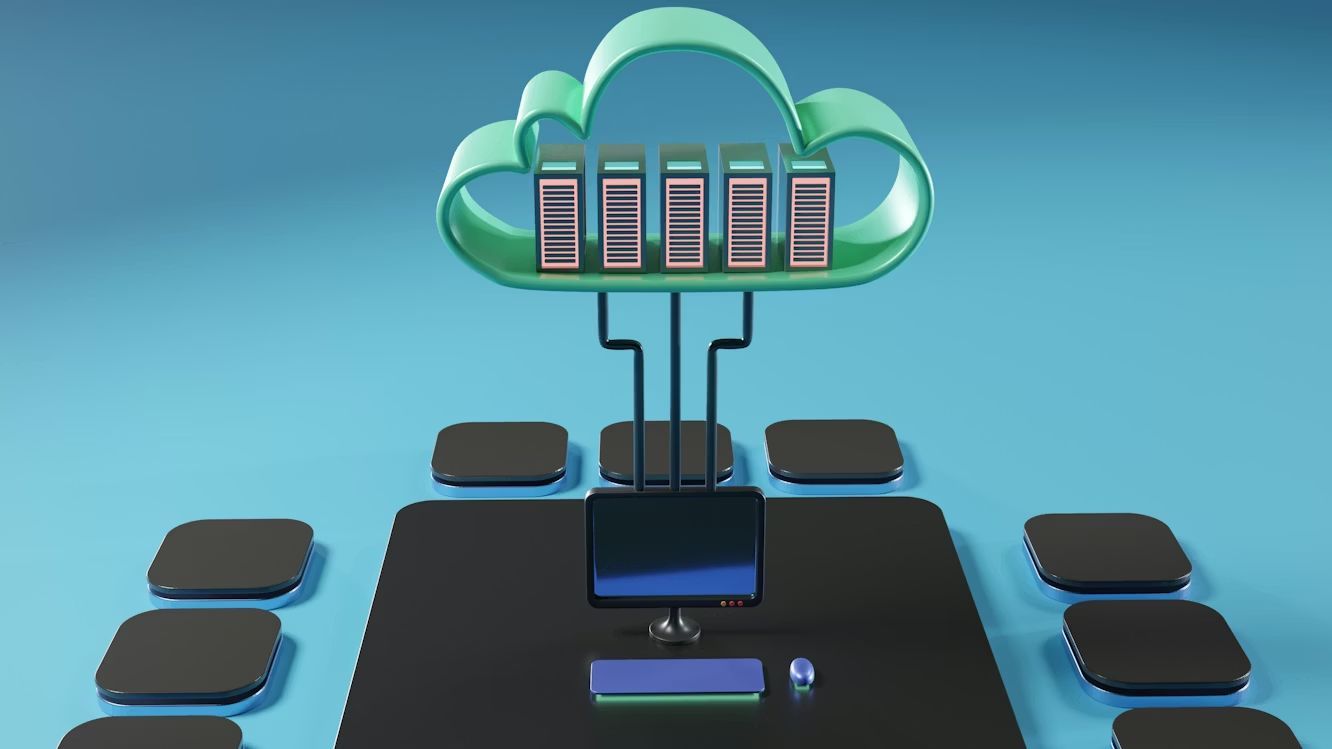
"The cloud" sounds mysterious, but it's really just someone else's computer: a very big, very powerful one in a data center somewhere. When you save a photo to iCloud or open a Google Doc, that file isn't sitting on your device. It's stored on a server far away, and your internet connection is the bridge that lets you reach it.

The practical benefit? If you drop your phone in a lake, your photos are still safe. Fun fact: The world's cloud data centers use more electricity than the entire United Kingdom—every single day.

7

Phishing

Image: Kaptured by Kasia

Phishing is when a bad actor sends you an email, text, or fake website pretending to be someone you trust, like your bank, Amazon, or the IRS, to trick you into handing over your password or credit card number. It's the digital version of a con man in a suit showing up at your door claiming to be from the gas company. The disguise looks real; the intentions are not.

If something feels off—a weird sender address, urgent scary language, a link that doesn't quite match—trust your gut and don't click.

8

Malware

Image: Markus Spiske

Malware is short for "malicious software": basically, any program that sneaks onto your device to cause trouble. Some malware spies on what you type. Some lock your files and demand money to release them.

However, a reputable antivirus program and a healthy dose of caution go a long way. Don't click suspicious links. Don't plug in a random USB drive you found. Don't install software from websites you've never heard of.

9

Algorithm

Image: Daniil Komov

An algorithm is just a set of instructions that a computer follows to make decisions or solve problems. When Facebook shows you certain posts first, or YouTube suggests a video, an algorithm made that choice. It's studying what you click, what you pause on, what you like, and using all of that to serve up more of the same. It's worth knowing this because it means your feed is a reflection of your behavior.

Want different results? Change your habits: like, comment, or search for different things, and the algorithm quietly shifts.

10

Two-factor authentication (2FA)

Image: FlyD

Two-factor authentication is like having a deadbolt in addition to your regular door lock. Even if someone gets your password, they still can't get in without a second piece of proof, usually a code sent to your phone.

Most apps make it very easy to set up, and the inconvenience is minimal compared to what it protects. Microsoft reports that accounts with 2FA enabled are over 99% less likely to be compromised.

11

VPN

Image: Privecstasy

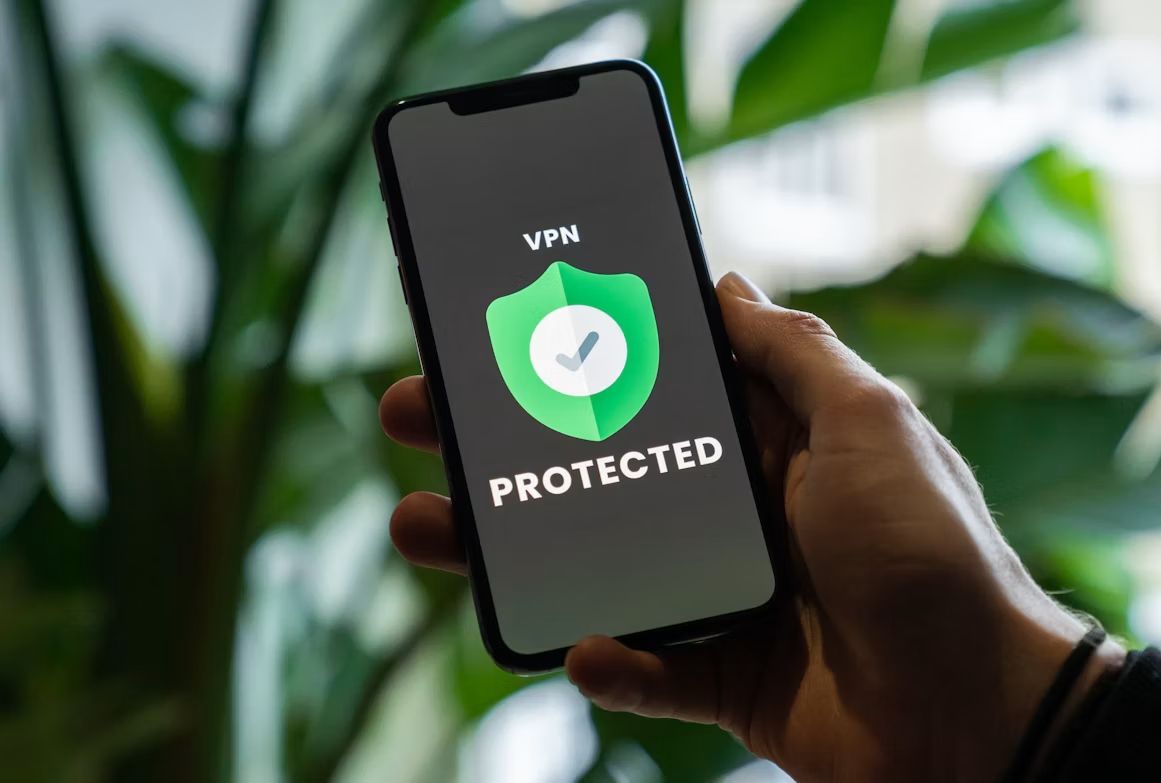
A VPN—Virtual Private Network—is like a secret tunnel your internet traffic travels through instead of the open road. When you use one, your data is encrypted and routed through a server somewhere else, hiding your real location and making it much harder for anyone to snoop on what you're doing online.

VPNs are especially useful on public Wi-Fi, like at the airport or a coffee shop, where your connection could otherwise be visible to strangers on the same network. It's not magic, it just makes your device look like it's somewhere it isn't.

12

Software update

Image: Cllint Patterson

A software update is a new, improved version of a program or operating system. Updates don't just add new features; they often patch security holes that hackers have already discovered and are actively trying to exploit. Ignoring them is a bit like knowing your back door lock is broken and deciding you'll fix it next weekend.

Updating your phone or computer software takes a few minutes, and it's one of the simplest things you can do to protect yourself online.


Million-dollar objects

You won’t believe how much Elvis Presley’s hair sold for


Published on June 5, 2026


Image: Kat von Wood

Could you have a gold mine right in your own home and not know it? Everyone keeps a vintage concert ticket, a family heirloom, or some collectible tucked away in a drawer somewhere. But imagine finding out that what you think is clutter is actually worth thousands of dollars. A lock of Elvis Presley’s hair was auctioned for over $100,000, a violin from the Titanic brought in $1.7 million, and even a banana taped to a wall reached an astonishing $6.2 million. These unbelievable sales prove that when nostalgia, fame, and history come together, people will pay jaw-dropping money for the strangest objects imaginable.

1

​​A lock of Elvis Presley’s hair: $115,000

You grew up listening to Elvis’ songs and watching his movies. You know from the highlights in his life to trivia details only true fans have. The man was larger than life, and so was his hair.

In November of 2002, a lock of Elvis’ hair sold at auction for a staggering $115,000. The hair had been carefully saved by his longtime barber, Homer Gilleland, who worked with Elvis for over 20 years and kept the trimmings in a plastic bag after giving him haircuts before television appearances and movie shoots. In order to prove its authenticity, Elvis’ associate Tom Morgan Jr. and memorabilia expert John Reznikoff both signed an authenticity certificate that backed the auction for which the anonymous avid fan paid thousands of dollars.

2

​Marilyn Monroe’s white dress: $4.6 million

Image: Adam Jones from Kelowna, BC, Canada, CC BY-SA 2.0, via Wikimedia Commons

Few movie moments are more recognizable than Marilyn Monroe standing over a subway grate with her iconic white dress blowing up in The Seven Year Itch, the 1955 film_._ Marilyn was a representation of the golden age of movies, which is why items of hers were valued at such a high cost. And the white dress was, probably, the most expensive of them all.

The iconic ivory piece belonged to fellow actress, Singin’ in the Rain star, Debbie Reynolds. Funny enough, she had bought it directly from 20th Century Fox for only $200. Reynolds had spent decades gathering costumes and props from classic movies and hoped to open a dedicated museum. Her project was rejected five times by the Academy of Motion Picture Arts and Sciences, and, due to personal debt, she had no other choice but to auction some pieces of her collection. Marilyn’s dress was one of those pieces and was auctioned in 1999 in Los Angeles for no less than $4.6 million dollars.

3

​Titanic rescuer’s pocket watches: $1.9 and $2.3 million

Image: Majvdl, CC BY-SA 4.0, via Wikimedia Commons

You’ve learned about the RMS Titanic tragedy growing up, and watched the tragic romance of Jack and Rose in the 1997 movie. More than a century after the sinking, people are still fascinated by this event, and for good reason, considering that we still hear fascinating stories about it.

In 2025, the gold pocket watch belonging to businessman Isidor Straus, co-owner of the Macy’s department stores, sold at auction for an astonishing $2.3 million, setting a new world record for Titanic memorabilia. The previous record had been set just a year earlier in 2024 by a Tiffany & Co. watch gifted to Captain Arthur Rostron of the RMS Carpathia, the ship that rescued more than 700 survivors from the icy Atlantic. Three wealthy widows who survived the sinking presented him with the watch as a thank-you for his bravery.

4

A banana taped to a wall: $6.2 million

Image: Brando Makes Branding

The paintings hanging on your walls have been selected among thousands of pieces, only responding to your personal taste, and that’s because art is subjective. But when you hear that a banana taped to a wall was auctioned and brought in $6.2 million, the conversation takes a fun turn.

Comedian is a duct-taped banana piece of art created by Italian artist Maurizio Cattelan in 2019, which immediately became the most talked-about artwork in the world. In 2024, the artwork sold at Sotheby’s, New York, for an astonishing $6.2 million to cryptocurrency entrepreneur Justin Sun, who later joked he planned to eat the banana himself. The buyer was really paying for a certificate of authenticity and instructions on how to replace the 35-cent-worth banana whenever it rotted. Modern art is not for everyone.

5

​John Lennon’s toilet: nearly $13,000

Image: BERTRAND MORITZ

You probably still know the words to plenty of Beatles songs by heart. The Fab Four changed music, fashion, and pop culture forever, and fans have spent decades collecting anything connected to them. Old records, concert posters, sure. But few people expected one of John Lennon’s toilets to become part of history, too.

John Lennon lived in Berkshire, England, from 1969 to 1972, where he recorded part of the Imagine album. But that’s not the only highlight of the apartment. In there, there was also a porcelain toilet, which was handed to his contractor, John Hancock, after the house was remodeled. Instead of getting rid of it, he stored it in a shed for nearly 40 years, and, in 2010, after his death, the unusual piece went up for auction in Liverpool, during the annual Beatles Convention. Organizers were expecting it to sell for $1,300, but instead collected almost $13,000 from an unidentified private overseas investor.

6

​Leonardo da Vinci’s Codex Leicester: $30.8 million

Image: Leonardo da Vinci (1452-1519), Public domain, via Wikimedia Commons

Most people have old notebooks filled with recipes, reminders, or random thoughts. Leonardo da Vinci’s notebooks, instead, changed the way people understood science and nature. One of his most famous journals, the Codex Leicester, dates back to the early 1500s and contains da Vinci’s sketches and scientific observations. The pages explore everything from astronomy to the movement of water.

In 1994, Microsoft co-founder Bill Gates purchased the manuscript at auction for a staggering $30.8 million, making it the most expensive book ever sold at the time. But it wasn’t for his private library. Gates loans the Codex to museums around the world so visitors can see da Vinci’s work up close.

7

​Justin Timberlake’s leftover French toast: $1,025

Image: Masha Rayt

The new millennium was defined by technology, pop style, and boy bands. Justin Timberlake was part of NSYNC, one of the most popular bands at the time, and fans followed him everywhere. In 2000, during an interview at New York radio station Z-100, Timberlake left behind a partially eaten French toast. Most people would have cleared the table, but one clever DJ saw an opportunity.

The leftover toast was auctioned on eBay, where a 19-year-old superfan from Wisconsin paid $1,025 to own it. Over the years, rumors claimed the toast sold for even more on a second auction, but the original auction price remains one of the strangest celebrity purchases ever recorded.

8

Albert Einstein’s theory on happiness: $1.56 million

Image: Associated Press, Public domain, via Wikimedia Commons

Most people remember Einstein as the wild-haired genius behind the theory of relativity, but one of his most valuable possessions was not a scientific formula at all. It was a simple handwritten note about happiness.

In 1922, while staying at the Imperial Hotel in Tokyo during a lecture tour, Einstein received news that he had won the Nobel Prize in Physics. When a courier arrived at his room with a delivery, Einstein realized he had no cash for a tip. Instead, he handed the messenger two signed notes. One of them read: "A calm and humble life will bring more happiness than the pursuit of success and the constant restlessness that comes with it." Decades later, the message was sold at auction in Jerusalem for an astonishing $1.56 million. The note remained in the courier’s family before being sold by his nephew, proving Einstein’s prediction was right after all.

9

J.K. Rowling’s chair: $394,000

Image: Z Graphica

Chances are, your kids or grandkids have read the worldwide phenomenon, Harry Potter. From the very beginning, the wizard created by English writer J.K. Rowling became an obsession for millions of people around the world. But for Rowling, things weren’t so easy. She was a struggling writer, working on her stories in a small apartment with mismatched secondhand furniture.

One of those chairs, a worn wooden dining chair from the 1930s, became the place where she typed the first two books of the saga. She later painted messages directly onto the piece, including the line: "I wrote Harry Potter while sitting on this chair." Rowling first auctioned the chair in 2002 to raise money for charity; years later, it resurfaced again and was sold at auction in New York for $394,000. The sale included a personal letter from Rowling explaining that the chair was the comfiest she had at the time.

Looking for an extra scoop of literary fun?

Learn more with our Word of the day

negligible

/ˈnɛɡlədʒəb(ə)l/