Read this, STAT!

What do doctors mean when they say "doughnuts"? You'll be surprised!


Published on August 19, 2025


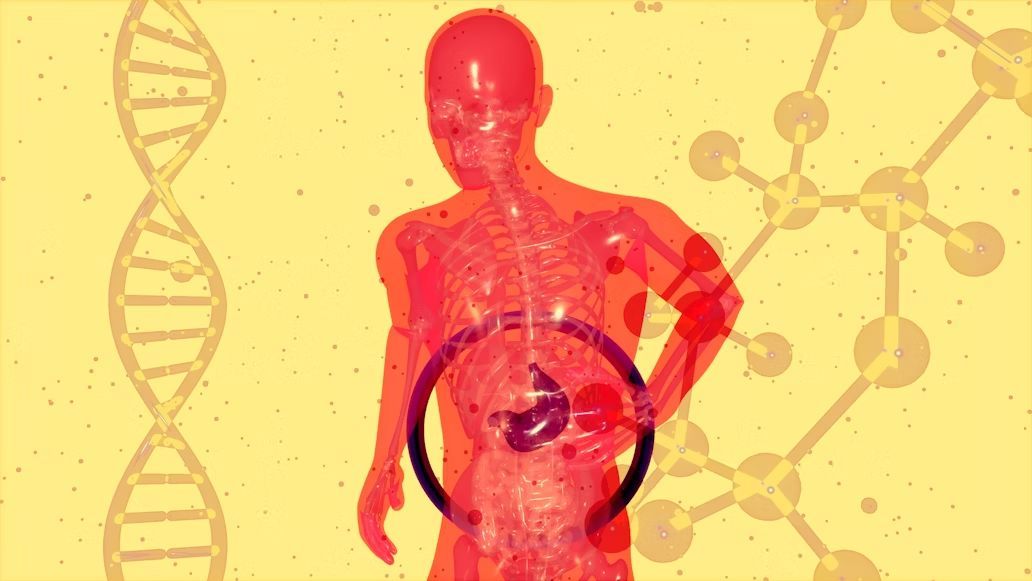
Image: National Cancer Institute

You don’t need a stethoscope to enjoy this one. Medicine isn’t always all needles and charts; it can have a sense of humor from time to time. Doctors and nurses use some wild expressions that might sound like something out of a sitcom. Here’s a lighthearted look at 16 real phrases from the medical world that are as funny as they are fascinating. Let’s take a peek behind the curtain at what health pros are really saying.

1

Vitamin IQ deficiency

Image: Nik Shuliahin 💛💙

This one’s not found in a textbook. Can you imagine what it refers to? Some doctors jokingly toss it around when a patient consistently ignores advice. No, it’s not a real condition, but it’s a witty way to say someone might not be making the wisest health choices. Just hope you’re never the focus of it!

2

Flu in the knee

Image: Anna Auza

When someone complains their knee flares up every time it rains, doctors might call it "flu in the knee." It’s an informal way of referring to osteoarthritis, a condition where joints feel swollen, stiff, or achy, often affected by the weather.

3

Bug juice

Image: Roberto Sorin

When doctors say "bug juice," they’re not talking about any special drink. It’s a playful nickname for antibiotics, the medicine that fights bacterial infections. Think of it like pest control for your body; it chases off the microscopic troublemakers.

4

Crispy critter

Image: Jakub Nawrot

This grim phrase refers to someone with severe burns. It’s dark humor, often used by emergency responders or burn unit teams. While it’s not said in front of patients, it reflects the emotional armor healthcare workers sometimes need to face a challenging day at work.

5

CBT

Image: Vyshnavi Bisani

Usually, CBT stands for Cognitive Behavioral Therapy. But in healthcare banter, you might hear someone joke about Chronic Biscuit Toxicity: Just a humorous nod to carrying a few extra pounds. It’s not meant to offend, just to bring some levity into a pretty tough profession.

6

Blamestorming

Image: Accuray

Healthcare teams sometimes gather to dissect what went wrong in a tough situation. When that meeting turns into finger-pointing, it becomes a "blamestorm." It's a real workplace phenomenon, you just don’t want to be there!

7

Yellow submarine

Image: julien Tromeur

In medicine, a "yellow submarine" doesn’t play Beatles tunes. It actually refers to a patient with jaundice. This condition turns the skin and eyes yellow due to liver issues. It’s serious, but the nickname helps lighten the mood.

8

Cut and paste

Image: JAFAR AHMED

Nope, not the one in your computer. In surgical slang, this phrase refers to operations that start but can’t be completed, when they have to close things up and send the patient for a second opinion. It’s medicine’s version of "well, we tried." How crazy is that?

9

Snot docs

Image: Robina Weermeijer

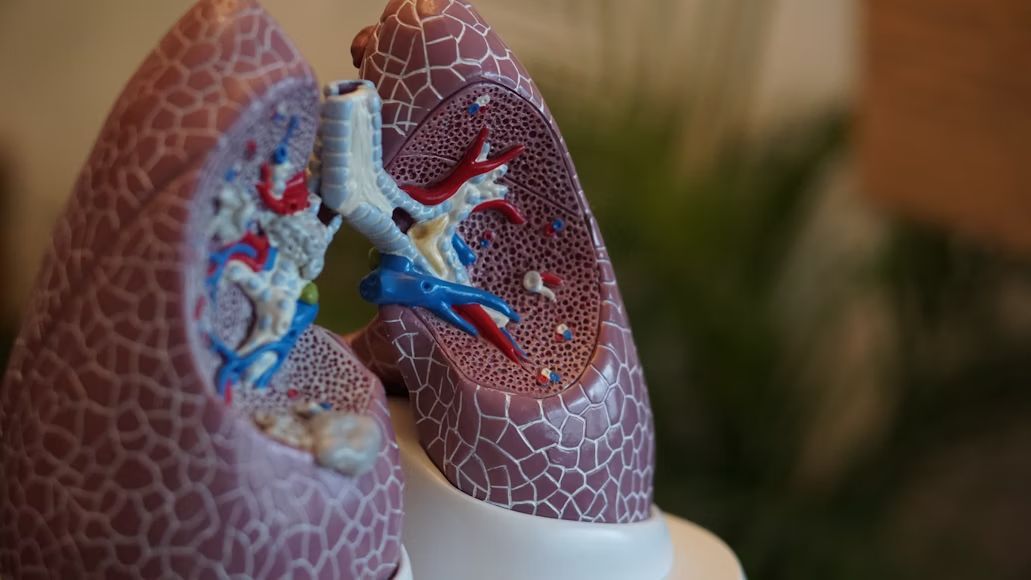
Pulmonologists—doctors who specialize in lungs and breathing—sometimes get called "snot docs." It’s a playful jab at their constant battles with mucus, coughs, and all things respiratory. Gross? Maybe. Necessary? Definitely!

10

Doughnut

Image: Accuray

A doughnut in medical slang isn’t a treat (they wish!) It’s a CT scanner. The machine’s big, round shape gives it the nickname. Patients lie down and slide through the "hole" to get detailed body images. Sprinkles are not included, though, sorry!

11

White cloud

Image: Patty Brito

In hospital lingo, a "white cloud" is someone who seems to bring good luck—calm shifts, easy cases, and no major emergencies. If you’re a white cloud, your coworkers might wish you’d come to work every day.

12

Noctor

Image: Luis Melendez

This one’s a little spicy. A "noctor" is a nurse who’s acting like a doctor—giving advice or making calls beyond their role. It's usually said behind the scenes, and while it’s not the nicest nickname, it reflects the tension that can sometimes bubble up in high-stress settings.


UNEARTHING SLANG MEANING

The Luck Of The Irish: 10 Popular Sayings From The Emerald Isle


Published on August 19, 2025


Image: Marian Brandt

According to the latest census, more than 31.5 million residents in the US claim to have Irish ancestry. Large states such as New York, California, Massachusetts, and Pennsylvania have the largest percentage of Irish Americans. So, even if you’ve never been to Ireland, you’ve probably heard one of these expressions at least once. But, do you know exactly what they mean or where they come from? Don’t worry, we've got you covered. Here are 10 of the most popular Irish slang words and phrases and their meanings.

1

Top o' the mornin' to ya!

Image: Yan Ming

The literal meaning of this phrase is "The best part of the morning to you" and is used as a greeting to wish somebody a good day. If that’s not sounding Irish enough, you should know that the traditional response for it is: "And the rest of the day to yourself".

This phrase was commonly used in all of the UK in the Victorian Era but fell out of use only to be revived later as a stereotypical Irish expression. Although it may have originated in Ireland, you probably won’t find a single Irish person saying it today. Maybe Hollywood had something to do with transforming it into a cliched Irish-ism?

2

Erin go bragh

Image: Pixabay

Every March 17th when we prepare to celebrate St. Patrick’s Day we dust off the famous phrase "Erin go bragh". But do you know exactly what it represents? According to Merriam-Webster Dictionary, Erin go bragh today means "Ireland forever". However, the original Irish expression was Erin go brách (or go bráth), which translates as "Ireland until eternity" or "Ireland till doomsday."

This popular statement originated during the 18th-century Irish rebellion against the British and was used to convey loyalty and devotion to the land. Later, a group of Irish volunteers joined the Mexican side in the Mexican–American War waving about a green flag with a harp and the motto Erin Go Bragh. In the decades following, similar flags have been used at different times to express Irish nationalism. So now you know the real story behind this historic expression!

3

Stop acting the maggot

Image: Engin Akyurt

Depending on the tone, this phrase can sound harsh or affectionate. Stop acting the maggot is an informal expression used to describe someone who is acting rowdy, lazy, or foolishly. If a friend or relative —especially the littlest ones— is not doing what they are supposed to and they are getting on your nerves, you can say "cop on" which also means stop "acting the maggot".

Like with many other slang terms or idioms, it is hard to trace the origin of this one. How such a disgusting creature as a maggot made its way into an expression used for decades is a mystery. However, it is a popular saying you’ll hear often in Ireland. You’ll also even find it printed on t-shirts and mugs!

4

What's the craic?

Image: Ann

You’ll frequently find the word craic in songs and other pop culture references. The truth is, craic became a staple in Irish slang, now used to describe a good time or a fun experience. The term comes from the Old English word "cracian" which meant an abrupt sound or sharp noise.

With time, the word came to convey general noise or commotion, and by the 20th century, it had morphed into a more positive term meaning enjoyable experiences. It’s pronounced like "crack" and you’ll probably hear it in the famous phrase What's the craic?, that is, "What’s happening?" or "Is there anything going on?".

5

Sláinte!

Image: Pressmaster

This one is another St. Patrick’s classic and a pub staple. If you ever had a drink —or five— with Irish people, you most certainly have heard the expression Sláinte!

Commonly used when lifting a glass to toast, this interjection literally translates to "Good Health". The word derives from the Old Irish word slán, meaning "healthy" or "safe" and it's pronounced slawn-sha. In other words, it is the Irish version of the English Cheers!

6

For Donkey's years

Image: Christian Hess Araya

This expression is a colloquial way to indicate a long period of time, similar to saying "for ages" or "for a very long time". Although it is believed to have originated in British English in the early 20th century, it is a very popular phrase in Ireland. Commonly used when you are not sure about an exact amount of years, it likely comes from the idea that donkeys live a long time compared to other animals, for example, horses.

Another plausible explanation is that it is a pun on the long ears of donkeys. In this case, the origin may have more to do with rhyming slang, taking advantage of homophones, that is, the similar pronunciation between the two words.

7

You're some yoke!

Image: mana5280

The term yoke originated in Northern Ireland and has deep roots in the local culture. It is commonly used to refer to anything, person, or object when you don’t want to specify its actual name or title. The word yoke is likely derived from the Old English word geoc, which refers to a wooden frame used to harness animals.

Either as a placeholder when used to refer to an object or as a funny way of invoking a memorable event, yoke is an incredibly versatile word that can be applied in different situations. Specifically, the expression You're some yoke! is used to address someone affectionately, meaning something similar to "You're pretty awesome".

8

Where's the jacks?

Image: Pixabay

If you are ever in Ireland and in need of a restroom just ask anyone: Where's the jacks?According to the legend, the first-ever multi-cubicle toilet was invented in 1806 by an Irish man called Jack Power. He is said to have had 38 children, so no wonder he was in desperate need of some privacy.

Although he patented his system, people insisted on calling it "Jacks". The more angry he became with him being associated with going to the toilet, the more people continued to address it this way. By popular belief, Jack eventually changed his name and moved to the UK. Urban myth or not, for the Irish, a toilet will always be referred to as "the Jacks".

9

I’m totally Banjaxed

Image: Falaq Lazuardi

Feeling tired and worn out? Has your car broken down? Then you are in need of the Irish slang word banjaxed. This term is widely used in Ireland to describe something —or someone— that is not working properly. It derives from the verb banjax, meaning "to damage or smash", although the exact origin of the word is not known.

Despite its defeatist connotation, it is an expression that is used colloquially and even humorously. So don't be afraid to drop a banjax here and there if you ever feel frustrated. It will take the weight off any problem!

10

Make an Irish Exit

Image: Isravel Raj

We didn’t want to end this article without saying goodbye —unlike the Irish! Well, to be honest, that’s a bit of a stretch. It’s not clear what is particularly Irish about the so-called Irish exit, meaning making a sneaky departure from a gathering without saying goodbye first. According to Dictionary.com, the expression can be traced back to Boston, Massachusetts, a city with a large Irish-American population.

Some suggest it has to do with Irish hospitality and the fact that their parties tend to go on for a long time, so it’s just easier to sneak out. Others associate it with the reserved personality of the Irish, who preferred not to draw attention to themselves. We’ll never know for sure, but if you ever find yourself feeling a bit tipsy it is okay to make an Irish exit to avoid revealing how drunk you really are!

Looking for an extra scoop of literary fun?

Learn more with our Word of the day

omit

/oʊˈmɪt/