Tongue slips

What did you just say?! VIP people also have a record of malapropisms!


Published on April 4, 2026

Image: Santa Barbara

We’ve all experienced a moment when a word comes out of a word mouth sounding confident, polished… And completely wrong! Maybe no one noticed, maybe everyone did. Whatever the case, that’s called a malapropism, and they happen when a word sounds close enough to the right one. The result can go from charming to catastrophic, especially if it happens in public. Here are some real-life examples of those verbal stumbles.

1

Electrical votes in Texas

Image: appshunter.io

During a conversation about elections, the then Vice President George Bush was chatting with baseball great Yogi Berra. Berra reportedly mentioned that Texas had plenty of "electrical votes." Can you guess what he meant? The correct words would’ve been "electroral," but the slip was classic Yogi.

2

Fading into Bolivian

Image: Kenny Eliason

After a tough boxing match in 2002, Mike Tyson was asked what came next for him. His answer? He might just "fade into Bolivian." The word he wanted was oblivion, but his version stole the spotlight. Who can blame him? Any of us who make a mistake after receiving a punch or two!

3

The Sixteenth Chapel

Image: Lorenzo Turroni

David Letterman once teased Justin Bieber by saying that too many tattoos could make him look like the Sistine Chapel. Bieber shot back that he wasn’t aiming for the "Sixteenth Chapel" look. The reply came fast and confident, which made it even funnier. Although Michelangelo, among others, would not agree, right?

4

The master of malaprop

Image: Ben White

Comedian Norm Crosby leaned into malapropisms so hard that it became his signature. He was known as The Master of Malaprop for a reason. One of his lines famously urged listeners to enjoy the "blabbing brook" instead of the babbling one. But in his hands, the wrong word was never an accident: It was the whole joke.

5

Dogberry’s verbal adventures

Image: Taha

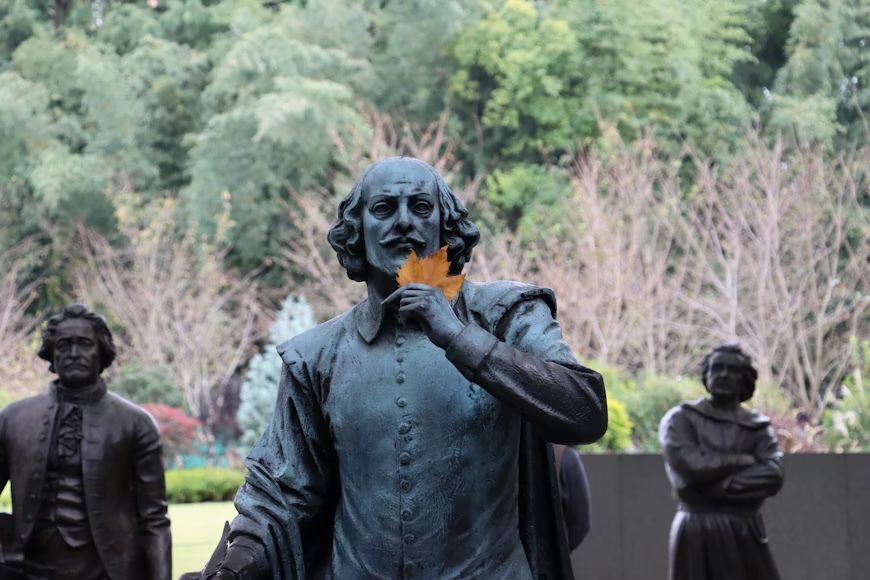
Shakespeare gave us a lot of new words, and some malapropisms too. For example, in Much Ado About Nothing, his character Constable Dogberry was famous for confidently saying the wrong thing. When Dogberry reports that two men were "comprehended" instead of "apprehended," and calls them "auspicious" instead of "suspicious," the comedy writes itself!

6

A coat with installation

Image: Nikolas Noonan

What kind of installation? These malapropism belongs to baseball player Mike Smith, who once praised a new coat by saying it had lots of "installation." He probably just meant "insulation," referring to how warm it was! He meant it as a compliment, besides, he’s a baseball player, what does he know about fashion features!

7

Chicago’s crosswords of the nation

Image: Max Bender

Former Chicago mayor Richard J. Daley had his share of word tangles. He reportedly referred to tandem bicycles as "tantrum" bicycles and called the O’Hare Airport the "crosswords of the nation." The intent was clear, even if the delivery wandered.

8

An unparalyzed moment

Image: Fine Photographics

Gib Lewis, who served as Texas Speaker of the House, once described something as "unparalyzed in the state’s history." The word he wanted was unparalleled, as you can imagine. Still, the statement landed with confidence, which is often half the battle. Moreover, it’s a good thing that whatever he was talking about wasn’t paralyzed, right?

9

Putrified with astonishment

Image: Preston A Larimer

Literature is full of malapropisms, and Mark Twain hasn’t got his record completely clean. In The Adventures of Huckleberry Finn, he gave Aunt Sally a memorable twist. She says she was "putrified with astonishment," and even if we know he meant "petrified," the picture it paints is clear and brilliant. Twain was fully conscious that these humorous words only contributed to the character’s development.

10

Archie Bunker’s verbal gymnastics

Image: Ming De Dong Huang

Archie Bunker from All in the Family was a gold mine for malapropisms. He once asked if he looked like an "inferior decorator" and wrapped things up by saying "Molotov" instead of Mazel tov. His mangled phrases were part of what made the character feel real, stubborn, and unintentionally funny. Did you like him?


THE CRADLE OF CIVILIZATION

All The Ways Ancient Greece Influenced The Modern World


Published on April 4, 2026


Image: Aleksandar Pasaric

Ancient Greece stands as a beacon of civilization, a cradle of democracy, philosophy, arts, and more and it continues to blow our minds centuries later.

This captivating country has come a long, long way, and it has evolved over thousands of years influencing the world as we know it today in more than one way: political structures, sports events, scientific discoveries, everything we take for granted today was once a breakthrough made by this civilization.

Read on and delve into some of the most influential aspects of Ancient Greece!

1

Democracy and government

Image: Arnaud Jaegers

Democracy is probably among the most important contributions from Ancient Greece. Even if it was exercised differently, the essence of democracy still remains.

According to its Greek roots, democracy means "government by the people" and it is a form of government by means of which the power is vested in the people who, directly or indirectly, choose their representatives through elections.

The difference between democracy then and democracy as we know it today, is that only a small portion of the population was allowed to participate. In Ancient Greece, the democratic government consisted of an assembly of 6,000 adult male citizens who voted on all kinds of issues. Similar to today’s system, a majority of votes were needed for laws to be passed.

Thanks to the evolution of societies and the system itself, men and women from all walks of life are allowed to vote and contribute to democratic governments today.

2

Trial by Jury

Image: KATRIN BOLOVTSOVA

The institution of trial by jury is a cornerstone of modern legal systems, but it can be traced back to the democratic principles discussed before. This concept back then was not so different from today’s: it was a judicial process that aimed to provide a resolution to conflicts and justice in civil and criminal matters.

The jurors were chosen through a random allocation among the citizenry and they were in charge of hearing the evidence, assessing the testimonies, and determining the innocence (or not) of the accused.

This breakthrough shaped legal systems and principles that are still set in stone today and it remains a fundamental way to cherish the principles of justice and democracy.

3

The Olympics

Image: Bryan Turner

No Gods are honored in the present, but we still hold some of the traditions of this ancient sports event. The Olympic Games, which receive their name after the city they were held in, Olympia, were much more than just a sporting event back then.

First and foremost, the Olympics were a sacred ritual to honor Zeus, the God of the Sky and Thunder, they were held every four years and all kinds of (sometimes dangerous) sports were played. Swimming, gymnastics, and "pankration" a hybrid between wrestling and boxing, that could turn the place into a bloodbath in a matter of minutes.

Today, the Olympics aim to bring the nations together to feature their sports stars, but some traditions are still displayed: the olive leaf crowns, the opening and closing ceremonies, and, of course, the great lightning of the flame.

4

Mythology

Image: kalhh

Zeus, Hercules, Hera, Hades, you probably know all of these names. That is because Greek mythology and its stories are some of the best-known in the whole world. Not only served us with legendary myths of every topic we can imagine, but it has inspired thousands of versions of those myths and their main figures.

Greek mythology inspired iconic pieces of art, like The Birth of Venus, a painting by Sandro Botticelli that depicts the Roman equivalent of the Greek goddess Aphrodite, the goddess of love, beauty, sex, and desire.

On the other end of inspiration, Greek Mythology made it all the way to Disney movies, considering that their version of "Hercules" is one of the most famous adaptations of the myth.

The variety of universal topics dealt with in Greek mythology has permeated and there is no sign this will stop anytime soon.

5

Modern Medicine

Image: Pixabay

Ancient Greece contributed to medical advancements that represented a pivotal moment in the evolution of healthcare practices. Medicine as a discipline was already a common practice in places like China or Egypt, but the standardization of it can be attributed to the Greeks. In this sense, modern medicine is very similar to ancient medicine since it consists of a diagnosis and a consequent treatment.

Moreover, Hippocrates, a well-known physician of the time, made contributions in terms of work ethics. For this reason, he is known as the "Father of Medicine" and his name is still honored with the title of the oath made by doctors today, the Hippocratic Oath. We have him to thank for the categorization of diseases and the use of prognosis too.

6

Architectural Marvels

Image: Josiah Lewis

The concept of beauty and proportion of the ancient Greeks is probably one of their most characteristic features. Even if we think of the time, the architectural achievements are a true testament to the artistic prowess of this civilization.

At the heart of this field, we will find Doric, Ionic, and Corinthians orders. Each of these had distinctive features and proportions and they all exemplified different things. The Parthenon, a masterpiece of Doric design, for example, was praised for its harmonious proportions and mind-blowing craftsmanship.

Temples, theaters, stadiums, agoras, and all kinds of civic buildings were just the beginning of architecture as we know it today. Together with democracy, the principles embodied in their view of architecture can be easily considered to keep inspiring us centuries later.

7

Philosophy

Image: Gabriella Clare Marino

Ancient Greece and philosophy are one and the same. And that is because the philosophical heritage of the Greeks was a true cradle of civilization.

This doesn’t mean they invented "thinking," but they surely came up with a name for the art of it. Philosophy comes from two Greek words, philos, which means "love" and sophia****, "wisdom." In essence, the discipline was in the quest for knowledge and tried to systematically answer existential questions.

Socrates, Plato, and Aristotle are the fathers of philosophy, responsible for laying the foundations of a comprehensive system. Their work has shaped thousands of studies and sciences around the world and throughout history offering deep insights on the human condition and reality itself. Academic knowledge as we know it today, especially in the Western world, wouldn’t exist were it not for these key figures.

8

Linguistics: Language and Literature

Image: Aaron Burden

This ancient civilization has left a mark also through words and lexicon. Fields like mathematics, astronomy, medicine and, as we said, philosophy are full of terminology with roots in the Greek language.

The ancient Greek language is unparalleled in terms of precision and clarity, and its grammar had a profound impact on the development of linguistic theories and analysis of today. Needless to say, our understanding of language structure, morphology, and syntax wouldn’t be the same without the influence of the ancient Greeks.

In the same way, literary contributions were the way to preserve all these cultural elements we discuss today. Books like the Iliad and the Odyssey, which depict the Homeric epics, laid the groundwork for narrative conventions that are still present in Western literature today.

9

Art and Aesthetics

Image: Sean Robertson

Ancient Greek art stands today as a testament to their ceaseless pursuit of beauty, symmetry, and the human form. The art of this civilization encompassed a wide range of media including pottery, painting, and sculpture.

The most iconic features were the mastery of technique and, again, an acute sense of proportion which was an innovation back then. And quite impressive today when you come across any of their sculptures. In terms of topics, the Greeks were concerned with universal themes in all fields: human nature, beauty, and truth.

They have undeniably influenced all kinds of artistic movements throughout history and this is a legacy that continues to inspire artists and art lovers today.

10

Naval Innovations

Image: Pixabay

The naval innovations of the ancient Greeks are also a defining chapter in maritime history. At the forefront of this revolution stood the trireme warship which, as its name indicates, was powered by three rows of oarsmen arranged in tires. This ship boasted unparalleled speed and agility and enabled the Greeks to assert control over strategic points and trade routes in the Mediterranean.

Their expertise showcased a sense of innovation and they became pioneers in shipbuilding which ultimately shaped the evolution of sea voyages and traditions to come.

Looking for an extra scoop of literary fun?

Learn more with our Word of the day

wondrous

/ˈwəndrəs/