Uncovering old data

What did the Dodgers actually dodge? 12 pro sports team names explained


Published on August 5, 2026

Image: Boston Public Library

Some sports team names sound fierce, others sound mysterious, and a few seem downright confusing. Why are basketball players in Utah called the Jazz? What exactly is a Dodger? And who were the 49ers? As it turns out, many of America's most iconic team names are little time capsules, preserving stories about cities, industries, historical events, and even newspaper jokes. Take a look at these 12 household names. Which one surprised you the most?

1

Los Angeles Dodgers

Image: Conor P. Fitzgerald

The Dodgers weren't always from Los Angeles. The franchise began in Brooklyn, where residents earned the nickname "trolley dodgers" during the late 1800s. Electric streetcars crisscrossed the borough, and pedestrians had to dodge them constantly to avoid serious accidents. Local newspapers started referring to the baseball club as the Dodgers, and the name eventually stuck.

When the team moved west in 1958, it kept the nickname, turning a distinctly Brooklyn expression into one of baseball's most recognizable brands. Few fans realize the name celebrates quick-footed pedestrians rather than baseball players.

2

Green Bay Packers

Image: Ringo Chiu

The Packers owe their name to a meat-packing company. In 1919, future coach and founder Curly Lambeau secured money for uniforms from the Indian Packing Company, where he worked. Since many of the players were employees there as well, local reporters naturally began calling the team the Packers.

Unlike most professional sports franchises, Green Bay has never changed its nickname. More than a century later, it remains one of the few major American teams still carrying the name of its original corporate sponsor.

3

Pittsburgh Steelers

Image: D'Avril Grant

Pittsburgh's identity has long been tied to steel, so it was only fitting that its football team embraced the city's signature industry. The franchise entered the NFL in 1933 as the Pirates but adopted the name Steelers in 1940 after owner Art Rooney held a public contest.

The new name honored the thousands of steelworkers whose mills made Pittsburgh one of the world's great industrial cities. Even today, the team's famous logo incorporates the Steelmark, a symbol created for the American steel industry.

4

San Francisco 49ers

Image: bluestork

The 49ers are named after the fortune seekers who flooded California during the Gold Rush. Gold was discovered at Sutter's Mill in 1848, but the greatest wave of prospectors arrived the following year, becoming known as the "Forty-Niners."

Although the franchise now represents the San Francisco Bay Area, its name celebrates one of the most transformative events in California history. The Gold Rush attracted hundreds of thousands of newcomers and helped shape the modern American West.

5

Chicago Cubs

Image: Blake Guidry

Despite the bear mascot, the Cubs were originally named after young baseball players rather than young bears. Around the beginning of the twentieth century, sportswriters noticed Chicago's roster featured an unusually youthful group of players and began referring to them simply as the Cubs.

The nickname gradually replaced earlier names such as the White Stockings, Colts and Orphans. Today it's difficult to imagine the club as anything else, but its famous name started as little more than a newspaper description.

6

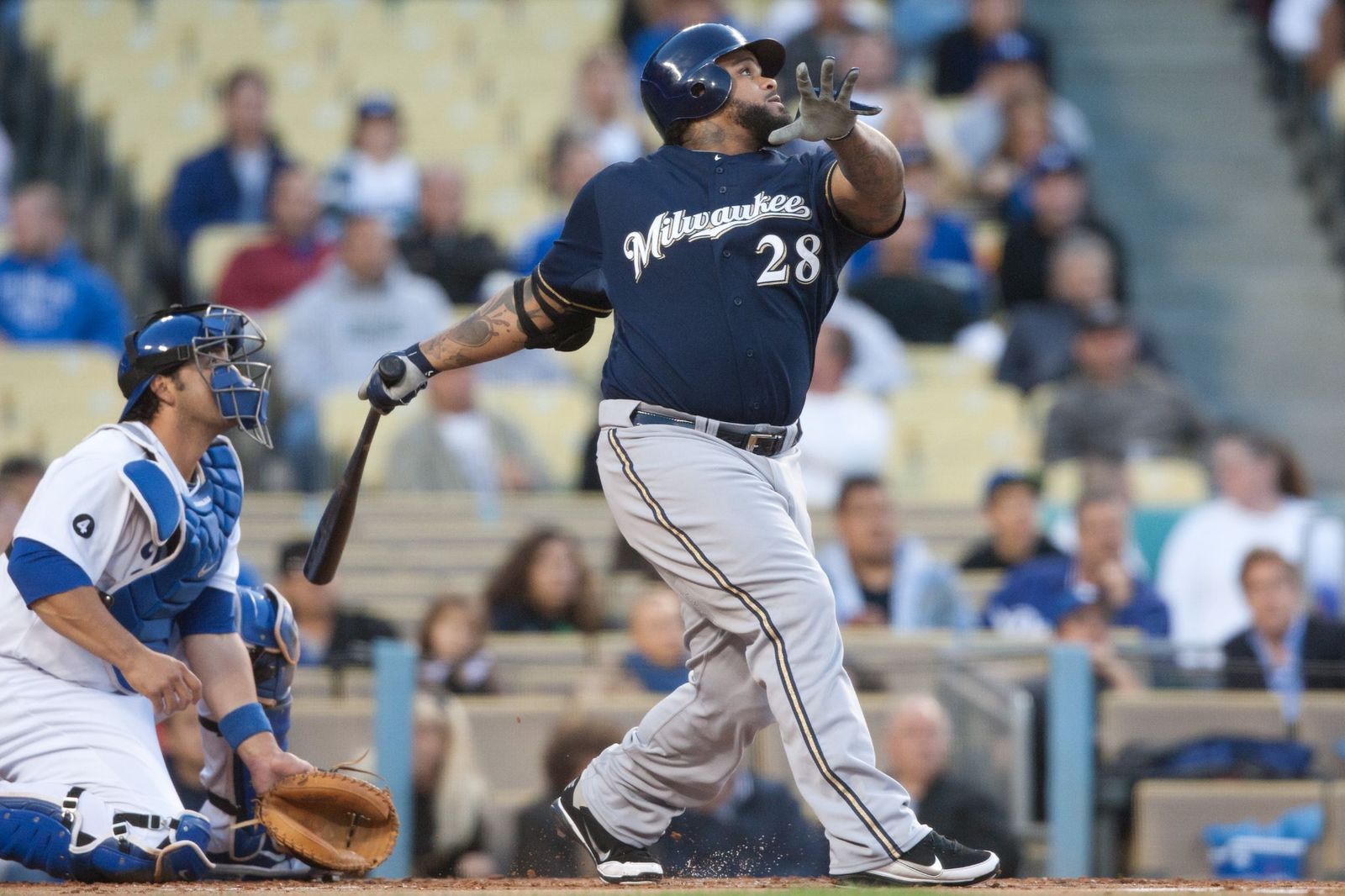
Milwaukee Brewers

Image: Photo Works

Milwaukee has been one of America's great brewing capitals for generations, home to legendary breweries such as Miller, Pabst, Schlitz, and Blatz. Baseball teams in the city had used the nickname Brewers since the late nineteenth century, making it an obvious choice when the current franchise relocated from Seattle in 1970.

Rather than honoring a mascot or an individual, the name celebrates the industry that helped define Milwaukee's economy and identity for well over a century.

7

Houston Astros

Image: Keeton Gale

Houston's baseball club entered Major League Baseball in 1962 as the Colt .45s. Three years later, the team moved into the futuristic Astrodome just as Houston became the home of NASA's Manned Spacecraft Center, placing the city at the heart of America's space program.

The franchise adopted the name Astros in 1965 to reflect this new Space Age identity. It remains one of the clearest examples of a professional team embracing a city's role in scientific history.

8

Los Angeles Lakers

Image: AS project

The Lakers have one of sports' most famous geographical mismatches. The franchise began in Minneapolis, Minnesota, whose nickname, "The Land of 10,000 Lakes", made the Lakers a perfect fit.

When the team relocated to Los Angeles in 1960, it simply kept the name. While Southern California isn't known for lakes, the nickname had already earned a winning reputation and had become too valuable to abandon.

9

Utah Jazz

Image: University of College

Few team names puzzle fans more than the Utah Jazz. The explanation is simple: the franchise wasn't originally from Utah. It began as the New Orleans Jazz in 1974, borrowing its name from the city that gave birth to jazz music.

After financial difficulties forced the team to move to Salt Lake City in 1979, the nickname remained unchanged. It has since become one of the best-known examples of a sports team carrying a name that reflects its original hometown rather than its current one.

10

New York Rangers

Image: Debby Wong

The Rangers weren't named after soldiers or adventurers. Instead, the nickname grew out of a newspaper pun. When boxing promoter Tex Rickard received an NHL franchise in 1926, journalists jokingly referred to the club as "Tex's Rangers," echoing the famous Texas Rangers.

The playful phrase was quickly shortened to simply "Rangers," giving hockey one of its most enduring names, all thanks to a clever headline.

11

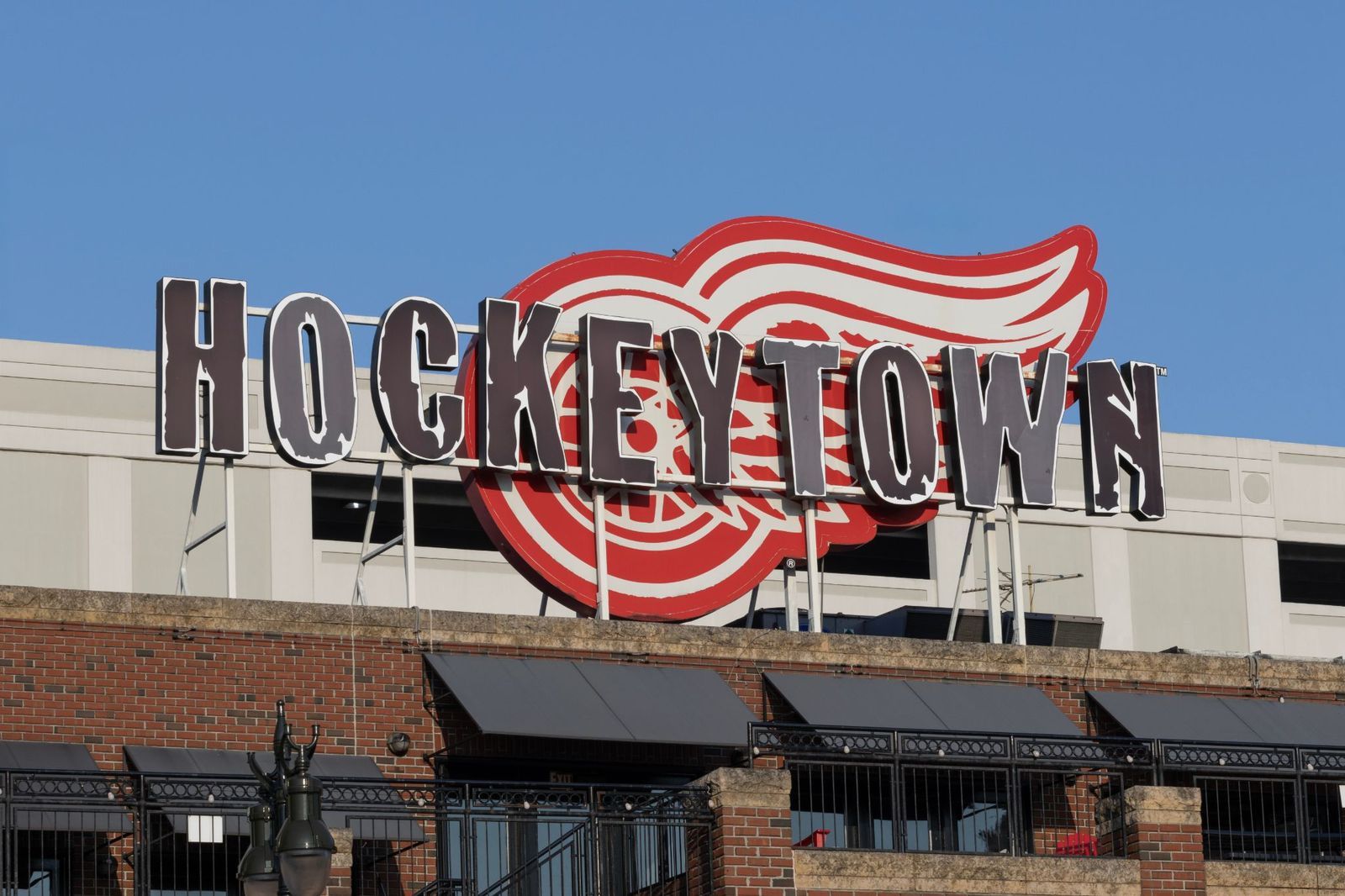
Detroit Red Wings

Image: Jonathan Weiss

Detroit's famous winged-wheel logo tells the story behind its nickname. When businessman James E. Norris purchased the franchise in 1932, he renamed it the Red Wings after Montreal's Winged Wheelers, an amateur club with which he had once been associated.

The winged wheel also proved especially appropriate for Detroit, already earning worldwide recognition as the center of the American automobile industry. The logo has become one of hockey's most iconic symbols.

12

Kansas City Royals

Image: Conor P. Fitzgerald

The Royals aren't named after kings or queens. Instead, they honor the American Royal, one of the nation's largest livestock, horse, and rodeo exhibitions, held annually in Kansas City since 1899.

When the city received an expansion baseball franchise in 1969, fans voted in a naming contest, and the Royals won in tribute to this beloved local institution. It's a reminder that sometimes a team's name celebrates hometown traditions rather than history's famous rulers.



Decoding the experts

You’ve heard your doctor use these words. Here’s what they really mean


Published on August 5, 2026


Image: Vitaly Gariev

Medical jargon can be somewhat confusing to the untrained ear. How can something negative or unremarkable be reassuring? If you’ve ever felt like you needed a translator during a medical appointment, you’re not alone. Curious about what your physician is really saying? Let’s break it down.

1

Artery vs. vein

Image: Robina Weermeijer

During a routine visit, your doctor might talk about keeping your arteries healthy. And later, when you get your blood draw, the technician mentions your veins. It’s easy to wonder how these two are related.

Arteries carry oxygen-rich blood from the heart to the body. They handle higher pressure and have thicker walls. They are in charge of delivering blood to every other organ.

Veins, instead, return blood to the heart after oxygen has been delivered. They work under lower pressure than the arteries. Conditions affecting them vary greatly, and knowing the difference allows any patient to understand what is really going on behind that lab result.

2

Electrocardiogram vs. echocardiogram

Image: Joachim Schnürle

Heart testing can involve several procedures, and the names don’t always make it clear what each one does. An electrocardiogram, or EKG, records the electrical activity of the heart. It helps detect irregular rhythms and signs of past damage. For instance, if someone feels palpitations, an EKG might be the first test ordered.

An echocardiogram uses ultrasound to create images of the heart’s structure and movement. It’s helpful to see blood flow through the heart and heart valves. Both tests look at the heart, but they focus on different aspects.

3

Hypothyroidism vs. hyperthyroidism

Image: El S

When it comes to thyroid conditions, a small prefix makes a big difference. Hypothyroidism means the thyroid is underactive and produces too little hormone, leading to symptoms like fatigue or feeling cold more often.

Hyperthyroidism, on the other hand, means it is overactive and produces too much hormone, causing the opposite effect and speeding up your system. This can lead to weight loss or rapid heartbeats. Because the symptoms and treatments differ, it’s important to know which condition is being described, even though the terms sound similar.

4

​Dose vs. dosage

Image: Olga DeLawrence

Prescription labels often include both of these terms, and their writing is very similar, but that doesn’t mean they are interchangeable.

A "dose" is the specific amount taken at one time, like a pill or 10 milligrams. "Dosage" is the overall plan. It includes how much to take, how often, and for how long. Following both correctly helps ensure the treatment works as intended.

5

Positive vs. negative

Image: Brett Jordan

Imagine opening your lab results and seeing the word "negative." In everyday language, that sounds like bad news, but in medicine, it often means the opposite.

In medical testing, "negative" usually means no sign of the condition was found. For example, a negative strep test means you don’t have a strep infection. A "positive," however, means something was detected, and it confirms the presence of the condition. It’s a simple switch in meaning, but it can feel confusing at first.

6

Normal vs. ​unremarkable

Image: National Cancer Institute

When reading test results, many people look for the word "normal." If they don’t see it, they may feel uneasy. But "normal" is not the only word that can describe healthy scenarios.

In medicine, "normal" means everything appears exactly as expected. No unusual findings, nothing to worry about. "Unremarkable," another word you might find in test results, is not necessarily a bad word. In general, it means whatever findings there may be, there’s nothing that requires follow-up. Despite how it sounds, "unremarkable" can be just as reassuring as "normal."

7

Aural vs. oral

Image: National Cancer Institute

You pick up a prescription labeled "for aural use." It looks familiar, but something feels off. Is it the same as oral? This mix-up happens because, in English, the words sound identical, but they refer to different parts of the body.

"Aural" relates to the ears and is used for treatments like ear drops. On the other side, "oral" refers to the mouth, including medication you swallow or let dissolve.

A medication labeled for aural use is designed specifically for the ear canal and should not be taken by mouth. When instructions aren’t clear, it’s always worth double-checking before using the medication.

8

Physiologic vs. pathologic

Image: Vitaly Gariev

Medical reports often include terms that sound technical and unfamiliar. Take "physiologic," it sounds pretty similar to "pathologic," so should one worry? Let’s see the difference.

"Physiologic" refers to normal body functions. It describes processes that occur as part of a healthy system. "Pathologic" is the opposite; it refers to changes caused by disease or abnormal conditions. Doctors use these terms to separate what is expected from what may require treatment. But even if both sound equally serious at first, your physician is the only one who can actually tell you if your hunch is right or not.

9

​​Chronic vs. acute

Image: National Cancer Institute

The word "chronic" often carries a heavy tone, even though its meaning is more straightforward than it seems. Funny enough, the opposite, "acute," seems light, but it generally isn’t.

"Chronic" refers to a condition that lasts for a long period, usually one year or longer. It doesn’t refer to severity, but duration. "Acute," instead, refers to a condition that develops suddenly and requires immediate attention. These terms describe timing, not seriousness, which is an important distinction when discussing a diagnosis.

10

Hypertension vs. hypotension

Image: National Cancer Institute

Similar to the thyroid, blood pressure discussions often include terms that sound nearly identical, which can make them easy to confuse.

"Hypertension" means high blood pressure, and it’s linked to long-term health concerns if not managed. "Hypotension" means low blood pressure, which may cause symptoms like dizziness, but it’s often less worrying. Understanding the difference helps make sense of your readings and what your doctor is monitoring over time.

Looking for an extra scoop of literary fun?

Learn more with our Word of the day

layman

/ˈleɪmən/