Calendar mysteries

How are we closer to the Sun during winter? 10 calendar surprises


Published on August 17, 2026


Image: Towfiqu barbhuiya

Most of us think we know the calendar pretty well, and if we don’t, our phones are there to remind us of dates and events. But the way humans measure the passage of time hasn’t always been the same. From the origins of month names to the truth behind leap years, today we’re going to share 10 surprising facts you probably didn’t know about the calendar.

1

Leaplings

Image: Glen Carrie

The probability of being born on February 29 is 1 in 1,461. Although birthdays on this date are rare, people born on it even have a name: leaplings. Leaplings officially get to celebrate their birthday on February 29 only once every four years, but what happens in the other years? While some people prefer not to jump to another month, March 1st is considered more astronomically accurate, as it comes directly after February 28.

2

The Earth trip

Image: NASA

The Earth’s orbit is elliptical, which means there are times when we are closer to the Sun and other times when we are farther away. In January, Earth is at its closest point to the Sun, known as "perihelion." You might wonder how we can be closer to the Sun during winter, but the seasons are caused by Earth’s tilt, not by our distance from the Sun. On the other hand, the month when we are farthest from the Sun is July, and this point in the orbit is called "aphelion."

3

February’s exception

Image: Andrew Hughes

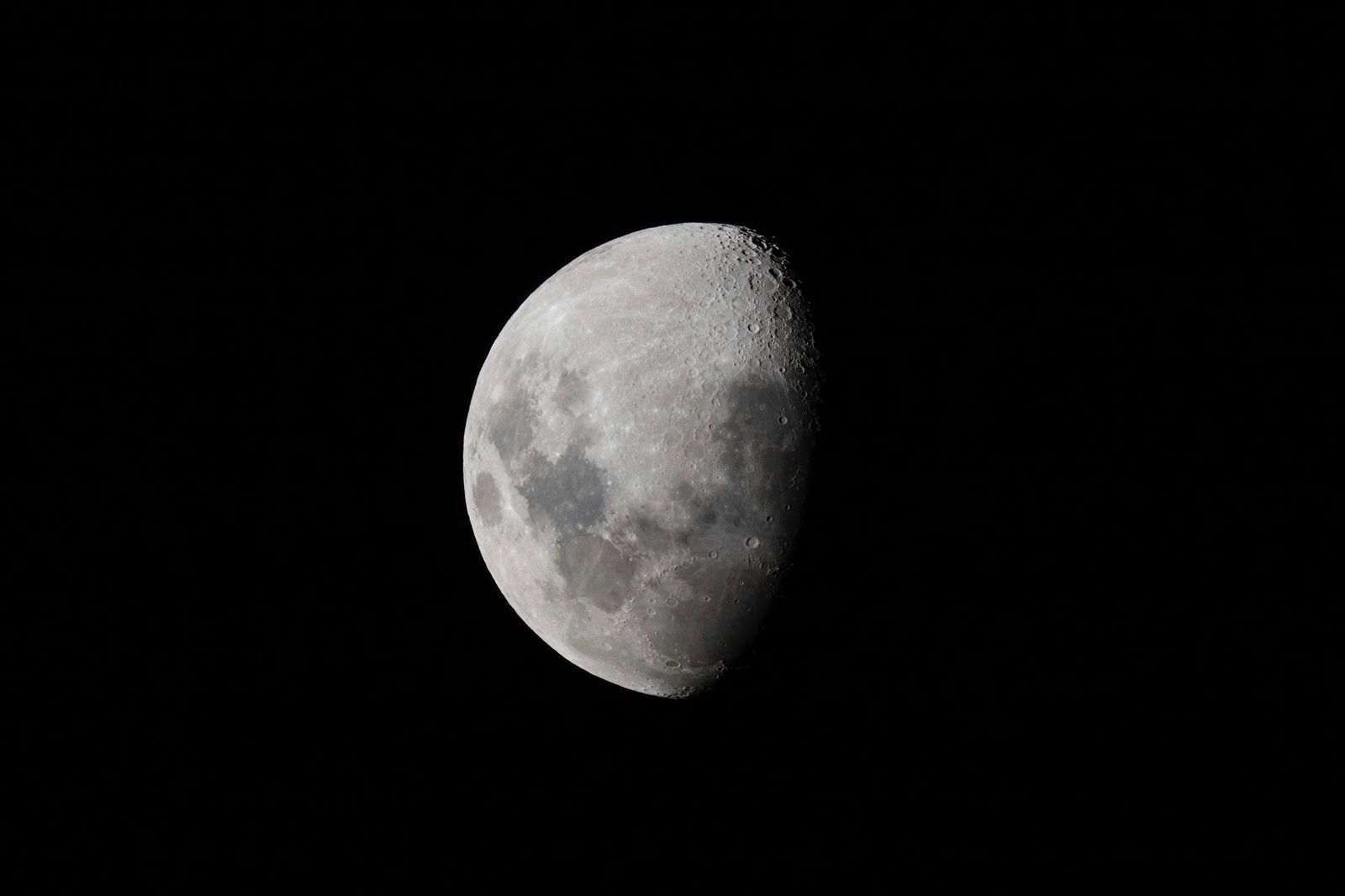
Due to its particularly short duration, February is the only month that can lack a full moon. Lunar cycles are 29.5 days long, which means that, approximately every 19 years, February has all the lunar phases except the full moon. When this happens, both January and March have two full moons, with the second one being called a "Blue Moon"; and that's why, when we say "once in a blue moon," we're talking about something that happens very rarely. The next time this will happen will be in the year 2037.

4

The Gregorian calendar

Image: Leandro Silva

Did you know that our calendar has a name? That’s right; most of the world uses the Gregorian calendar, named after Pope Gregory XIII, who introduced it in 1582 as a reform of the older system.

The main difference lies in how leap years are handled. The previous system, known as the Julian calendar, added a leap year every four years, assuming a year lasted exactly 365.25 days. However, a real solar year is slightly shorter. To fix this, the Gregorian calendar keeps leap years every four years with one exception: century years (like 1900) are not leap years unless they are divisible by 400 (such as 2000).

5

Only 10 months

Image: Massimo Virgilio

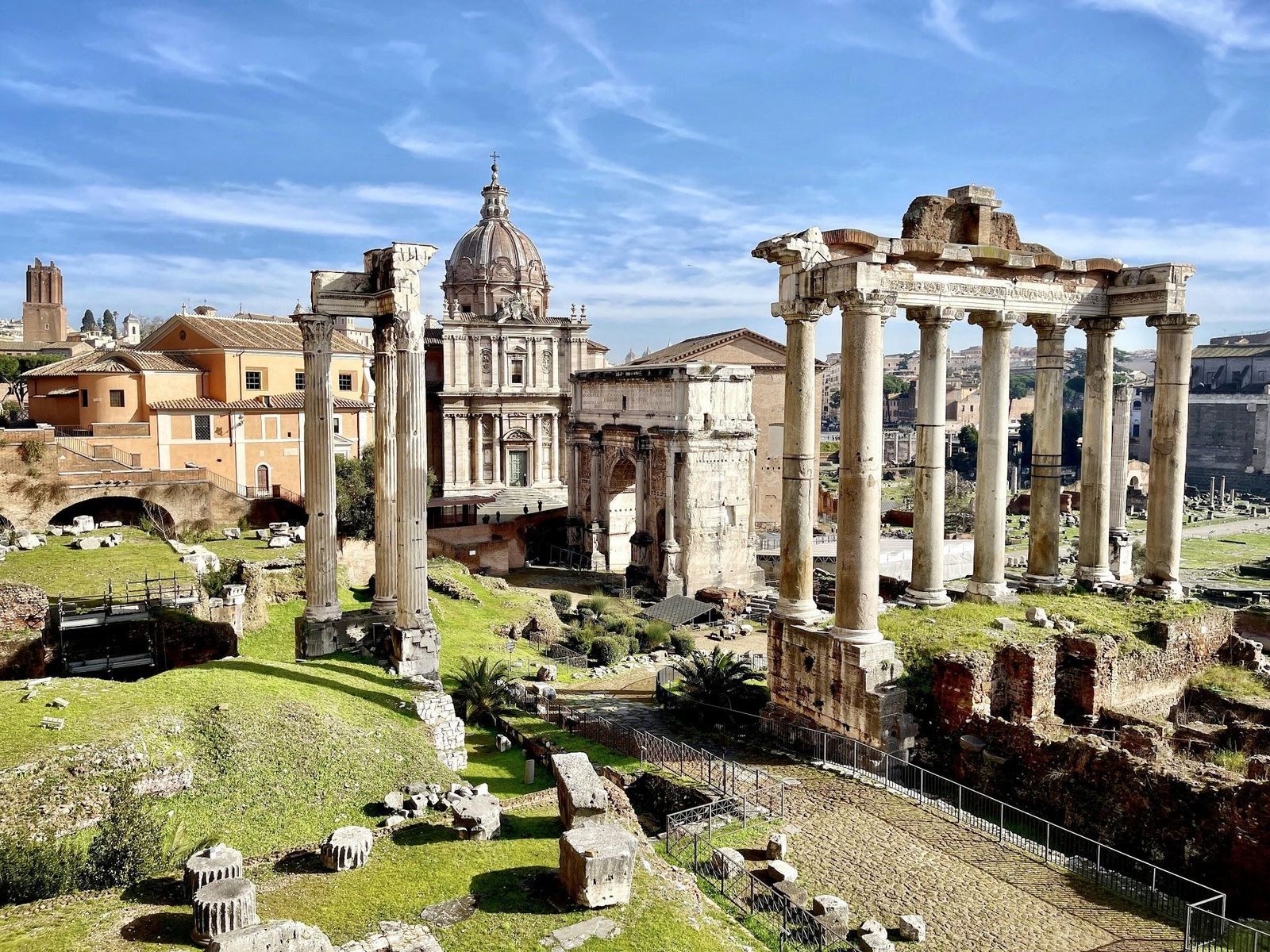
But before the Julian calendar, ancient Rome used an even older system with one key difference: it had only 10 months. This calendar began in March and ended in December, totaling just 304 days. What about the remaining days? They were considered a winter gap and simply weren’t counted. Around 700 BC, January and February were added to fill that gap, and these changes were later standardized under Julius Caesar’s reform in 45 BC, when he introduced the Julian calendar.

6

Our month names

Image: Casey Lovegrove

The names also come directly from life in ancient Rome, where months were named in honor of deities and important festivities. For example, March was named Martius after Mars, the god of war, because it marked the start of the military campaigning season. Aprilis, the Roman name for April, comes from the Latin verb aperire, meaning "to open," in reference to the arrival of spring. May was named Maius after Maia, the goddess of fertility and growth, and June was named Iunius in honor of Juno, the Roman goddess of marriage.

7

The numbered months

Image: Clemens van Lay

What about the rest of the months? From July through December, they were originally named after their position in the year. Since March was considered the first month, July was called Quintilis ("the fifth"), August was Sextilis ("the sixth"), September comes from septem, meaning "seven" in Latin, October from octo ("eight"), November from novem ("nine"), and December from decem ("ten").

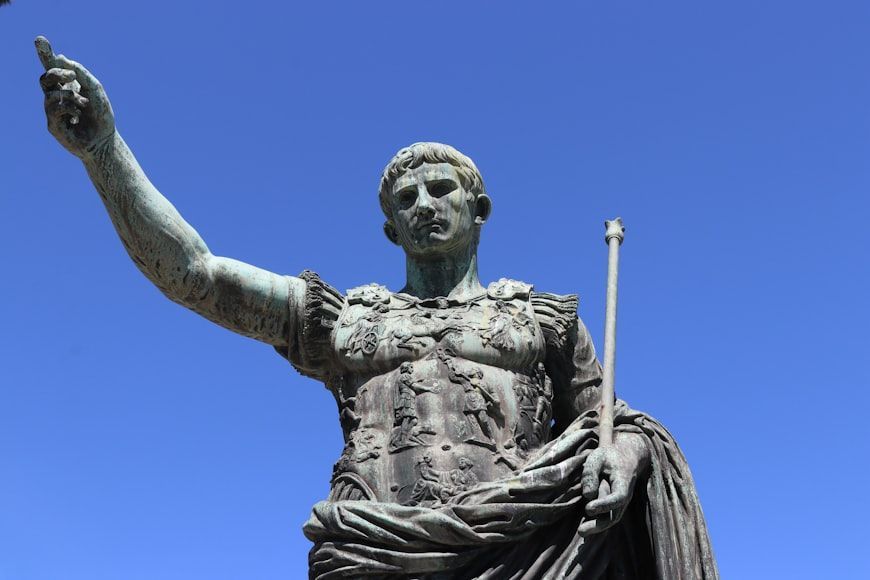
Most of these names remained similar, with two exceptions: Quintilis was renamed Iulius to honor Julius Caesar after his death, and Sextilis became Augustus, in honor of Augustus Caesar, the first Roman emperor.

8

The days of the week

Image: Jan Ledermann

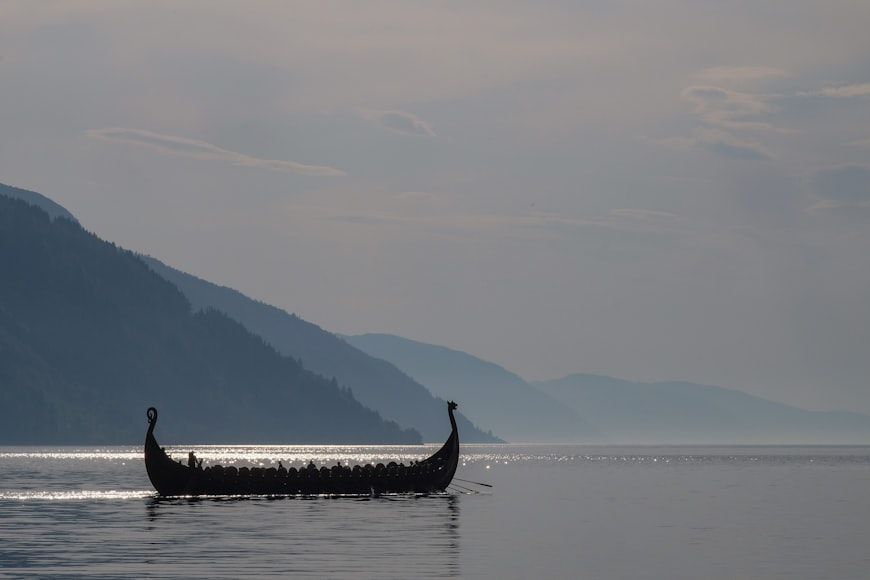
The days of the week are no exception to Roman tradition. Sunday was named dies Solis ("day of the Sun"), Monday was dies Lunae ("day of the Moon"), Tuesday was called dies Martis (day of Mars), Wednesday dies Mercurii (day of Mercury), Thursday dies Iovis (day of Jupiter), Friday dies Veneris (day of Venus), and finally, Saturday was dies Saturni (day of Saturn).

9

The Nordic influence

Image: Steinar Engeland

As you may have noticed, only Saturday retained its Roman root, while Sunday and Monday kept their meaning but were translated. What happened to the rest? They were influenced by Norse mythology, resulting in Tuesday being named for Tyr, a Norse god of war; Wednesday after Woden (Odin), the Norse interpretation of Mercury; Thursday from Thor, the god of thunder, replacing Jupiter; and Friday from Freya, a Norse goddess linked to the Roman Venus.

10

A global variation

Image: Kelly Sikkema

In the United States, Sunday is considered the start of the week. This tradition has religious and cultural roots, and it’s shared by many parts of the world, but not all of them. In fact, several other English-speaking countries do it differently: places like England, Australia, and parts of Canada consider Monday the first day of the week, with Sunday closing it out.


Western words

Saddle up, partner, and learn some cowboy jargon!


Published on August 17, 2026


Image: Ahmet Çığşar

Tarnation! I better get to the jaw cracker before I end up in the bone orchard! If you don’t know what this all means, don’t worry—we’re here to help! Cowboys in the Old West not only tamed the inhospitable land, but they also forged their own language. They created unrefined similes and metaphors, broke the rules of grammar, flooded figures of speech with humor, and made a verb out of anything. In this article, we review 12 expressions we inherited from the men and women who populated the American frontier—many of which we still use today. Giddyup!

1

Yeehaw

Image: Mehmet Turgut Kirkgoz

Yeehaw! Welcome to the rodeo! You probably know this one: "Yeehaw" is one of the most famous words in cowboy lingo. It’s an expression of excitement and celebration, usually pronounced by slurring the vowels in a loud shout of triumph. Have you ever used it?

"Yeehaw" is a combination of gee and haw, two words used to direct a horse to move. The term is believed to have originated in the southern United States and was later popularized by Western movies and television shows.

2

Saloon

Image: paulclee

Also thanks to Western movies, we all know what a saloon is. But where does the word come from? Saloons were the bars of the Old West, where cowboys, outlaws, gamblers, and miners went to have a drink, get a free lunch, catch some entertainment, and engage in a fight or two.

The word saloon appeared in America in the 1840s and derives from the French term salon, which in turn comes from the Italian salone, meaning "a large hall in a public place for entertainment or amusement."

3

Bellyaching

Image: Anya Juárez Tenorio

In its literal sense, the term _bellyache_—which has been in use in the English language since at least the mid-1500s—refers to a pain in the stomach. However, beginning in the 1880s, Americans gave it a figurative meaning.

As a slang word, bellyaching is used to describe someone who complains too often in an irrational or unjustified way to avoid responsibility. For instance, "Quit your bellyaching and take care of the horses once and for all" is a good example of how a cowboy might have used this term.

4

All hat and no cattle

Image: Josh Withers

This idiom is a Western variation of the popular expression "all bark and no bite." All hat and no cattle is used to describe a phony, pretentious person who talks a lot but does little. It can also refer to someone who has a way with words but can't deliver on their promises.

Its origin is probably related to people who wore cowboy hats as fashion, but who didn’t herd and tend cattle on a ranch for a living.

5

Howdy

Image: Matthew Pablico

Howdy is the quintessential cowboy greeting. Although it’s an expression characteristic of the Southern United States, howdy actually originated in late 16th-century England. It is a contraction of the phrase "How do ye?", which was commonly used to ask about someone’s health.

Today, howdy is used in many rural Southern and Western states—especially Texas—in casual contexts as a standard greeting instead of "hello."

6

Jawing

Image: Bailey Alexander

Do you have a friend or family member who talks and gossips non-stop? In the Wild Wild West, they would have said they are jawing.

The origin of this slang term is unclear, but since you need to open and close your jaw to speak, it makes sense that it became a verb used to describe someone who talks excessively. Have you ever used this term?

7

Jaw cracker

Image: Spring Fed Images

And speaking of mouths—do you know what they used to call a dentist who traveled from place to place to relieve cowboys of their pain? Yeap, a jaw cracker!

We don’t know the exact origin of this slang term, but it’s pretty self-explanatory. It might sound a bit rowdy, but we can only imagine that Old West dentistry wasn’t for the faint of heart—especially since blacksmiths or barbers were often the ones tasked with pulling out a decaying tooth. No wonder frontier dentist Doc Holliday became a gunslinger!

8

Tarnation

Image: ArtHouse Studio

American slang is full of colorful phrases that help us express strong emotions without crossing the line into blasphemy. Heck, darn, gosh, and gee-whiz are just a few examples. Tarnation is another of these euphemistic expressions used to convey surprise or anger.

The term was coined in the late 18th century in America as a softened version of damnation, which was considered impolite at the time. Tarnation is a mix of darnation and tarnal, a shortened form of the word eternal.

9

Tenderfoot

Image: JosephHershMedia

According to the Merriam-Webster Dictionary, a tenderfoot is "an inexperienced beginner, a novice." Today, we use this term to describe someone who’s raw and unaccustomed to outdoor living or hard work. For example, a rookie starting a new job or a young football player might be called a tenderfoot.

Originally, a tenderfoot was an immigrant or newcomer who wasn’t used to the rugged pioneer lifestyle—especially the grueling labor of ranching and mining. It came into use in mid-19th century America as a pejorative way to describe newcomers to the West. Other colorful synonyms from the same period include pilgrim, Johnny-come-lately, mail-order cowboy, stringin’ a greener, and skim-milk cowboy, among others.

10

Desert canary

Image: jackmac34

In the Old West, desert canary was a slang term for a burro. But what exactly is a burro? A burro is a wild or feral donkey, valued for its sturdiness and reliability. These hardy animals were extensively used by miners and prospectors as pack animals, and by cowboys to guard livestock.

Burros played a vital role in frontier life, so why did they call them desert canaries? Simple, they are affectionately called this way because of their characteristic braying that could be heard all across the desert.

11

Giddyup

Image: yavuz pancareken

The first thing most folks picture when they hear giddyup is a cowboy riding off into the sunset—and they wouldn’t be wrong. Giddyup originated in the Wild West during the 19th century as a command to instruct a horse to get going.

The term is likely a playful alteration of "get up," and it’s still used today in casual conversation to mean "let’s go" or "hurry up." Whether you're wrangling cattle or racing to catch a bus, giddyup gets the job done!

12

Bone orchard

Image: Simon Alibert

Can you imagine what life was like in those lawless frontier towns? The Old West was surely a dangerous place where people experienced more than one way to die or get killed. So it’s no surprise that they had many colloquial ways of referring to the cemeteries.

Bone yard, boot hill, and grave patch were just a few of the grim nicknames for "cemetery" at that time. But our favorite is undoubtedly bone orchard. Pretty poetic for such a rough and hostile era, don't you think?

Looking for an extra scoop of literary fun?

Learn more with our Word of the day

assimilate

/əˈsɪməˌleɪt/