Sound smarter today!
Using these terms can make you seem less intelligent than you really are
Published on September 4, 2026

Everyone, even the most articulate of us, has a few words they lean on while speaking. Linguists often call them discourse markers: expressions that organize ideas, soften opinions, invite agreement, or buy time while the brain catches up with the mouth. They are not necessarily mistakes, but when repeated too often, they can become more noticeable than the message itself. Are any of the following 12 part of your everyday repertoire?
Like

"It was, like, the best concert ever."
Few words are as closely associated with casual speech as "like". Linguists note that it is not merely an empty filler: it can introduce an example, signal approximation, frame a quotation, or give the speaker a brief moment to organize a thought.
The habit becomes a crutch when it appears so often that listeners start counting it. Used sparingly, "like" can make speech sound natural and flexible. Used every few words, it can blur the point and make even a confident speaker sound hesitant or unprepared.
Literally
"I literally froze."
Literally originally meant "in a literal sense," but English speakers have also used it figuratively for emphasis for centuries. Charles Dickens, Mark Twain, and F. Scott Fitzgerald all stretched the word beyond strict factual meaning long before social media turned the practice into a public argument.
Today, it often works as an emotional intensifier rather than a precise description. Saying "I literally froze" may simply mean the experience felt overwhelming. The word is not automatically wrong, but constant use weakens its force and makes dramatic statements sound routine.
You know

"It was just... you know... awkward."
Unlike many fillers, "you know" directly involves the listener. It can check whether someone is following, suggest shared knowledge, soften an awkward remark, or help a speaker maintain rapport while searching for the next phrase. In conversation, it often acts as a small request for cooperation.
That usefulness also makes it easy to overuse. When repeated every few seconds, it stops sounding inclusive and begins to resemble a nervous reflex.
Honestly

"Honestly, I didn't expect that."
Beginning a sentence with "honestly" does not necessarily imply that everything else was dishonest. Linguists often treat it as a stance marker: a word that signals sincerity, emotional investment, or the introduction of a personal opinion. It prepares listeners for something the speaker considers especially direct.
The irony is that repeated announcements of honesty can create suspicion rather than trust. Used occasionally, the word adds emphasis and intimacy. Used before nearly every opinion, it can sound theatrical, defensive, or strangely unnecessary.
So

"So... here's what happened."
Sentence-opening so is now common in interviews, podcasts, meetings, and everyday conversation. It usually does more than fill silence: it signals that an explanation, answer, summary, or conclusion is about to follow. It helps connect what comes next to what has already been discussed.
The problem appears when every response begins the same way. A useful bridge then becomes a visible habit, and listeners may notice the repetition of so more than the explanation itself. Pausing briefly can often make the answer sound cleaner and more deliberate.
To be fair

"To be fair, they didn't have much time."
"To be fair" introduces balance, concession, or nuance. Speakers often use it before acknowledging another person’s circumstances, softening criticism, or presenting a competing point of view. That is why the phrase appears so often in debates, reviews, sports commentary, and political discussion.
Its appeal lies in the suggestion of objectivity, but repetition can make that fairness feel automatic rather than thoughtful. When every disagreement begins with the same disclaimer, the phrase loses its diplomatic value and becomes little more than a verbal routine.
Basically

"Basically, we ran out of money."
"Basically" promises that a complicated subject is about to be reduced to its essentials. It can be genuinely useful when a speaker needs to summarize a long story, strip away technical detail, or identify the central point.
The usual problem is that many people say "basically" before launching into an explanation that is anything but basic. Used carefully, it clarifies. Used constantly, it becomes a vague shortcut that adds no meaning and may even make the speaker sound less certain about the summary.
I mean
"I mean... that's not exactly what I meant."
Few expressions reveal real-time thinking as clearly as I mean. Speakers use it to correct themselves, refine a claim, soften a judgment, or rephrase something that did not come out quite right. It marks the moment when the mind edits a sentence that has already begun to leave the mouth.
That flexibility explains why the phrase is so common, and so easy to repeat unconsciously. Occasional use makes speech sound natural and self-aware. Constant use can make every statement seem provisional and indecisive, as though the speaker is forever revising a thought before fully committing to it.
Right?
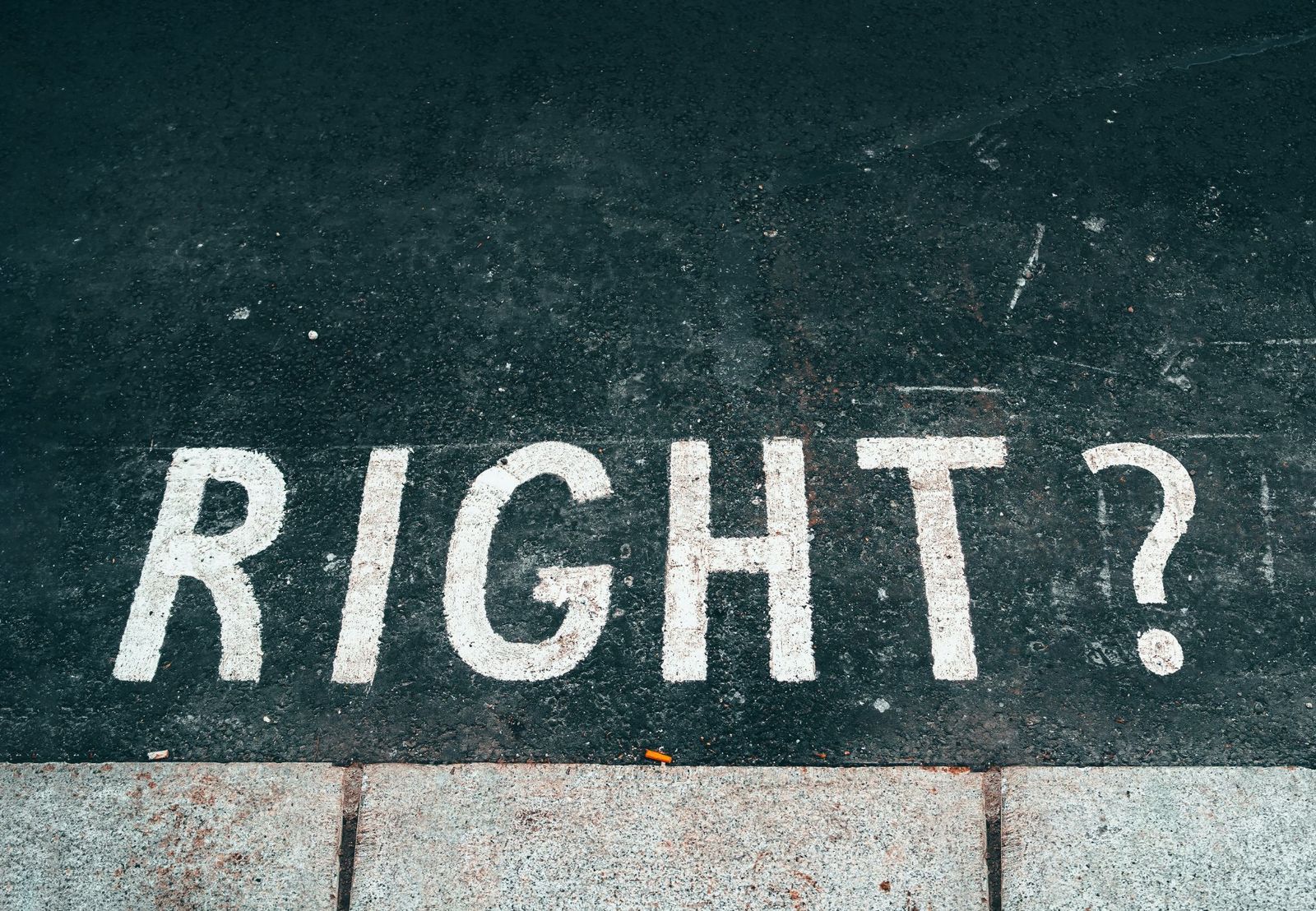
"That makes sense, right?"
Adding "right?" to the end of a statement turns it into a small request for confirmation. The speaker may be checking comprehension, inviting agreement, or simply making sure the listener remains engaged. It is less a genuine question than a conversational signal that says, "Are you still with me?"
Used occasionally, the tag creates warmth and participation. Attached to nearly every sentence, however, it can undermine authority and make even a strong argument sound uncertain.
Look

"Look, here's the problem."
When "look" begins a sentence, it usually has nothing to do with vision. It acts as an attention signal, warning that a correction, explanation, disagreement, or important point is coming. Politicians, lawyers, coaches, and television commentators favor it because it quickly redirects the room.
The word can be effective, but it also carries a slightly forceful tone. Repeated too often, it may sound impatient or controlling, as though every remark requires special attention.
At the end of the day

"At the end of the day, results matter."
Once a literal reference to evening, at the end of the day has become one of English’s best-known business clichés. It now usually means "ultimately," "when everything is considered," or "what matters most." Executives, politicians, and sports commentators have helped make it nearly unavoidable.
The phrase is not incorrect, but familiarity has drained it of freshness. Because it often introduces an obvious conclusion, listeners may hear it as padding rather than insight.
In terms of

"In terms of cost, it's a great option."
"In terms of" frames the specific angle from which a topic will be discussed: cost, timing, quality, risk, or some other category. It is especially useful in academic, technical, and professional language, where speakers may need to separate several dimensions of the same issue.
Repeating it can make ordinary conversation sound bureaucratic, as though every thought belongs in a report.