Fun facts you’ll want to share

They know what you want: What you ignore about the most popular apps


Published on May 8, 2026


Image: Jonny Gios

We carry these apps with us in our pockets everywhere we go. Yet how little we know about them… Did you know TikTok can learn how to make you laugh in less than an hour? Or that Google’s first server was literally built with toys? Or the percentage of songs on Spotify that have never been heard by anyone –ever? Here’s a list of fun facts that you’ll want to share with your friends.

1

Google

Image: Richard Heinen

This story sounds made up, but you can Google it yourself. In its very early days, Google’s founders stored the company’s first server in a box made of… Lego bricks! It held ten 4 GB hard drives.

As you can imagine, that colorful, practical, creative image cemented the same aesthetic that Google is nowadays so well-known for.

2

Instagram

Image: cottonbro studio

Gone are the days when we judged people harshly for posting pictures of the food they ate.

The strange habit of showing the world your meal via Instagram is a die-hard, worldwide trend. And the most Instagrammed food globally is #Pizza (with 75.6 million posts), followed by #Sushi (39.2 million).

3

Netflix

Image: Mathieu Improvisato

Has this ever happened to you? You log into Netflix and find a romantic poster for a brand new series. But when your friend goes in through his account, the same series has a poster that makes it look like a horror show.

This is intentional: Netflix famously runs tests on almost everything, including the artwork you see for a show. They know what you’d prefer to watch!

4

Twitter ("X")

Image: Terrillo Walls

Yes, many people use Twitter (a.k.a. "X"). But only about 10% of those active users are responsible for around 92% of all tweets.

In other words, most people lurk and use the site to get their instant news or a few laughs. Very few accounts produce the content!
5

Facebook

Image: Ben Sweet

The first logo of Facebook (around 20 years ago, when it was still "thefacebook.com") used a portrait; specifically, it was a white-and-blue profile of the young face of actor Al Pacino. You can still look up that old logo.

6

Spotify

Image: Reet Talreja

Massive and popular as Spotify is, a big part of it is completely unexplored. That’s because roughly 25% of the songs on Spotify have never been played.

Are you thinking about the poor artists whose songs have 0 plays? Well, consider this: A 2024 report showed that around 99,000 new tracks were uploaded every day!

7

Amazon

Image: ANIRUDH

If you type Relentless.com into a browser today, it still redirects to Amazon. That’s because "Relentless" was one of the early names considered.

"Cadabra" (as in abracadabra) was another early option, but it was changed because the founder’s lawyer noted it sounded too much like "cadaver."

8

YouTube

Image: NordWood Themes

It would be impossible for a human to watch even a third of YouTube’s content in a lifetime. The site has 5.1 billion videos, and the number keeps growing: More than 360 hours of new content are uploaded every minute.
9

WhatsApp

Image: Brett Jordan

WhatsApp is one of the world’s leading messaging apps, and it is currently owned by Facebook. But it was created by two former Yahoo employees who were repeatedly rejected from jobs at Facebook… and then Facebook ended up buying their app for 19 billion dollars.

10

TikTok

Image: Zulfugar Karimov

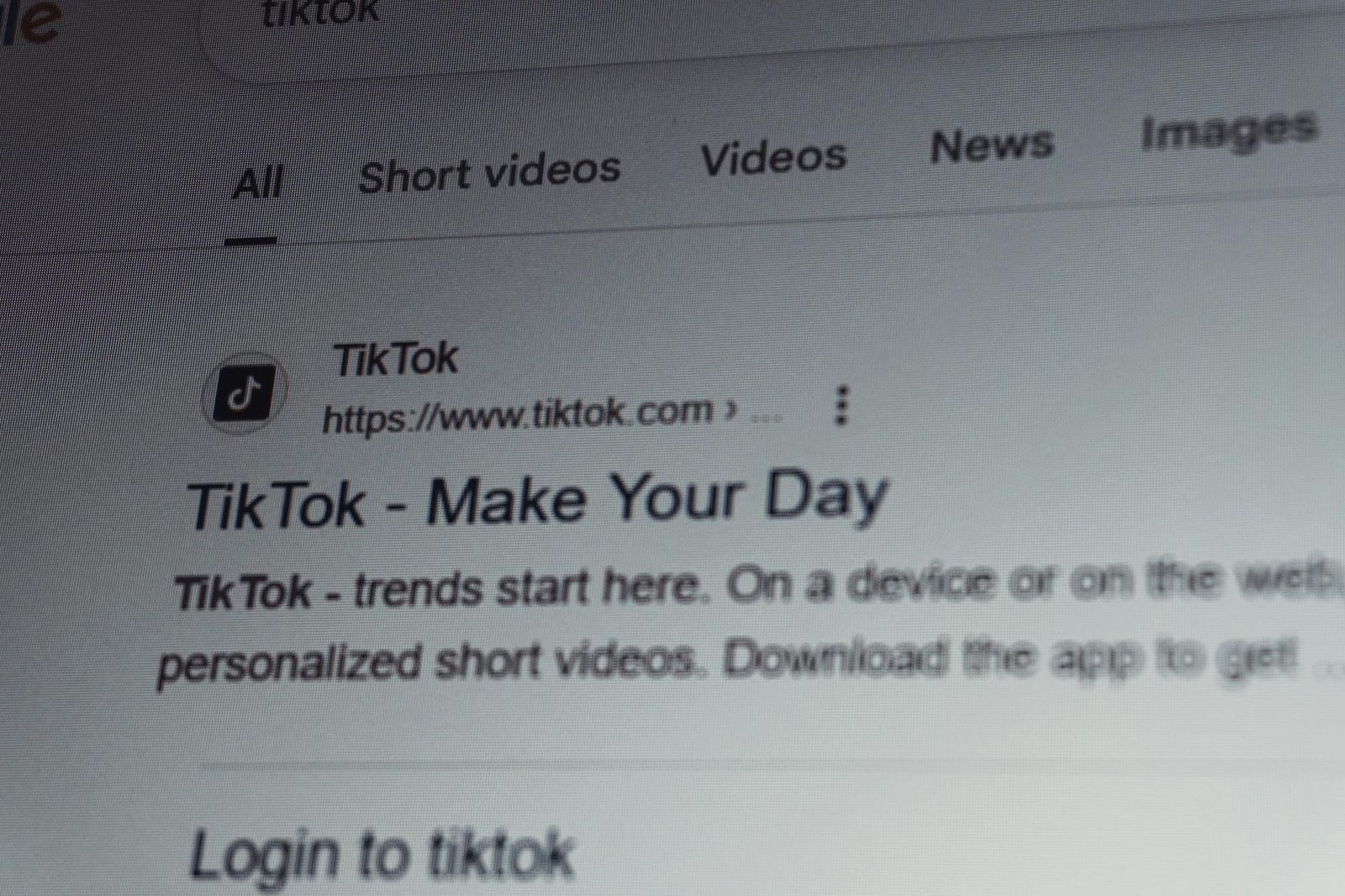
TikTok’s algorithm is so precise that studies show it can figure out your preferences in about 40 minutes of use, just from what you linger on. That is scary-precise technology.

Also, TikTok has been the most downloaded app in the world since 2020, surpassing even Facebook and Instagram.

11

Wikipedia

Image: Oberon Copeland

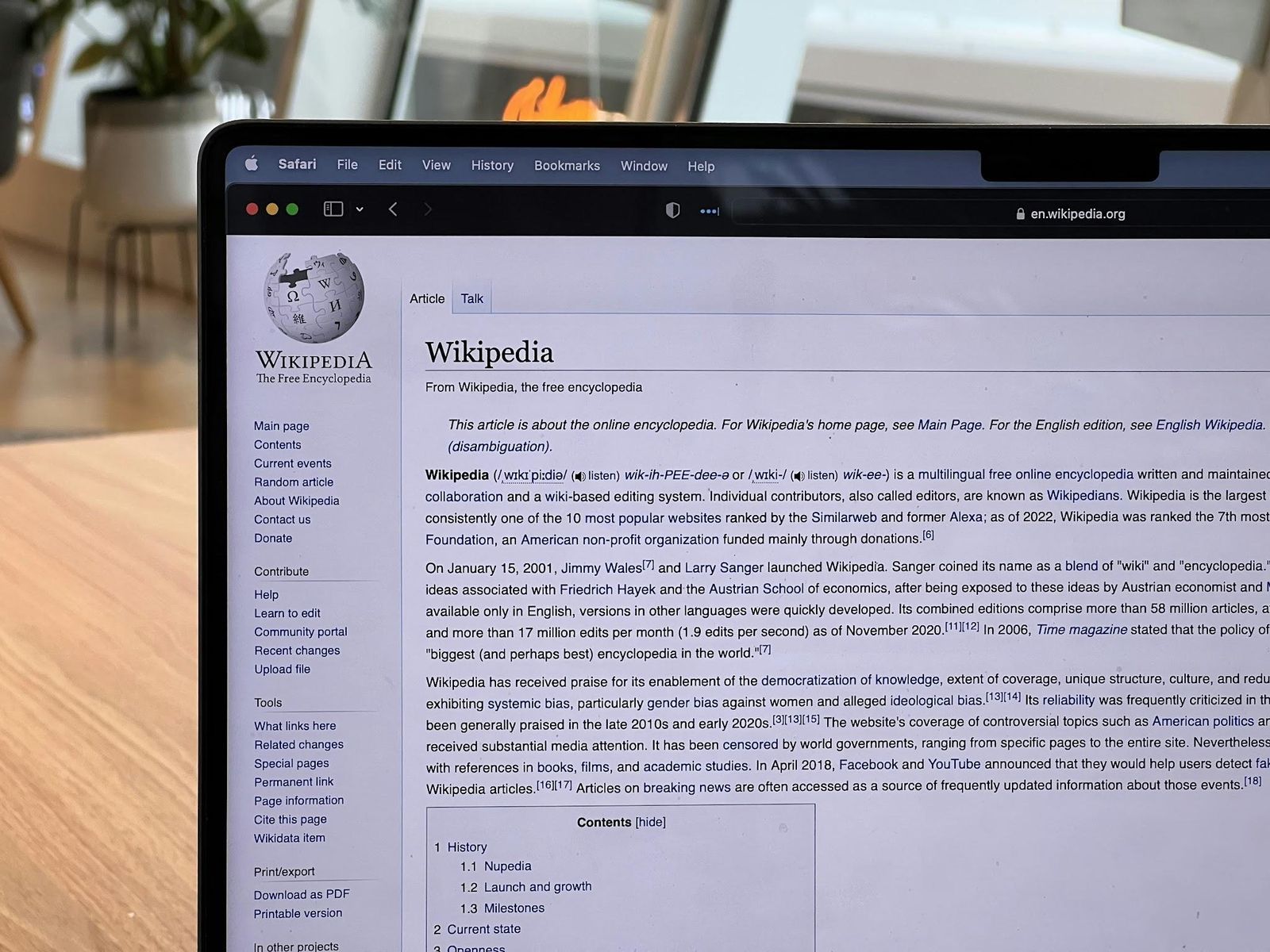
Wikipedia supports one of the largest knowledge bases on Earth. Yet it runs on a budget far smaller than people assume, roughly comparable to a mid-size NGO.

It’s edited by a surprisingly tiny active community. A small percentage of editors maintain a huge portion of the platform.
12

Reddit

Image: Brett Jordan

Would you trust information found in "r/AskReddit"? As it turns out, it is officially one of the site’s most influential subreddits and has shaped countless journalism pieces, TikToks, and YouTube videos. So, basically, it has transformed organically into a quiet content engine behind the internet.


SERIOUS MISCHIEF

Weird Science: The 10 Funniest Scientific Pranks and Hoaxes Ever


Published on May 8, 2026


Image: National Cancer Institute

Who said scientists can’t have a bit of fun? While we often picture those dedicated to scientific inquiry as extremely serious people with no sense of humor, this couldn’t be further from the truth. Scientists, like the rest of us, love having a good laugh. And in fact, it could be argued that they love it so much that it often spills into their work, leading to whimsical names for new species or astronomical phenomena, or go so far as to make elaborate hoaxes that fool even their peers. From bizarre names to outrageous pranks, here are 10 of the weirdest scientific jokes and the fascinating stories behind them.

1

Mini Frogs

Image: Sergiu Nista

Studying tiny frogs smaller than the size of a thumbnail is no easy feat. Much less so when these frogs live in the lush jungles of Madagascar. And once they have been captured, it comes the even more complicated job of identifying them!

If distinguishing between normal-sized frog species can already be a daunting task, imagine when these frogs are scaled down to the size of a housefly. So, we can cut these hard-working scientists some slack for naming three of these tiny frog species as Mini ature, Mini scule, and Mini mum. The frogs certainly won’t mind, and we can smile at the silliness of it all.

2

A Cosmic Joke

Image: Greg Rakozy

Playing April Fool’s pranks on unsuspecting victims never gets old, and it seems most scientists couldn’t agree more. What better way to teach everyone to be less gullible (and to check the laws of physics once in a while) than by completely fabricating scientific phenomena?

On April 1, 1976, BBC astronomer Patrick Moore claimed that a rare alignment of Jupiter and Pluto would decrease Earth's gravity, allowing people to briefly float. This prank, known as the Jovian-Plutonian Gravitational Effect, fooled many listeners, some of whom even called in to report having experienced the phenomenon.

3

The Bob Dylan Conundrum

Image: Brett Jordan

In 1997, when John Jundberg and Eddie Weitzburg of the Karolinska Institute published a paper on measuring intestinal gas to detect inflammation, they didn’t waste the opportunity and titled the article "Nitric Oxide and Inflammation: The Answer Is Blowing In The Wind," inspired by Bob Dylan’s iconic song.

But it didn’t stop there. This playful homage sparked a bet among a group of fellow scientists to incorporate Dylan quotations in their own papers. Over 17 years, this led to numerous references to "the voice of a generation" in all kinds of scientific papers, such as "Dietary Nitrate – A Slow Train Coming" and "Blood on the Tracks: A Simple Twist of Fate?".

4

Chemical Danger

Image: Imani

In 1983, a weekly newspaper in Michigan reported that the chemical dihydrogen oxide had been found in the city's water pipes, and warned of its many dangers - including the fact that it could be fatal if inhaled. To make matters worse, this dangerous chemical seemed to be everywhere!

A closer inspection, however, reveals that dihydrogen oxide is simply two atoms of hydrogen and one of oxygen, also known as H₂O — water! This amusing hoax has been used many times to demonstrate how scientific terminology can be misleading if not properly understood.

5

The Weirdest Tribe

Image: Vince Fleming

In 1956, anthropologist Horace Miner published an article describing the strange rituals of the Nacirema, a "tribe" obsessed with body purity. Miner claimed that the underlying belief of this culture is that their bodies are inherently ugly, so they perform various rituals to make them more acceptable. The Nacirema were particularly obsessed with rituals related to their teeth, believing that neglecting these rituals would lead to disgrace and the loss of friends and lovers.

If you haven’t noticed already, the mysterious Nacirema are none other than Americans ("Nacirema" spelled backward), and the rituals were everyday activities like brushing teeth and visiting the dentist. Beyond being hilarious, the genius of Miner’s satirical report lies in its ability to show that while we may view ourselves as civilized and rational, most of our everyday practices can seem ridiculous and nonsensical from another culture’s perspective.

6

Evolutionary Advantages

Image: Zach Lucero

There’s such an abundance of odd theories in the field of evolutionary science that a yearly prank contest has been initiated to poke some fun. Dubbed "The Festival of Bad Ad Hoc Hypotheses" or BAH!, participants vie for an award by presenting the most well-argued, thoroughly researched, yet completely unhinged evolutionary theory.

One recent winning entry argued that infant distress vocalization, commonly known as "crying," provided prehistoric warriors with a competitive edge in battle. Allegedly, strapping these crying infants to their backs helped warriors "perform significantly better on violent motor tasks." So, next time you hear a baby cry, perhaps it’s the perfect moment to tackle those long-postponed, mildly aggressive emails.

7

A ‘Real’ Danger To The Public

Image: SwapnIl Dwivedi

In the 1990s, a British television program called "Brass Eye" aired a satirical segment featuring a fictitious drug named "Cake." The segment humorously portrayed Cake as a dangerous new substance with absurd side effects, such as impossibly swollen necks and overstimulation of a fictional brain region called "Shatner’s Bassoon," causing users to perceive time much, much slower.

Despite the outlandish claims and explicitly stating multiple times in the spoof report that Cake was a "made-up drug" with "made-up" chemicals (sic), several public figures and even government officials were fooled into issuing warnings against it.

8

Homages And Puns

Image: Sonika Agarwal

In 2011, scientists named a rare horsefly species Scaptia beyonceae in honor of singer Beyoncé. The fly, noted for its golden rear, was discovered in Australia. However, this type of homage is more common than one might expect.

While sometimes names are deliberately humorous or quirky to garner public interest in scientific research, often scientists simply wish to pay tribute to their favorite artists or inject a bit of fun into their work. There are even hidden palindromes (like Orizabus subaziro), anagrams (like Rabilimis mirabilis), and numerous puns that only those in the know can appreciate.

9

Pranking Academia

Image: Scott Graham

In 1996, physicist Alan Sokal perpetrated what became known as the Sokal affair - a notorious academic hoax that targeted postmodernist philosophy and cultural studies. Sokal, frustrated by what he saw as a trend of pseudoscientific language creeping into these disciplines, submitted a deliberately nonsensical paper titled "Transgressing the Boundaries: Towards a Transformative Hermeneutics of Quantum Gravity" to the journal Social Text.

To his surprise—and one could imagine, delight—the jargon-filled, entirely fabricated research paper was accepted and published. Sokal promptly revealed his prank in the journal Lingua Franca, igniting widespread discussions about scholarly publishing standards and causing considerable embarrassment within academic circles.

10

Cute Chemicals

Image: Derek Oyen

Penguinone is a whimsical name given to a chemical compound whose structural formula resembles a penguin. Officially known by the less whimsical name 3,4,4,5-tetramethylcyclohexa-2,5-dienone, it's likely scientists chose creativity over grappling with its cumbersome designation.

Besides, the playful moniker not only sparked interest and engagement in organic chemistry—a field not typically known for its accessibility to laypeople—but also demonstrated that even the most technical and obscure disciplines can embrace a sense of humor.

Looking for an extra scoop of literary fun?

Learn more with our Word of the day

seminal

/ˈsɛmən(ə)l/