Do we miss them?

These letters were left out of the English alphabet, and here's why


Published on December 1, 2025
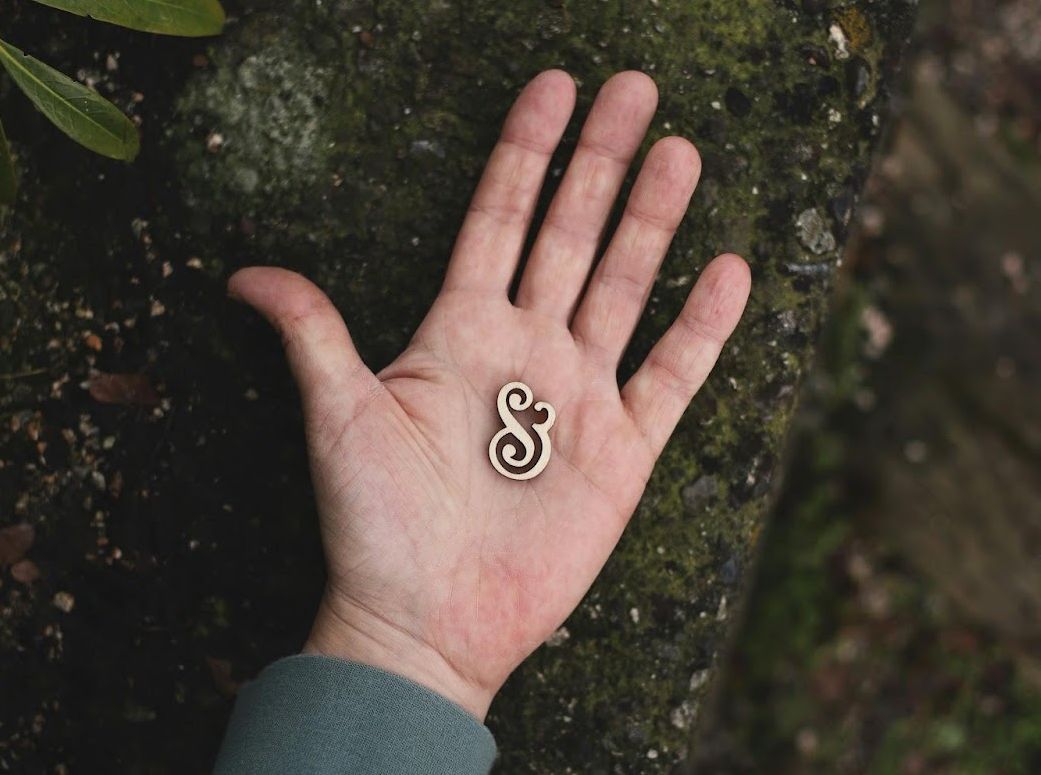

Image: Ksenia Makagonova

Some letters and symbols were once part of the English alphabet or its ancestors. But time and lack of use eventually made them be dropped, replaced, or forgotten. Most of them come from Old English, Middle English, Latin, or early printing traditions, and their stories are full of phonetic shifts, shortcuts, and the drive toward standardization. Let’s look at them!

1

Thorn (Þ, þ)

Image: Andrey Grinkevich

Thorn was used to represent the "th" sound in words like thin or this. It visually resembled a modern P, which often causes confusion when seen in old manuscripts.

Common in Old English, it eventually got phased out during the Middle English period, replaced by the two-letter combination th. Thorn survives today in modern Icelandic, though!

2

Eth (Ð, ð)

Image: James Barnett

Eth was another letter used to represent the "th" sound, particularly the voiced version. It looked a bit like a crossed D and appeared alongside thorn in Old English texts.

Over time, English speakers settled on using "th" for both the voiced and voiceless sounds, and eth gradually fell out of use. Like thorn, eth still exists in modern Icelandic.

3

Wynn (Ƿ, ƿ)

Image: MART PRODUCTION

Wynn was used to represent the "w" sound in Old English—a sound that Latin lacked a letter for. It resembled a capital "P," though it had no connection to that sound.

Instead of writing two "u"s (as in "uu"), scribes used wynn. Over time, however, "uu" evolved into the modern "w," and wynn was phased out during the Middle English period.

4

Yogh (Ȝ, ȝ)

Image: Josué AS

Yogh had a rather confusing role. It could represent several sounds: a throaty "gh" like in "night," a "y" as in "yes," or even a soft "g" like in "genre," depending on context and region. It looked like the number 3 and was used heavily in Middle English.

As spelling and pronunciation evolved, these sounds were either lost or spelled differently (gh, y, j, or g).

5

Ash (Æ, æ)

Image: Bruno Martins

Ash is a fusion of "a" and "e," borrowed from Latin and used in Old English words like æthel (noble). It represented a distinct vowel sound, somewhere between "a" and "e," like the short "a" in cat.

In early English texts, it was treated as a letter in its own right. Over time, as English spelling standardized, ash was replaced by "a" or "e" depending on pronunciation.

6

Ethel (Œ, œ)

Image: Natalia Y.

Think of Ethel as a relative of ash. This ligature combines "o" and "e" and shows up in Latin borrowings like fœtus, œuvre, and œconomy. As spelling was standardized, it got the axe in favor of plain old "oe" or even just "e."

You’ll still spot it in French and in stylized English writing.

7

Tironian et (⁊)

Image: Jo Coenen - Studio Dries 2.6

This curious mark, which resembles a 7, means "and." Created by Cicero’s secretary Tiro in ancient Rome, it became a popular shorthand used by monks and scribes throughout the medieval world, including in Old English.

In Ireland, it persisted longer than almost anywhere else, until the more elegant ampersand (&) eventually took its place.

8

Ampersand (&)

Image: Mark Wieder

Well, we know this one! But as a symbol, not as a letter from the alphabet. Once upon a time, schoolchildren recited it after "Z": X, Y, Z, and "per se and," which eventually morphed into the word "ampersand."

The symbol itself is a ligature of the Latin word et, meaning "and."

9

Insular G (ᵹ)

Image: Mark Rasmuson

This one looked like a medieval mashup of a "g" and a "z," and was mostly found in Irish and Old English manuscripts.

It served the same purpose as today’s "g." It stuck around until the Carolingian script took over, giving us the more familiar "g" we know today.

10

Long S (ſ)

Image: Ot van Lieshout

At first glance, the Long S (ſ) looks like a stretched-out "f" missing its crossbar, but it’s an "s" in disguise. This character was used at the start and middle of words (e.g., ſunshine, bleſſing), but never at the end.

The character was ubiquitous in English printing until the late 1700s, when it was gradually replaced by the modern "s."

11

Eng (Ŋ, ŋ)

Image: Aaron Burden

The letter itself sounded like the "ng" at the end of "fang" or "sing."

The letter resembles an "n" with a tail and remains in use today in the International Phonetic Alphabet (IPA) and in languages such as Sami and Māori. However, English spelling never officially adopted it.



Notable names for humble plants

From Achilles to kidnappings: 12 plant names derived from mythology


Published on December 1, 2025


Image: Smit Shah

It should come as no surprise that many plants have names linked to mythological figures, since most scientific plant names are derived from Greek or Latin. These 12 plants have names with hidden meanings that most of us may not recognize. Did you know any of these?

1

Achillea (Yarrow)

Image: Beth Macdonald

This genus of flowering plants was named after Achilles, the mythical Greek hero and greatest of the Greek warriors, famed for his knowledge of healing herbs.

According to legend, Achilles knew of yarrow’s healing properties and used the plant to treat the wounds of his soldiers during the siege of Troy.

2

Ambrosia (Ragweed)

Image: Sergiy Tsyganenko

The name Ambrosia comes from Greek mythology, where ambrosia was the food or drink of the gods, said to grant immortality and eternal youth. It was often associated with divine nourishment and sometimes carried by doves. According to some versions of the myth, even the sun god Helios fed his horses with ambrosia.

Ironically, the plant genus _Ambrosia_—commonly known as ragweed—is now infamous for causing seasonal allergies rather than bestowing any divine gifts

3

Anemone (Windflower)

Image: Annie Spratt

Commonly known as the windflower, the anemone is a delicate flowering plant that sways easily in even the gentlest breeze. According to Greek legend, the anemone sprang from the drops of blood shed by Adonis after he was fatally wounded by a wild boar during a hunt.

4

Acanthus

Image: Laura Ockel

According to a lesser-known Greek myth, Acantha was a beautiful nymph who didn't reciprocate Apollo's feelings, so, as an act of revenge, he transformed her into a plant. After this incident, the graceful nymph became a striking flower with bold, spiny leaves and distinctive petals.

5

Syringa (Lilac)

Image: Esteban Castle

Revenge for unrequited love seems to be a recurring theme among the Greek gods. According to one myth, Syrinx was a beautiful nymph who caught the attention of Pan, the god of the wild. When she rejected his advances, she fled and was transformed into a reed to escape him. In his sorrow, Pan cut the reeds and crafted them into the first pan flute.

The plant genus Syringa (commonly known as lilac) was named after this myth. The name Syringa is derived from the Greek word syrinx, meaning pipe or tube, referencing the plant’s hollow stems.

6

Iris

Image: Christina Brinza

The name of this flower means "rainbow" in Greek, which is fitting, as it is associated with Iris, the Greek goddess of the rainbow and the divine messenger of the gods. Appropriately, irises bloom in a wide range of colors, nearly spanning the full spectrum of the rainbow.

7

Persephone’s Path

Image: Rachel McGrane

Persephone, the daughter of Demeter, goddess of agriculture and fertile soil, was abducted by Hades, the god of the underworld. Though eventually rescued, Persephone was fated to spend six months in the underworld and six months above ground, symbolizing the changing of the seasons.

Some seasonal flowers that bloom and fade in sync with this myth are poetically referred to as "Persephone’s Path."

8

Helianthus

Image: Rebekah Hansen

The Greek sun god Helios lends his name to the genus Helianthus, commonly known as sunflowers. These radiant blooms resemble the burning sun with their golden petals spreading out like rays, capturing the essence of sunlight in both form and name.

9

Protea cyranoides

Image: Al Diaz

As the legend goes, Proteus was a sea god known for his gift of prophecy. However, he disliked his prophetic duties and would evade them by shape-shifting into various forms and disguises.

The Protea flower was named after Proteus because it comes in a wide variety of shapes and sizes, reflecting the god’s many transformations.

10

Water Lilies (Nymphaea)

Image: Xuan Nguyen

Water nymphs, known as Nymphs in Greek mythology, were often believed to inhabit ponds, rivers, and other bodies of water. The genus Nymphaea, which includes water lilies, takes its name from these mythical creatures, reflecting the flowers’ natural aquatic habitats.

11

Agave

Image: Dylan Freedom

In Greek mythology, Agave was the mother of King Pentheus, who opposed the god Dionysus (also known as Bacchus). In a tragic turn, Agave was driven mad and blinded by Dionysus, causing her to mistake her son for a wild boar and kill him.

This fierce mythological figure lends her name to the Agave plant, known for its sharp, spiny leaves and resilient nature.

12

Zephyr

Image: prathap karaka

Zephyranthes, sometimes called the fairy lily, open their flowers nearly flat only in full, direct sunlight. These charming flowering plants are named after Zephyr, the Greek god of the west wind, who was said to be the lover of the goddess Flora. Given this connection, it is no surprise that his name graces such a delicate flower.

Looking for an extra scoop of literary fun?

Learn more with our Word of the day

loot

/lut/