Do we miss them?

These letters were left out of the English alphabet, and here's why


Published on December 1, 2025
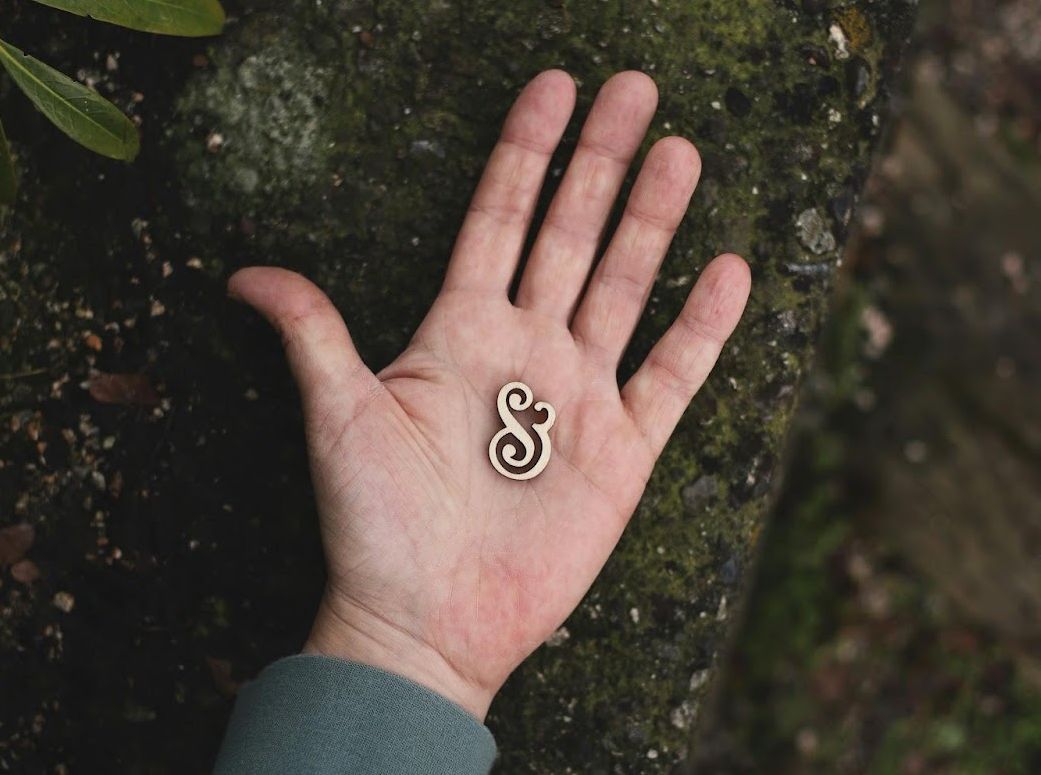

Image: Ksenia Makagonova

Some letters and symbols were once part of the English alphabet or its ancestors. But time and lack of use eventually made them be dropped, replaced, or forgotten. Most of them come from Old English, Middle English, Latin, or early printing traditions, and their stories are full of phonetic shifts, shortcuts, and the drive toward standardization. Let’s look at them!

1

Thorn (Þ, þ)

Image: Andrey Grinkevich

Thorn was used to represent the "th" sound in words like thin or this. It visually resembled a modern P, which often causes confusion when seen in old manuscripts.

Common in Old English, it eventually got phased out during the Middle English period, replaced by the two-letter combination th. Thorn survives today in modern Icelandic, though!

2

Eth (Ð, ð)

Image: James Barnett

Eth was another letter used to represent the "th" sound, particularly the voiced version. It looked a bit like a crossed D and appeared alongside thorn in Old English texts.

Over time, English speakers settled on using "th" for both the voiced and voiceless sounds, and eth gradually fell out of use. Like thorn, eth still exists in modern Icelandic.

3

Wynn (Ƿ, ƿ)

Image: MART PRODUCTION

Wynn was used to represent the "w" sound in Old English—a sound that Latin lacked a letter for. It resembled a capital "P," though it had no connection to that sound.

Instead of writing two "u"s (as in "uu"), scribes used wynn. Over time, however, "uu" evolved into the modern "w," and wynn was phased out during the Middle English period.

4

Yogh (Ȝ, ȝ)

Image: Josué AS

Yogh had a rather confusing role. It could represent several sounds: a throaty "gh" like in "night," a "y" as in "yes," or even a soft "g" like in "genre," depending on context and region. It looked like the number 3 and was used heavily in Middle English.

As spelling and pronunciation evolved, these sounds were either lost or spelled differently (gh, y, j, or g).

5

Ash (Æ, æ)

Image: Bruno Martins

Ash is a fusion of "a" and "e," borrowed from Latin and used in Old English words like æthel (noble). It represented a distinct vowel sound, somewhere between "a" and "e," like the short "a" in cat.

In early English texts, it was treated as a letter in its own right. Over time, as English spelling standardized, ash was replaced by "a" or "e" depending on pronunciation.

6

Ethel (Œ, œ)

Image: Natalia Y.

Think of Ethel as a relative of ash. This ligature combines "o" and "e" and shows up in Latin borrowings like fœtus, œuvre, and œconomy. As spelling was standardized, it got the axe in favor of plain old "oe" or even just "e."

You’ll still spot it in French and in stylized English writing.

7

Tironian et (⁊)

Image: Jo Coenen - Studio Dries 2.6

This curious mark, which resembles a 7, means "and." Created by Cicero’s secretary Tiro in ancient Rome, it became a popular shorthand used by monks and scribes throughout the medieval world, including in Old English.

In Ireland, it persisted longer than almost anywhere else, until the more elegant ampersand (&) eventually took its place.

8

Ampersand (&)

Image: Mark Wieder

Well, we know this one! But as a symbol, not as a letter from the alphabet. Once upon a time, schoolchildren recited it after "Z": X, Y, Z, and "per se and," which eventually morphed into the word "ampersand."

The symbol itself is a ligature of the Latin word et, meaning "and."

9

Insular G (ᵹ)

Image: Mark Rasmuson

This one looked like a medieval mashup of a "g" and a "z," and was mostly found in Irish and Old English manuscripts.

It served the same purpose as today’s "g." It stuck around until the Carolingian script took over, giving us the more familiar "g" we know today.

10

Long S (ſ)

Image: Ot van Lieshout

At first glance, the Long S (ſ) looks like a stretched-out "f" missing its crossbar, but it’s an "s" in disguise. This character was used at the start and middle of words (e.g., ſunshine, bleſſing), but never at the end.

The character was ubiquitous in English printing until the late 1700s, when it was gradually replaced by the modern "s."

11

Eng (Ŋ, ŋ)

Image: Aaron Burden

The letter itself sounded like the "ng" at the end of "fang" or "sing."

The letter resembles an "n" with a tail and remains in use today in the International Phonetic Alphabet (IPA) and in languages such as Sami and Māori. However, English spelling never officially adopted it.



Lost in time

Ever felt "crapulous"? Check out 10 beautiful words we no longer use


Published on December 1, 2025


Image: Blaz Photo

Life is always evolving, and because language is a reflection of life, it changes too, sometimes in ways we hardly notice. English is full of beautiful terms that we use every day, but it also holds many other gorgeous words that, unfortunately, we have stopped using over time. Cultural, social, and technological changes shape our vocabulary, causing many words -despite their charm- to fall into disuse. If you want to remember 10 beautiful English words that we don't use much anymore -but definitely should- this article is for you!

1

Murmuration

Image: Rob Curran

Let's start with a word that might test some people's patience. Well, not the word itself, but what it means.

"Murmuration" is a beautiful word in our language that refers to a soft, continuous sound, like the muttering of a crowd: ever-present but with no distinct voice standing out. A bit unsettling, isn't it? But despite its meaning, this word has a lovely, almost poetic sound. Just give it a try and say it out loud!

This noun comes from the Latin verb murmurare ("to murmur"). In English, the term has been used since the 14th century, and while it has fallen into disuse in recent decades, it can still be found in literary or formal contexts.

2

Obambulate

Image: Mitchel Lensink

If you want to sound elegant and sophisticated, this is the perfect word for your next conversation. However, be aware that most people might not be familiar with it, as it hasn't been a part of everyday language for a long time.

"Obambulate" means to walk around or wander without a specific direction or destination. For instance, you might say, "My grandfather enjoyed obambulating through the city streets during the evening hours." Quite fancy, right?

This verb in English comes from the Latin obambulare, which has the same meaning. The Latin word combines the prefix ob- ("around") with ambulare ("to walk").

3

Crapulous

Image: Gary Meulemans

"Crapulous" comes from the Latin crapula, which means "intoxication," and crapulentus, which means "drunk." The word in English has a similar meaning. A very clear example would be: "After the big party last night, the man woke up on the couch feeling crapulous and vowed never to drink again."

The word entered the English language in the 17th and 18th centuries to describe someone suffering from the effects of excessive drinking or eating. Although its use began to decline in the 19th century, this word remains a refined alternative for describing a hangover day. After a fabulous night, a crapulous day probably awaits.

4

Recogitate

Image: Helena Lopes

If a friend is asking you for advice about a situation or decision, it's wise to suggest they take some time to "recogitate" their conclusions before making a move. But what does this verb actually mean?

"Recogitate" means to think again or reconsider something very carefully. It comes from the Latin recogitare, formed from the prefix re- (again) and cogitare (to think). Its most frequent use in English was seen in formal written contexts beginning in the 18th century, but as early as the 19th century, its use began to decline, and the word was replaced by others, such as "reconsider."

5

Solivagant

Image: Luca Baggio

This word is related to one of the other terms we have already mentioned in this list. If "obambulate" is the verb that describes the action of wandering without an apparent destination, "solivagant" is the adjective that represents the person who does it.

"Solivagant" thus describes a solitary wanderer. This beautiful word that carries an air of mystery and introspection comes from the Latin solus ("alone") and vagari ("to wander").

A passage in a book might read, for example, "The author rejoiced in his days as a solivagant, wandering the quiet streets of that remote neighborhood." While this word has largely fallen out of everyday use, it's a good reminder of our language's beauty.

6

Ostentatious

Image: Rutger Lanser

While this word continues to appear in formal and informal contexts, its usage has been declining in recent years.

We are talking about the term "ostentatious," an adjective used to describe someone or something that exhibits extravagance with the intention of impressing. Though often used with a touch of criticism, we can't deny the elegance of this word's form.

The term comes from the Latin ostentare, which means "to show off" or "to display." It entered English around the 17th century and was long used in our language, although recently, it has been replaced by other terms such as "showy."

7

Cacography

Image: Mukund Shyam

This is one of our favorites! The word "cacography" has an interesting meaning and also a great sound.

This beautiful word entered the English language in the 16th century and was used to describe bad handwriting or misspellings. It doesn't come from Latin but from the combination of the Greek words kakos, meaning "bad," and graphein, meaning "to write." As you probably suspected, it can be thought of as the opposite of "calligraphy," which is beautiful or artistic writing.

If you want to use it in a sentence, you might say, "When I was a kid, the teachers often criticized my cacography in school."

8

Contumelious

Image: Afif Ramdhasuma

This is one of those words that sounds beautiful but has a not-so-beautiful meaning.

Here, we have another adjective, "contumelious," used to describe someone who is insolent, rude, disdainful, or arrogant. "Contumelious" (we just can't stop pronouncing it) comes from the Latin word contumelia, meaning "insult" or "abuse." The term entered Middle English around the 14th century, and its usage began to decline in the 19th century.

If you want to sound refined, you can say something like, "I won't tolerate their contumelious attitude, as it is a clear sign of disrespect."

9

Peccable

Image: Jametlene Reskp

Those who struggle to meet their responsibilities, don't respond as well, or have difficulty accepting and following rules might be described with this word.

According to the Merriam-Webster dictionary, "peccable" is an adjective used to describe "someone liable or prone to sin: susceptible to temptation or error." This word in English is derived from the Latin word peccare ("to sin" or "to commit a fault") and the Latin adjective peccabilis ("liable to sin").

Due to the general beliefs of the time, this word was more commonly used during the 17th and 18th centuries, but its usage began to decline in the 19th century.

10

Buss

Image: Jonah Pettrich

No, this word doesn't refer to the big vehicle that carries passengers. It's something a bit different.

Although it's a bit simpler and less melodious than the other words on this list, "buss" still has its own charm. Want to know what it means? "Buss" can be both a noun meaning "a kiss" and a verb meaning "to kiss." Have you ever heard this word or used it in your conversations or letters?

It comes from the Old French word baiser, which also means "to kiss." The Old French term itself comes from the Latin basiāre, which had the same meaning, too.

Looking for an extra scoop of literary fun?

Learn more with our Word of the day

creative

/kriˈeɪdɪv/