Grim tales ahead

These harmless expressions have a dark past. Number 9 is hard to believe


Published on November 25, 2025


Image: Kevin Wang

We toss around these phrases every day like nothing, without thinking about where they came from. But behind some of these familiar expressions lurk stories of violence, superstition, and even death. From battlefield slang to old legal terms and folklore, their histories can be surprisingly grim. Did you know the origins of these common sayings?

1

Saved by the bell

Image: David Guliciuc


This phrase is commonly tied to boxing, where a bell ends the round and saves a fighter. But it has a darker twist to it.

In the 18th and 19th centuries, safety coffins with bells were invented to prevent premature burial, and ringing would literally save someone’s life.

Image: Sacre Bleu

2

Graveyard shift

This term refers to working overnight hours, and it is named so for the stillness that resembles a cemetery.

It may also stem from 19th-century watchmen who guarded graves to deter body snatchers seeking corpses for medical schools.

Image: Orkun Azap

3

Caught red-handed

The expression "caught red-handed" began as a legal term in Scotland for being found with blood on one’s hands after poaching or murder.

Its vivid imagery made it a lasting metaphor for being caught in the act of wrongdoing.

Image: Jørgen Håland

4

Dead ringer

Today, it means an exact duplicate, but some trace it to 19th-century fears of live burial, where it had a similar meaning to that of our first entry.

As with "saved by the bell," some believe this phrase refers to the practice of attaching bells to coffins so that a mistakenly buried person could ring for rescue—hence, a "ringer" from the dead.

Image: Provincial Archives of Alberta

5

Diehard

Originally, this idiom was used to describe soldiers who fought to the death or refused to surrender despite mortal wounds.

Over time, it evolved into a term for anyone fiercely resisting change or clinging to a cause.

6

Under the gun

Image: Stijn Swinnen


The origin of this phrase is a literal reference to being under direct threat of enemy fire in battle.

It now describes any high-pressure situation, though the imagery still carries a sense of danger.

Image: Austrian National Library

7

Throw in the towel

Borrowed from boxing, this phrase signals surrender, as trainers toss a towel into the ring to stop a fight.

Its roots lie in the stark reality of protecting a beaten fighter from further harm.

Image: Daniel Bernard

8

Deadline

During the U.S. Civil War, prison camps marked a line that, if crossed, allowed guards to shoot prisoners instantly.

The word later softened into a publishing and workplace term for time limits, fortunately losing its lethal edge.
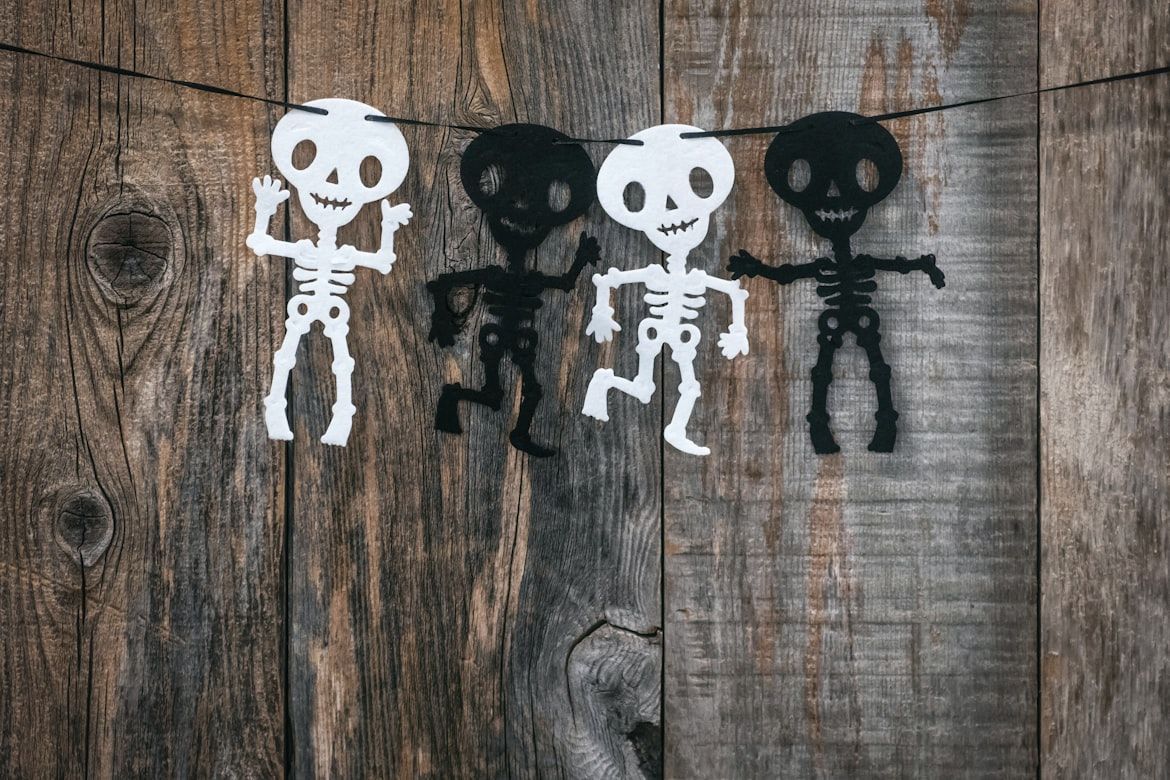
Image: Tim Mossholder

9

Skeleton in the closet

The expression "skeleton in the closet" is a metaphor for a hidden shame or scandal, which, originally, evoked the image of concealing a corpse.

Its morbid imagery endures, making it one of the most vivid idioms in everyday language.

Image: Michael LaRosa

10

Silver bullet

There was a time when silver bullets were considered real weapons in folklore, believed to be the only way to kill werewolves or other monsters.

Today, it means a simple, almost magical solution to a complex problem, retaining its mythical flavor.


Everybody loves a dessert

Why is it called a Floating Island? Discover the world of desserts’ names


Published on November 25, 2025


Image: Frederick Medina

Nobody raised an eyebrow or batted an eyelash when the lemon ice cream was introduced to the world. After all, the name was explanatory enough to describe its subject: it was a lemon-flavored ice cream, and that’s all there was to it. But what about the Floating Island? Or the Angel Food cake? One can only wonder what a dinner party guest would imagine when the host announced that the chosen dessert was called Summer Berry Grunt. Listed below you will find ten oddly chosen names for desserts, for your perusal. So, read on, and see if any one of these tempts you!

1

Summer Berry Grunt

Image: Enrique Briseno

Truth be told, the name sounds more ominous than it should. A grunt is a cobbler that's slow-cooked on the stovetop, or in a slow-cooker. Supposedly, the name comes from the sound the berries make as the dish cooks.

A Summer Berry Grunt is a delicious and easy-to-make dessert. The summer berries add a sweet and tart flavor to the filling, making it ideal for the warmer months.

2

Floating Island

Image: Yi Mun Loo

A dessert with a quite spectacular name, the Floating Island is a dessert consisting of meringue floating on a vanilla custard. The meringue used is baked in a vessel over warm water. It can be served at room temperature or chilled.

Eggs in Snow is a similar dessert where the meringue is shaped into egg-sized pieces and poached, rather than in one large baked piece. A 1771 letter from Benjamin Franklin reported "At dinner had a floating island", meaning that it was a special treat even back then. Also, an 1847 American cookbook lists Floating Island as a Fourth of July celebration dessert.

3

Angel Food cake

Image: Nathalie Jolie

Angel Food cake is a type of sponge cake made with egg whites, flour, and sugar. It differs from other cakes because it uses no butter. The aerated texture that gives this dessert its name comes from whipped egg white.

Angel food cake is usually baked in a tall, round pan with a tube up the center that allows the cake batter to rise higher by 'clinging' to all sides of the pan. It is always sound advice to cut Angel food cake with a serrated blade since the straight-edged blade tends to compress the cake rather than slice it.

4

Apple Platz

Image: Brina Blum

Platz is the German word for "place". But, of course, an Apple Platz is not a park made of apples. The Apple Platz is a simple and sweetly satisfying dessert that tastes like a cross between apple crisp, coffee cake, and apple cake.

The topping is crumbly, rich, and sugary, while the apple filling is jammy and infused with cinnamon flavor.

5

Clafoutis

Image: Chinh Le Duc

A clafoutis is a French dessert that can assume the appearance of crisp, Yorkshire pudding-like creations and custardy flans, but all topped with a layer of seasonal fruit.

Clafoutis traditionally uses unpitted fruit arranged in a buttered dish, covered with a thick but pourable batter, then baked to create a crustless tart. The clafoutis is traditionally dusted with powdered sugar and served warm, sometimes with cream, as a dessert.

6

Fruit Fools

Image: Hisu lee

Aside from the pejorative term, a fool can also refer to an English dessert. Commonly, fruit fools are made by folding puréed stewed fruit into sweet custard. Modern fool recipes often use whipped cream instead of custard.

Many authors believe the name "fool" derives from the French verb fouler meaning "to crush" or "to press". The name trifle was also originally applied to the dish, with the two names being used, for a time, interchangeably. In the late 16th century, a trifle was 'a dish composed of cream boiled with various ingredients'.

7

Eton Mess

Image: Carissa Gan

A dessert named after its messy appearance, the Eton Mess is a traditional English dessert consisting of a mixture of strawberries or other berries, meringue, and whipped cream. It is commonly believed to originate from Eton College and is served at the annual cricket match against the pupils of Harrow School.

Aside from referring to the appearance of the dessert, the word mess may be used in the sense of "a quantity of food", particularly "a prepared dish of soft food" or "a mixture of ingredients cooked or eaten together".

8

Fruit Buckle

Image: Honey Fangs

A buckle is a mix of fruit and cake baked together, somewhat similar to a cobbler, with a streusel topping. As it bakes the fruit and streusel topping makes the cake "buckle."

This silky, moist cake can be studded with any seasonal fruit and is topped off with a buttery crumb topping, a blood orange glaze, and just a pinch of sea salt.

9

Brown Betty

Image: Priscilla Du Preez 🇨🇦

For those who never heard of it, a Brown Betty is a traditional American dessert made from fruit, usually apple, but also berries or pears and sweetened crumbs.

Similar to a cobbler or apple crisp, the fruit is baked, and, in this case, the sweetened crumbs are placed in layers between the fruit. It is usually served with lemon sauce or whipped cream.

10

Johnnycake Cobblers

Image: Clint Patterson

Another variation of the omnipresent cobbler uses johnnycakes as its base in place of biscuit or pie dough to produce a cobbler with a rustic cornbread feel.

This old-fashioned, colonial dessert with a cornmeal biscuit topping can include peaches and plums, or whichever stone fruit is in season, to make an excellent dessert.

Looking for an extra scoop of literary fun?

Learn more with our Word of the day

contented

/kənˈtɛn(t)əd/