What if?

The world we almost lived in: 10 historical near-misses


Published on May 8, 2025


Image: The New York Public Library

History is full of near misses—moments where a single decision, accident, or twist of fate could have completely changed the world. From avoided wars to scientific breakthroughs nearly lost, these events remind us how fragile the course of history can be. Here are 10 times history almost took a dramatically different path.

1

The near-extinction event

Image: Toby Elliott

Around 70,000 years ago, a supervolcanic eruption in Indonesia nearly wiped out humanity. Genetic evidence suggests that the human population dropped to just a few thousand!

Had the decline been any worse, human civilization might never have recovered or developed as we know it today.

2

Misinterpreted flares

Image: K. Mitch Hodge

The Titanic’s distress flares were seen by the SS Californian, a ship just 10 miles away. However, the captain misinterpreted the signals and failed to respond.

Had the Californian arrived in time, hundreds of lives could have been saved. Instead, the tragedy cemented its place as one of history’s deadliest maritime disasters.

3

The harshest winter

Image: Elimende Inagella

In 1812, Napoleon’s invasion of Russia seemed unstoppable—until an unexpectedly harsh winter decimated his army.

The Russian cold, coupled with severe supply shortages, forced Napoleon’s retreat. Only 10% of his troops survived, marking a turning point in European history.

4

Tragedy on the Moon

Image: NASA

During the moon landing, Buzz Aldrin noticed a broken circuit breaker that could have stranded them on the lunar surface. Fortunately, he used a felt-tip pen to fix it.

If the makeshift repair had failed, Neil Armstrong and Aldrin might have been the first men to die on the moon.

5

The scourge of Europe

Image: Peter Kvetny

In the 14th century, the bubonic plague killed millions. It nearly wiped out entire regions, transforming Europe’s social and economic structure.

If the disease had been slightly more virulent, the Renaissance and Industrial Revolution might never have happened.

6

Gambling on the beach

Image: Tim Marshall

The Allies originally planned to invade Normandy on June 5, 1944, but a last-minute weather forecast prompted a 24-hour delay.

Had they gone ahead, bad weather could have doomed the invasion. The successful landing on June 6 helped turn the tide of World War II. Fortunately, we learned the lesson from Napoleon!

7

Magnicide avoided

Image: Mark Stuckey

In 1605, Guy Fawkes’ plot to blow up the English Parliament was foiled at the last minute.

Had it succeeded, much of England’s leadership—including King James I—would have been killed, likely causing a massive power shift.

8

A computer error

Image: Dan Meyers

In 1979, a training tape mistakenly showed a full-scale Soviet attack simulation on U.S. computers. Military leaders prepared to launch a counterattack.

The mistake was caught just in time. A nuclear war was narrowly avoided due to human intervention.

9

Saving winds

Image: Su San Lee

In 1281, a massive Mongol fleet attempted to invade Japan but was wiped out by a typhoon.

The storm, later called the "Divine Wind" (Kamikaze), saved Japan from conquest and altered the course of Asian history.

10

The lost nuke

Image: Oo Jiflip

In 1961, a U.S. B-52 bomber broke apart over North Carolina, dropping two nuclear bombs. One nearly detonated—five of six safety switches had failed.

Had it exploded, the blast would have been 250 times more powerful than Hiroshima, devastating the Eastern Seaboard. The incident remains one of the closest calls in nuclear history.

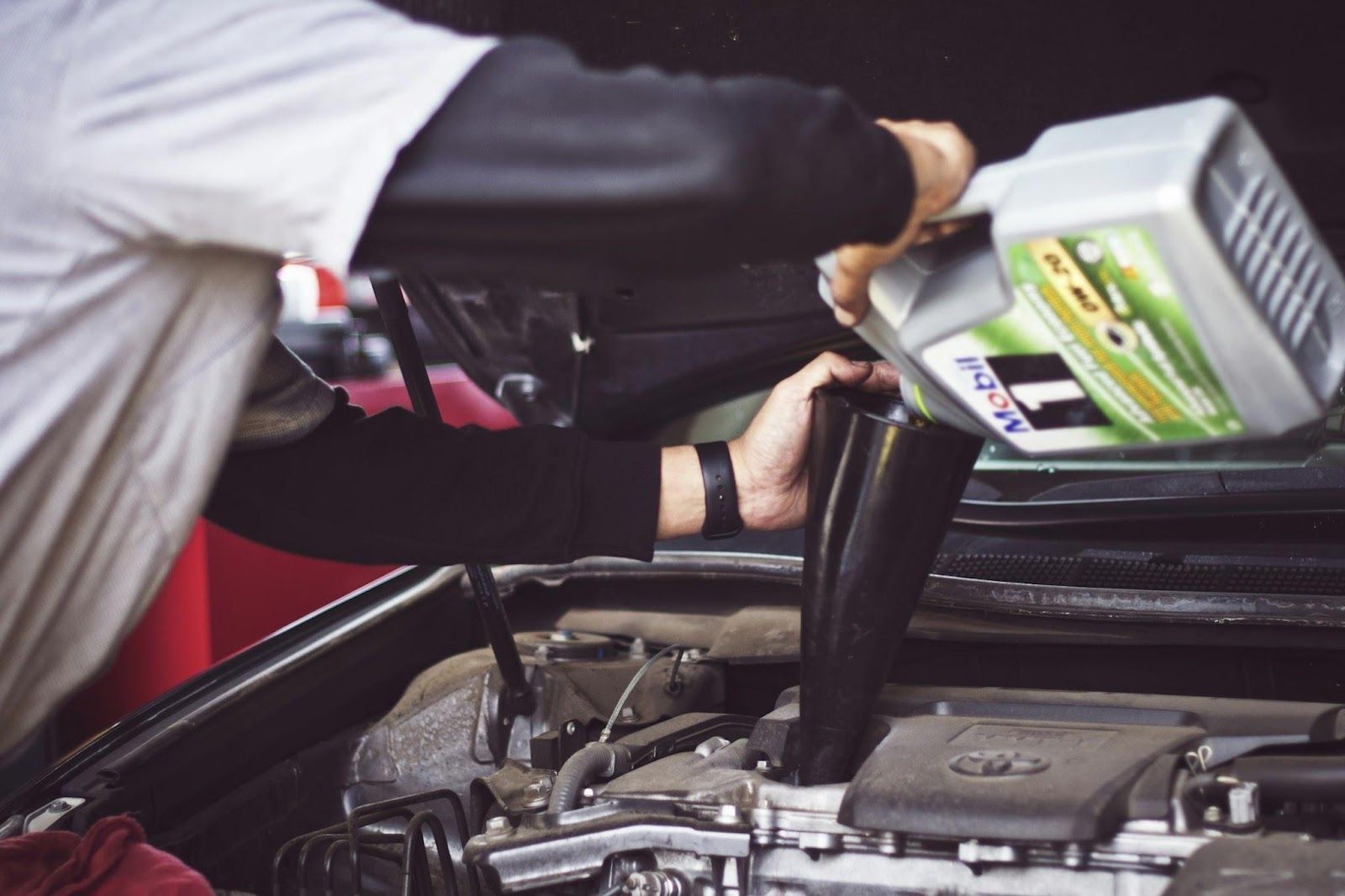
Do you trust your mechanic?

Have you ever been told one of these 12 lies by a mechanic?


Published on May 8, 2025


Image: Chad Kirchoff

In our modern world, where specialization is the norm and nobody is required to know about everything, we enlist the services of different people for all of the things that we don’t know how to do ourselves. Unless you are a mechanic or know quite a bit about the subject, fixing your vehicle is a task you delegate to more competent hands. As with everything in life, most of the mechanics out there are decent folks. But there’s always a rotten apple looking to scam innocent customers with fake repairs. Take a look at the following 12 possible examples. Have you witnessed any of these?

1

Your vehicle’s age determines when you change your oil

Image: Tim Mossholder

Many mechanics say that a car needs to have its oil changed every 3,000 miles. While this is true for some vehicles, most modern ones can often go much longer — up to around 7,500 miles — without an oil change. What matters is what the manufacturer recommends and what the dipstick color indicates.

2

Your mechanic aligned all four wheels

Image: Anastase Maragos

While most modern cars certainly call for a four-wheel alignment, some mechanics will try to charge you for all four wheels even when they only do two of them. If, for example, the rear wheels haven’t been adjusted, this isn’t true.

3

Fuel system service

Image: Laurel and Michael Evans

A fuel system service might be required sometimes. But it often happens that a mechanic will charge a customer somewhere between $249 to $449 for adding some fuel injector cleaner to the fuel tank, which can be accomplished by going to any store and buying a bottle for $10.

4

New tires

Image: Robert Laursoo

Many mechanics will try to get their customers to buy new tires, even if the old ones are just fine. Tires below 5mm of tread don’t necessarily need to be replaced right away, since the tread is there to remove water. Hence, if the driver is careful enough and drives slower in the rain, he or she can get many more miles out of the tire.

5

New brakes

Image: Vlad Grebenyev

It goes without saying, that having reliable brakes is essential to ensuring a safe ride. But if a customer is being told that he or she needs them the moment they’re below 3mm, that purchase can be delayed for a little while longer, provided that the car is driven with care.

6

Transmission fluid flush

Image: Patrick

A transmission fluid flush can be necessary at times, but it might not be as often as the mechanic claims. The customer should find out why the mechanic is suggesting it before actually doing it. A fluid and oil filter change might be enough.

7

Power steering fluid flush

Image: Garett Mizunaka

Since we are on the subject of flushing, if a mechanic tells you it’s time to flush your power steering fluid, consider getting a second opinion. Some mechanics say that the smell or color of the power steering fluid is how they’re able to tell it needs to be replaced, but commonly, it only needs to be flushed once or twice during the lifetime of the car.

8

Synthetic oil

Image: Glenn Hansen

Yes, there are some advantages to using synthetic oil, but not every car calls for it. This can be checked in the owner’s manual. However, some mechanics might try to sell a customer on synthetic oil, simply because it is typically more expensive.

9

Coolant replacement

Image: Kenny Eliason

If a vehicle is relatively new or it has recently had its coolant flushed, chances are there is no need to have it replaced again. Coolant doesn’t wear like oil does and only needs to be replaced maybe once or twice during the car’s lifetime.

10

Warranty coverage

Image: Tekton

Some mechanics will prefer to get their money faster, from the customer, instead of getting it from the insurer, and to achieve this, they will say that a certain repair is not covered by the warranty when it is. The standard warranty covers both labor and parts, so make sure to check this with the insurer.

11

Air filter

Image: Tim Mossholder

It has been reported that some unscrupulous mechanics keep dirty air filters on hand to pass off to customers to get them to pay for a new one.

To prevent falling for this type of scam, customers should know the filter on their car and find out how often it needs to be replaced.

12

An unsafe car to drive

Image: Angry._.Kat

This statement is sometimes uttered by mechanics looking to scare a customer, to make him or her pay for unneeded repairs. The truth is, these kinds of remarks should be taken with a grain of salt and a second opinion is advisable.

Looking for an extra scoop of literary fun?

Learn more with our Word of the day

herald

/ˈhɛrəld/