This is what the presidents call it

The president's car has three names, here's why


Published on September 11, 2026


Image: bluestork

Presidents seem to speak a vocabulary of their own. There’s the armored limousine known as "The Beast," the mysterious "Biscuit" tied to nuclear command, and a presidential retreat once called "Shangri-La." Even familiar terms like POTUS and the White House have stories that reach much further back than most people realize. Here are 10 presidential names, nicknames, and code words, along with the fascinating stories behind them.

1

The Resolute Desk

Image: National Archives and Records Administration, Public domain, via Wikimedia Commons

The massive desk in the Oval Office may look like an ordinary piece of presidential furniture, but its history stretches back to an Arctic exploration ship.

In 1854, the British ship HMS Resolute became trapped in Arctic ice while searching for the lost expedition of Sir John Franklin. The crew eventually abandoned the vessel. A year later, an American whaling crew discovered the ship drifting in the ice, and the United States bought it, restored it, and returned it to Britain as a gesture of goodwill. When the ship was later retired, Queen Victoria had some of its oak timbers turned into an elaborate desk. In 1880, she presented it to President Rutherford B. Hayes. The desk spent years in different parts of the White House before Jacqueline Kennedy moved it into the Oval Office in 1961 for President John F. Kennedy. Several presidents later chose different desks, but the Resolute Desk eventually became one of the most recognizable pieces of furniture in the White House.

2

Cadillac One (The Beast / "Stagecoach")

Image: US Secret Service, Public domain, via Wikimedia Commons

You've probably seen the president's armored limousine roll through a city on the news. Most people just call it "The Beast." But it also goes by "Cadillac One," and Secret Service radios use a third name entirely, "Stagecoach." The story behind those names starts in the sky, not on the road.

In December 1953, an Eastern Air Lines flight and a plane carrying President Eisenhower answered to the same call sign, 8610, in the same stretch of airspace. To stop that from happening again, the Air Force created a single name for any aircraft carrying the president: Air Force One. The Secret Service later applied that same idea to the limousine, giving it its own name, Stagecoach, and its own private radio handle. Two identical Cadillac Ones now travel with every motorcade, so no one outside the Secret Service knows for sure which one is real.

3

Shangri-La (Now Camp David)

Today, the presidential retreat tucked into Maryland’s Catoctin Mountains is known as Camp David. But its first name sounded much more exotic.

Franklin D. Roosevelt established the mountain retreat in 1942. He called it "Shangri-La," borrowing the name from the fictional Himalayan paradise in James Hilton’s 1933 novel Lost Horizon. The name remained through the rest of Roosevelt’s presidency and into Harry Truman’s administration. When Dwight D. Eisenhower became president in 1953, however, he thought "Shangri-La" sounded a little too grand for a rustic mountain retreat. He changed the name to Camp David in honor of his father, David Eisenhower, and his young grandson, David Eisenhower. The new name was less mysterious and much more personal.

4

The White House (Official name change)

Image: Frank Zubor

It’s hard to imagine Washington, D.C., without the White House. But for much of its history, "The White House" wasn’t actually its official name.

During the 19th century, government documents usually called the building the "Executive Mansion" or the "President’s House." Citizens, however, had already been calling it the White House for years. The nickname was a natural one. The building’s sandstone exterior had been painted and whitewashed, giving it the pale appearance that inspired the familiar name. The informal name finally became official in 1901. President Theodore Roosevelt preferred "The White House" to the rather stiff "Executive Mansion" and ordered the words placed on official stationery.

5

The President’s Own

Image: Spc. Luciano Alcala, Public domain, via Wikimedia Commons

The United States Marine Band has a title that sounds almost like a family nickname: "The President’s Own." And there’s a good reason for it.

Congress created the band in 1798, but its close relationship with the White House took shape a few years later. On New Year’s Day in 1801, John Adams invited the musicians to perform inside the still-unfinished Executive Mansion. Thomas Jefferson took the relationship even further. A music lover and violinist himself, Jefferson hired the Marine Band to perform at his inauguration and gave it the affectionate title "The President’s Own." The band has been a fixture at presidential inaugurations ever since. The nickname has endured for more than two centuries, making the Marine Band one of the oldest musical traditions tied to the presidency.

6

Marine One (and "Executive One")

Image: White House (Samantha Appleton), Public domain, via Wikimedia Commons

Whenever the president strides across the South Lawn to offer a final wave before lifting off, the green helicopter rising against the skyline is hailed worldwide as "Marine One." But the moniker was never tied to a single helicopter.

It belongs to whichever Marine Corps aircraft, usually a VH-3D Sea King or a newer VH-92A Patriot, happens to be carrying the president that day. The rule follows the same logic that created Air Force One after that 1953 mix-up over the East Coast. Swap the helicopter for a private jet, and the call sign changes instantly to "Executive One." Air traffic controllers still use that same system today, decades after a near collision first made it necessary.

7

The Biscuit

Image: DC Studio

Few objects associated with the presidency have a nickname as harmless-sounding as "the biscuit." Yet the small laminated card carried by the president is connected to one of the most serious responsibilities imaginable: authorizing a nuclear strike.

The nickname dates back to the Cold War era, when nuclear launch codes were reportedly kept in sealed packets. The packaging inspired military personnel to use the nickname "SAS cookies," which eventually evolved into the more familiar "biscuit."

8

POTUS & FLOTUS

Image: I, BrokenSphere, CC BY-SA 3.0, via Wikimedia Commons

Every news broadcast today treats POTUS and FLOTUS as if they were always part of the language. FLOTUS is newer, but POTUS goes way back.

In the 1890s, telegraph operators had a very practical reason for shortening "President of the United States." Government agencies paid for telegrams by the letter, so trimming a long title could save time and money. The solution was simple: P-O-T-U-S. The abbreviation eventually found its way into government paperwork and Secret Service communications, where short forms were especially useful. FLOTUS, meaning "First Lady of the United States," came much later. The Secret Service adopted it as a radio shorthand during the Reagan administration in the early 1980s. What started as a way to save a few telegraph characters eventually became part of everyday political language.

9

Secret Service Codenames

Image: Mircea Moira

"Rawhide." "Renegade." "Lancer." They sound like names from an old Western movie, but these Secret Service codenames have a very practical purpose.

The tradition grew out of a time when presidential security teams sometimes communicated over radio systems that weren’t encrypted. Saying a president’s actual name over the air could reveal information to anyone listening. A codename offered a simple layer of protection. The names also follow a family tradition. Members of a first family generally receive codenames beginning with the same letter. John F. Kennedy was "Lancer," while Jacqueline Kennedy was "Lace." And presidents don’t necessarily have their names chosen for them. The White House Communications Agency prepares lists of possible call signs, and the president can select one. So behind every memorable codename is a little bit of security planning and, sometimes, personal preference.

10

Ground Force One

Image: Gheorghe Casian

Air Force One gets most of the attention, but the president also needs a secure way to travel when the destination is beyond the reach of an airport runway. That’s where "Ground Force One" comes in.

The nickname was never officially created by presidential order. Instead, it emerged naturally among reporters and staff members covering presidential campaigns and road trips. It refers to heavily protected motor coaches used for presidential travel. They’re equipped with features such as secure communications systems, run-flat tires and substantial armor. Observers naturally borrowed the best-known presidential transportation nickname and adapted it for the road: Air Force One became Ground Force One.



Have you heard about these?

You might not know this about these 10 literary characters


Published on September 11, 2026


Image: Iñaki del Olmo

Many literary characters have transcended their stories, a few of them becoming universal archetypes. But despite beign known by all, readers continue to learn new things about their favorite characters. Who was the inspiration for Shelock Holmes? What famous wizard was named after a cabinet drawer? Which famous playwright coined the name "Jessica"? Here are 10 facts about famous characters that you might not know.

1

Sherlock Holmes was based on a very observant surgeon

Image: Mediamodifier

While Sherlock Holmes was not the first widely famous fictional detective (that title belongs to Poe’s C. Auguste Dupin), he has become the blueprint for thousands of literary detectives and investigators. It might be surprising to know that his author, Arthur Conan Doyle, didn’t model Sherlock after a detective, but after a surgeon he had met while working as a clerk at the Royal Infirmary of Edinburgh.

Joseph Bell was a surgeon known for his ability for diagnosis, following an observation-based technique he called "The Method". According to his students, Bell was able to deduce a patient’s ailment, profession, and origin just by looking at them.

2

Huckleberry Finn was Mark Twain’s childhood friend

Image: Natalya_Bolkonskaya

Huckleberry Finn is considered by many to be one of the most important characters in American literature. Despite being presented as ignorant, neglected, and superstitious, his innate sense of right and wrong makes him constantly challenge the hypocrisy and prejudices of the Antebellum South, and side with those oppressed and mistreated.

Many might think that Mark Twain constructed the character to serve this purpose, but he was actually inspired by one of his childhood friends, Tom Blankenship. According to Twain, he wrote Huck exactly as Blankenship was: the son of a drunkard, unwashed, poorly fed, and uneducated, but also good-hearted, free, and fiercely independent, a fact that caused the envy and the admiration of his peers.

3

The Wizard of Oz was named after a file cabinet

Image: Maksym Kaharlytskyi

To write The Wonderful Wizard of Oz, Frank L. Baum drew inspiration from all sorts of places, such as the 1893 Chicago World's Fair, his childhood nightmares, his mother-in-law, and even political debates. Many believe the titular wizard and the land that gives him his name to be a reference to Australia, colloquially nicknamed "Oz", but the name was actually inspired by the most mundane object imaginable.

Years after the publication of the book, Baum explained that he wanted his magical land to have a short and catchy name, easy to remember. Looking around his office, he noticed that his three-drawer file cabinet was labeled alphabetically, and that the third drawer contained the letters O through Z.

4

Jessica from The Merchant of Venice was the first Jessica ever

Image: joshimerbin

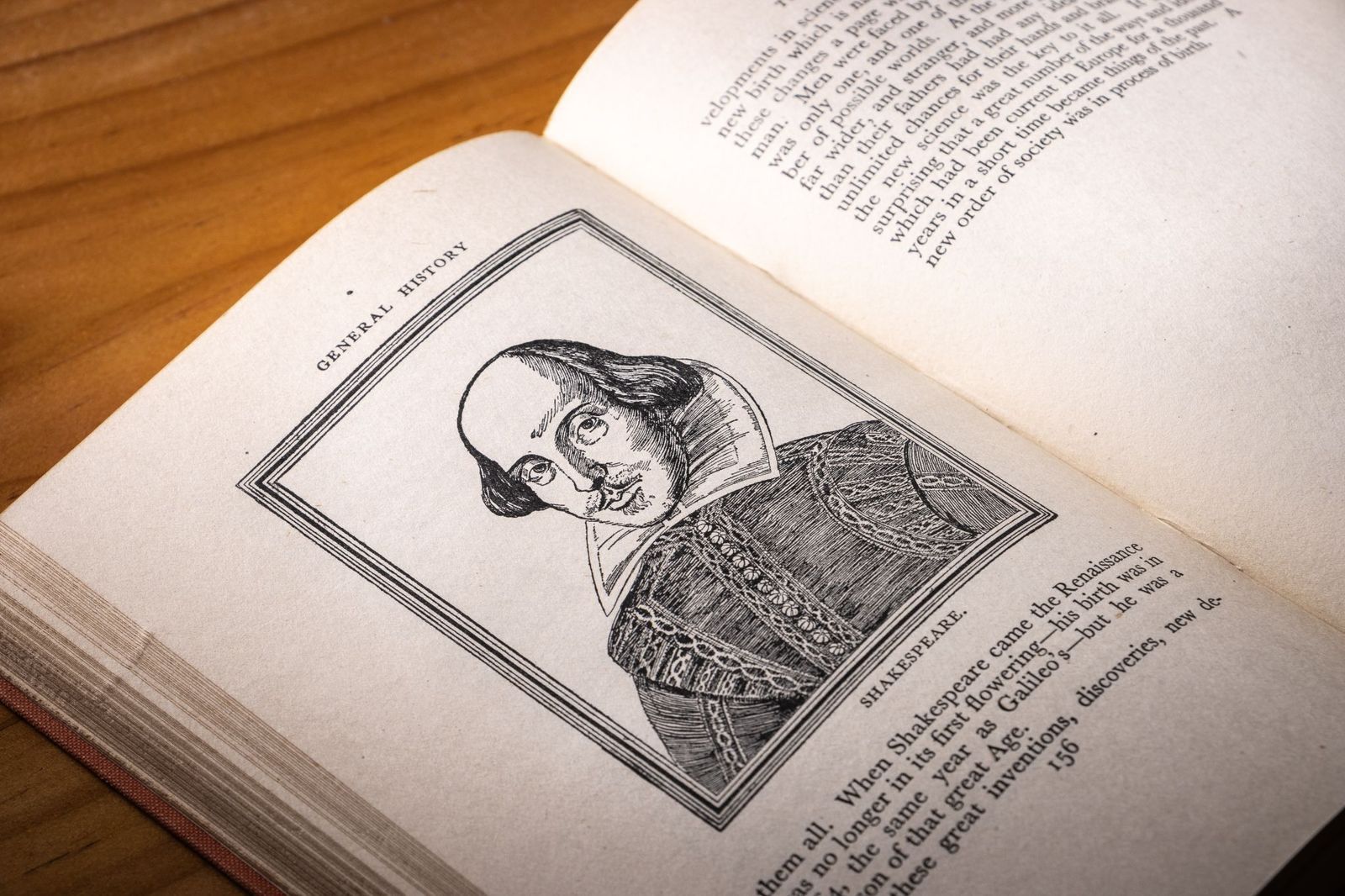
We all know that William Shakespeare created hundreds of new words, or was at least the first to record them, but the name Jessica is not a word one expects to find in this category. Yes, "_The Merchant of Venice"_’s Jessica, Shylock’s daughter, was the first Jessica to ever exist.

It is widely believed that Shakespeare drew inspiration for this name from the Bible, where Iscah (meaning "foresight," "sight," or "to behold") is Abraham’s niece and a minor character in the Book of Genesis. The name is spelled "Iesicca" in the First Folio, as "j" and "i" were not distinguished at the time.

5

Frankenstein’s creature might have had a name

Image: Michał Mancewicz

Although its cinema portrayals have led many to believe that Frankenstein is the name of the famous monster, readers of the book know that it’s actually the name of its creator, and that the monster is commonly referred to as "the creature", unnamed and unwanted by its maker.

According to some of her contemporaries, Mary Shelley had named her character "Adam" and had referred to it as such during a public reading of the novel. While this was never confirmed by Shelley, Victor briefly considers the name "Adam" in the story as a nod to the "new man" created, and later on the creature compared itself to Adam.

6

The Professor from Narnia might be an homage to J.R.R. Tolkien

Image: BAUER Alexandre

The Professor in "The Lion, the Witch and the Wardrobe" might not seem an important character in The Chronicles of Narnia. Still, once the reader realizes he and "The Magician’s Nephew"’s Digory Kirke are the same person, he becomes crucial to the story, a fact quite ironic considering that many believe the Professor to be inspired by J.R.R. Tolkien, who openly disliked the saga.

Although Professor Kirke was partly modelled on and named after Lewis’ strict childhood tutor, William T. Kirkpatrick, readers have noted many coincidences between the Professor and Tolkien, such as both being young orphans, indirect creators of a fantasy world born from a tree, and having academic and intellectual interests.

7

Moby Dick was a real whale

Image: Jonas Gruhlke

Moby Dick has been seen as representing many things, such as fate, the power of nature, evil, human internal struggles, or just maybe the absurdity of reality, while Captain Ahab’s relentless quest for vengeance has been traditionally interpreted as the search for answers in a confusing and deceptive world. But did you know that all this symbolism is built on a real-life whale?

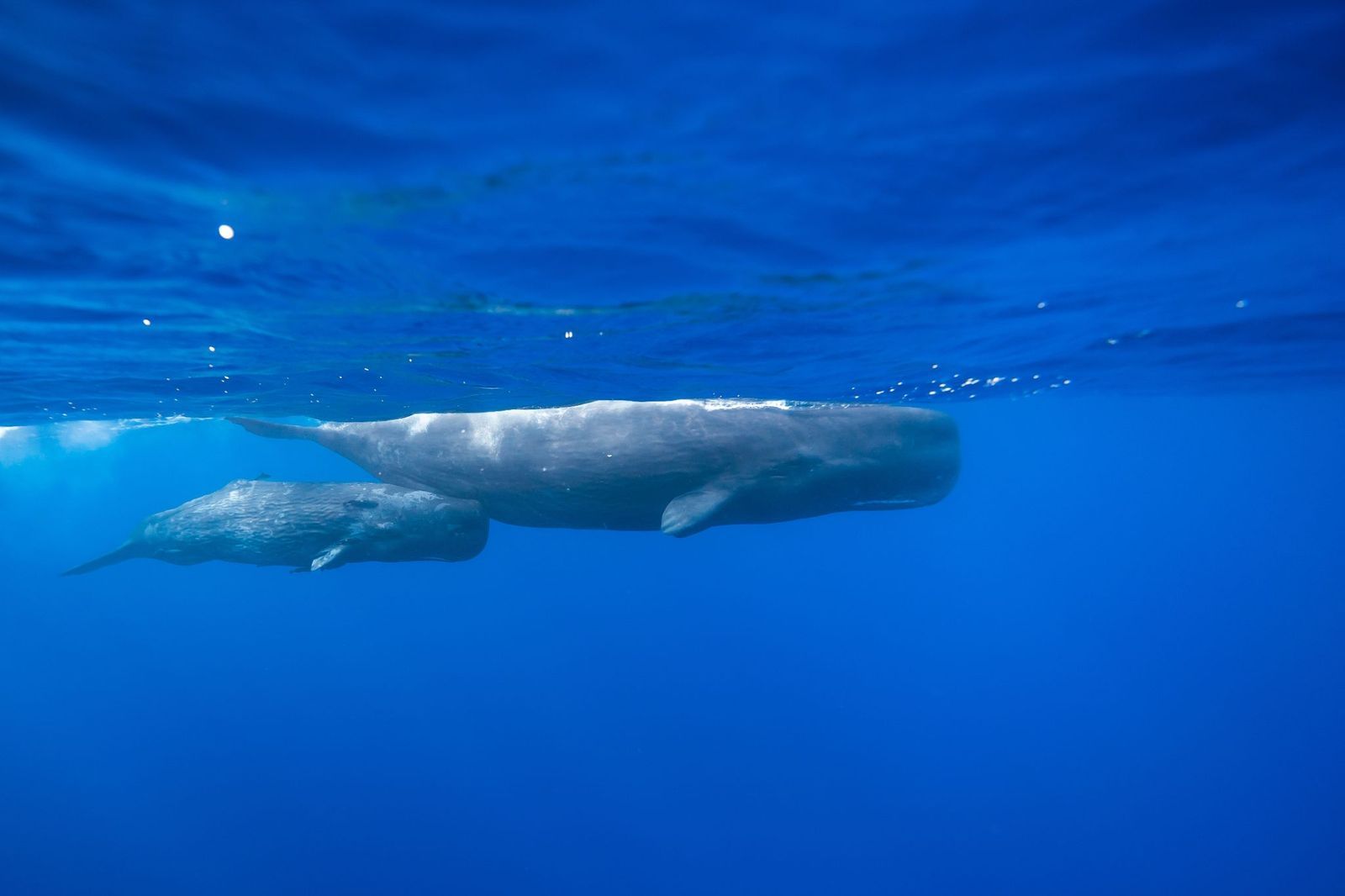
Mocha Dick was a leucistic, or albino, sperm whale that lived in the southeastern Pacific Ocean in the early 19th century, usually sighted near Mocha Island off the coast of Chile. There are at least a hundred skirmishes registered between whalers and Mocha Dick —including the sinking of a whaling ship in 1820. The whale was allegedly killed in 1838, although some sailors claim to have seen him after that date.

8

Jean Valjean and Inspector Javert are inspired by the same person

Image: John Wreford

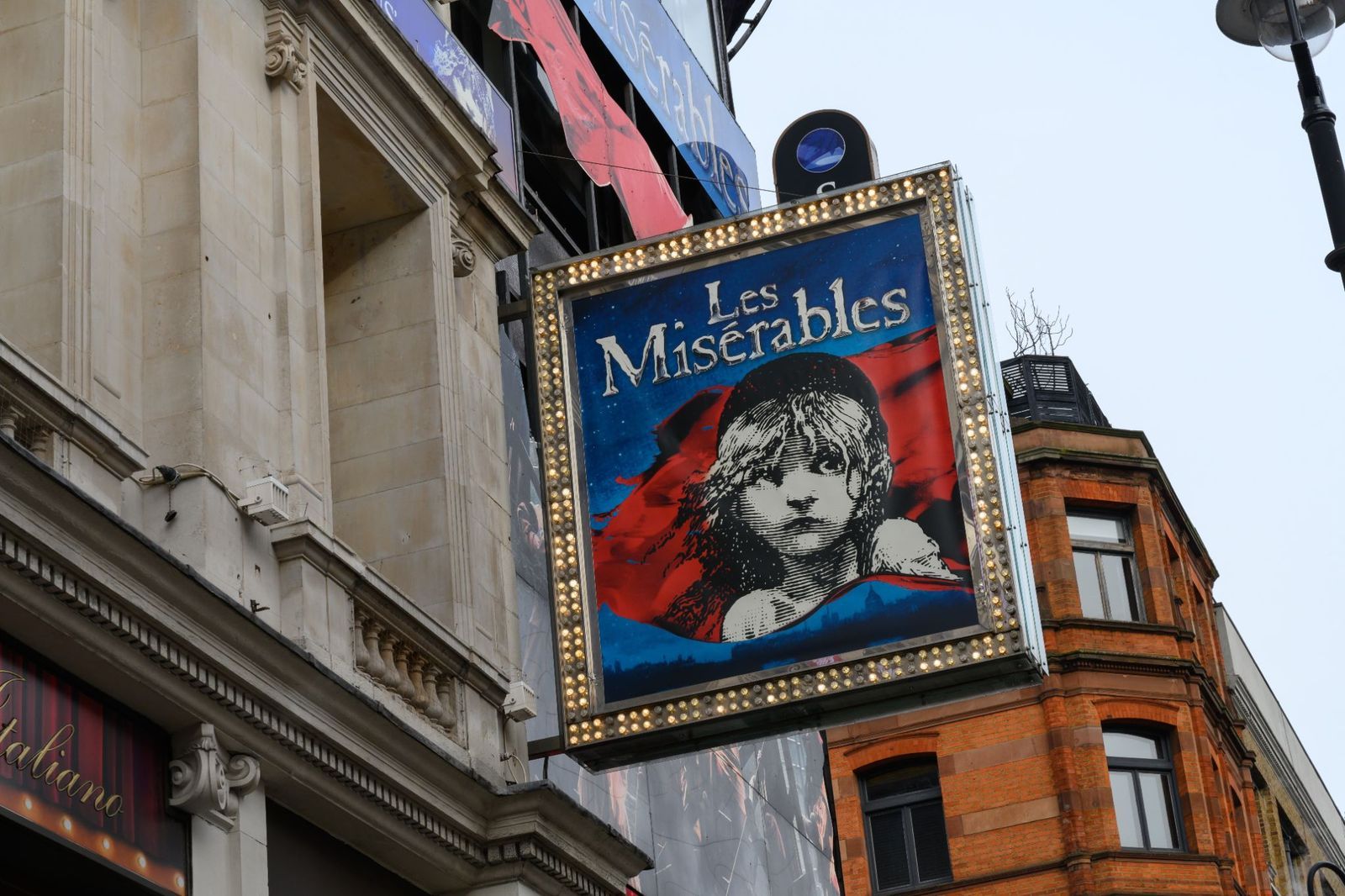
If you read Victor Hugo’s Les Misérables or watched the musical inspired by it, you know that the characters of Jean Valjean and Inspector Javert stand on opposite sides of a conflict: Can people change? While Jean Valjean champions the power of compassion and mercy, Javert sees people’s character as fixed and adheres to rigid law and mechanical justice.

This stark contrast starts making sense when we learn that both characters are based on the same person, Eugène François Vidocq, a famous criminal later turned police detective. Jean Valjean and Javert are two faces of the same coin, the reformed criminal and the ruthless enforcer. In the end, however, one side has to prevail, and it is the side of compassion, which also fits Vidocq’s history as an enforcer who, according to the accounts of the time, refused to arrest petty thieves who stole out of necessity.

9

Poirot was the first (and only) fictional character with a front-page obituary

Image: visuals

If Sherlock Holmes was the greatest detective of 19th century literature, we can argue that Hercule Poirot is a main contender for that title in 20th century detective novels. The most famous of Agatha Christie’s leads, the Belgian detective starred in 33 novels and over 50 short stories, captivating readers with his personal quirks, his infallible method, and his deep understanding of human nature.

It is not surprising, then, that the death of such a beloved character was a monumental event. Curtain: Poirot's Last Case, which closes the detective’s career with his passing, was written around World War II, but only published in September of 1975, when Christie’s own health began to fail. A month earlier, the New York Times had published a front-page obituary of the fictional detective, announcing his passing in England, an homage no other literary character has received.

10

Heathcliff is an ambiguous character on purpose

Image: Chris Gilbert

The countless cinematic adaptations of Emily Brontë’s Wuthering Heights have come across the same dilemma: How should Heathcliff, one of its tortured protagonists, be represented? Is he Irish? Is he Romani? Is he black? Is his appearance relevant to the story? The answer is simple, and yet incredibly complex at the same time.

Emily Brontë’s description of Heathcliff is deliberately ambiguous. He is described as "dark", characterized as Romani, South Asian, Irish, Chinese, or of mixed heritage, while some hints suggest he is an illegitimate child, but no clue about his parents is given to us. In the end, the correct answer doesn’t matter. Heatcliff could be any of these things, because he is an outsider and a foreigner. His appearance is important because it visually sets him apart from Cathy and Edgar, but how to interpret his background is for the reader to imagine.

Looking for an extra scoop of literary fun?

Learn more with our Word of the day

frightful

/ˈfraɪtf(ə)l/