The etymological twist: 10 common words that used to mean the opposite
Published on August 25, 2026

Language is a moving target. What we consider a precise definition today is often just the latest stop on a centuries-long journey of semantic drift. A 17th-century scholar would likely be horrified by how we use words like sophisticated or anecdote. Etymology is like a fossil record of human behavior, class struggles, and cultural priorities. Here are 10 common words that have undergone radical transformations.
Geek

Before it was a badge of honor for Silicon Valley billionaires, a geek was a social pariah of the most literal kind. In the early 20th century, the term referred to a specific type of carnival performer, a side show "freak" whose primary act involved biting the heads off live chickens or snakes.
The word likely stems from the Low German geck, meaning "fool" or "simpleton". It wasn’t until the mid-20th century that the meaning drifted toward social awkwardness and, eventually, an obsessive devotion to technical or niche subjects. Today, the geek has moved from the dirt of the carnival floor to the top of the global economy, but the word’s gruesome origins remain a hidden layer of its history.
Sophisticated

In a modern context, being sophisticated is an aspiration, it implies refinement, worldliness, and complexity. However, for most of its history, the word was pejorative. Derived from the Greek sophistēs (the Sophists, a group of philosophers often accused of using clever but fallacious reasoning), a sophisticated thing was something that had been corrupted or adulterated.
In the 1600s, you might have been accused of "sophisticating" wine by watering down or adding lead to sweeten it. To be sophisticated was to be "unnatural" or "adulterated". It wasn’t until the 19th century that the complexity of being sophisticated began to be viewed through a positive lens, evolving into the mark of high culture we recognize today.
Handsome

We currently use the term handsome to describe a person, usually a man, with pleasing, symmetrical features. But the word’s roots are purely functional. In the late 14th century, a handsome object was simply something that was hand-some, meaning "easy to handle" or "handy".
Over time, the utility of an object became associated with its quality. If a tool was handsome, it was well-made and fit for its purpose. This led to the word describing things that were "generous" or "substantial" (for example, a "handsome reward"), and eventually, by the late 16th century, it settled into its current role as a physical descriptor for an attractive person.
Anecdote

An anecdote is now a brief, often amusing story about a real person or incident. But in its original Greek, anekdota, it literally meant "things unpublished".
The term gained fame through the 6th-century historian Procopius, who wrote a public history of the Emperor Justinian and his court. At the same time, he also wrote a "Secret History" filled with scandalous details that he didn’t dare release while the subjects were still alive. These unpublished secrets were the original anecdotes. The meaning eventually shifted from secrets to short, private narratives, and finally to the casual stories we share at parties today.
Brutalize

This word is currently the subject of a massive linguistic tug-of-war. Most people today use brutalize to mean "to treat someone in a brutal or violent way". However, its original 18th-century meaning was the exact opposite: "to become a brute" or "to make someone brutal".
The original logic was that the person committing the violence (or the person exposed to it) was being stripped of their humanity and turned into a beast. If you were brutalized by war, it didn’t mean you were hurt; it meant you had been made a savage by experience. While the modern "attacked violently" definition is now widely accepted, purists still argue that the word should describe the state of one’s character, not just the physical assault.
Nostalgia
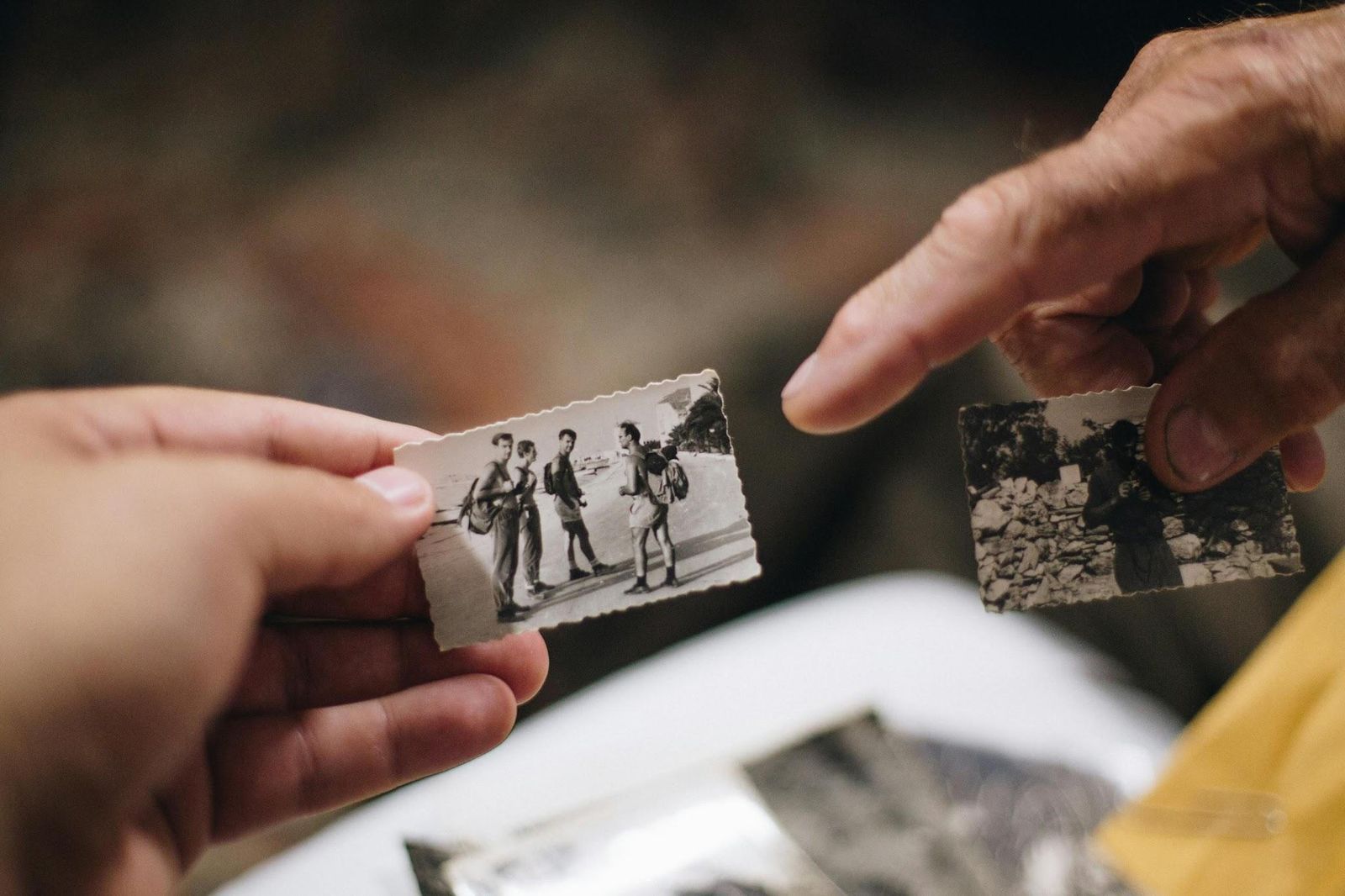
We think of nostalgia as a bittersweet, sentimental longing for the past. But in the 17th century, it was a terrifying medical diagnosis. Coined by a Swiss medical student, the term combined the Greek nostos (homecoming) and algos (pain).
It was considered a physical "disease of the imagination" that primarily affected soldiers fighting far from home. Symptoms included persistent melancholy, heart palpitations, and even death. It was treated as a literal sickness, sometimes cured by sending the soldier home, but occasionally met with more gruesome 17th-century medical interventions. Only in the 20th century did it soften into the purely emotional, non-lethal state we discuss today.
Backlog

In the modern office, a backlog is a source of stress, a pile of unfinished tasks or orders. But in the 1600s, a backlog was a luxury. It was literally the "back log," the largest, thickest piece of wood placed at the back of the fireplace to reflect heat forward and keep the fire burning through the night.
Because it was so large, the backlog was the last thing to burn. Over time, the concept of something "kept in reserve" or "accumulated at the back" moved from the fireplace to the ledger book. By the 1880s, the "unburned" log had become the "unfinished" work.
Manipulate

To manipulate someone today carries a heavy connotation of deception or unfair control. Yet, the word began as a neutral, even positive, term for manual dexterity. Rooted in the Latin manus (hand), it originally meant "to treat or operate with the hands."
It was a term used by scientists and doctors to describe the skillful handling of tools or physical objects. It wasn't until the mid-19th century that the word jumped from the physical to the psychological, describing the skillful (but often dishonest) handling of people or information for one’s own advantage.
Condominium

Long before it was a type of real estate, a condominium was a system of government. Coming from the Latin con- (together) and dominium (right of ownership), it referred to "joint sovereignty" over a territory by two or more states.
For instance, a piece of land ruled by both England and Egypt would be called a condominium. It wasn't until the 1960s that the term was co-opted by the American real estate market to describe a building where individuals own their units but share the common areas—a miniature, domestic version of "joint sovereignty."
Scavenger

Few words have tumbled as far down the social ladder as scavenger. In the Middle Ages, a scavager (from the Old French escauwer, "to inspect") was a respected customs official. Their job was to inspect imported goods and collect "scavage," a tax on foreign merchants.
As part of their duties, these officials often had to oversee the cleaning of the streets where the merchants set up shop. Eventually, the name for the official (scavager) was applied to the laborers who actually did the cleaning. From there, it became a general term for anyone who picked through trash, and finally, it was adopted by biology to describe animals that feed on carrion.