From pets to legends

The dog that waited 10 years for its owner and other statue-worthy pets


Published on September 29, 2025
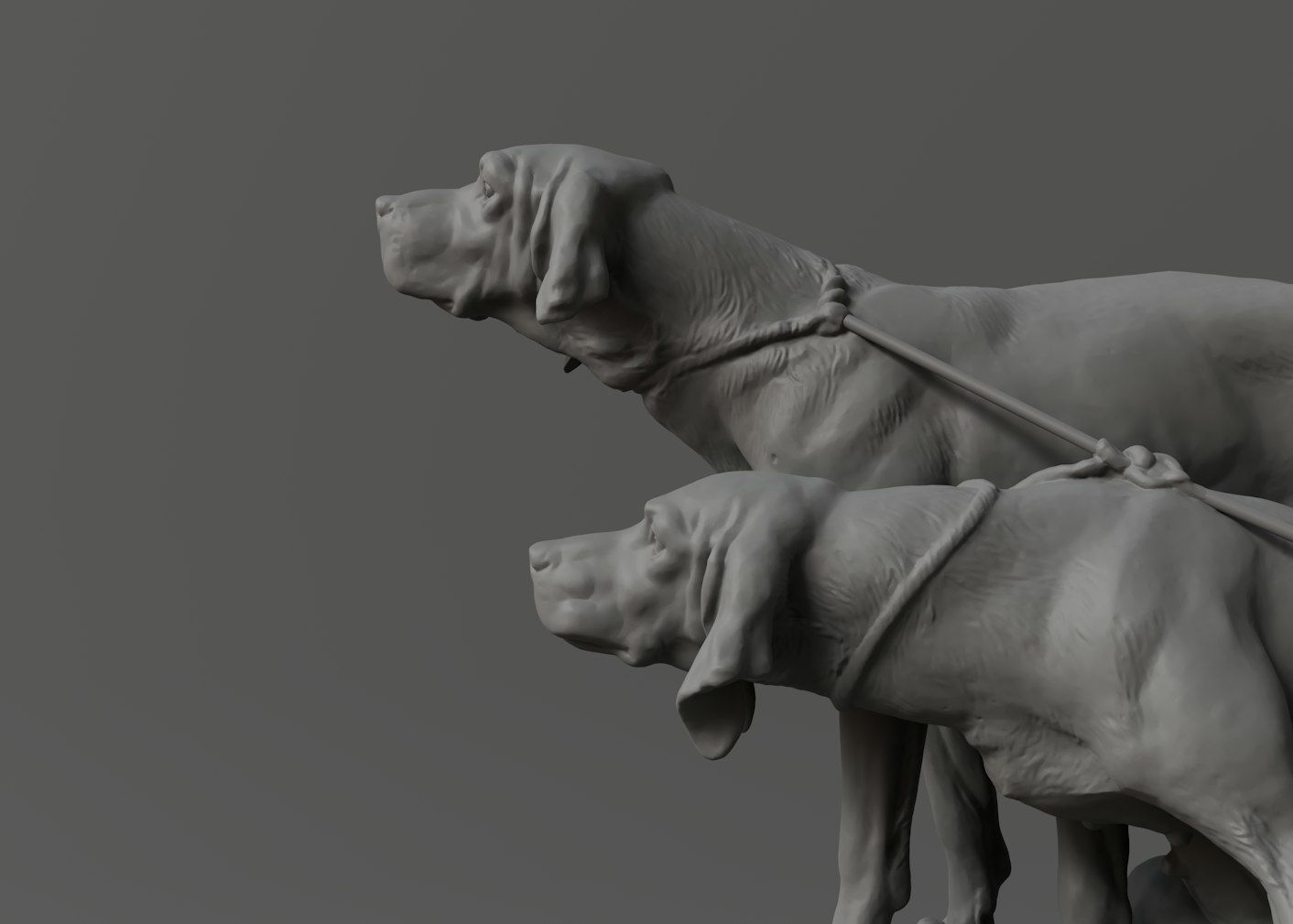

Image: Point Normal

We all remember a special pet from our childhood for different reasons, and many of us still have a furry friend who happily greets us every time we come home. But beyond being faithful companions, some animals have also made a lasting impact on society. Join us as we discover 10 incredible animals who were honored with their own memorials!

1

Fala, FDR’s dog (USA)

Image: Jessica Tan

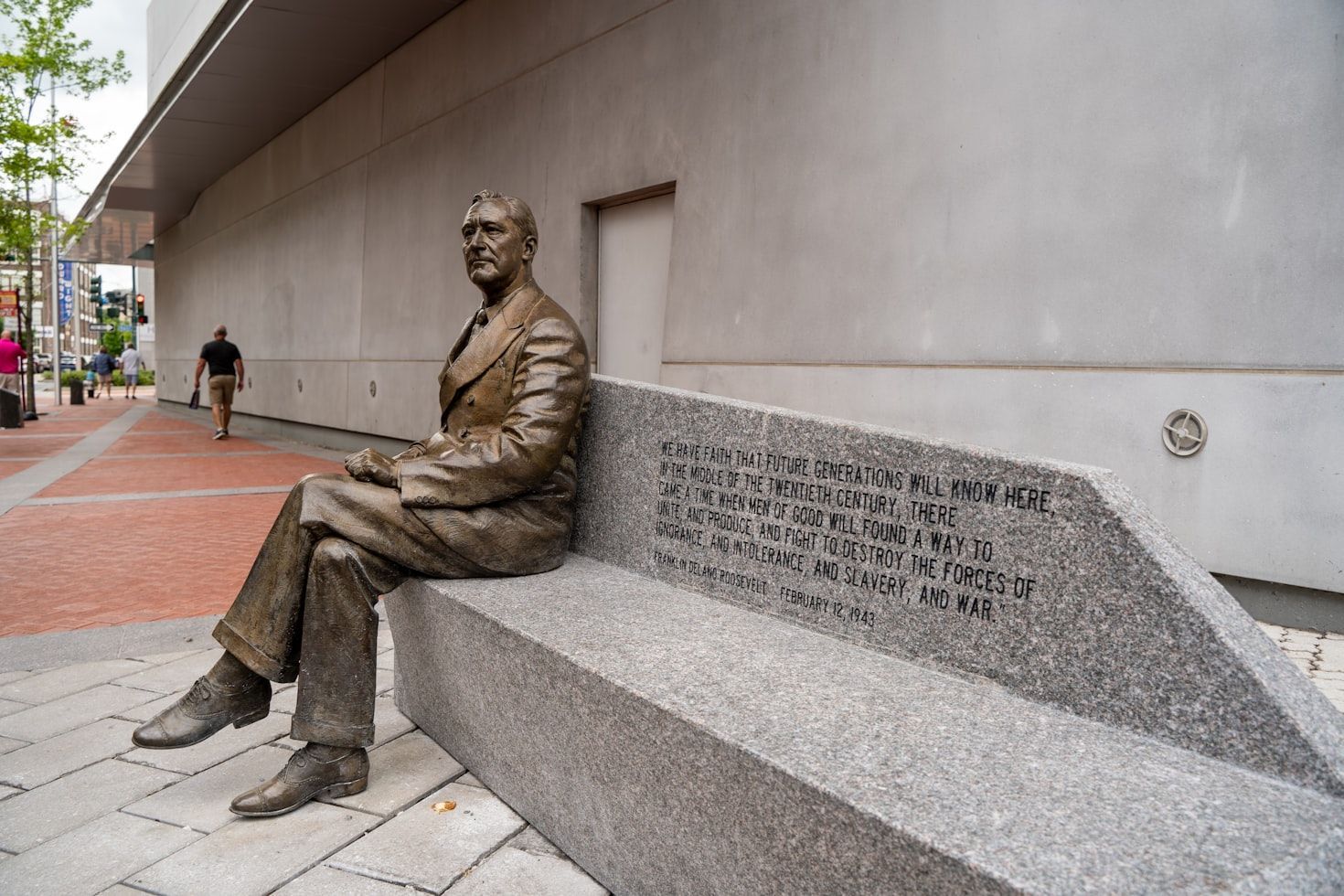
One of the most famous presidential pets in America -and even the world- was Fala, the lovely black Scottish Terrier who followed President Franklin D. Roosevelt everywhere he went. And in a way, Fala is still by FDR's side, as his own bronze statue sits right next to the president's at the Franklin Delano Roosevelt Memorial in Washington, D.C.

2

Bosco the dog mayor (USA)

Image: Alfred Lee

All dogs have a special place in our hearts, but as it turns out, some of them even find a place in government! That was the case for Bosco, a Labrador and Rottweiler mix that was elected honorary mayor of Sunol, California, and held the title from 1981 until his passing in 1994. As it could not be otherwise, after his death, the locals honored him with his well-deserved bronze statue.

3

Balto the heroic sled dog (USA)

Image: Chalo Gallardo

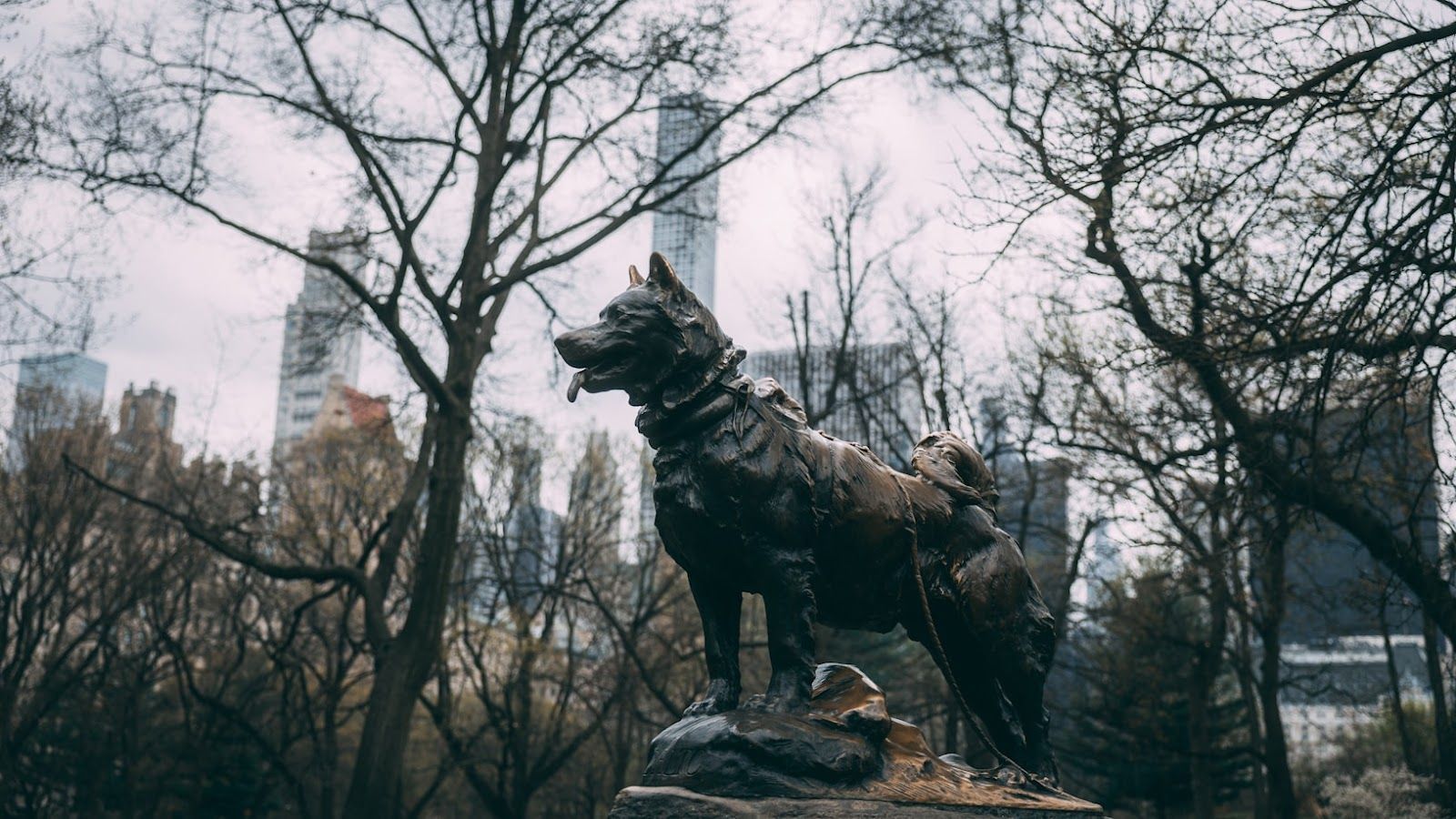
Central Park is where you'll find the statue of Balto, a brave dog who helped save many lives! In 1925, Balto led a team of sled dogs across nearly 700 miles of icy Alaskan terrain. This heroic dog was tasked with transporting diphtheria antitoxin to a remote village facing a deadly outbreak. No one can deny that he deserves a memorial!

4

Hachiko (Japan)

Image: Darel Low

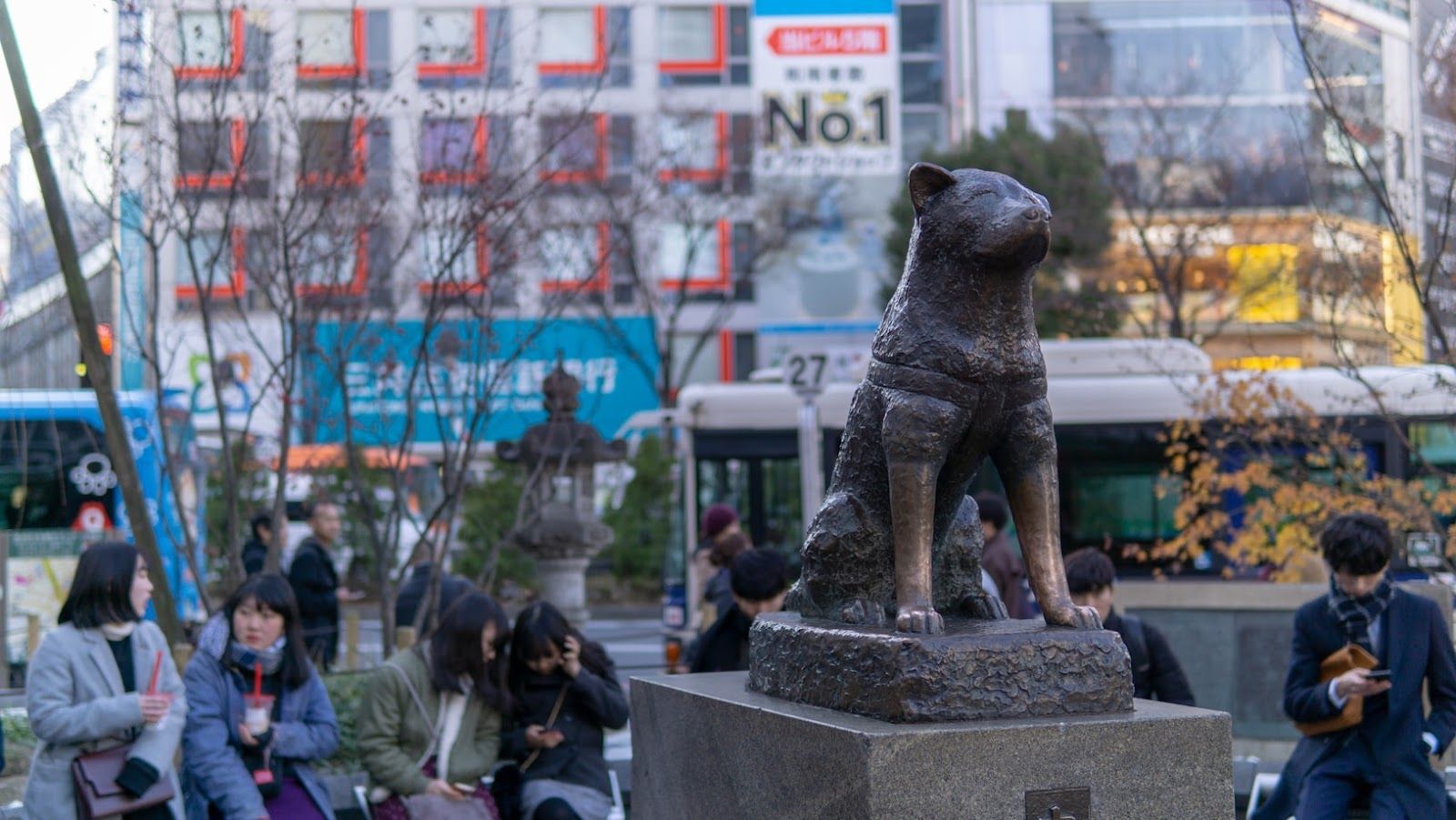
Dog loyalty is a serious issue, and Hachiko is the perfect example. Famous not just in Japan but around the world, Hachiko, an Akita dog, faithfully accompanied his owner to work every day and waited for him at the train station. Tragically, his owner passed away while at work, but Hachiko never left the station, waiting for him every day for 10 years until his own death. His story touched many people, and in 1934, a bronze statue of Hachiko was erected at Shibuya Station.

5

Tombili the posing cat

Image: Andréas BRUN

In the streets of Istanbul lived Tombilli, the city's most beloved cat. Known for lounging lazily on the steps of different buildings with one arm comfortably draped, this cat became an icon and was the main character of many stories and photos. After his passing in 2016, Tombilli's fame earned him a memorial in the streets of the Turkish city.

6

Jim the wonder dog (USA)

Image: Erik Mclean

This Llewellyn Setter, born in 1925, was particularly known for his exceptional hunting skills, but that wasn't all. It was said that Jim was able to understand and obey commands in multiple languages, and even in Morse code! According to his owner, Jim could also identify cars and people just by hearing their description. Whether this was true or an exaggeration, there's no doubt that Jim was an incredibly intelligent dog, and we're glad he has a well-deserved statue.

7

Laika the space dog (Russia)

Image: Nan Wisanmongkol

We all remember Laika, the courageous dog who became the first living creature to orbit the Earth. Laika was found on the streets of Moscow, and her strength and resilience led her to become a part of this historic space mission. In November 1957, she was sent aboard Sputnik 2, the second spacecraft to be launched into space. Unfortunately, Laika didn't survive. Years later, a memorial was erected in Moscow to commemorate and honor Laika's heroic sacrifice.

8

Trim the explorer cat (Australia)

Image: COPPERTIST WU

In the early 1800s, explorer Matthew Flinders undertook a series of voyages to circumnavigate and map the coasts of the Australian continent. But Flinders didn't sail alone. Along for the journey was Trim, the loyal cat who stayed by his side throughout the adventure. It's said that as a kitten, Trim once fell overboard but managed to swim back to the ship and climb up a rope. That moment showed his bold spirit, and it's just one of the reasons he earned the statue that was erected in his honor in 1996.

9

Winnipeg the war bear (UK)

Image: Sean Benesh

It's not just cats and dogs; there's also a statue that honors Winnipeg, a black bear cub. In 1914, Winnipeg was adopted by a Canadian lieutenant who named her after his hometown of Winnipeg, Manitoba. The bear cub traveled with him to England during WWI and eventually became a star resident at the London Zoo. There, she captured the heart of A.A. Milne's son and became the inspiration for the lovable Winnie the Pooh. As could not be otherwise, her memorial is in the Canadian city of Winnipeg.

10

Animals in War (UK)

Image: Irina Nakonechnaya

When we talk about heroic animals, we can't forget the many four-legged friends who have served in different wartime conflicts. In London, you can find the Animals in War Memorial, a place dedicated to all those animals that have served and lost their lives under military command throughout British history. They definitely deserve recognition!


SHOULD ROCKING CHAIRS MAKE A COMEBACK?

Hanging Beds, Phone Niches, And Things Rarely Seen In Houses Anymore


Published on September 29, 2025


Image: Museum of New Zealand Te Papa Tongarewa

Many technological solutions of the past that have been replaced by newer inventions still linger in old houses. Some of them, you might even have seen in your grandparent’s home or somewhere else. A number of these old features, like the laundry chute, are quite handy even in this day and age. Take a look at the following ten items and see if you can recognize some of them.

1

Phone Niche

Image: Quino Al

Until a couple of decades ago, landline telephones were an essential means of communication. Every place had one and it was a communal device for every person in that location. Telephones were big, sturdy, and quite elegant, actually. But they weren’t always so compact.

Because of their big, heavy stature, they required quite a bit of space. Homes used to have niches in walls for this purpose. These phones had cords, so people had to stand around to talk. Hence, phone niches often appeared in hallways, kitchens, and bedrooms.

2

Small Iron Door At Street Level

Image: Marcos Assis

It might seem odd today but, up until around 1940, most families heated their homes by burning coal. Coal delivery men traveled door-to-door to provide people with the fuel to power their furnaces.

These men shoveled coal through a small door and down the chute into the basement. Once in the basement, homeowners could shovel the coal directly into the furnace. Today most of these chutes have been sealed, though you will often still see the iron doors on older homes.

3

Ceiling Bed

Image: Grant Durr

Not to be confused with the famous Murphy bed, which folds into a closet or wall to save floor space when not in use, the Sorlien ceiling bed was stowed in the ceiling. This device was lowered from the ceiling via a crank, with hidden weights in the wall working to counterbalance the bed.

The obvious advantage of this bed was that it took up no closet or wall space, with floor space used only when in service. The ceiling bed only worked for houses with an attic above.

4

Push-Button Light Switch

Image: Stefan Steinbauer

Even basic things like light switches evolve. There was a time when those humble but useful devices had not one but two buttons for each light. One to turn on the light, one to turn it off.

The button you pushed, stayed down. And, when you pushed a button, the one that was down, popped right up. Neat, right?

5

Boot Scraper

Image: Melanie Kreutz

It seems like a quite useful thing to have if your shoes are dirty and you need to scrape them off before entering a place, right? If you’ve ever walked up to someone’s front door and seen a strange ground-level cast-iron contraption, that is it: it’s a boot scraper.

In some homes, these tiny iron ornaments still stick out in front of the door. Many include ornate spirals and designs, including animals. Usually, two boot scrapers would border the door at the end of a walkway.

6

Root Cellar

Image: Ray Shrewsberry

Root cellars were used to store vegetables, fruits, nuts, and other things for long periods. Some were simply an unfinished room in the basement while others were built into the ground a short distance from the house.

Modern refrigeration has rendered root cellars unnecessary for most people. But if you have one, you can certainly still put it to good use and store foods that maybe don’t need to be frozen but are best kept at a cooler temperature than that room.

7

Razor Slit in Medicine Cabinet

Image: Nacho Fernández

If the idea of a dark space full of rusty razor blades right in your bathroom gives you the chills, you are not alone. But there was a time when that was a real thing. A couple of decades ago, medicine cabinets had a tiny slit to dispose of old razor blades. Where might those dirty razors go? Nowhere, really. They merely went into the wall.

If someone were to remove the medicine cabinet, they’d likely see all the discarded razors. Keep that in mind if you plan to have someone replace your old cabinet.

8

Milk Door

Image: Jason Murphy

Once upon a time, milk was delivered door to door in the early morning hours by milkmen dressed in white overalls. That is why having a milk door was standard in many homes. The small door was situated on the outside of the house and was used by the milkman to pick up empty bottles and leave fresh ones.

Milkmen usually delivered the drinks early in the morning so families could drink milk with breakfast. Sometimes, milkmen would deliver other products such as eggs, cheese, butter, and soft drinks.

9

Picture Hanging Molding

Image: Kaylah Matthews

Imagine not having to drive a nail through your walls to hang a picture. It would be convenient, right? Well, until some decades ago, that was the norm. Enter picture hanging molding.

The whole contraption looked like, well, a molding design in the upper segment of the interior walls. Movable hooks were hung from such rails and, in turn, pictures were suspended from those hooks.

10

Laundry chute

Image: engin akyurt

Wouldn’t it be nice if there was a little door on your bathroom wall where you could simply toss your laundry and have it fall right next to the washing machine? Well, there was a time when that was the case in many homes with more than one story.

Laundry chutes were designed to relieve the burden of carrying laundry. They're so handy that many people still install them today. No one knows who invented the first laundry chute, or when. Newspaper articles describing early linen chutes date back to the 1890s.

Looking for an extra scoop of literary fun?

Learn more with our Word of the day

wonderment

/ˈwəndərmənt/