Nothing is set in stone

The Oxford comma is a choice, not a rule (and it is not about grammar)


Published on June 16, 2026


Image: Markus Winkler

Unlike languages like French or Spanish, the English language does not have an official academy that registers the use of the language and determines which rules still apply and which are obsolete. While institutions such as the Oxford Dictionary help with standardizing and registering the language, English evolves through the daily use of its speakers, and its rules evolve with it.

As a consequence, some rules are more fixed than others, and many of them are not so much rules as they are stylistic choices. Does this mean we can write however we please? Not exactly, but it means that many "rules" are not set in stone. Let’s see some language mandates that are more of a guideline.

1

Sentences should never end in a preposition

Image: Austin Chan

As evidenced by daily language, it is perfectly acceptable to end a sentence with a preposition, no matter the context or the formality. In fact, it’s something that speakers tend to do naturally. The idea that ending sentences with a preposition is incorrect is a myth left over by 17th-century grammarians trying to impose Latin grammar on the English language.

2

You should never split an infinitive

Image: Megan Watson

‘To run quietly’ or ‘To quietly run’, which one is correct? The answer is both. The choice to place an adverb after the infinitive or in the middle of it has nothing to do with proper grammar, but with emphasis and sounding more natural. Again, this "rule" is a leftover from Latin grammar.

3

You should always use ‘whom’ when referring to the object

Image: Artem Beliaikin

Not so long ago, this rule was set in stone, and saying "to who?" instead of "to whom" would get you a few stares. However, rules change as people change, and the use of ‘who’ to refer to the object has become increasingly more common. However, this only applies to informal contexts. In a more formal setting, it is recommended to still use ‘whom’.

4

Sentences should never start with conjunctions

Image: Tim Mossholder

Much like prepositions at the end of sentences, conjunctions —such as and, but, so, or, nor, for, and yet— can go at the beginning of a sentence. This helps with emphasis, breaks up long sentences, and provides flexibility, although it is recommended to use them sparingly in this way.

5

The Oxford comma is mandatory

Image: Dan (mrpolyonymous on Flickr), CC BY 2.0, via Wikimedia Commons

The first issue here is that the serial comma, better known as the Oxford comma, is a punctuation issue, not a grammar rule. That aside, although it is recommended to avoid confusion caused by lengthy enumerations, in the end, it is a stylistic choice, and it is only considered mandatory in contexts that follow a certain style guide.

6

Adjectives should always precede the noun they modify
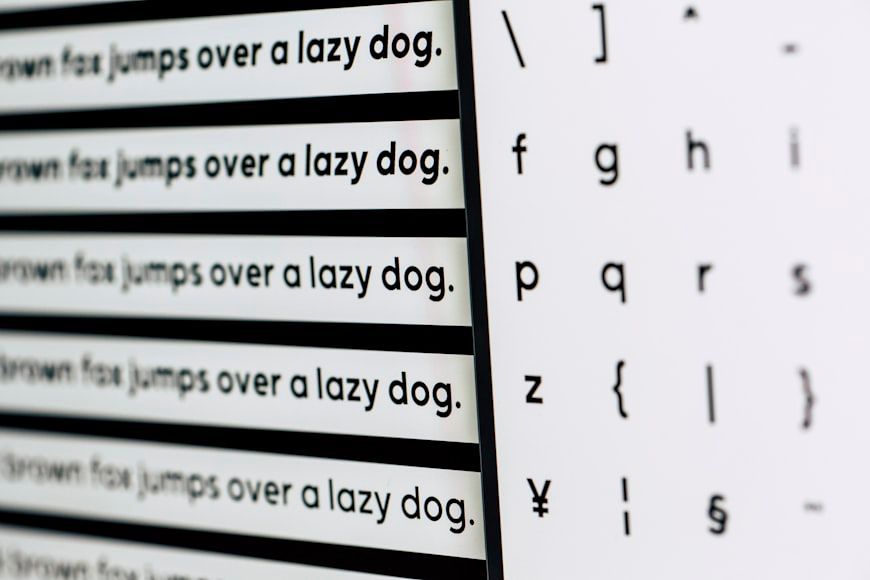
Image: Markus Spiske

Just because in most cases the adjective goes before the noun, it does not mean it should always do so. English speakers tend to naturally put the adjective first when talking about qualities and characteristics, but in many cases, putting the noun first will sound better. Again, it depends on your preferences and the flow of the sentence.

7

The subjunctive is mandatory for conditions uncertain or contrary to fact

Image: Christina @ wocintechchat.com M

While this is technically correct and subjunctive has been used this way for centuries, this rule mainly applies to written language and formal contexts. In colloquial English, speakers tend to use both the indicative and the subjunctive for uncertain or contrary-to-fact scenarios, such as saying "If I was you" and "If I were you". The choice almost always boils down to what sounds more natural.

8

‘They’, ‘their’, and ‘them’ should only be used for plural antecedents

Image: Towfiqu barbhuiya

Once an unbreakable rule, the use of ‘they’, ‘their’, and ‘them’ for a singular antecedent is widely accepted nowadays, even in the most formal contexts, to fill the gap left by the lack of gender neutral pronouns. In fact, many style guides recommend using these words as singular to avoid awkwardness and assuming someone’s gender.

9

A double negative will always be understood as positive

Image: Nick Fewings

"Two negatives make a positive", a rule you must have heard about in school. While this is a fact in math, it is not always true in grammar. In more standard English variants, the rule applies, especially in academic writing and formal contexts. However, informal dialects and vernaculars follow the ‘negative concord’: here, the second negative intensifies the first one instead of cancelling it.

10

‘None’ should always be followed by a singular verb

Image: Marcel Eberle

This is a myth made popular by old grammar books. ‘None’ can be used with both singular and plural verbs, depending on the meaning. When ‘none’ is used to mean ‘not any’, it is more natural to use a plural verb. When it means ‘not one’ or ‘not any of it’, the verb should be in the singular form. If you are unsure, pick the choice that sounds clearer and more natural.


Why you shouldn't walk under a ladder — and other superstitions explained


Published on June 16, 2026


Image: Raquel Pedrotti

Superstitions have shaped human behavior for centuries, often rooted in ancient beliefs, religious practices, or sheer coincidence. From knocking on wood to avoiding black cats, even today, these curious traditions persist across cultures. But where did they come from? Here are 12 common superstitions and the fascinating origins behind them.

1

Knock on wood

Image: Alexey Demidov

This practice dates back to ancient pagan traditions, where trees were believed to house spirits. Knocking was a way to summon their protection or avoid tempting fate.

Over time, the superstition spread across cultures, and early Christians adapted it as a reference to the wood of the cross for divine protection. Today, people still "knock on wood" after making a hopeful statement to ward off bad luck.

2

Breaking a mirror

Image: Savannah B.

Ancient Romans believed mirrors reflected the soul. Breaking one was thought to damage the soul, which would take seven years to renew.

This idea was reinforced in the Middle Ages, when mirrors became expensive. Breaking one was not only a spiritual concern but also a financial burden, and the superstition likely served as a warning to handle them with care.

3

Friday the 13th

Image: Waldemar

The fear of the number 13 stems from Norse and Christian traditions, with an unlucky 13th guest believed to bring misfortune. Friday was also linked to Jesus’ crucifixion.

The superstition intensified in the 20th century through pop culture references, leading to widespread fear. Many buildings and airlines even avoid labeling a 13th floor or row.

4

Walking under a ladder

Image: Jilbert Ebrahimi

Ancient Egyptians saw ladders as sacred symbols, forming a triangle with the ground. Walking through one was believed to anger the gods.

During the Middle Ages, ladders were associated with gallows, creating a connection with death. The belief persists today, reinforced by the obvious danger of a ladder toppling.

5

Black cats

Image: Tatiana Zanon

In medieval Europe, black cats were linked to witches, believed to be their familiars—or even witches in disguise—and crossing paths with one was thought to bring misfortune.

However, this wasn’t true everywhere. In ancient Egypt, black cats were especially revered, and today they are considered lucky in some cultures, particularly in Japan and Scotland.

6

Opening an umbrella indoors

Image: Trent Haaland

In Victorian England, umbrellas with spring mechanisms could accidentally injure people indoors, making this superstition more about a real hazard than a "bad omen."

A deeper origin may stem from ancient Egypt, where parasols were used to shield pharaohs from the sun. Opening one indoors was thought to offend the sun god Ra.

7

Spilled salt

Image: Emmy Smith

Salt was a valuable commodity in ancient times, sometimes even used as currency. Spilling it was considered wasteful and unlucky.

Leonardo da Vinci’s The Last Supper depicts Judas spilling salt, reinforcing its association with betrayal and misfortune. As a countermeasure, tossing salt over the left shoulder was thought to blind evil spirits.

8

Tossing a coin in a fountain

Image: Virgil Cayasa

The Romans believed water had sacred properties, and tossing a coin into a fountain was an offering to the gods for good fortune.

The Trevi Fountain in Rome helped popularize the tradition. Today, millions of coins are thrown into fountains worldwide, with many places donating the collected money to charity.

9

Horseshoes for luck

Image: Matt Benson

The horseshoe’s luck stems from iron’s historical association with warding off evil spirits and fairies. The shape also resembles a crescent moon, a symbol of protection.

In part, the association with the supernatural stemmed from the fact that blacksmiths were highly respected in medieval Europe, and their complex craft was seen by many as nearly magical.

10

Crossing fingers for luck

Image: Dayne Topkin

This tradition likely originated with early Christians, who used finger gestures to invoke divine protection and ward off evil.

Over time, the practice became a general symbol of good luck, with people crossing their fingers for positive outcomes—or even to excuse small lies.

11

Stepping on a crack

Image: Luis Villasmil

This rhyme originated in the 19th century as a playful warning to children, with no real historical basis.

However, cracks in sidewalks were sometimes linked to supernatural beliefs, with some cultures fearing they could allow evil spirits to escape from the underworld.

12

Saying "bless you" after a sneeze

Image: mohammad hosein safaei

According to one theory, Pope Gregory I promoted saying "God bless you" during the bubonic plague to protect against disease, and the phrase stuck.

Another possible origin comes from ancient Rome, where sneezing was thought to temporarily expel the soul, making a blessing necessary for protection.

Looking for an extra scoop of literary fun?

Learn more with our Word of the day

loot

/lut/