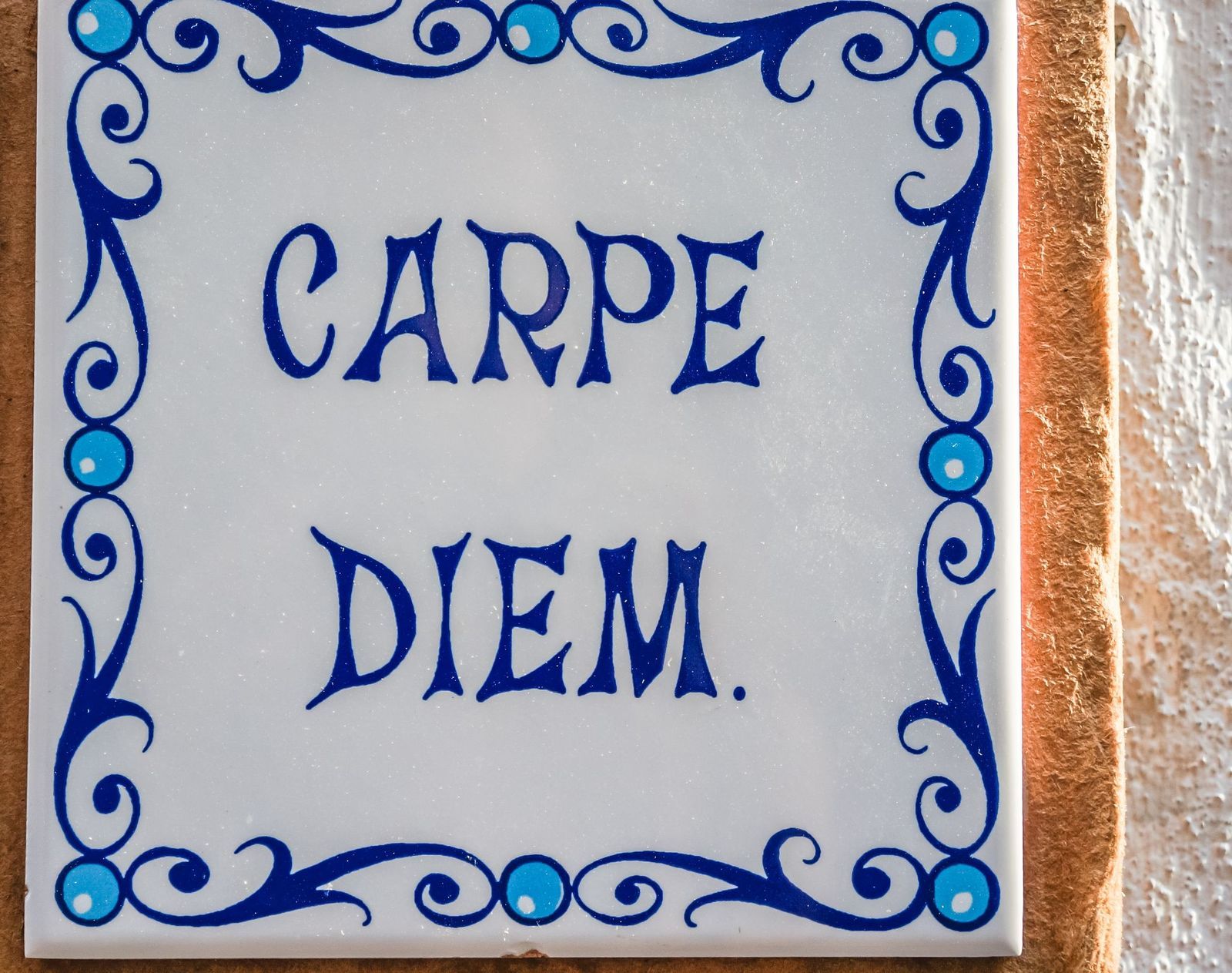
Words to live by

The Italian phrase that turns doing absolutely nothing into an art form


Published on August 15, 2026


Image: Thomas Bethge

Every culture looks at life through its own lens: from a farmer in old Japan to a poet in ancient Rome, they all figured out their own version of "life's too short, don't be a fool about it". But some languages found the perfect handful of words to capture an idea that other languages take a whole paragraph to fumble through. You've probably heard "Carpe diem" shouted by Robin Williams in Dead Poets Society, or maybe your grandfather liked to say "a bird in the hand is worth two in the bush" (which got a big boost from Benjamin Franklin, who printed it in his famous almanac). Here are 10 more gems worth adding to your back pocket.

1

"C'est la vie" (French: "that's life")

Image: Nicoleta Ionescu

You say this when something annoying or disappointing happens and there's simply nothing to be done about it: you missed the bus, the soup's too salty, whatever the case may be. Nobody can pin down exactly when it started, but it's been part of everyday French speech for centuries, and it slipped into English decades ago.

The closest American equivalent is probably "such is life" or the more resigned "it is what it is."

2

"Il dolce far niente" (Italian: "the sweetness of doing nothing")

Image: JaySi

This one celebrates lounging around guilt-free: sipping coffee, watching the world go by, accomplishing absolutely nothing on purpose. It's tied to Italy's relaxed approach to life and shows up whenever someone wants to justify an afternoon nap.

There's no single inventor; it's just baked into Italian culture. English doesn't really have a phrase this poetic, though "kicking back" or "taking it easy" gets at the same idea, minus the charm.

3

"Que será, será" (Spanish: "whatever will be, will be")

Image: stoatphoto

A gentle way of saying "don't stress about the future, it'll work out how it works out." Many Americans know it from the 1956 Doris Day song, though the phrase itself is older and its exact origin is fuzzy; some trace similar sayings back to medieval Europe. It's perfect for calming down a worrier before a big decision.

English speakers might reach for "what will be, will be" or simply "it'll all work out."

4

"Carpe diem" (Latin: "seize the day")

Image: Indre Brazauskaite

This one comes straight from the Roman poet Horace, around 23 B.C., urging readers to grab pleasure from today instead of banking on tomorrow. It became a household phrase in America after that unforgettable scene in Dead Poets Society. Use it anytime you're pushing someone (or yourself) to stop overthinking and just do the thing.

The English cousin is "no time like the present."

5

"The best time to plant a tree was 20 years ago" (often called a Chinese proverb)

Image: Yury Zap

The message is: you can't undo a late start, but you can still act now instead of moping around. It's often attributed to ancient Chinese farming wisdom, though nobody can point to an exact author or date. People say this when someone's beating themselves up over a delayed career change, workout plan, or savings account.

The nearest English saying is "better late than never."

6

"Deru kui wa utareru" (Japanese: "The nail that sticks up gets hammered down")

Image: Cagkan Sayin

This reflects a traditional Japanese value of blending in and not causing friction within the group. It's used to explain why someone might hold back from bragging or standing out too much at work or school, even when they deserve more credit. Its exact origins are unclear, but it's long been considered a summary of Japanese social norms.

English has "the squeaky wheel gets the grease"; funny enough, the opposite advice.

7

"When the music changes, so does the dance" (Africa, various regions)

Image: Elena_Alex_Ferns

This proverb, heard across several African countries without one confirmed birthplace, is about adapting when circumstances shift: new boss, new rules, new season of life, whatever the case may be. It's the wise elder's way of saying "stop dancing to a song that already ended."

Americans might say "roll with the punches" or "go with the flow" instead.

8

"A bird in the hand is worth two in the bush" (England)
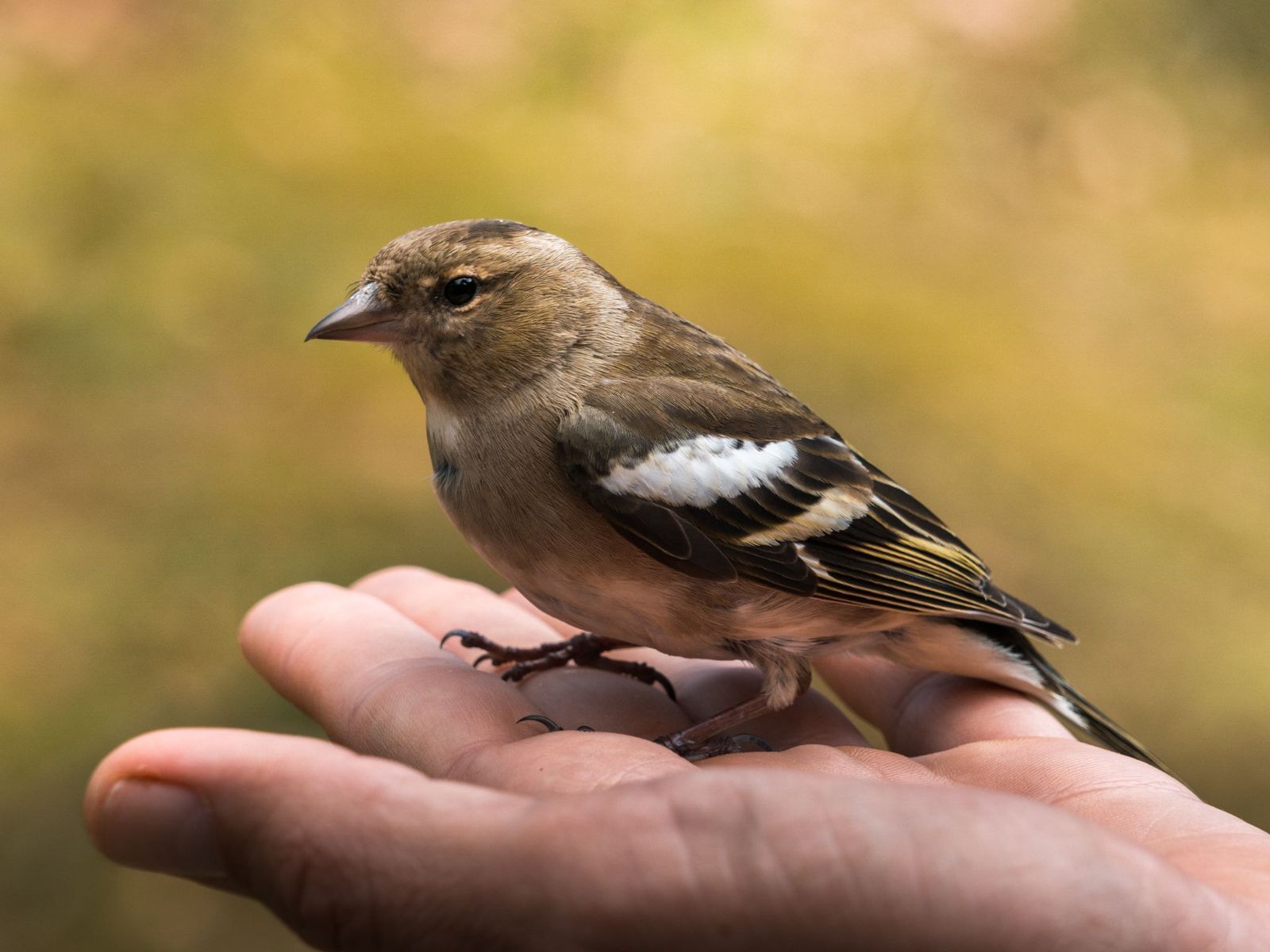
Image: Ansems - de Jong

This warns against risking something certain for something uncertain, however tempting. Benjamin Franklin printed it in his famous Poor Richard's Almanack in the 1700s, though the saying is actually much older, tracing back to medieval English and even earlier fable traditions. It's the go-to line when someone's tempted to gamble a sure thing for a "maybe better" option.

9

"Ubuntu: I am because we are" (African philosophy)

Image: PeopleImages

Rooted in Southern African culture, this idea states that your identity and wellbeing are tied to your community and that you don't exist in isolation. Archbishop Desmond Tutu helped popularize it worldwide during South Africa's post-apartheid years. It's used to encourage compassion and teamwork, and to remind us that we're all connected.

English doesn't have a tidy one-liner for this, though "no man is an island" comes close.

10

"Wo de tian!" (Chinese: "Oh my heavens!")

Image: TimeImage Production

This is simply an exclamation of shock or disbelief, the Mandarin cousin of "oh my gosh!" There's no dramatic origin story here; it's everyday, casual speech, useful for when you accidentally drop your phone in the toilet or hear surprising gossip.

The English equivalent is right there in the translation: "oh my heavens" or "good grief."


Fear Factor

What pet was Julius Caesar afraid of? Discover 10 rare phobias


Published on August 15, 2026


Image: Nik

We all feel scared sometimes, right? But phobias aren't simple fears; They represent a type of irrational and strong fear of objects, situations, or activities that can cause intense feelings of anxiety. Some are very frequent, such as arachnophobia (fear of spiders) or claustrophobia (fear of confined spaces). However, there are many other phobias that are not only rare but also have some of the strangest names. Have you ever heard of chaetophobia? Do you know the term for mirror phobia? If you want to discover 10 uncommon phobias and the origin of their names, read on!

1

Anthophobia

Image: Gabriela Popa

Since old times, poets and artists have dedicated part of their work to nature, particularly flowers. In all types, sizes, and colors, Mother Nature has a flower for everyone, and we, as humans, have incorporated them into our culture in countless ways.

But not everything is rosy. Some people struggle when spring arrives. We're not talking about those allergic to pollen –although they suffer too– but those with anthophobia.

Άνθος (anthos) is the Greek word for flower. So, as the name implies, it's a deep fear of flowers, their appearance, contact with them, or, in some cases, even their scent.

2

Arithmophobia

Image: Waldemar

Do you have a lucky number? We do! Numbers represent a lot in our lives, both socially and personally. In fact, many cultures have adopted certain numbers as positive or negative symbols. For example, according to Chinese culture, 8 is a lucky number, while 4 heralds bad news. In Japanese culture, 7 is responsible for announcing good fortune.

Arithmophobia is the irrational fear of numbers. Some people with arithmophobia may reject all numbers in general, while others may associate the fear with a specific number, especially those considered negative or unlucky. Just like the word "arithmetics," arithmophobia has its origin in the Greek ἀριθμός (arithmós), meaning "numbers" or "counting."

3

Nomophobia

Image: Yura Fresh

While connectivity allows us to work, find out what's going on in the world, keep in touch with our loved ones, and receive funny memes, technology can also have its downside.

Our reliance and dependence on laptops and cell phones have increased in recent years, and one of the consequences was the emergence of a condition called nomophobia.

According to the National Library of Medicine, nomophobia is the severe anxiety caused by the fear of being without your phone, losing it, or lacking cell service. Unlike most phobias, its name doesn't have Greek origins; it's actually a portmanteau: NO MObile PHOne phoBIA.

4

Ailurophobia

Image: Kim Davies

Cats and dogs have been part of our lives for ages, but while many of us may find them adorable, some people would prefer another type of pet. Why? Well, for many and varied reasons, and one of them could be ailurophobia.

Ailurophobia is the intense and irrational fear of cats. Its name comes from the Greek αἴλουρος (ailouros), meaning "cat," and φόβος (phóbos), "fear," and its symptoms and triggers can vary from person to person.

Surprising as it may be, this phobia is not new. It seems that this fear has been around since ancient times. In fact, some stories claim that figures such as Julius Caesar and Alexander the Great experienced this phobia.

5

Eisoptrophobia

Image: Caroline Veronez

What's the first thing you do when you wake up in the morning? For many of us, looking in the mirror is part of our daily routine, whether it's brushing our teeth or trying on the outfit we'll wear to work. For some, however, a mirror isn't necessary. In fact, they would prefer to avoid it at all costs.

We're talking about eisoptrophobia, the irrational fear of mirrors. As you've probably guessed by now, this word is also derived from Greek but is a bit more specific. εἰς (eis) means "into," and ὀπτῐκός (optikos) refers to vision, image, or sight. As you can see, the word's etymology points to a fear of the reflected image rather than the mirror itself.

6

Logophobia

Image: Ionela Mat

Wherever you go, wherever you look, there will be words. On your phone screen, on the TV, on book spines, food packages, clothing labels, street signs, and even graffiti. They're everywhere!

All that will seem overwhelming when you learn about logophobia, the fear or terror of words. As you know, Φόβος is the Greek word for "fear," while λόγος (logos) translates as "word" or "speech." This fear can be triggered by a specific word, a type of word, or all of them.

7

Sesquipedalophobia

Image: Sergi Kabrera

Believe it or not, sesquipedalophobia is the fear of long words. Ironic, isn't it?

In Latin, sesqui means "one and a half," while pedis is "foot." In Rome, there was a term for really long words: sesquipedalis, those that seemed "a foot and a half long." Over time, this Latin joke became part of the medical term.

But there's more! As if "sesquipedalophobia" wasn't long enough, the term "hippopotomonstrosesquippedaliophobia" has emerged in recent years to describe the same fear. While the latter is not officially recognized, it seems that someone thought it would be good to exaggerate the term by adding the Latin monstrum ("monster") and hippopotamus.

8

Arachibutyrophobia

Image: Towfiqu barbhuiya

Peanut butter is one of Americans' major favorites. Whether it's breakfast or any other meal, this ingredient is a staple in most of our diets. However, there are those who can't tolerate it.

If you experience sweaty palms, dizziness, discomfort, or anxiety at the mere thought of peanut butter entering your mouth, perhaps it's arachibutyrophobia.

Arachi is a Greek term related to leguminous plants such as peanuts, and βούτυρον (bouturon) means "butter." Some people associate this specific phobia with the idea of peanut butter sticking to the roof of their mouth, which triggers a fear of choking.

9

Chaetophobia

Image: Tim Mossholder

When it comes to looking good, hair is the key. We all know things aren't easy when it's a bad hair day, right?

While for most of us, it's as simple as going to the salon or taking some time out of our day to fix our hair, it's not so simple for others.

No one enjoys walking into the bathroom just to find a pile of loose hair scattered around. Definitely not pleasant scenery! But when dislike reaches an extreme, it can be chaetophobia, an irrational and persistent fear of hair. This name comes from the Greek χαίτη (khaitē), meaning "loose, flowing hair."

10

Globophobia

Image: Adi Goldstein

"Pennywise" is a familiar name to most of us, isn't it? Thanks to this iconic clown from Stephen King's novel and the movies based on it, we have all come to hear about coulrophobia, the fear of clowns.

While coulrophobia is quite common, there is another related phobia that is much less frequent. This is globophobia, the extreme fear of balloons, their texture, smell, the material they are made of, or the possibility of them popping. For that reason, globophobia is one of the phonophobias, associated with loud sounds.

Looking for an extra scoop of literary fun?

Learn more with our Word of the day

unyielding

/ˌənˈjildɪŋ/