HIDDEN GEMS

The 8 Most Beautiful Words In The English Language


Published on December 8, 2023


Image: Marina Vitale

They say beauty is in the eye of the beholder, or maybe in the ear of the listener, in this case. Although beauty is always subjective, there are some words that–for different reasons–stand out from the crowd and are almost universally praised for their beautiful meanings or mellowness to the ear.

Here’s a list of eight of our favorite English words, enjoy!

1

Serendipity

Image: Isaac Davis

A fortunate but unexpected discovery. Most scientific breakthroughs come this way!

The word can be traced back to an ancient Persian tale about three princes from a far-away country called Serendip (or Serendippo in some versions) that, with a mix of wisdom and lucky accidents, navigate their way through many seemingly impossible challenges.

2

Idyllic

Image: Matteo Minelli

According to the Cambridge Dictionary, "an idyllic place or experience is extremely pleasant, beautiful, or peaceful." A clear-skied afternoon spent in a colorful meadow, a summer spent at your lovely grandmother’s house on the outskirts of town, a calm and beautiful beach under a cliffside, hidden from view, these are all possible examples of idyllic places. In Ancient Greece, an idyll was also a short poem descriptive of rustic life—which may explain why we tend to associate this word with nature and simple things.

3

Sequoia

Image: Vitto Sommella

As you may already know, sequoias are coniferous redwood trees that can be found mostly in Northern California. They are the largest trees on Earth! These towering giants were named after Sequoya, a Cherokee man who devised a system of writing for his people's language.

4

Gossamer

Image: Markus Spiske

A very poetic word, it can refer either to "a film of cobwebs floating in the air in calm clear weather," or to something delicate and insubstantial: the gossamer of midsummer dreams. In Middle English, it used to refer to a warm spell during late autumn, when geese are in season—literally "goose summer." Moreover, the association of the word with light or delicate elements, such as cobwebs, likely stems from the silk-like texture of goose down.

5

Petrichor

Image: Roman Synkevych

The pleasant scent of rain or, more specifically, the scent produced when rain falls on dry soil. Derived from Ancient Greek roots, "petra" signifies rock or stone, while "ichor" refers to a fluid associated with the blood of the Gods.

When water falls to the ground, air bubbles trapped within the soil are displaced, forming aerosols that carry scents as well as some microorganisms. Apparently, humans evolved to perceive it, as our noses are capable of discerning one of the main released compounds, geosmin, at concentrations as low as 0.4 parts per billion.

6

Aurora

Image: Jakob Owens

Aurora was the Roman goddess of dawn, and like its Greek counterpart Eos, it carries the linguistic root of an earlier Indo-European word also relating to the dawn of the day. Traditionally, it is also the given name of the princess of the fairy tale Sleeping Beauty.

Nowadays, we tend to associate it mostly with the Aurora Borealis (or Aurora Australis if it is located in the southern hemisphere), a natural electromagnetic phenomenon seen in high-latitude regions.

7

Cynosure

Image: Mike Setchell

A cynosure, literally Greek for "dog's tail," is a guiding principle, something or someone that is the center of attention. However, it was originally used to refer to the North Star, or even the entire Ursa Minor constellation, since it was extensively used for navigation.

8

Eudaemonia

Image: Eddie Kopp

This Ancient Greek word (notice a pattern?) refers to a blissful state of being happy, healthy, and prosperous, usually translated as "happiness" or "welfare." It can also appear as eudaimonia or eudemonia.

According to Aristotle, eudaemonia is the highest good for humans, and the goal of practical philosophy is to better understand this state or experience in order to find a way to achieve it.



Brands and inventions

When brands become words: 10 U.S. classics


Published on December 8, 2023


Image: Kvalifik

Some 20th-century inventions solved real problems of everyday life, and their stories are just as surprising: like Band-Aid helping soldiers during World War II, or the Jacuzzi being created to relieve arthritis pain. Over time, many of these products became so popular that their brand names turned into everyday words. Here are 10 brand names that became everyday words.

1

Band-Aid

Image: Possessed Photography

Every small cut brings it to mind, but did you know that Band-Aid was created in 1920 by Earle Dickson, a Johnson & Johnson employee, for his wife? Josephine Dickson often got cut and burned while cooking, so Earle combined two products: adhesive tape and gauze, and the Band-Aid Brand adhesive bandage was created. One year later, 1921, they were already in stores, and in 1942, Band-Aid was the product in every soldier's kit on the front lines of World War II. One century later, in 2021, Band-Aid introduced "OURTONE" bandages, designed to better blend with brown skin tones. Today, it remains the top-selling bandage brand.

2

Jacuzzi

Image: Dimitris Kiriakakis

Although today they’re linked to relaxation and luxury, the Jacuzzi wasn’t originally designed for that. The story begins with seven Italian brothers who moved to California in the early 1900s. Known as the Jacuzzi Brothers Inc., they worked as inventors, developing water pumps for agriculture and engineering solutions for aviation.

Their most important invention came from a personal need. After one of the brothers’ sons, Kenneth, was diagnosed with juvenile arthritis, Candido Jacuzzi created a portable hydrotherapy pump to help ease his pain. Introduced in 1956, the device turned a regular bathtub into a therapeutic spa. In 1968, Roy Jacuzzi took the idea further and launched the first fully integrated whirlpool bath. Today, the company holds more than 250 patents, and "Jacuzzi" has become almost synonymous with whirlpool baths.

3

Post-It Note

Image: Paolo Chiabrando

Another man who made a discovery that stood the test of time. In 1968, Spencer Silver was trying to create a super-strong adhesive at 3M (Minnesota Mining and Manufacturing Company), but instead came up with a weak, reusable one. It could stick to surfaces without leaving marks, but at first, no one knew what to use it for.

A few years later, in 1974, Art Fry needed a bookmark that would stay in place without damaging pages. He realized Silver’s adhesive was perfect for that idea, and it quickly evolved into small and removable notes. In 1977, they were called "Press n’ Peel," but the product didn’t gain much attention until 1980, when they were relaunched as Post-it Notes and became part of everyday life.

4

Frisbee

Image: channnngma

Believe it or not, it all started with pie. The Frisbie Pie Company of Connecticut was one of the most successful bakeries on the East Coast by the mid-1900s. College students began tossing empty pie tins, shouting "Frisbie!" to warn each other, and the name stuck as the game spread across campuses.

On the other side of the country, Walter Frederick Morrison was experimenting with flying discs. Inspired by the growing fascination with UFO sightings, he designed a plastic version called the "Pluto Platter," which he was selling in Los Angeles by 1951. In 1955, Wham-O, a renowned toy brand, spotted him and brought him on board. After hearing the word "Frisbee" used by college students, the company officially adopted the name in 1957. Today, flying disc sports are played around the globe by millions of people.

5

Kleenex

Image: Kelly Sikkema

During World War I, Kimberly-Clark developed crepe paper for gas mask filters. After the war, with less demand for military supplies, the company needed new uses for the material. In the 1920s, it was adapted into Kotex, offering a more hygienic option for women. It was later marketed as a "marvelous new way to remove cold cream," but, in 1927, the company suggested another use: disposable "absorbent handkerchiefs." By 1930, it was promoted as "the handkerchief you can throw away," reflecting a growing focus on hygiene and convenience. Today, it’s hard to think of tissues without calling them Kleenex.

6

Q-Tips

Image: Etactics Inc

In 1923, after seeing his wife wrap small pieces of cotton around toothpicks, Leo Gerstenzang founded the Leo Gerstenzang Infant Novelty Co. and began producing a ready-to-use cotton swab.

The product was first called "Baby Gays," then renamed "Q-Tips Baby Gays" in 1926, before being shortened to simply Q-tips. The "Q" stands for quality. It became widely popular in the 1920s–30s as a baby care product, and in 1987 was acquired by Unilever, helping expand it worldwide. Over time, the name "Q-tips" became so common that many people use it to refer to any cotton swab, not just the brand.

7

Scotch Tape

Image: Alan Aprilio

How did a young banjo player in Minnesota end up creating Scotch Tape? Richard Drew, who practiced the banjo in his free time, joined 3M Company (Minnesota Mining and Manufacturing Company) in 1923 and began working with materials in auto body shops. There, he noticed painters struggled to get clean lines because existing tape damaged fresh paint. He solved this by inventing masking tape in 1925. An early version didn’t have enough adhesive, and painters joked the company was being "scotch," or cheap; a nickname that stuck.

In 1930, Drew adapted the idea to cellophane, creating the first transparent Scotch Tape for sealing and everyday use. The product became especially popular during the Great Depression, when people used it to fix and reuse items instead of replacing them because they were rather expensive or scarce in markets.

8

Jell-O

Image: Girl with red hat

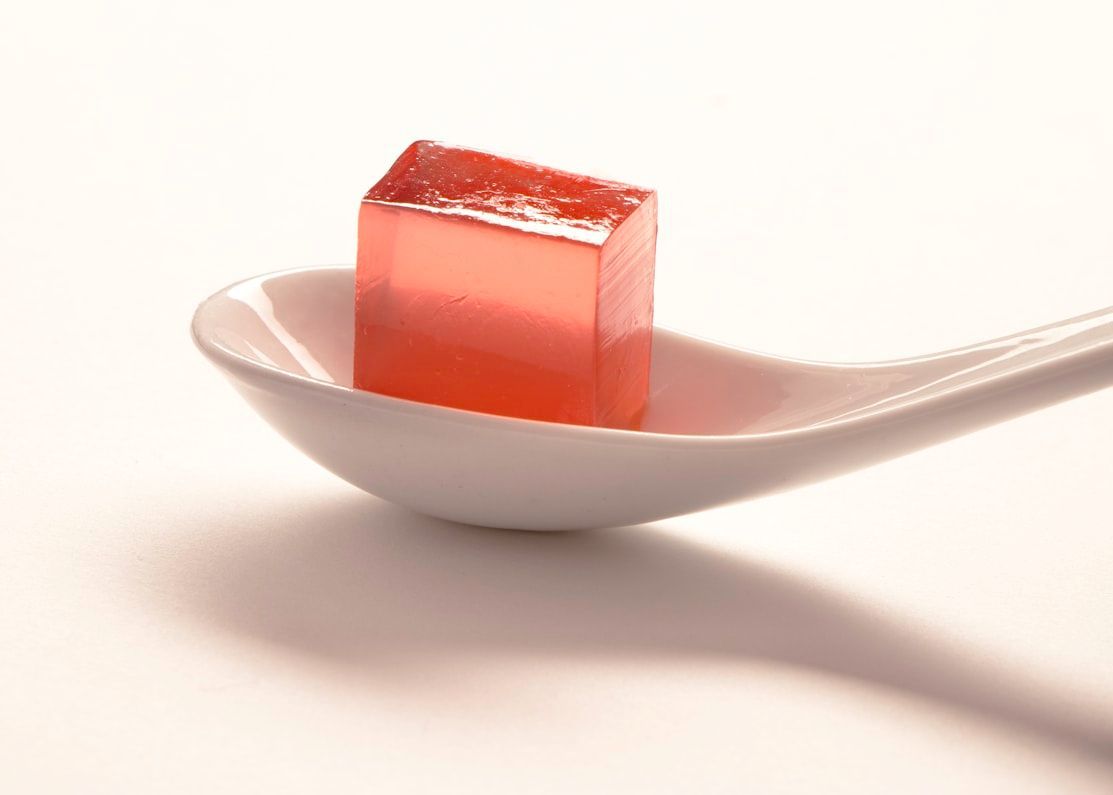
In 1845, Peter Cooper created a powdered gelatin, but it wasn’t yet a ready-to-use dessert. Decades later, in 1897, Pearle Bixby Wait and his wife, May, added sugar and fruit flavor, turning it into what would become Jell-O. In 1899, the couple sold their flavored gelatin product and business to their neighbor, Orator Francis Woodward, for $450 because it wasn't growing.

Until Woodward then built a strong marketing campaign, using free recipe booklets and traveling salesmen to show how easy it was to make, helping Jell-O grow in popularity. By the early 1900s, it was already a household name, and today, it’s known as one of America’s most famous desserts.

9

ChapStick

Image: OhTilly

Dr. Feet was a pharmacist in Lynchburg, Virginia, who opened his family-run pharmacy in 1869. He was known for creating remedies and experimenting with ingredients to help customers.

In the 1890s, he developed an early version of ChapStick. However, it wasn’t until his friends, Mr. and Mrs. Morton, who had already bought the product, refined the idea that the product took shape. Mrs. Morton melted the mixture and poured it into brass tubes to form sticks, making it easier to use and ready for wider distribution, turning the product into America’s easy-to-carry favorite for lip care to this day.

10

Xerox

Image: engin akyurt

In 1959, the Xerox 914 copier was introduced, allowing people to make plain-paper copies quickly, changing office work for good. How did it all start? Patent attorney Chester Carlson created the first xerographic image in 1938. He needed a simpler way to copy documents after studying imaging processes at the public library. At first, he called his method "electrophotography," because it used light and static electricity. After being rejected by more than twenty companies, his idea was finally picked up by the Haloid Company, when a consultant suggested the name "xerography," meaning "dry writing," to replace the original term.

After the success of the Xerox 914, Haloid Company renamed itself Xerox in 1961, turning the invention into a global business. The copier quickly became essential in offices, making document duplication faster and more accessible than ever before. As the technology spread, the brand name became so widely used that "to xerox" started to mean "to photocopy," until these days.

Looking for an extra scoop of literary fun?

Learn more with our Word of the day

initiative

/ɪˈnɪʃədɪv/