Bookworms reunite!

Six opening lines every reader should know, do you?


Published on December 14, 2025


Image: Thought Catalog

Don’t you just love a good puzzle? Let’s play a round with some of the most unforgettable first lines in literature. You’ll get a taste of the sentence that set the whole story in motion, plus a quick description of what’s ahead, but without spoiling the title just yet. Don’t worry, the answers are waiting for you further down. Settle in with a cup of coffee and see how many you can get right.

1

Line #1

Image: Olga Tutunaru

"It is a truth universally acknowledged that a single man in possession of a good fortune must be in want of a wife."

This tale begins in the English countryside, where money, marriage, and manners mix into a lively social dance. The plot follows daughters hoping to secure their futures, nosy neighbors, and a string of misunderstandings that continue to make readers smile centuries later.

2

Line #2

Image: Rey Seven

"It was a bright, cold day in April, and the clocks were striking thirteen."

Here we step into a chilling future where language is twisted, history is rewritten, and even private thoughts aren’t safe. The story follows one weary worker caught between his conscience and a system that demands absolute obedience. What book is it?

3

Line #3

Image: Olga Tutunaru

"Call me Ishmael."

The voice belongs to a man who signs on for an epic sea voyage. He joins a crew on a whaling ship, but the real focus is the captain’s dangerous obsession with one particular creature of the deep. The narrator watches it all unfold, with plenty of salt air, danger, and philosophy along the way. Did you guess it already?

4

Line #4

Image: Clay Banks

"It was the best of times, it was the worst of times…"

This famous opening sweeps us into Europe during a period of revolt and upheaval. In the middle of political storms, two very different men are drawn together by love and sacrifice. It’s a mix of history, tragedy, and hope packed into a sweeping tale that still resonates today. If you don’t know which book it is, keep scrolling and find the answer!

5

Line #5

Image: Sixteen Miles Out

"It was a pleasure to burn."

You probably know this one! In this dystopian world, books are outlawed, and firemen don’t put out flames; they actually start them. The main character loves his job at first, but soon starts questioning everything. His journey is one of rebellion, discovery, and danger.

6

Line #6

Image: Francesca Zanette

"All happy families are alike; each unhappy family is unhappy in its own way."

This story transports us to imperial Russia, with shiny ballrooms on one side and a private heartbreak on the other. At its center is one woman whose scandalous choices send shockwaves through her family and society. The novel balances love, betrayal, and tragedy in a way that continues to captivate readers today. Dare to take a guess? Now it’s time to find out the answers!

7

Book #1: Pride and Prejudice by Jane Austen
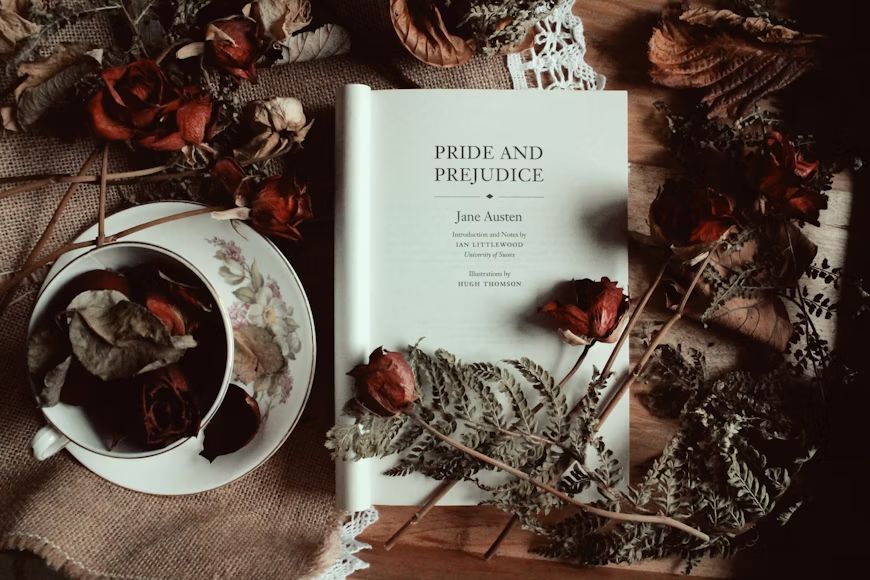
Image: Elaine Howlin

Elizabeth Bennet’s wit still enchants readers more than two centuries later. Austen uses humor and sharp observation to poke fun at social climbing, marriage expectations, and the limited options women had in 19th-century England. No wonder this book has never gone out of style, huh?

8

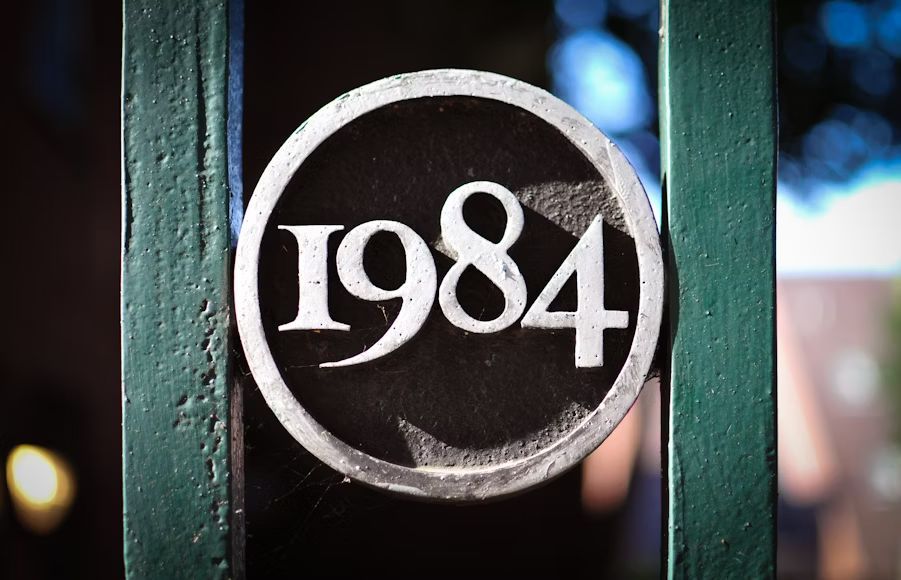
Book #2: 1984 by George Orwell

Image: Viktor Forgacs

That thirteen-o’clock moment instantly signals that something’s off. Orwell’s novel still feels eerily relevant, with its Big Brother surveillance, strict Party rules, and the constant manipulation of truth. At once a warning and a masterpiece of storytelling, it continues to haunt readers decades after its first publication.

9

Book #3: Moby-Dick by Herman Melville

Image: Eir Health

Ishmael’s short self-introduction kicks off one of America’s greatest novels. The real star, though, is Captain Ahab, whose obsession with the white whale drives the entire plot. Melville delivers an unforgettable blend of high-seas adventure, philosophical reflection, and haunting obsession.

10

Book #4: A Tale of Two Cities by Charles Dickens
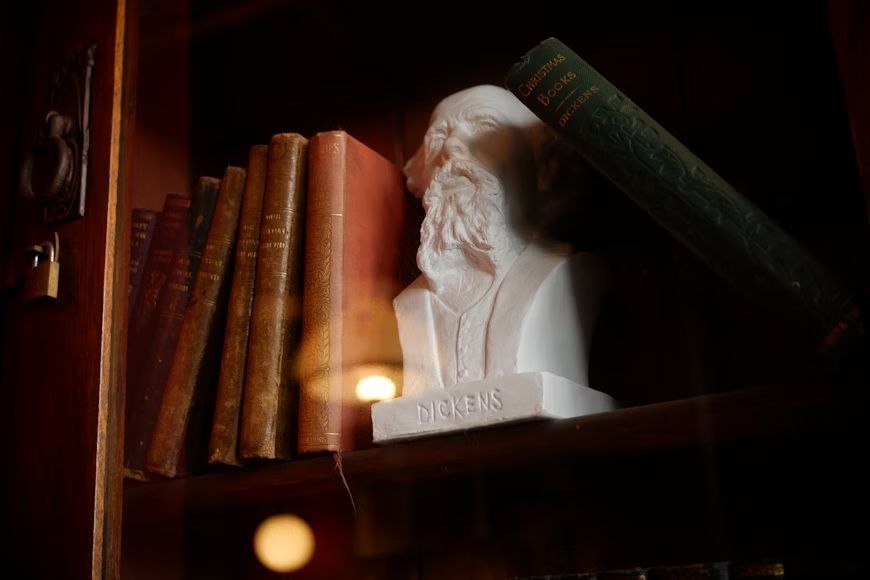
Image: Daniela Muntyan

Dickens contrasts London and Paris during the French Revolution, capturing both cruelty and courage. The famous first line sets the tone for the chaos of the times. And in the end, one character’s ultimate sacrifice delivers one of the most moving finales in literature.

11

Book #5: Fahrenheit 451 by Ray Bradbury

Image: Marvin Meyer

Guy Montag, the book-burning fireman, slowly wakes up to the emptiness of his world. Written in the 1950s, Bradbury’s novel eerily anticipates issues ranging from mass entertainment to censorship, delivering a timeless and powerful warning. Simply a masterpiece.

12

Book #6: Anna Karenina by Leo Tolstoy

Image: Europeana

Tolstoy opens with a sweeping truth about families, before delving into Anna’s personal tragedy. The novel blends love, betrayal, and questions of duty, all set against the backdrop of 19th-century Russian society. It remains one of the most ambitious and enduring novels ever written.


LINGUISTIC CONUNDRUM

Weltschmerz and More: The Beauty Behind 10 Untranslatable German Words


Published on December 14, 2025


Image: Bekky Bekks

Languages are a curious thing: No matter how different they are, we humans always find a way to understand each other. Translation has come a long way in making sure of that. However, it hasn’t covered all its gaps; some words remain untranslatable. In the German language, words like sturmfrei and verschlimmbessern (yep, that’s a word!) have no direct translation, but that doesn’t mean they are not describable. So, we’ve put together a list of ten German words with their funny descriptions, do you feel like learning German? Read on then!

1

Home Alone

Image: Allen Taylor

Here’s a word you can learn, but sure don’t want your children or grandchildren to learn. Sturmfrei literally translates to "when your parents are away, and you have the whole house to yourself."

The word describes a feeling, and based on its literal translation, one can assume it is a feeling of happiness, excitement, and why not, freedom. Specifically, the kind of freedom a teenager gets when their parents leave the house to their regard.

2

Mind The Details

Image: shawnanggg

This is a rather long word, but that is not an uncommon thing in the German language. This is because multiple meanings can be attached to a base, forming more complex meanings. In this case, verschlimmbessern means "to make things worse by trying to improve them."

However, it’s not used in the most common scenario of facing a problem and trying to bring about a solution that backfires. It refers to the consequence of obsession with perfection, which can ultimately be counterproductive. Trying to improve things over and over only to make everything worse… Who hasn’t been there?

3

Melancholia

Image: Cory

The complexities of the modern world can easily bring us down and we need to work on our mental health to win the battle day after day. Now, in German, there is a word that describes the apathy caused by the comparison of the current state of the world with an ideal state: that word is weltschmerz.

It describes that melancholic feeling that comes from realizing how hard living in the modern world is. Moreover, it includes an idealist aspect, the kind that hopes to live in an ideal world. When confronted with the realization of the impossibility of achieving such a world, weltschmerz comes into play.

4

Put Those Gloves On

Image: Kelly Sikkema

Another long word, and who would think such a specific situation was worth putting so many letters together? If you’ve ever played in the snow, you can relate to that awful sensation that comes from picking up the snow with your bare hands.

Well, in German, when you’re not brave enough to do that, you’re handschuhschneeballwerfer. This term means you are too afraid to pick up the snow with bare hands and resort to a glove to do so. Now, its literal translation is "glove snowball thrower." Quite specific, don’t you think?

5

Perfectly Perfect

Image: Sarah Brown

Perfection and obsession with details don’t always end badly, like with the words we discussed before. You can just be an erbsenzähler and that’s it. This word, an adjective, describes someone who is obsessed with details and a bit of a control freak, according to its literal translation.

In this context, the person can’t stand even the smallest detail being out of their control. So, if you think you fall into this category, you might want to think again. "Erbsenzähler" is a compound word and, its literal translation includes the words "peas" and "count!"

6

Language Master

Image: Unseen Studio

Speaking of German words, this term represents its essence perfectly. However cool it sounds, this word is part of this list because it has no direct equivalent in English. Here is what it means: Sprachgefühl refers to someone who loves learning a new language and is obsessed with fully grasping its grammatical nuances.

If you decide to study German after reading this article, then you could be described as a sprachgefühl: a unique word for a unique interest!

7

Tall Enough

Image: MI PHAM

If you thought the previous ones were weird, wait until you hear about this one! Dreikäsehoch when translated literally, means "three cheese high." And we’re sure you will never guess what it means, so here is the explanation.

The word simply describes an undersized child, that is, a child who is not tall enough for their age. It is an adjective used to describe that situation. Now, if cheese has nothing to do with it, how did it come to be part of the word? Think of it this way: The kid is not taller than three cheese rolls piled one on top of the other. Talk about untranslatable words!

8

Hands up!

Image: Nathan Bingle

Have you ever been caught red-handed? You start sweating and your brain instantly tries to come up with answers for all those questions that are coming your way. Now, that is erklärungsnot. Having to explain yourself quickly.

Even if it lacks a one-on-one translation, this word is quite transparent. It is used to describe the immediacy of a situation in which you have to come up with answers to explain what you were caught doing.

9

Blank Space

Image: Afif Ramdhasuma

If we said that treppenwitz means, literally, "a staircase joke," would you understand its meaning? If not, let us enlighten you.

A treppenwitz refers, once again to a very specific scenario: Imagine someone makes a joke or a witty comment, and you are left speechless, unable to figure out what to say in response to sound just as smart or funny. Can you see where we are going? After the moment has passed, your brain comes up with the perfect response, but it is just too late to say it. That moment right there is treppenwitz. Frustrating, isn’t it?

10

Damaged Goods

Image: Seb [ P34K ] Hamel

This word is indeed untranslatable, but we’re sure it’s not in your best interest for anyone to find a translation of it if they are talking about you.

Schadenfreude translates to "damage joy," and it describes the feeling of happiness that comes from seeing another person fail, or enjoying someone’s distress.

The German language knows that getting any joy out of another person’s misery is simply wicked. Good for them!

Looking for an extra scoop of literary fun?

Learn more with our Word of the day

loot

/lut/