Let’s get candy!
You'll never guess which iconic chocolate bar honors a horse
Published on September 21, 2026
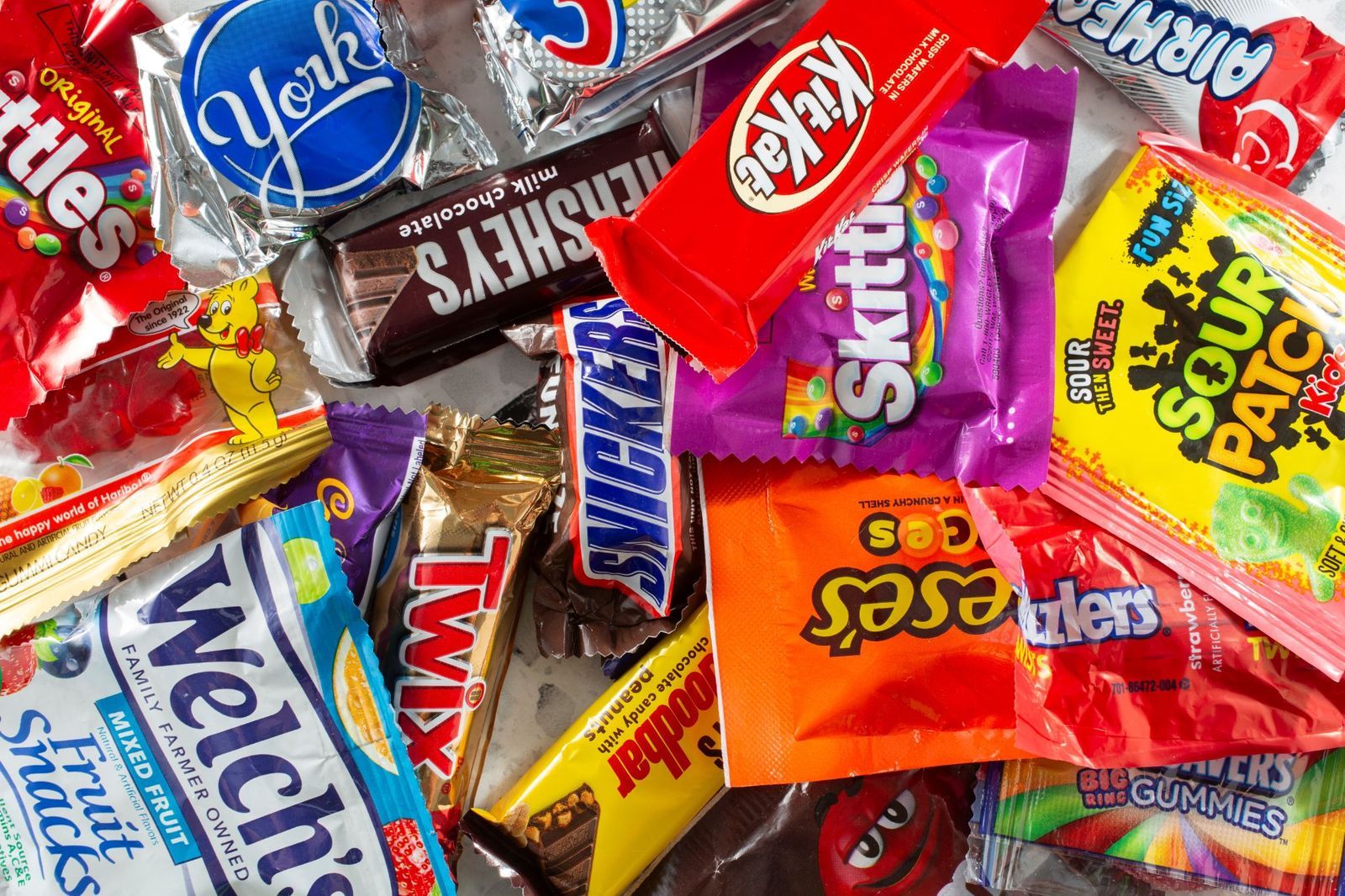
You may bite into a Milky Way bar and think of stars, when it’s really about an old-fashioned milkshake. Maybe it’s Life Savers you like but don’t know that their name refers exactly to the object they resemble. Candy names have some intriguing stories behind them: a beloved horse, a president's daughter, a boy who charmed the girls at the corner shop. Grab your favorite treat, and read about 10 confectionery brands and why they are called that.
Baby Ruth
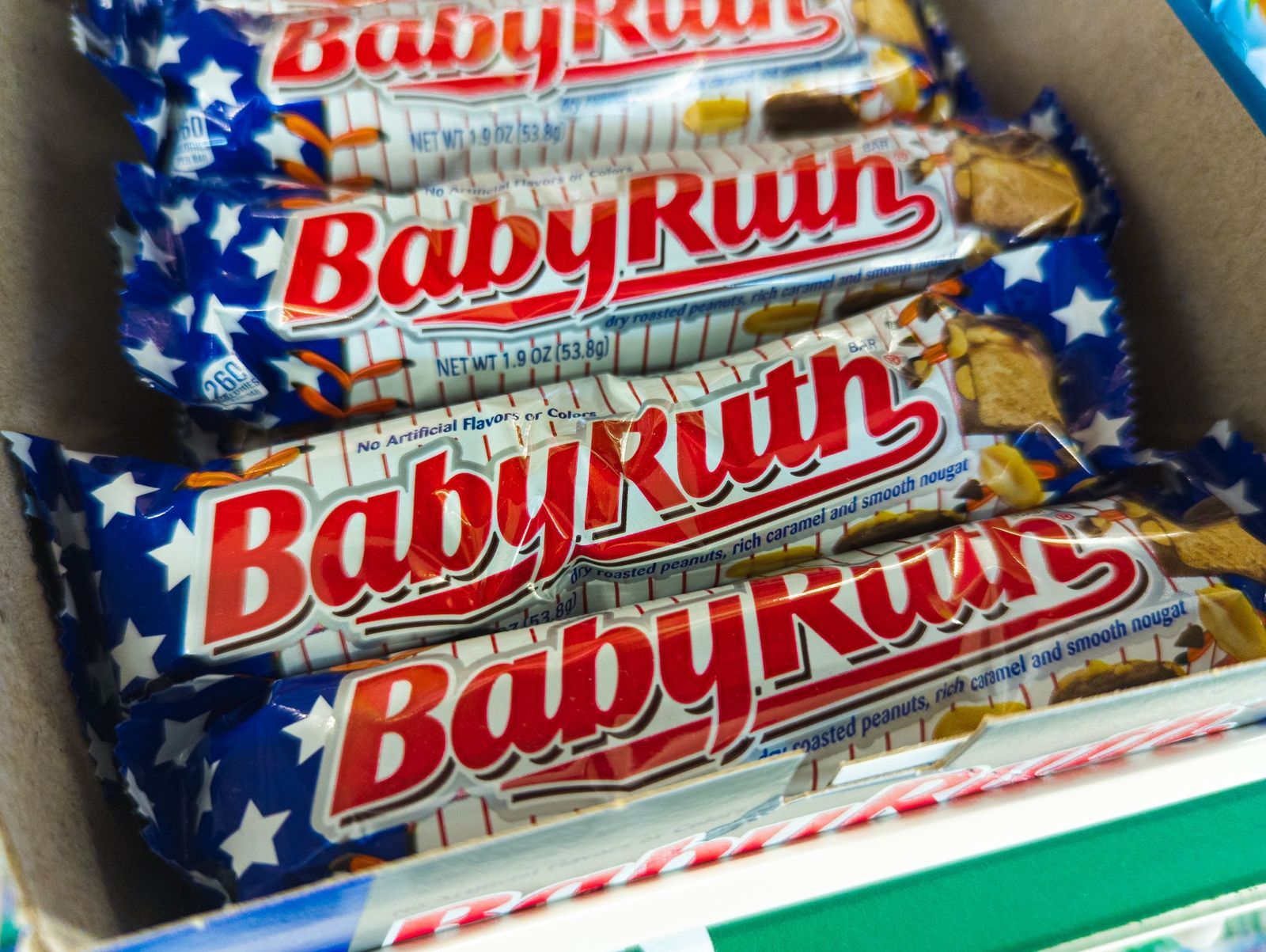
Few candy names have sparked as much debate as Baby Ruth. When the Curtiss Candy Company relaunched its Kandy Kake as Baby Ruth in 1921, baseball legend Babe Ruth was in the middle of a record-setting season, having just hit 54 home runs the year before.
Naturally, everyone assumed the candy was cashing in on his fame. But Curtiss always insisted otherwise, claiming the bar honored Ruth Cleveland, the daughter of former President Grover Cleveland, who had died of diphtheria back in 1904 at just 12 years old. Skeptics point out the timing seemed suspicious, especially since Curtiss's factory sat on the very same Chicago street as Wrigley Field. When the real Babe Ruth tried to sell his own candy bar in 1926, Curtiss took him to court over the name and won. To this day, the company has never had to pay him a cent.
3 Musketeers
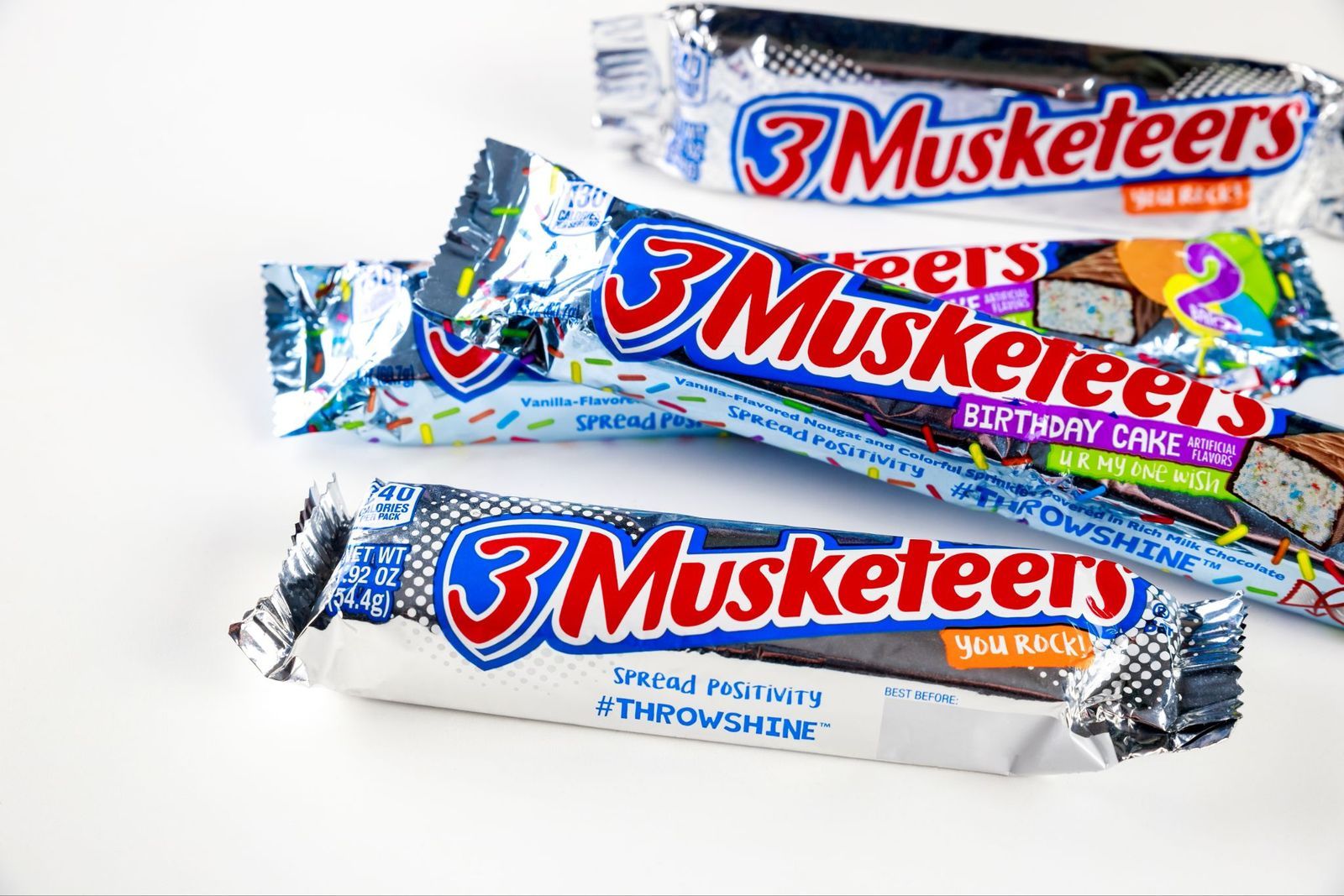
When Mars, Incorporated launched the 3 Musketeers bar in 1932, right in the middle of the Great Depression, it wasn't one candy bar at all. It was three separate mini bars in a single wrapper, one flavored chocolate, one strawberry, and one vanilla, a nod to Alexandre Dumas's classic novel, The Three Musketeers.
At just five cents, families could split the three flavors between them, which made the bar an instant hit during hard economic times. Everything changed a decade later. When the United States government rationed sugar during World War II, Mars could no longer justify producing three separate nougat flavors. The company kept only the most popular one, chocolate, and reshaped it into the single, larger bar recognized today. The name stuck around even after two of its three namesakes disappeared from the wrapper.
Snickers
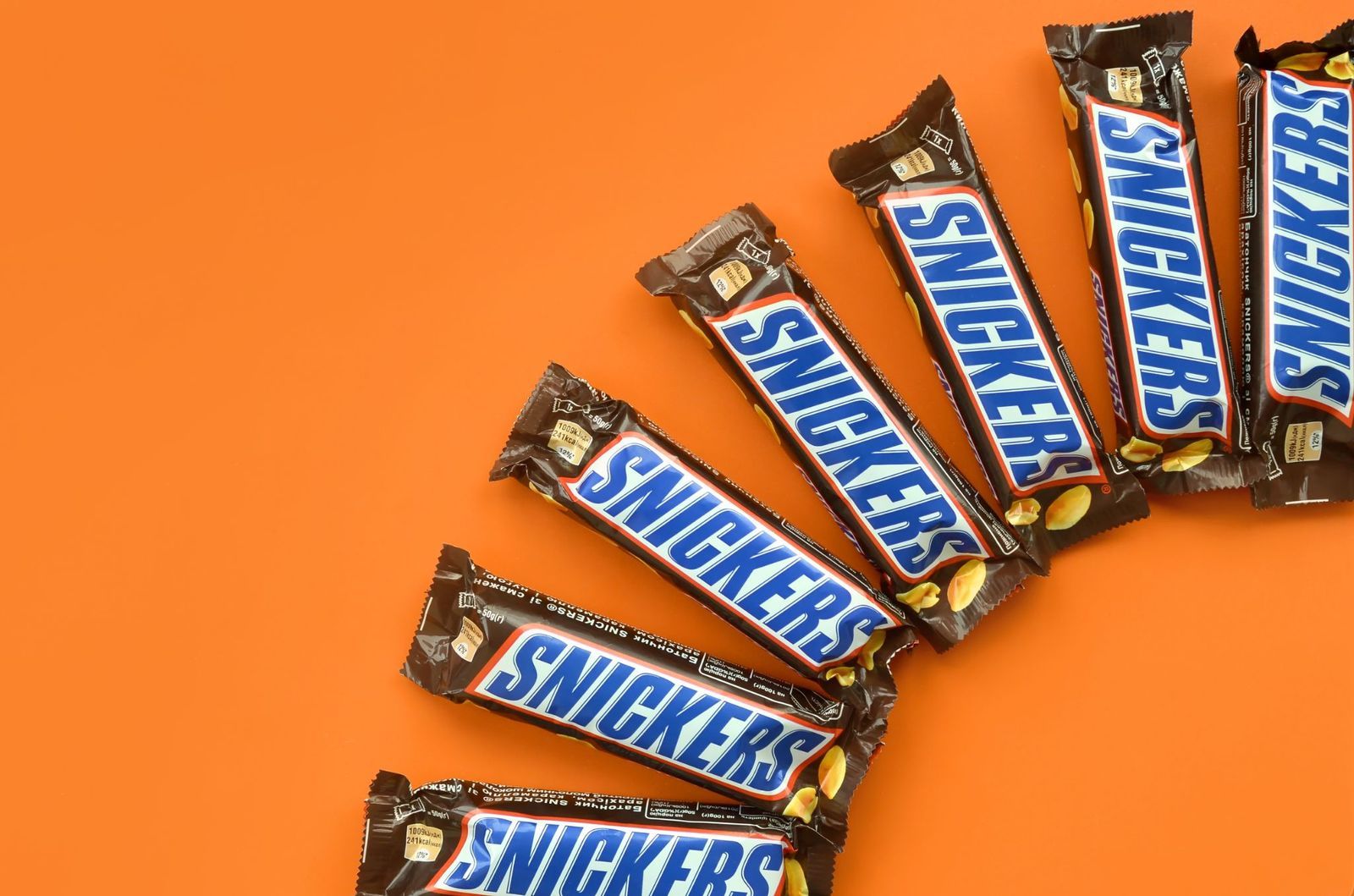
The story behind Snickers begins not with chocolate, but with a horse. In 1930, Frank and Ethel Mars owned Milky Way Farm, a sprawling 2,800-acre property in Pulaski, Tennessee, where they raised prize Thoroughbred racehorses. One of their favorites was a horse named Snickers.
Around the same time, the Mars candy company was preparing to launch a new bar combining nougat, caramel, peanuts, and milk chocolate, and it still needed a name. According to family accounts, Snickers the horse died shortly before the bar's debut, and the Mars family decided to honor their beloved animal by naming their new candy after him. The bar has kept that name in the United States ever since, though in the United Kingdom it was oddly sold as Marathon until 1990, when Mars finally unified the branding for most countries.
Milky Way
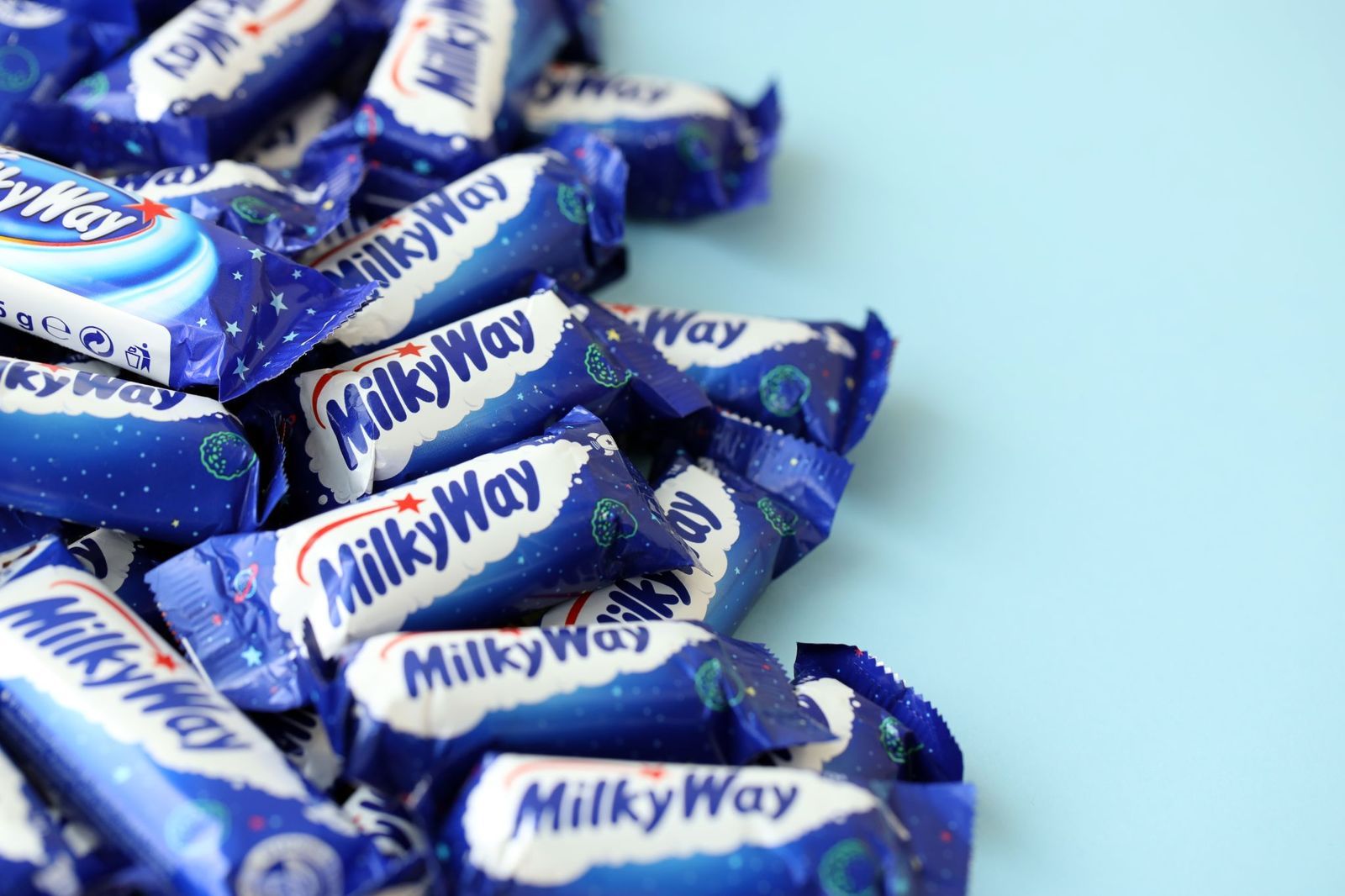
Back in 1923, Frank C. Mars ran a modest candy operation out of Minneapolis, Minnesota. His son Forrest, reunited with his father after years of a strained relationship due to his parents’ divorce, suggested turning a popular soda fountain treat, the malted milkshake, into something you could carry in your pocket. Frank combined whipped nougat with malt flavoring, and the Milky Way bar was born.
Many assume the name pays tribute to the galaxy, especially given the family surname, Mars. But the real inspiration was far closer to home: the taste and name came straight from those creamy malted shakes soda jerks were slinging across America at the time. The bar was such a hit that it grossed roughly $800,000 in its very first year, which equals roughly $15.6 million today. The chocolate remains the oldest candy bar still made by Mars, Incorporated.
Butterfinger
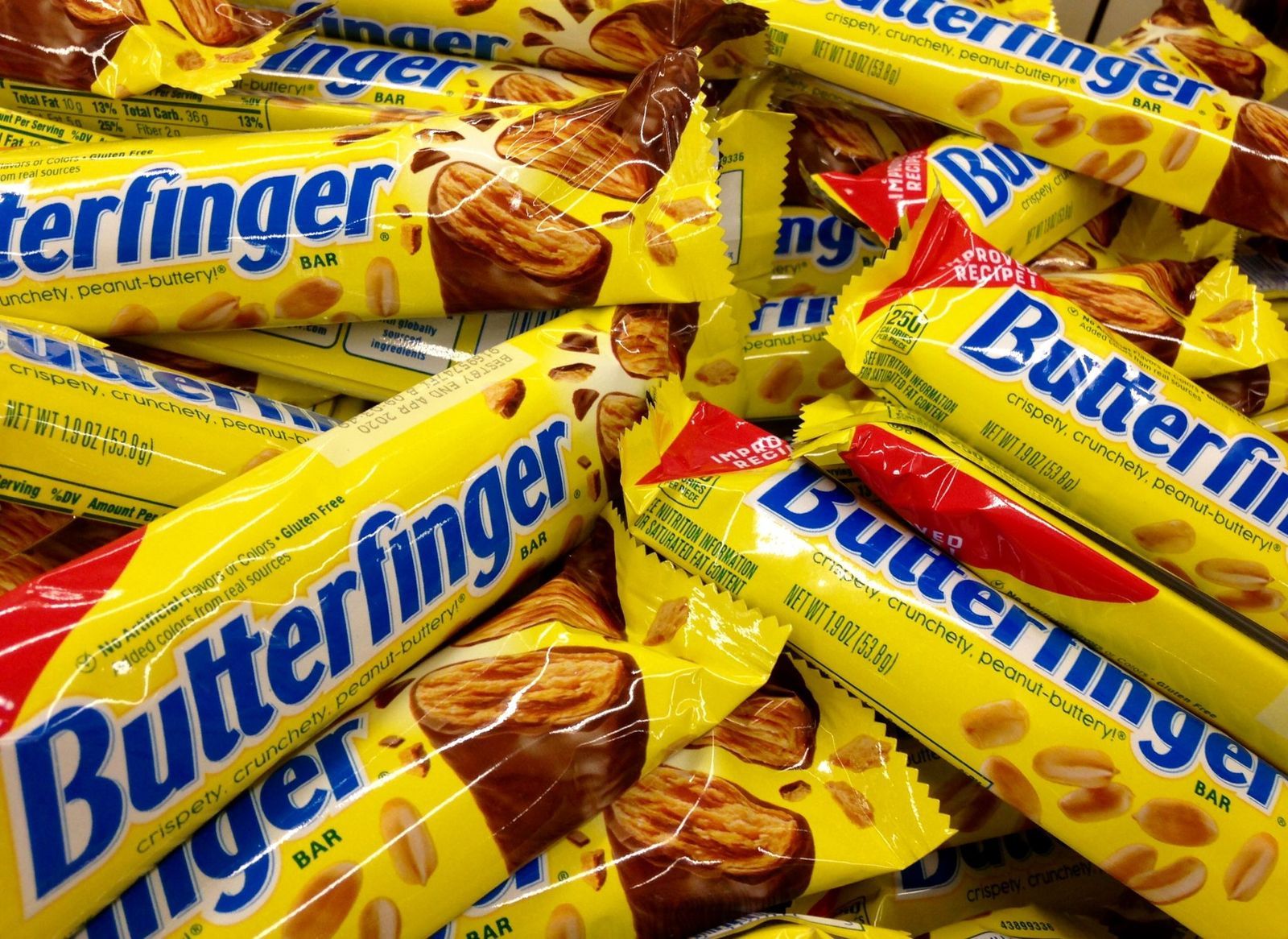
In 1923, the Curtiss Candy Company of Chicago, Illinois, needed a name for its new chocolate-covered peanut butter bar, so founder Otto Schnering did something unusual: he asked the public.
The company launched a naming contest through mail-in entries, and a participant from Chicago suggested Butterfinger, borrowing a term sportscasters used for baseball players who couldn't hold onto the ball. The name stuck immediately. Schnering, who had already scored a hit with the Baby Ruth bar, leaned into showmanship to promote his new candy. He famously had airplanes drop thousands of Butterfinger bars, each rigged with a tiny parachute, over American cities like New York and Atlanta. Nearly a century later, the bar's crispy, flaky center is still instantly recognizable, even if most people eating one today have no idea it's named after a baseball insult.
Junior Mints
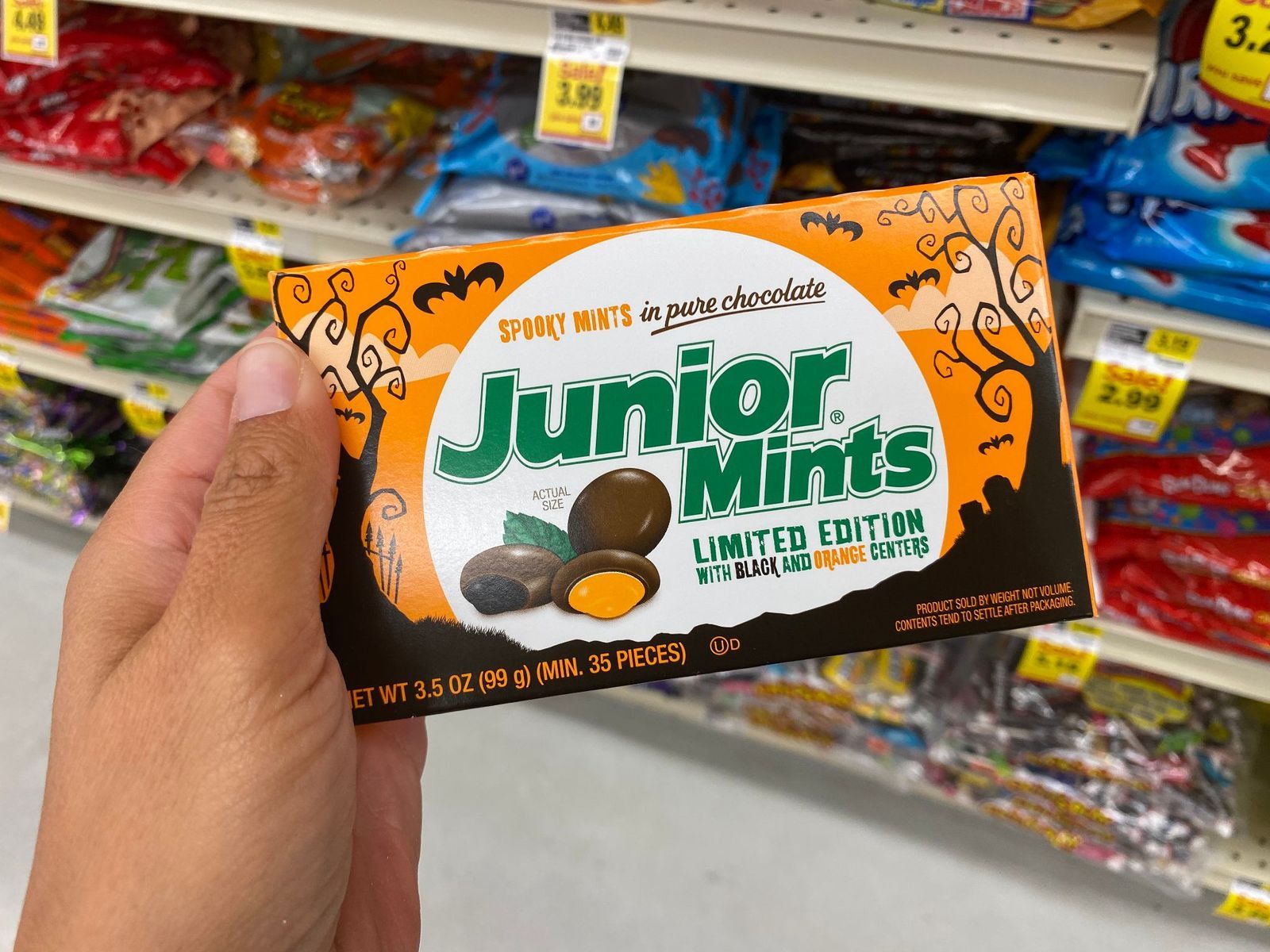
In 1949, candy maker James O. Welch was ready to launch a new chocolate-covered peppermint from his company in Cambridge, Massachusetts.
For the name, he reached back to a personal favorite: Junior Miss, a Broadway play based on Sally Benson's New Yorker stories, which had run from 1941 to 1943 and even inspired a radio show starring Shirley Temple. Even though the play had already closed six years earlier, this was his way to honor it. Food chemist Charles Vaughan, who also created Sugar Babies for the same company, was the one who actually developed the chocolate-covered mint.
KitKat
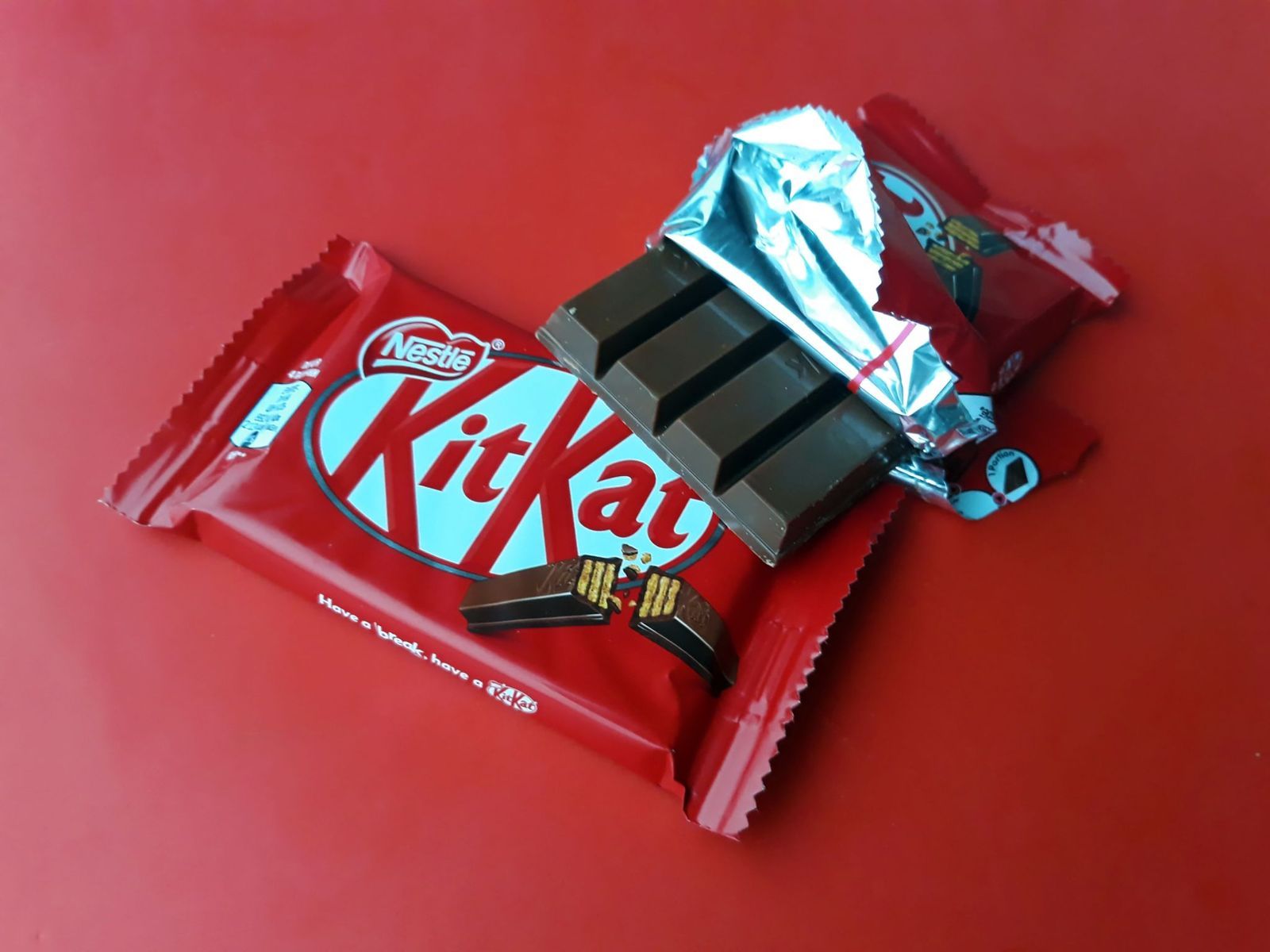
Long before it was a chocolate bar, Kit Kat was a mutton pie. In early 1700s London, a pastry cook named Christopher Catling ran a pie house on Shire Lane near Temple Bar, where his savory pies, nicknamed Kit-Kats after his own nickname (a nod to his own name), became so popular that a gathering of politicians from the Whig party and writers started meeting there regularly. They eventually became known as the Kit-Cat Club.
Two centuries later, in 1911, the English candy company Rowntree's trademarked the names Kit Kat and Kit Cat, likely as a nod to that historic club. The chocolate wafer bar itself, originally called Rowntree's Chocolate Crisp, didn't take on the Kit Kat name until 1937. It was a clever way to tie a new treat to old British tradition.
Hershey’s Kisses
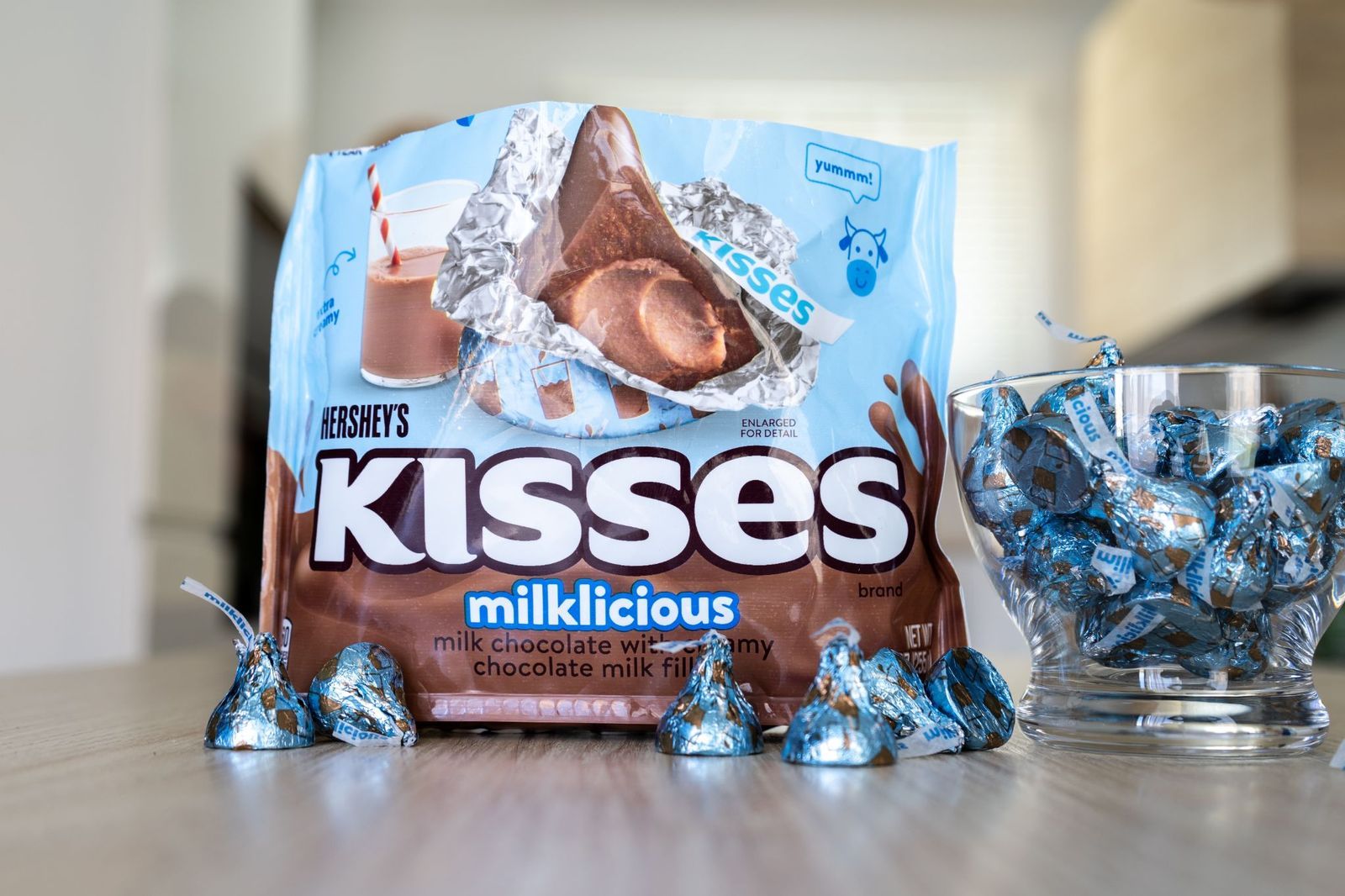
When Hershey's introduced its little chocolate drops in 1907, the candy needed a name that matched its size and shape. The most repeated explanation involves the factory machines themselves: as they dropped dollops of chocolate onto a moving conveyor belt, the motion and sound reportedly resembled a smacking kiss, and the name Hershey's Kisses was born.
However, the word "kiss" was simply common candy-making slang at the time for a small, bite-sized treat, so the truth may be a little less romantic than the story suggests. What's certain is that the Kisses were originally wrapped by hand until 1921, when a new machine automated the process and added the paper plume, that little strip peeking out of the foil, so shoppers could tell a genuine Hershey's Kiss from a copycat. Milton Hershey trademarked the shape in 1924, and the candy has barely changed since.
Oh Henry!
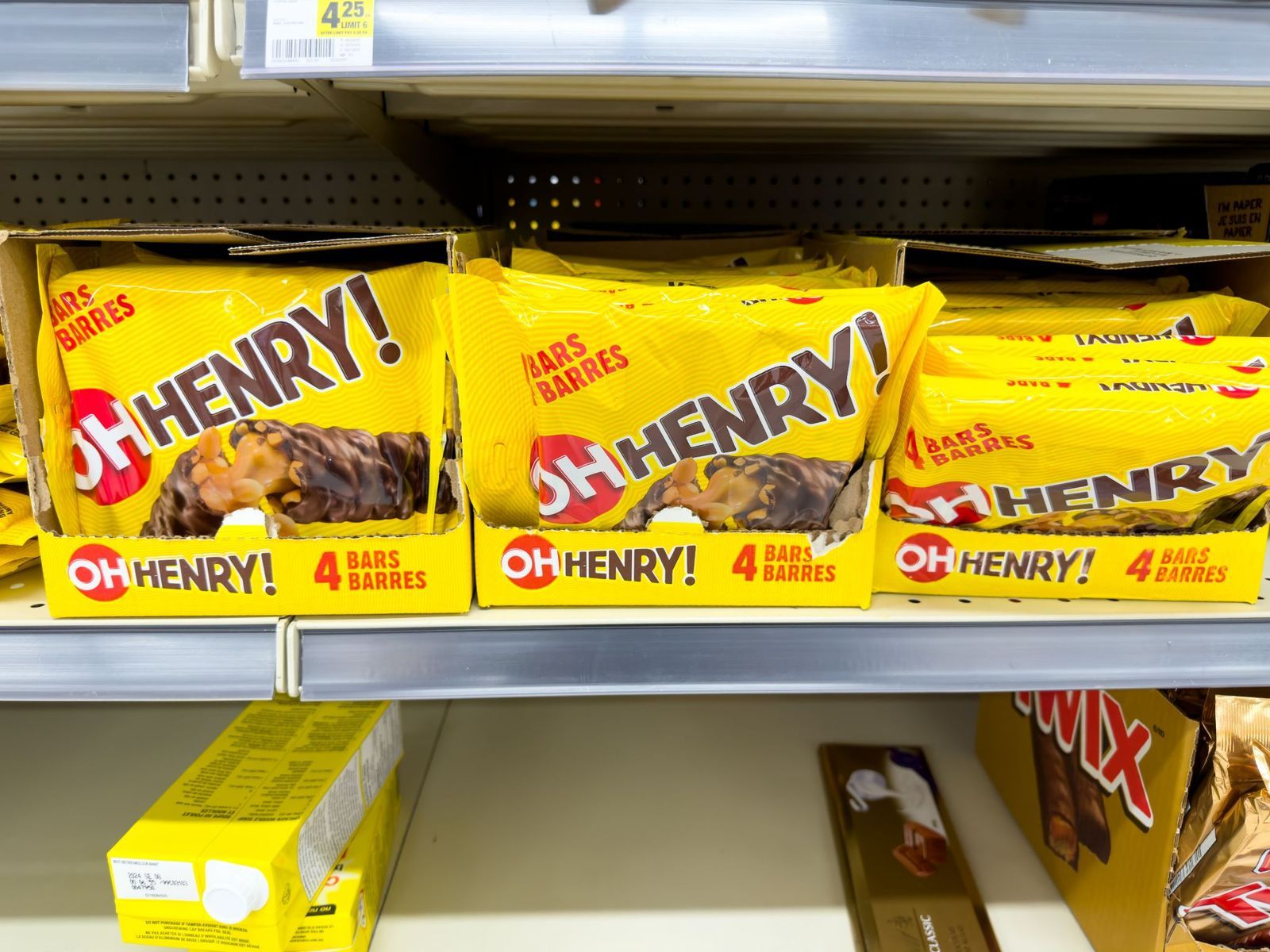
According to company legend, the Oh Henry! bar owes its name to a charming young man named Henry who used to stop by George Williamson's candy shop in Chicago sometime around 1920.
Henry became a favorite of the young women working behind the counter, who often sent him on errands, calling out "Oh, Henry!" whenever they needed his help. Williamson supposedly overheard the phrase so often that he decided to name his new peanut, caramel, and fudge bar after it. Not everyone buys the story, though. Some chocolate buffs believe the bar actually started as the Tom Henry Bar, invented by a candy maker in Kansas and later sold to Williamson, who simply renamed it. Whichever version is true, the Williamson Candy Company trademarked Oh Henry! in 1922, and the catchy exclamation has stuck around for more than a century.
Life Savers
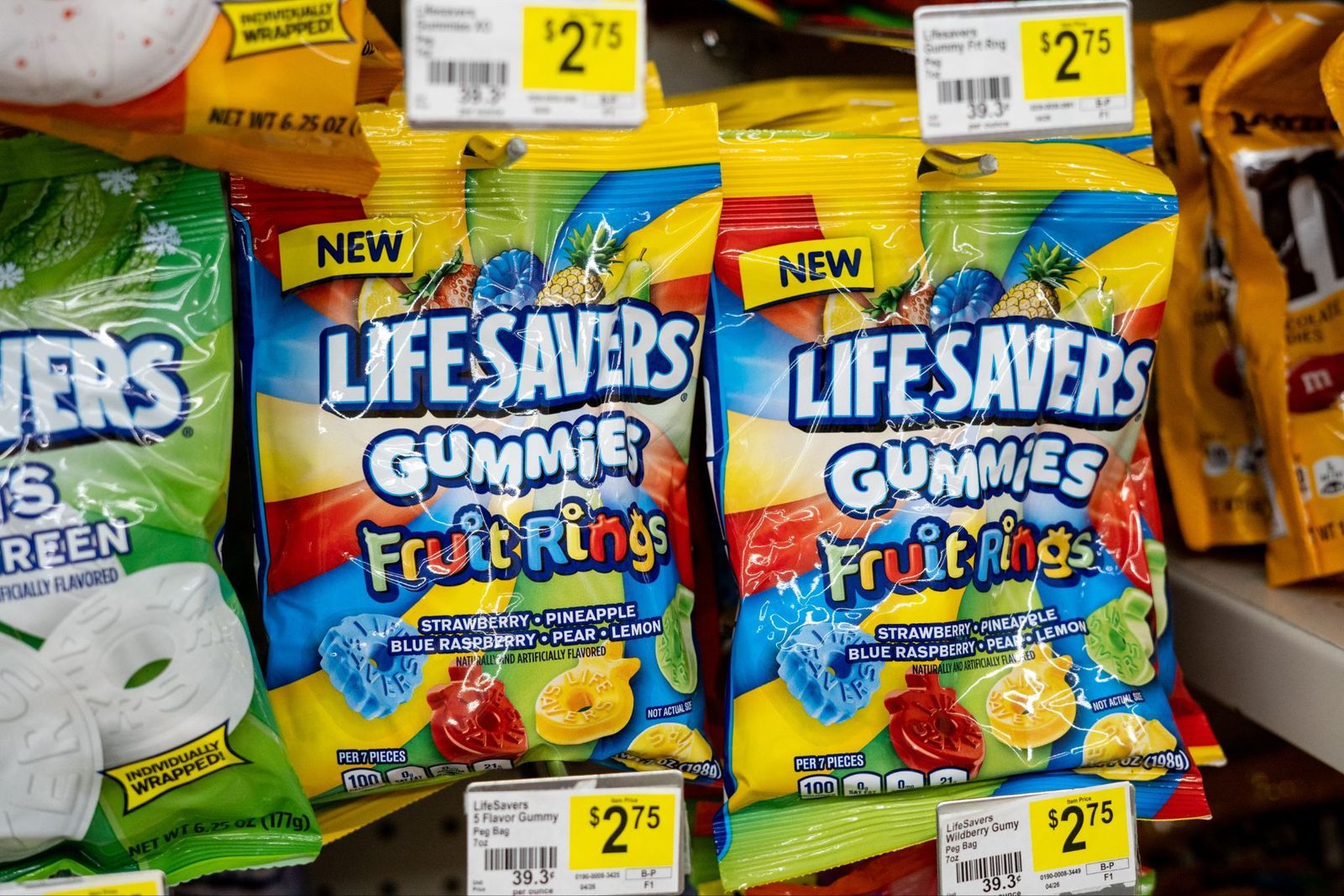
In the summer of 1912, Cleveland chocolate maker Clarence Crane had a problem: his chocolates kept melting in the heat, and sales always dropped once summer arrived.
Looking for a candy that could survive warm weather, Crane borrowed an idea from an unlikely source, a pharmacist's pill-making machine, which pressed round, flat tablets instead of the square mints then popular in Europe. The machine happened to punch a small hole through the center of each mint. Rather than see it as a flaw, Crane noticed the shape resembled a ring-style life preserver used on ships, and he named his new peppermint candy Life Savers. He sold the rights just a year later, in 1913, to businessman Edward Noble for $2,900 —something close to $100,000 today— who switched the packaging to tinfoil and turned it into one of the best-selling candies in American history.