One of these things is not like the others

Produce in disguise: 10 fruits and vegetables that are not what they seem


Published on December 10, 2025


Image: Alexandr Podvalny

The classification of food can be challenging because it often relies on subjective criteria. Not everyone utilizes ingredients in the same way or for the same purposes, so how we see these items is influenced by cultural and social factors.

An example of this is what produce we consider to be a fruit, a vegetable, or a nut, which doesn’t always align with its botanical classification. Let’s look at some fruits and vegetables that are not what they seem to be.

1

Tomato

Image: Dan Gold

Let’s start with a classic. Most people know that tomatoes are a fruit commonly used as a vegetable (The U.S. Supreme Court once had to rule on this due to customs regulations). They have seeds surrounded by a fleshy pulp. But did you know that tomatoes are actually berries? Botanically, ‘berry’ is used for all fruit without a pit or stone where each flower develops into a single fruit.

Tomatoes are part of the Nightshade family, meaning they are related to chillies, potatoes, and the tobacco plant.

2

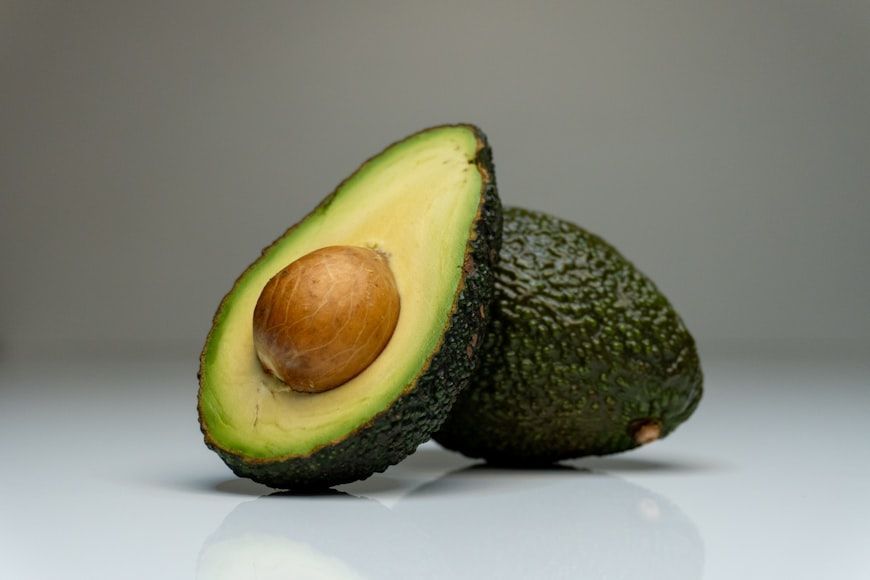
Avocado

Image: John Vid

This one is for all the avocado toast lovers: Avocados are a fruit. A berry, more specifically. While in Western countries avocados are used in savoury preparations, many cultures around the world use them in desserts and sweet drinks.

But aren’t berries fruits without a stone? One would think that the stone is hard to miss in this case. Botanists are still arguing on this one, but the general consensus is that the avocado seed does not fulfill the requirements to be considered a stone. Some common plants that you might not know were related to the avocado are the bay laurel and the cinnamon tree.

3

Peanut

Image: Ashes Sitoula

A staple in the nut/dried fruit category, peanuts are neither fruits nor nuts in a botanical sense. They are actually the seed of a legume, but even then, they are unique because they are the only legume that develops underground.

Peanuts are classified and treated as nuts for culinary purposes, so people often think that a peanut allergy is the same as a nut allergy, but these are two very distinct (although dangerous) reactions. As part of the Fabaceae family, peanuts are related to soybeans, chickpeas, lentils, and peas.

4

Zucchini

Image: Mockup Graphics

Zucchinis are used as a vegetable, but they are multiseeded, fleshy, and have an edible outer layer. Rings any bells? That’s right, zucchinis are a type of berry. A member of the Cucurbitaceae family, they are relatives of cucumber, squash, watermelon, and the luffa (yes, the one used in the shower).

As an ingredient, zucchinis are usually harvested before they mature, because ripe zucchinis have tougher skin, harder seeds, and are bitter.

5

Corn

Image: Andre Ouellet

Also known as maize, corn is used in savoury and sweet preparations alike. Classified as a grain for culinary purposes, it is actually a grass that bears fruit. So, technically, corn is a fruit.

But where are the seeds and the skin? In the grass (Poaceae) family, each flower has a seed that fuses with the skin and forms a kernel. Other relatives that behave in the same way are wheat, rice, sugarcane, and barley.

6

Mushroom

Image: Transly Translation Agency

Mushrooms are vegetables in a culinary sense, and a "fruit" body in a botanical sense, but they are neither vegetables nor fruits, because they are not plants. Culinary mushrooms are edible fungi, and as such, they have a totally different classification.

Mushrooms are not the only fungi that have culinary uses: other cases include yeast used for leavening or alcoholic beverages, fermented foods, or the mold used for blue cheese.

7

Rhubarb

Image: kaori nohara

Rhubarb is a vegetable, but is traditionally used for tarts, jams, and other sweet desserts. The only edible part of the plant is the stalk, as the leaves can be toxic.

Edible rhubarb is a hybrid, and it’s not closely related to other edible plants, although it is a distant relative of buckwheat.

8

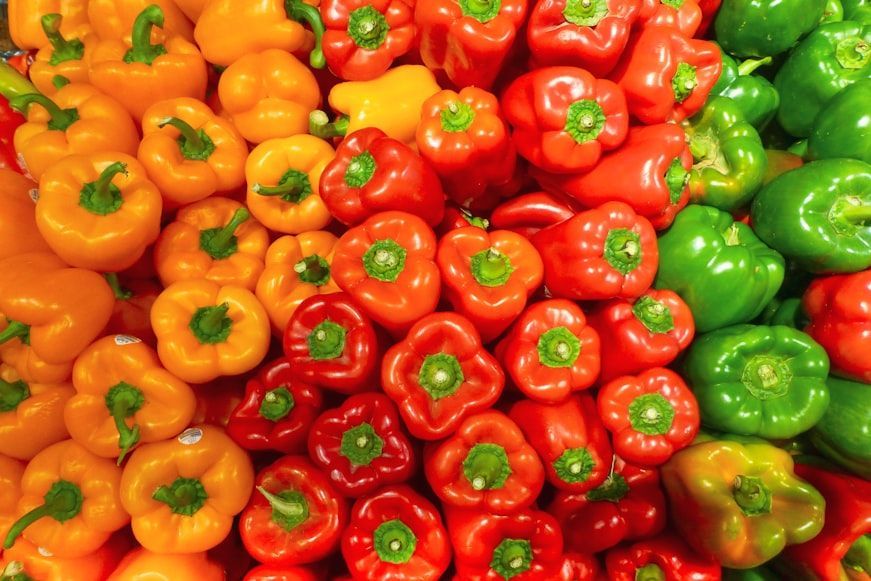
Bell Pepper

Image: Nick Fewings

Also called capsicum or sweet pepper, bell peppers are a berry of the Nightshade family (which makes them a relative of tomatoes and potatoes). Although they are classified as berries, they lack one of their main characteristics: instead of having seeds surrounded by fleshy pulp, plants in the capsicum species are hollow.

Fun fact: plants in the capsicum species have no relation whatsoever to the pepper spice, but they were given that name because Europeans used the word ‘pepper’ for all plants and spices that were pungent.

9

Strawberry

Image: Oliver Hale

Despite their name, strawberries are not berries in the botanical sense of the word, because they develop multiple fruits from each flower, and they don’t have seeds (even if they look like they do). Historically, the English language has used the word ‘berry’ for any small, brightly colored, and juicy edible fruit.

So, where do strawberries come from? They are a hybrid, and they belong to the Rosaceae family, which makes them a relative of apples, cherries, peaches, almonds, and roses.

10

Cashew

Image: Kischmisch

From a culinary point of view, cashews are classified as nuts. But nuts, in their botanical sense, are fruits protected by a hard shell that doesn’t open on their own. Cashews are actually drupes, or stone fruits.

In this case, what we eat is the seed of the cashew fruit. As a member of the Anacardiaceae family, cashews are related to mangoes, sumac, and (by a more recent classification) to pistachios.


BEHIND EVERY GREAT BRAND THERE’S A GREAT NAME

Take a Look at the Stories Behind 12 Big Brand Names


Published on December 10, 2025


Image: Kristian Egelund

The genesis of iconic brand names often involves a mixture of creativity, inspiration, and strategic vision. Incredibly successful companies like Apple, Coca-Cola, Nike, and Google have names that today are synonymous with their products but that was not the case when those names were chosen.

Unraveling the stories behind these brand names shows the intention, symbolism, and market positioning, showcasing the strategic acumen that underpins their enduring legacies.

1

Apple

Image: Jason Leung

The birth of the name "Apple" for the iconic tech company traces back to the fertile grounds of Steve Jobs' creativity. Co-founder Steve Jobs, known for his penchant for simplicity and innovation, chose the name as a departure from the prevailing trends in the tech industry dominated by complex and intimidating names.

Jobs envisioned a brand that would resonate with consumers on a personal level, evoking warmth, simplicity, and approachability. The choice also carried a personal touch, as Jobs had spent some time working on an apple orchard during his youth.

2

Starbucks

Image: TR

While the name "Starbucks" now conjures images of coffee culture, community, and global ubiquity, its origin is rooted in nautical history rather than caffeinated pursuits. Founded in Seattle in 1971 by three partners inspired by Moby-Dick, the name pays homage to the first mate on the ship Pequod, Starbuck.

This literary allusion captures the seafaring spirit of the brand's Pacific Northwest origins. The founders sought a name that conveyed the rich, seafaring tradition of coffee trading, and Starbucks resonated as an evocative and memorable choice. The maritime theme extends to the iconic logo, featuring a twin-tailed mermaid.

3

Facebook

Image: Timothy Hales Bennett

The name "Facebook" is now synonymous with social networking, but its origins can be traced back to a more unconventional source: college dormitories. Founded by Mark Zuckerberg in 2004, the name describes the platform's initial purpose: connecting students within a university's social circles.

The term "Facebook" itself refers to the printed directories universities distributed to students, containing photos and basic information about their peers. Zuckerberg's digital adaptation transformed this concept into a virtual space where people could share their lives, making the name a metaphorical extension of a real-world social directory.

4

Coca-Cola

Image: Mahbod Akhzami

The name "Coca-Cola" is a perfect testament to the brand's rich history and the fusion of its original ingredients. Conceived by Dr. John Stith Pemberton in the late 19th century, the beverage was initially marketed as a patent medicine, containing coca leaves and kola nuts.

The name "Coca" is a direct reference to the coca leaves, while "Cola" is derived from the kola nuts. The combination of these two elements not only gave the drink its distinctive flavor but also created a name that resonated with consumers.

5

Nike

Image: Wu Yi

The name "Nike" comes from ancient Greek mythology. Co-founder Phil Knight, a track and field athlete, and his business partner Jeff Johnson drew from the winged goddess of victory, Nike.

In Greek mythology, Nike symbolizes strength, speed, and triumph, aligning seamlessly with the ethos of the athletic brand. The swoosh logo, designed by Carolyn Davidson in 1971, further embodies the brand's spirit, representing movement and speed.

6

Adobe

Image: Szabo Viktor

The name "Adobe" is synonymous with digital creativity and design. It finds its origins in the co-founders' love for the Adobe Creek that ran behind the house of John Warnock, one of the company's founders.

In the context of the software giant, the name signifies the seamless flow of ideas and innovation in the realm of digital creativity. It captures the essence of the company's commitment to providing tools that empower individuals and organizations to create, express, and transform ideas.

7

IKEA

Image: Jueun Song

Founded in 1943 by Ingvar Kamprad, IKEA is an acronym that combines the founder's initials (I.K.) with those of Elmtaryd, the farm where he grew up, and Agunnaryd, his hometown.

The Swedish origin of the name adds a touch of Scandinavian flair, enhancing the brand's image as a global purveyor of well-designed, ready-to-assemble furniture.

8

Cisco

Image: Kvistholt Photography

The name "Cisco" itself is derived from the term "San Francisco," the city where the company originated. Its logo resembles the Golden Gate Bridge. Beyond its geographical symbolism, the name reflects Cisco's core mission: to act as a bridge, connecting people and information seamlessly.

The choice of a concise name aligns with the brand's commitment to simplifying complex networking solutions. Today, Cisco stands not just as a name but as a symbol of connectivity and innovation.

9

Amazon

Image: ANIRUDH

"Amazon" draws its inspiration from the world's second-longest river. Founded by Jeff Bezos in 1994, the name symbolizes the ambitious and expansive vision of the e-commerce giant.

The Amazon River, with its immense volume and diverse ecosystem, epitomizes abundance and variety. Bezos envisioned his company in a similar vein, aiming to create an online marketplace that offered an extensive array of products.

10

IBM

Image: Carson Masterson

Perhaps one of the most straightforward names on this list, the IBM acronym stands for International Business Machines Corporation. Established in 1911 as the Computing-Tabulating-Recording Company (CTR), the company evolved through mergers and acquisitions.

The name change to IBM in 1924 signified a strategic shift towards global computing solutions. The choice of the "International" part of the name emphasized the company's global aspirations, while"Machines" reflected its focus on manufacturing tabulating, and calculating machines.

11

eBay

Image: Giorgio Trovato


Few people know that "eBay" was initially named "AuctionWeb." However, as the site expanded beyond auctions to encompass a broader spectrum of online transactions, the name needed a change to reflect its evolving identity.

The founder Pierre Omidyar, inspired by the notion of an "electronic bay" where people could drop their goods and conduct business, coined the new name "eBay" in 1997. This moniker not only captures the digital essence of the platform but also emphasizes the idea of creating a virtual marketplace.

12

Google

Image: Mitchell Lou

A brand name as ubiquitous as Google originated as a misspelling of "googol", a mathematical term representing the number 1 followed by 100 zeros. Co-founders Larry Page and Sergey Brin chose this name in 1997 to convey their mission of organizing the vast amount of information on the internet.

The transformation from "googol" to "Google" not only showcased the company's playfulness but also its commitment to making immense amounts of data accessible and searchable.

Looking for an extra scoop of literary fun?

Learn more with our Word of the day

loot

/lut/