Ten bizarre inventions from the past that never caught on

People once caged babies several stories above the street


Published on March 1, 2026


Ever wonder what happened to all those "revolutionary" gadgets that promised to change our lives? Some ideas were just too weird, too early, or too wonderfully impractical to survive. Let's take a nostalgic trip through the patent office's hall of shame.

1

The baby cage (1930s)

Image: Beth Jnr

Back when fresh air was considered a cure-all, London parents who lived in apartments faced a dilemma: how to give their babies outdoor time without a yard? The solution was a wire cage that hung outside the window, suspending Junior several stories above the street. Parents would just pop the baby in the cage and go about their day.

Shockingly, this didn't catch on. Perhaps it was the image of infants dangling precariously over busy sidewalks.

2

The isolator helmet (1925)

Image: Mert Yüce

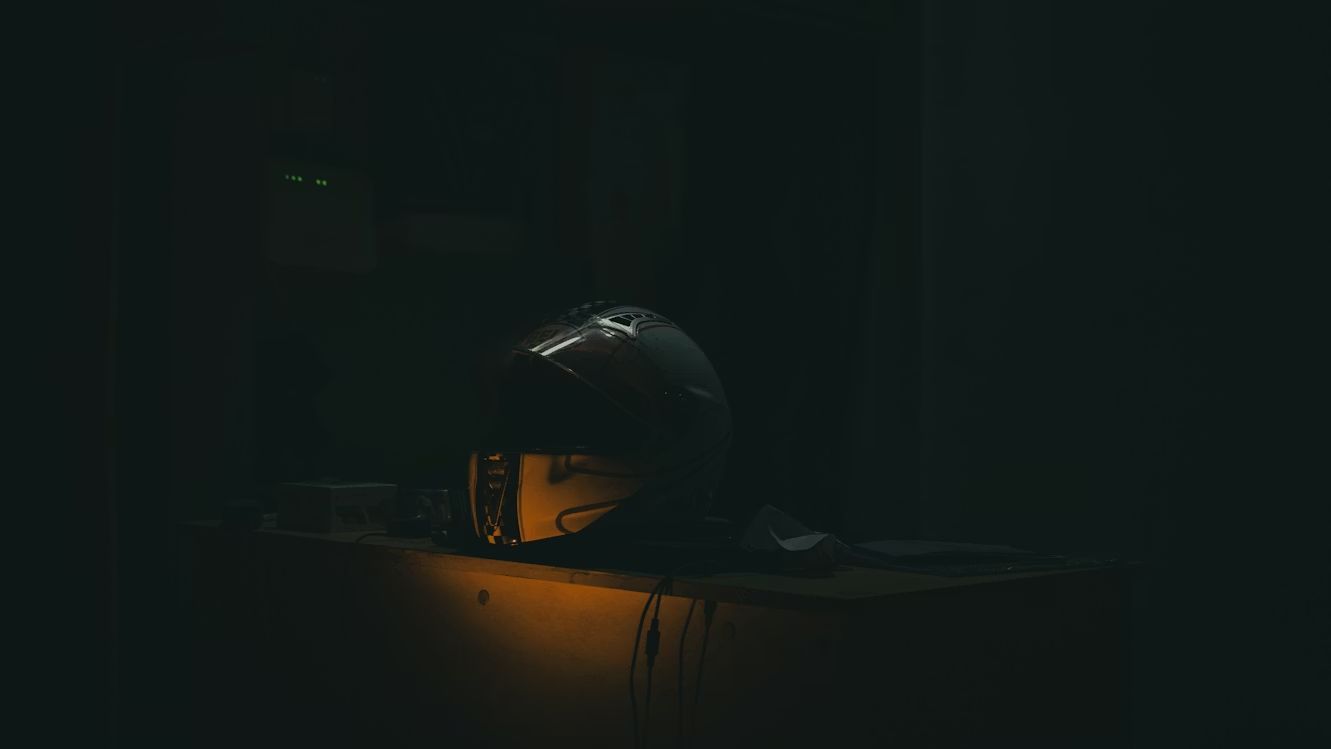
Imagine a giant goldfish bowl on your head, lined with cork, with only a thin slit to see through. That was the Isolator, designed to help people concentrate by blocking out all distractions. The inventor, Hugo Gernsback, thought sensory deprivation was the key to productivity. An attached oxygen tank let you breathe while you worked.

The problem? Looking like a deep-sea diver at your desk isn't exactly conducive to office camaraderie. Plus, trying to type while essentially wearing a fish tank proved impractical.

3

Motorized ice cream cone (1990s)

Image: Zach Camp

This battery-powered cone featured a small motor that rotated the ice cream for you, so you could just stick out your tongue and let technology do the rest. It was supposed to prevent drips and ensure even licking coverage.

The invention raised an important question: had we become so lazy that rotating our wrist was now an insurmountable challenge? Apparently, the answer was no. The motorized cone disappeared faster than ice cream on a summer day.

4

The Cyclomer (1930s)

Image: Suraj Chilamkruthi

This amphibious bicycle promised to let you pedal across lakes and rivers just as easily as riding down Main Street. It featured a boat-like hull and paddle wheels instead of regular tires. The inventor envisioned commuters cycling across waterways, avoiding bridge traffic entirely.

Unfortunately, the Cyclomer was heavy, slow on both land and water, and required the leg strength of an Olympic athlete to move at anything faster than a crawl.

5

Rejuvenation by goat gland transplants (1920s)

Image: engin akyurt

Dr. John Brinkley convinced thousands of men that transplanting goat testicles into humans would restore youth and vigor. For the bargain price of $750 (about $12,000 today), you could have surgery in his Kansas clinic and supposedly regain the vitality of your younger days.

Unsurprisingly, the procedure didn't work—goat glands don't function in human bodies. Brinkley eventually lost his medical license, but not before making millions.

6

The pedestrian catcher (1920s)

Image: Susan Gold

When cars first became common, someone invented a net-like contraption that attached to the front bumper to scoop up pedestrians before running them over. The idea was that the person would land safely in the net instead of under the wheels. It looked like an industrial-sized butterfly net.

The fatal flaw? Getting hit by a car and caught in a net is still getting hit by a car. Plus, the contraption made vehicles longer and harder to maneuver, probably causing more accidents than it prevented.

7

The piano for bedridden patients (1935)

Image: Beth Jnr

Picture this: you're stuck in bed recovering from illness, and what you really need is a full-size piano suspended over your body. That's what one inventor thought, anyway. The piano hung horizontally above the patient, who could supposedly play while lying flat on their back.

Beyond the obvious safety concerns of dangling a heavy musical instrument over sick people, there was the question of who actually wants to play piano while confined to bed.

8

Dimple-making machine (1936)

Image: bearinthenorth

In an era when dimples were considered irresistibly charming, someone invented a face-shaping device that promised to create them artificially. The contraption used springs and knobs to press into your cheeks for 15 minutes daily until dimples supposedly formed permanently.

It didn't work, of course—dimples are genetic, caused by variations in facial muscle structure. But that didn't stop people from trying.

9

The Hubbard Electrometer (1960s)

Image: Afif Ramdhasuma

L. Ron Hubbard claimed this modified lie detector could measure the electrical characteristics of your thoughts and help achieve spiritual enlightenment. Users held two tin cans connected to a meter while being asked questions. A needle supposedly revealed deep psychological truths.

Scientifically, it was just a simple ohmmeter measuring skin resistance—the same principle behind mood rings. But it cost considerably more and came with significantly more baggage.

10

The radio hat (1949)

Image: Nirmal Chaudhari

Why carry a portable radio when you could wear one on your head? This invention looked like a regular pint-sized baseball cap but contained a tiny AM radio with an antenna poking out the top. Earphones ran down to your ears, letting you listen to broadcasts while keeping your hands free.

The problem was that you looked absolutely ridiculous, like an alien trying to blend in at a baseball game. The reception was terrible, the batteries died quickly, and the whole contraption was uncomfortable.


TRAILBLAZERS IN ANIMATION

10 Saturday-morning cartoons that were loved for generations


Published on March 1, 2026


Image: Emre Turkan

Catchy theme songs. Universal visual gags. Ageless catchphrases. These cartoons have woven themselves into the fabric of our culture, and have brought giggles to parents, their children, and their grandchildren. They shaped the language of animation and left us with iconic characters and music that can spark old Saturday-morning nostalgia. Let's look into the history of 10 titles that charmed audiences and evolved into movies, park rides, and merch that still live in countless homes around the world.

1

Popeye the Sailor

Image: Jonathan MONCK-MASON

As is the case with many early animated cartoons, Popeye the Sailor was born in 2D. The comic strip he first appeared in, Thimble Theater, was created by Elzie Crisler Segar in 1919. Interestingly, Popeye’s famous love interest, Olive Oyl, was introduced 10 years before him. Once Popeye was drawn into Thimble Theater, though, he stole the show. Popeye became so popular that Fleischer Studios decided to produce a series of animated shorts about him.

The 1933 show was one of the trendsetters for the rotoscope technique, where animators traced over live-action footage to create more realistic movement. Popeye the Sailor was also one of the first cartoons to incorporate sound effects synchronized with on-screen actions. Segar eventually revealed that the character had been based on an eccentric retired sailor he had once known, called Frank "Rocky" Fiegel.

2

Looney Tunes

Image: Nate Biddle

Did you know that Looney Tunes was conceived as a strategy for Warner Bros. to promote its music catalog? It began as a series of shorts in 1930 and so, Bugs Bunny, Daffy Duck, Porky Pig, and many others were born. Looney Tunes became legendary for its use of humor and storytelling.

It introduced a faster-paced, more dynamic style of animation. We still remember the chattering, speedy speeches of many of these characters and some of their catchphrases, like "What's up, doc?", "That's all, folks!" or "¡Andale!". The series also established the device of "personality animation," where characters had signature moves, mannerisms, and quirks, setting the standard for character-driven style in the industry.

3

Tom & Jerry

Image: Teresa Jang

It all began with a mouse and a cat. Tom & Jerry was created by animators William Hanna and Joseph Barbera, who developed the series for Metro-Goldwyn-Mayer in 1940. The collaboration was so successful that it marked the beginning of one of the most enduring partnerships in animation history: Hanna-Barbera Productions. Remember that name.

Tom & Jerry was visual and musical storytelling, relying heavily on slapstick humor, with minimal dialogue, allowing physical comedy and expressive animation to drive the narrative. This focus on action and visual gags made Tom & Jerry universally appealing to audiences regardless of their mother language. Over time, it won seven Academy Awards for Best Animated Short Film.

4

Mickey Mouse & Friends

Image: Rod Long

Mickey Mouse & Friends is what the series of original Disney shorts are popularly called. From 1928 to the present, the characters created by Walt Disney and Ub Iwerks have been cemented as some of the most iconic cartoons of all time. Since its inception, the series was a trailblazer in animation for its pioneering use of synchronized sound in Steamboat Willie, one of the first cartoons to feature a fully synchronized soundtrack. Walt Disney was soon established as a leader in the animation industry and technology.

The popularity of Mickey and his friends led to the creation of countless shorts, feature films, and television series that are still recreated and watched today. Mickey Mouse's iconic status was further solidified when he became the first animated character to receive a star on the Hollywood Walk of Fame in 1978.

5

The Flintstones

Image: Bekir Uğur

The renowned cartoon about two families in the Stone Age was one of the creations of Hannah-Barbera Productions. It premiered in 1960 as the first prime-time animated television series. The Flintstones paved the way for many other animated shows aimed at adults. To give an idea, The Flintstones was the first animated show to feature a married couple sharing a bed on-screen.

At its heart, this show was a sitcom. It was modeled after The Honeymooners, also consisting of scenes from a suburban family, but adapted to a prehistoric setting. The show’s success proved that animated series could attract an adult audience in prime time, which was a significant departure from the children’s programming that dominated the landscape at the time.

6

The Jetsons

Image: Aleksandar Pasaric

The Jetsons was another of Hanna-Barbera Productions’ prodigal children. It premiered in 1962 with a concept deriving from the success of The Flintstones. This time, the suburban family scenes would be set in a utopian space-age world. The Jetsons offered a satirical yet optimistic view of the future, with flying cars, robot maids, and advanced technology.

The producers decided to emphasize the vibrant, high-tech world they were painting by broadcasting the show in color. This was rather new. While The Flintstones was also produced in color, it aired in black-and-white during its first two seasons. The Jetsons wasn’t a hit at first and was canceled after one season owing to low numbers, while it competed with Walt Disney's Wonderful World of Color. In the 80s, ABC came up with the idea to move the show to Saturday mornings, where it achieved widespread success and stayed on that schedule for decades.

7

Scooby-Doo, Where Are You!

Image: Nik

The original premise for the show was a musical group touring around the country in their van, accidentally solving mysteries (a twist on the by-then-famous The Archie Show). That’s why their talking dog, Scooby-Doo, was named after Frank Sinatra’s scat line, doo-be-doo-be-doo. Although the musical angle was dropped, the villain-unmasking group of teenagers still became legendary.

Scooby-Doo, Where Are You! was released as a Saturday morning CBS show in 1969 to compete with the violence of superhero cartoons. Since then, the original episodes, along with spin-offs and revivals, have lived on. It became a trailblazer for being one of the first animated mystery series, blending winks to supernatural horror, comedy, and adventure.

8

The Pink Panther Show

Image: adonyig

As unforgettable as its jazzy theme song, the Pink Panther is the icon of one of the longest-standing American TV and film franchises. The suave and silent character was introduced in the opening credits of Blake Edward’s 1963 The Pink Panther, set to the iconic music by Henry Mancini. The bit was so popular in the subsequent films that it developed into an animated series, The Pink Panther Show. The first installment was 1964's The Pink Phink, which won that year’s Academy Award for Animated Short Film.

By 1968, the show was airing on Saturday mornings on NBC. It was groundbreaking in its use of minimal or null dialogue. Set only to jazzy original scores, the Pink Panther’s endearing personality and his visual gags transcended language barriers and became popular worldwide.

9

The Smurfs

Image: Diego F. Parra

The Smurfs was created in Belgium, and it might have stayed there if it hadn’t caught the eye of Hannah-Barbera. Belgian cartoonist Peyo (Pierre Culliford) was the creator behind the 1958 comic strip, Les Schtroumpfs. The blue humanoid beings, who were friendly teamworkers and lived in mushroom-shaped houses, had in fact been born as side characters in a previous successful comic strip by Peyo.

Just like Popeye had, these colorful, wholesome creatures won the audience’s hearts and got their own strip. In the following years, animated shorts featuring the Smurfs were released in Belgium. Attracted by their success, Hanna-Barbera decided to produce a series to run in the U.S. This Saturday-morning cartoon aired for the first time in 1981 via NBC and is still broadcast in the country to this day.

10

The Simpsons

Image: Stefan Grage

Matt Groening, creator of The Simpsons, designed an animated dysfunctional family and named its members after his own. He only changed his name to "Bart". The Simpsons was released in 1989 as a half-hour prime-time show after a series of shorts that aired on The Tracey Ullman Show in 1987 became popular.

The satirical sitcom soon became a cultural phenomenon. The show pioneered a willingness to tackle controversial topics, a style that grew to become a subgenre of animated TV. Opening with one of the most recognized themes in television history, by Danny Elfman, The Simpsons has won numerous awards, including 34 Primetime Emmy Awards. It also holds the record as the longest-running American sitcom and the longest-running American scripted prime-time television series.

Looking for an extra scoop of literary fun?

Learn more with our Word of the day

severe

/səˈvɪr/