The universal language

"OK" is the most frequently spoken word on the planet, and these 9 follow


Published on June 6, 2026


Image: Anna Shvets

Learning languages is hard. But, fortunately, some terms rooted in daily universal experiences don't change much when crossing borders. If you say "mama, "papa," "taxi," or "banana," anywhere in the world, they’ll recognize those nouns immediately —even if the context provided is entirely blurry. The question is: Why did these words barely change over time and across different languages? Let’s explore the stories behind the most spoken words on the planet.

1

OK

Image: boris misevic

"OK" is the most spoken word on the planet. And it started as a typo joke. In 1839, the initials "O.K." were first published in the Boston Morning Post, meant as an abbreviation for "oll korrect" — a popular slang misspelling of "all correct."

Following that gag, politics intervened. In 1840, President Martin Van Buren's reelection supporters formed "O.K. Clubs" across the country, since Van Buren was nicknamed "Old Kinderhook" after his hometown in upstate New York. From there, telegraphs carried it coast to coast, and eventually it spread from North America all the way to the Moon, where Buzz Aldrin spoke it after the Apollo 11 landing.

2

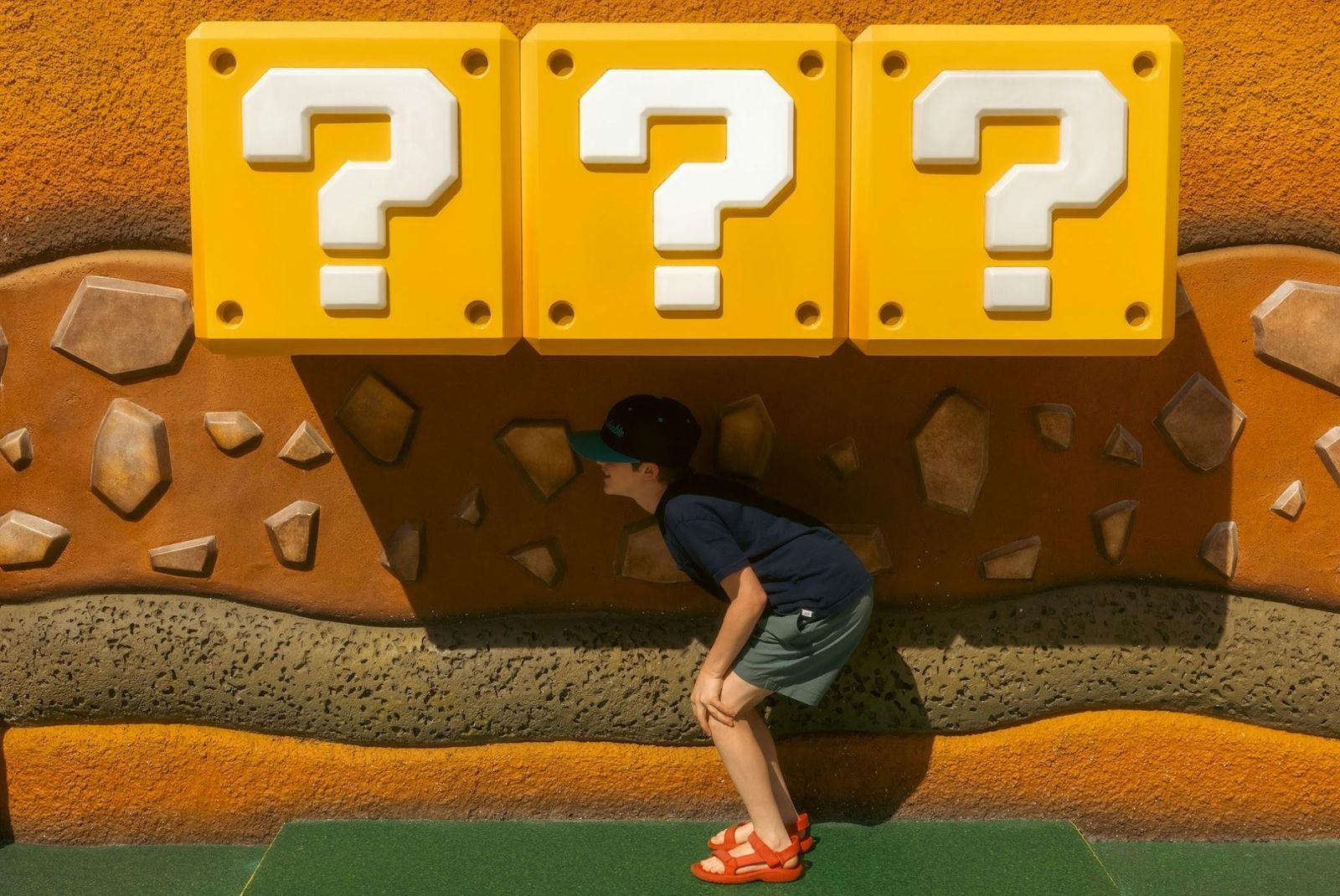
Huh?

Image: Fabio Sasso

Is it a real word? According to science, it is. In 2013, researchers at the Max Planck Institute for Psycholinguistics investigated "huh?" in naturally occurring conversations across ten languages and presented evidence for two claims. One, the term is universal. Two, it is genuinely a word.

They later expanded the study to 31 spoken languages from around the world and found that all of them have a word with a nearly identical sound and function as the English "huh?" With all its nuances and differences, most human languages on Earth independently arrived at similar rising syllables for not understanding something in conversation.

3

Mama and Papa

Image: Volodymyr Hryshchenko

Why do unrelated languages, spoken by people who never met, use almost identical words for "mother" and "father"? In Swahili: mama. In Polish: mama. In Mandarin Chinese: māma. In Quechua, spoken in the Andes of South America: mama. This mystery puzzled linguists for generations.

This isn’t a case of cognates (words borrowed from one language to another). The answer here lies in babies: "mama" and "papa" are among the easiest sounds to produce, because they combine bilabial consonants and open vowels. "Mmm" is often the first consonant babies experiment with.

4

Hello

Image: Nikolai Chernichenko

The term "hello" had floated around English since the 1820s, mainly as a shout to get someone’s attention, like "hey" or "oi." But it was barely more than that before telephones existed.

Then, in 1876, Alexander Graham Bell invented the telephone, and it was time to decide what callers should say when they picked up. Bell himself suggested the traditional nautical hail, "Ahoy." It was Thomas Edison who suggested "Hello!" in a letter dated 1877. By 1889, telephone operators had become widely known as "hello-girls." By then, the greeting had jumped to everyday conversation, and eventually every language on Earth picked up a version of it.

5

Coca-Cola

Image: Ayesha Ch

It is said that "Coca-Cola" is one of the most recognizable terms on the entire planet, much like the word "OK." This makes sense: the soft drink is sold in more than 200 countries. The name wasn’t the result of a marketing team or a focus group. It was coined in 1886 by the company’s bookkeeper, Frank M. Robinson, who derived it from the drink's two original ingredients: coca leaf and kola nut.

The drink was invented in Atlanta, Georgia, in 1886 by Dr. John S. Pemberton, who originally marketed it as a medicinal tonic. Today, approximately 1.9 billion servings of Coca-Cola beverages are consumed each day, so wherever in the world you are, the brand needs absolutely no introduction.

6

Coffee

Image: Karl Joshua Bernal

The word "coffee" has traveled far. Its story starts in the Ethiopian highlands with a by-now popular legend that depicts a 9th-century goat herder who noticed his goats wouldn’t sleep after eating berries from a certain bush. Thus, the idea of the drink made from those berries spread in Ethiopia.

From there, it moved to Yemen, where it was documented in a 15th-century text as a drink made from roasted coffee beans. It was assigned the Arabic word qahwa, which traveled with the drink. The product was traded by the Ottomans, who influenced several other languages, and from it derived the Italian caffè, the Dutch koffie, and the French café. So, the term has mutated slightly in each language, but it remains similar enough to identify it easily all over the world.

7

Pajamas

Image: Karsten Winegeart

Every night, hundreds of millions of people all over the world put on a Persian garment with a Persian name. The word "pajamas" comes from the Persian pay-jāma, a compound of pay (foot or leg) and jāma (garment). In 15th-century Persia, it referred to loose trousers worn by men and women for comfort, and the term entered English in the 18th century when British colonists encountered the garment in India.

But the original pajamas were not sleepwear for a long time. Victorian high society adopted them as fashionable, exotic loungewear, and it was by the early 20th century that the two-piece sleeping suit had spread across the Western world. Today, most countries in the world have very similar names for this garment.

8

Safari

Image: Dmitry Limonov

"Safari" is the name for a very specific activity. For many tongues in the world, the word itself conjures jeeps, binoculars, lions, and zebras.

But its original meaning was distant from the current one. It comes from the Arabic safara, which means "to travel." In Swahili, safari simply means any kind of journey, not just a wildlife expedition. For the English language, it was first recorded by explorer Sir Richard Francis Burton in the Journal of the Royal Geographical Society in 1859. British colonists in East Africa understood the word to apply to hunting expeditions, and, by the middle of the 20th century, Hollywood had cemented its modern image with films romanticizing the African bush.

Today, Apple’s decision to name its search engine "Safari" brings the term closer to its original meaning than to the one related to wildlife exploration.

9

Banana

Image: Nanda Mends

Banana is one of the most consumed fruits on Earth, and its name has traveled with it. The word "banana" first appeared in English in the 1590s, borrowed by Spanish or Portuguese explorers from a West African word, possibly from the Wolof language, spoken in what is today Senegal and Gambia.

Most historians sustain that Africans began harvesting the fruit at least 4,500 years ago. When Portuguese and Spanish ships began trading across the world in the 15th and 16th centuries, they encountered the fruit, borrowed its African name, and carried both across the Atlantic. Today, the word sounds remarkably similar in many languages: banana in English, Spanish, Italian, and German; banane in French; 바나나 (banana) in Korean.

10

Taxi

Image: Kristóf Sass-Kovan

From Buenos Aires to Bangkok, you can step off a plane having never spoken a word of the local language, hold out your hand, and say one word: "Taxi." You will get the exact same thing. But the story of this two-syllable word is a tangle of countries and languages.

The original word was "taximeter," coined by German inventor Friedrich W. G. Bruhn in 1891. This was a device that measured the fare by distance. It was the French who shortened taximètre to taxi. A company imported them to New York under the market name "Taxicab" and decided to paint them yellow, since it was the most visible color. From there, both the short name and the iconic color stuck. Today, it is a symbol universally shared that you’ll find in every major city.


THE CRADLE OF CIVILIZATION

All The Ways Ancient Greece Influenced The Modern World


Published on June 6, 2026


Image: Aleksandar Pasaric

Ancient Greece stands as a beacon of civilization, a cradle of democracy, philosophy, arts, and more and it continues to blow our minds centuries later.

This captivating country has come a long, long way, and it has evolved over thousands of years influencing the world as we know it today in more than one way: political structures, sports events, scientific discoveries, everything we take for granted today was once a breakthrough made by this civilization.

Read on and delve into some of the most influential aspects of Ancient Greece!

1

Democracy and government

Image: Arnaud Jaegers

Democracy is probably among the most important contributions from Ancient Greece. Even if it was exercised differently, the essence of democracy still remains.

According to its Greek roots, democracy means "government by the people" and it is a form of government by means of which the power is vested in the people who, directly or indirectly, choose their representatives through elections.

The difference between democracy then and democracy as we know it today, is that only a small portion of the population was allowed to participate. In Ancient Greece, the democratic government consisted of an assembly of 6,000 adult male citizens who voted on all kinds of issues. Similar to today’s system, a majority of votes were needed for laws to be passed.

Thanks to the evolution of societies and the system itself, men and women from all walks of life are allowed to vote and contribute to democratic governments today.

2

Trial by Jury

Image: KATRIN BOLOVTSOVA

The institution of trial by jury is a cornerstone of modern legal systems, but it can be traced back to the democratic principles discussed before. This concept back then was not so different from today’s: it was a judicial process that aimed to provide a resolution to conflicts and justice in civil and criminal matters.

The jurors were chosen through a random allocation among the citizenry and they were in charge of hearing the evidence, assessing the testimonies, and determining the innocence (or not) of the accused.

This breakthrough shaped legal systems and principles that are still set in stone today and it remains a fundamental way to cherish the principles of justice and democracy.

3

The Olympics

Image: Bryan Turner

No Gods are honored in the present, but we still hold some of the traditions of this ancient sports event. The Olympic Games, which receive their name after the city they were held in, Olympia, were much more than just a sporting event back then.

First and foremost, the Olympics were a sacred ritual to honor Zeus, the God of the Sky and Thunder, they were held every four years and all kinds of (sometimes dangerous) sports were played. Swimming, gymnastics, and "pankration" a hybrid between wrestling and boxing, that could turn the place into a bloodbath in a matter of minutes.

Today, the Olympics aim to bring the nations together to feature their sports stars, but some traditions are still displayed: the olive leaf crowns, the opening and closing ceremonies, and, of course, the great lightning of the flame.

4

Mythology

Image: kalhh

Zeus, Hercules, Hera, Hades, you probably know all of these names. That is because Greek mythology and its stories are some of the best-known in the whole world. Not only served us with legendary myths of every topic we can imagine, but it has inspired thousands of versions of those myths and their main figures.

Greek mythology inspired iconic pieces of art, like The Birth of Venus, a painting by Sandro Botticelli that depicts the Roman equivalent of the Greek goddess Aphrodite, the goddess of love, beauty, sex, and desire.

On the other end of inspiration, Greek Mythology made it all the way to Disney movies, considering that their version of "Hercules" is one of the most famous adaptations of the myth.

The variety of universal topics dealt with in Greek mythology has permeated and there is no sign this will stop anytime soon.

5

Modern Medicine

Image: Pixabay

Ancient Greece contributed to medical advancements that represented a pivotal moment in the evolution of healthcare practices. Medicine as a discipline was already a common practice in places like China or Egypt, but the standardization of it can be attributed to the Greeks. In this sense, modern medicine is very similar to ancient medicine since it consists of a diagnosis and a consequent treatment.

Moreover, Hippocrates, a well-known physician of the time, made contributions in terms of work ethics. For this reason, he is known as the "Father of Medicine" and his name is still honored with the title of the oath made by doctors today, the Hippocratic Oath. We have him to thank for the categorization of diseases and the use of prognosis too.

6

Architectural Marvels

Image: Josiah Lewis

The concept of beauty and proportion of the ancient Greeks is probably one of their most characteristic features. Even if we think of the time, the architectural achievements are a true testament to the artistic prowess of this civilization.

At the heart of this field, we will find Doric, Ionic, and Corinthians orders. Each of these had distinctive features and proportions and they all exemplified different things. The Parthenon, a masterpiece of Doric design, for example, was praised for its harmonious proportions and mind-blowing craftsmanship.

Temples, theaters, stadiums, agoras, and all kinds of civic buildings were just the beginning of architecture as we know it today. Together with democracy, the principles embodied in their view of architecture can be easily considered to keep inspiring us centuries later.

7

Philosophy

Image: Gabriella Clare Marino

Ancient Greece and philosophy are one and the same. And that is because the philosophical heritage of the Greeks was a true cradle of civilization.

This doesn’t mean they invented "thinking," but they surely came up with a name for the art of it. Philosophy comes from two Greek words, philos, which means "love" and sophia****, "wisdom." In essence, the discipline was in the quest for knowledge and tried to systematically answer existential questions.

Socrates, Plato, and Aristotle are the fathers of philosophy, responsible for laying the foundations of a comprehensive system. Their work has shaped thousands of studies and sciences around the world and throughout history offering deep insights on the human condition and reality itself. Academic knowledge as we know it today, especially in the Western world, wouldn’t exist were it not for these key figures.

8

Linguistics: Language and Literature

Image: Aaron Burden

This ancient civilization has left a mark also through words and lexicon. Fields like mathematics, astronomy, medicine and, as we said, philosophy are full of terminology with roots in the Greek language.

The ancient Greek language is unparalleled in terms of precision and clarity, and its grammar had a profound impact on the development of linguistic theories and analysis of today. Needless to say, our understanding of language structure, morphology, and syntax wouldn’t be the same without the influence of the ancient Greeks.

In the same way, literary contributions were the way to preserve all these cultural elements we discuss today. Books like the Iliad and the Odyssey, which depict the Homeric epics, laid the groundwork for narrative conventions that are still present in Western literature today.

9

Art and Aesthetics

Image: Sean Robertson

Ancient Greek art stands today as a testament to their ceaseless pursuit of beauty, symmetry, and the human form. The art of this civilization encompassed a wide range of media including pottery, painting, and sculpture.

The most iconic features were the mastery of technique and, again, an acute sense of proportion which was an innovation back then. And quite impressive today when you come across any of their sculptures. In terms of topics, the Greeks were concerned with universal themes in all fields: human nature, beauty, and truth.

They have undeniably influenced all kinds of artistic movements throughout history and this is a legacy that continues to inspire artists and art lovers today.

10

Naval Innovations

Image: Pixabay

The naval innovations of the ancient Greeks are also a defining chapter in maritime history. At the forefront of this revolution stood the trireme warship which, as its name indicates, was powered by three rows of oarsmen arranged in tires. This ship boasted unparalleled speed and agility and enabled the Greeks to assert control over strategic points and trade routes in the Mediterranean.

Their expertise showcased a sense of innovation and they became pioneers in shipbuilding which ultimately shaped the evolution of sea voyages and traditions to come.

Looking for an extra scoop of literary fun?

Learn more with our Word of the day

remit

/rəˈmɪt/