Heartbreaking truths ahead
Most people think they know what these abbreviations mean, but they don’t
Published on July 8, 2026

Most abbreviations really do stand for something. Others only seem to. That's where backronyms come in: phrases invented after a word or name already exists, making it look like the letters always had a hidden meaning. You have probably heard of many of the following examples. Some are official, some are humorous, and some have become so popular that many people mistake them for genuine origins.
S.O.S. "Save Our Ship" / "Save Our Souls"

Nearly everyone has heard that SOS means "Save Our Ship" or "Save Our Souls." The phrases sound so fitting that they've appeared in books, films, and everyday conversation for more than a century.
The truth is simpler. SOS was never an abbreviation. It became the international Morse-code distress signal in 1906 because its pattern—three dots, three dashes, three dots—was unmistakable. The famous phrases were invented afterward as memory aids, making them classic backronyms. The signal became world-famous during the Titanic disaster in 1912.
POSH "Port Out, Starboard Home"

One of the best-known language myths claims wealthy passengers sailing between Britain and India booked cabins marked P.O.S.H., meaning "Port Out, Starboard Home," to stay on the cooler side of the ship.
It's an entertaining story, indeed, but historians have never found evidence that shipping companies used those markings. The Oxford English Dictionary rejects the explanation, and linguists consider it a false acronym. The real origin of posh remains uncertain, proving that a good story can sometimes outlive the facts.
NEWS "North, East, West, South"

This explanation feels almost too perfect, right? Since news comes from every direction, many people assume the word must have been built from the initials of the four compass points.
In reality, news existed centuries before acronyms became common. The word developed from the plural of new, referring to recent events or fresh information. The compass-direction version was invented much later, making it another clever backronym rather than the word's true origin.
CHIPS Act "Creating Helpful Incentives to Produce Semiconductors"
Congress was still creating memorable backronyms decades later. The CHIPS and Science Act, signed into law in 2022, was named to emphasize its focus on rebuilding semiconductor manufacturing in the United States.
The word CHIPS was deliberately expanded to Creating Helpful Incentives to Produce Semiconductors, matching the legislation's primary goal. The act provides tens of billions of dollars in incentives for chip production and scientific research, making it one of the largest industrial policy initiatives in recent U.S. history.
YAHOO "Yet Another Hierarchical Officious Oracle"
Computer enthusiasts have long joked that Yahoo! stands for "Yet Another Hierarchical Officious Oracle," a name that certainly sounds technical enough for an early internet company. Except it's not real.
The real story is literary instead of technological. Founded in 1994 by Jerry Yang and David Filo, Yahoo! borrowed its name from the unruly Yahoos in Jonathan Swift's Gulliver's Travels. The elaborate expansion came later as a humorous backronym embraced by programmers and web users alike.
AMBER Alert "America’s Missing: Broadcast Emergency Response"

The AMBER Alert system honors Amber Hagerman, the 9-year-old girl abducted and murdered in Arlington, Texas, in 1996. Her case inspired a faster way to notify the public when children go missing.
The program's name came first, as a tribute to Amber. Officials later created the official expansion America's Missing: Broadcast Emergency Response, giving the system an easy-to-remember backronym. Since then, AMBER Alerts have helped law enforcement safely recover hundreds of abducted children across North America.
WIKI "What I Know Is"
"What I Know Is" sounds like the perfect explanation for a website anyone can edit. It's short, memorable, and neatly matches the idea of people sharing knowledge online.
But Wiki has a completely different origin. Programmer Ward Cunningham borrowed the Hawaiian phrase wiki wiki, meaning "quick," when he created the first wiki in 1995. The idea reportedly came from Honolulu Airport's Wiki Wiki Shuttle. The English phrase appeared later as a playful backronym after the technology became popular.
DREAM Act "Development, Relief, and Education for Alien Minors"

The DREAM Act was introduced in Congress in 2001. It was designed to provide a pathway to legal status for certain undocumented immigrants brought to the United States as children.
Its title was intentionally crafted to produce the hopeful word DREAM, making it another official legislative backronym. Although the original bill has never become law, it gave rise to the widely used term "Dreamers," which remains central to discussions about U.S. immigration policy.
ADIDAS "All Day I Dream About Sport"

Few brands have inspired more fake acronym stories than Adidas. Variations like "All Day I Dream About Sport" have circulated for years, while others replace "Sport" with "Soccer" or even "Success."
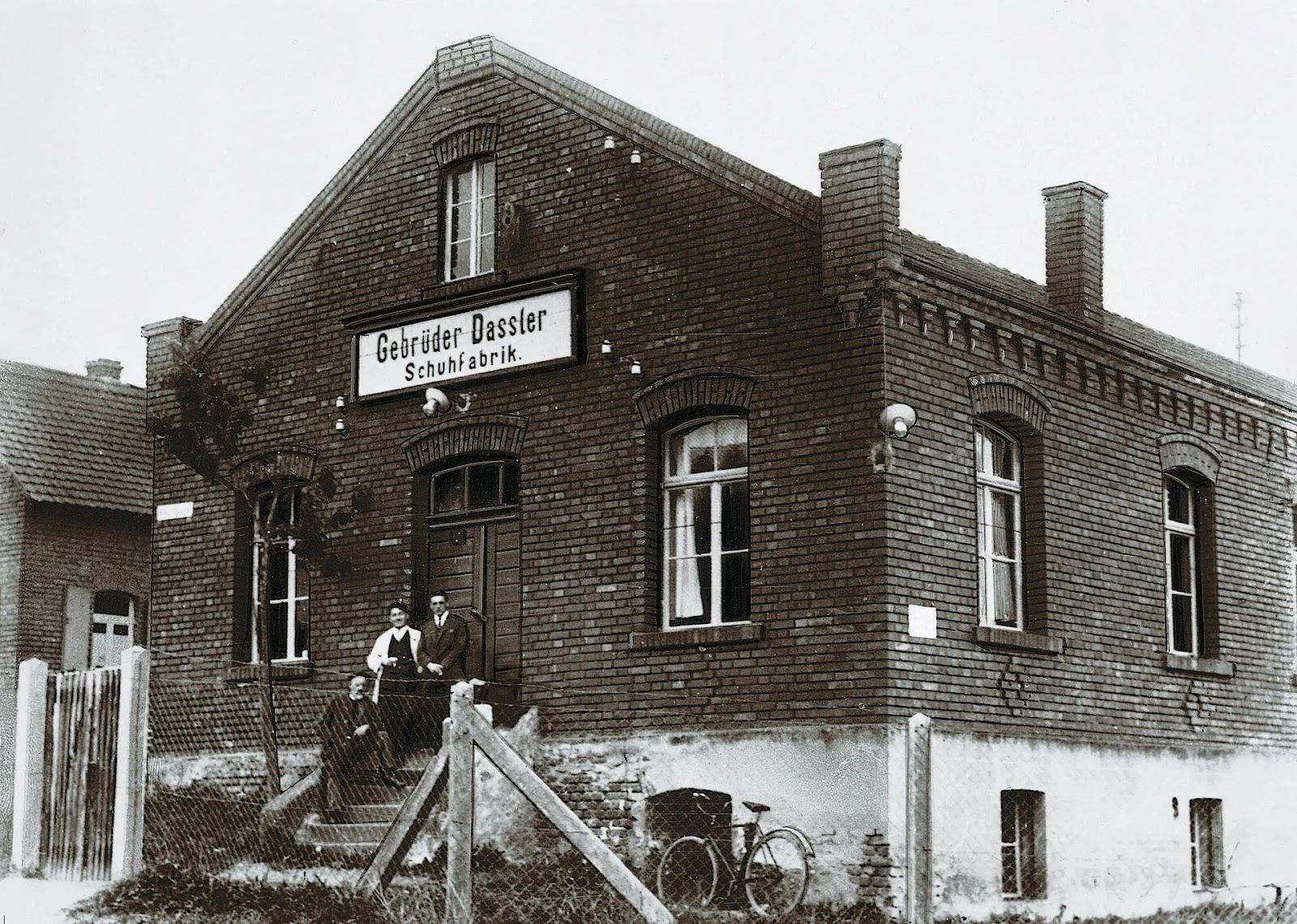
None of them is true. The company, founded in Germany in 1949, was named after its founder, Adolf "Adi" Dassler. The brand name simply combines his nickname with the beginning of his surname: Adi + Das(sler). Every catchy expansion came afterward, making them textbook examples of backronyms.
APGAR "Appearance, Pulse, Grimace, Activity, Respiration"

Unlike most entries on this list, this is an official backronym that serves a practical purpose. Medical students around the world still learn it during their training.
The Apgar Score was introduced in 1952 by anesthesiologist Dr. Virginia Apgar to quickly evaluate newborn babies after birth. The test was originally named after her surname. Later, educators created the mnemonic Appearance, Pulse, Grimace, Activity, Respiration, turning the doctor's name into a memorable teaching tool.
PATRIOT Act "Providing Appropriate Tools Required to Intercept and Obstruct Terrorism"
Some backronyms are created not by accident, but by design. The USA PATRIOT Act became one of the best-known examples after the September 11, 2001, terrorist attacks.
Signed into law by President George W. Bush on October 26, 2001, the legislation's lengthy official title was deliberately written so its initials would spell PATRIOT. The memorable name helped define the law's public image, even as its expanded surveillance powers sparked years of debate over security and civil liberties.
STEVE "Strong Thermal Emission Velocity Enhancement"

Not every backronym begins in a government office. One of the newest started with a joke. Aurora enthusiasts spotted a mysterious purple ribbon in the night sky and jokingly nicknamed it STEVE, borrowing the gag from the animated film Over the Hedge.
As scientists began studying the phenomenon, they later created the technical expansion Strong Thermal Emission Velocity Enhancement to match the already popular nickname. Today, STEVE is recognized as a distinct atmospheric phenomenon related to, but different from, traditional auroras—proof that even serious science sometimes enjoys a little humor.