You probably do it too

Looking to sound smarter? Here are 12 redundant words & how to avoid them


Published on January 20, 2026


Image: Linh Pham

Some of these phrases belong to what is known as RAS (Redundant Acronym Syndrome), a linguistic phenomenon in which an acronym or initialism is used alongside one of the words it represents, such as "ATM machine." Others are simply redundancies that have become common through frequent use, like "free gift." Still, we all use a couple of these—at least. Which of these 12 do you use the most?

1

ATM machine

Image: Precious Madubuike

The phrase "ATM machine" is redundant because "ATM" already stands for "Automated Teller Machine," so adding "machine" repeats the word unnecessarily. It’s like saying "Automated Teller Machine machine."

This phrase is not the only example of RAS on the list, as we will see in the following entries.

2

Free gift

Image: Ekaterina Shevchenko

An expression commonly found in advertising and marketing, "free gift," is redundant because a gift already means something given without payment. Adding "free" simply repeats what the word "gift" already implies.

Though often used in advertising to emphasize that there’s no cost, "free gift" technically restates the same idea twice.

3

PIN number

Image: Eduardo Soares

Saying "PIN number" is redundant because "PIN" already stands for "Personal Identification Number," so adding "number" repeats the word unnecessarily.

While common in casual speech, this expression is best avoided in formal or precise writing.

4

End result

Image: Jakub Żerdzicki

Another redundant phrase, "end result" falls into this category because "result" already means the outcome of something. Adding "end" repeats an idea that’s already implied in the word.

Saying "end result" is like saying "final outcome outcome." Simply using "result" is clear and complete on its own. Though stylistically the phrase is still widely used for emphasis in both spoken and written English.

5

Added bonus

Image: Frugal Flyer

"Added bonus" is redundant because a bonus already means something extra or beyond what’s expected. Saying "added" simply repeats the idea unnecessarily. Since "bonus" already implies an addition, the word "added" doesn’t contribute any new meaning. It’s a clear example of redundancy in language.

Like "free gift," this phrase is very common and often used for emphasis in everyday speech or marketing.

6

Close proximity

Image: Marek Studzinski

"Close proximity" is redundant because "proximity" already means closeness or nearness. Adding "close" simply repeats the same idea.

Not unlike the previously mentioned "PIN number," where "number" is already part of the acronym. In both cases, one word unnecessarily duplicates the meaning of the other.

7

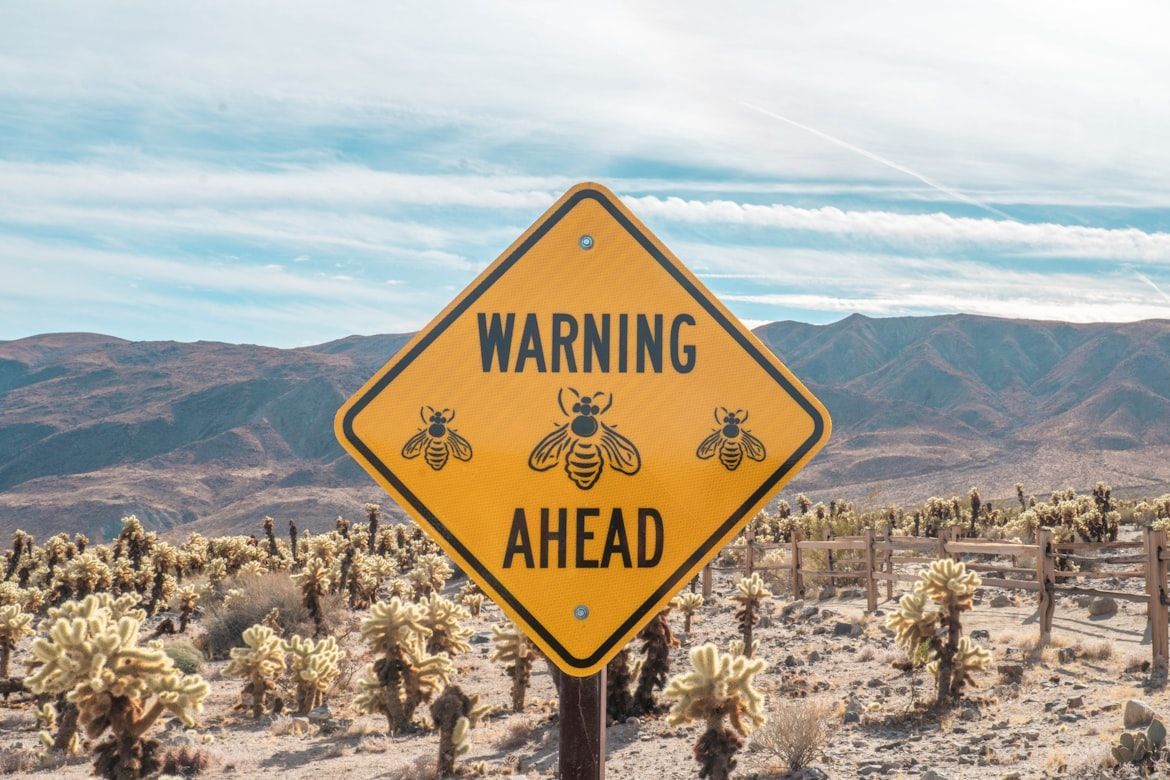
Advance warning

Image: Breana Panaguiton

The expression "advance warning" is redundant because a warning already implies something given ahead of time. Adding "advance" simply repeats the idea of "beforehand."

Since "warning" means prior notice of danger or trouble, saying "advance warning" is like saying "beforehand warning," which adds no new meaning. However, it’s worth noting that this phrase is very common and often considered idiomatic, especially in formal or technical contexts.

8

Unexpected surprise

Image: Ben White

This one should be obvious, but we’ve all seen it from time to time. "Unexpected surprise" is redundant because a surprise is, by nature, not expected.

Saying "unexpected" adds no new meaning—unless, of course, the person was already expecting a surprise and received a different one, which effectively surprised them.

9

Completely destroyed

Image: Julia Joppien

Saying that something is "completely destroyed" is redundant because "destroyed" already means total ruin. Adding "completely" simply repeats the idea without adding any new meaning.

When something is destroyed, it’s already beyond repair or use. Saying "destroyed" alone is clear and sufficient.

10

True fact

Image: Hartono Creative Studio

A much-used phrase in the age of fake news, "true fact" is redundant because a fact is, by definition, something that is true or can be proven. Adding "true" just repeats what’s already implied.

It’s like saying "frozen ice" or "past history"—the second word adds no new meaning. While "true fact" may be used for emphasis, it’s unnecessary and best avoided in formal writing.

11

Future plans

Image: Glenn Carstens-Peters

Since all plans are, by nature, in the future, the expression "future plans" is redundant. Adding "future" repeats what is already understood.

Unless you have a time machine, you can’t make plans for the past, so the word "future" adds nothing. Simply saying "plans" is clear and more concise.

12

Unsolved mystery

Image: 𝓴𝓘𝓡𝓚 𝕝𝔸𝕀

Another expression used for added drama, "unsolved mystery" is redundant because a mystery already implies something unexplained or unresolved. Adding "unsolved" repeats what’s inherently part of the word.

A mystery is, by definition, something not yet understood, so saying "mystery" alone is clear and more concise.


Don’t say her name in the mirror thrice: 10 legendary ghosts, decoded


Published on January 20, 2026


Image: Famitsay Tamayo

These days, it seems every city offers a ghost tour, every building over fifty years old claims cases of the supernatural, and every cemetery has a list of reported specter sightings. But the fascination with ghosts and the retelling of their haunted stories are as old as humanity. Let’s look into the names of some of the world’s best-known legendary ghosts and the eerie tales that have been passed down for generations.

1

Bloody Mary

Image: Tuva Mathilde Løland

The legend warns never to stand in front of a mirror and chant Bloody Mary’s name three times—unless you want her ghostly figure to appear before you, accompanied by supernatural, violent, and frightening illusions.

Her name is tied to a mix of historical and mythical figures. One origin points to Queen Mary I of England, nicknamed "Bloody Mary" for her persecution of Protestants. Other possible inspirations include Mary Worth, an alleged witch, or Elizabeth Báthory, a Hungarian noblewoman infamous for her cruelty.

This folkloric figure is widespread across many cultures, to the point that some believe she is a benevolent, helpful spirit, while others insist that she only returns to haunt those who disturb her.

2

The Flying Dutchman

Image: Andrew Neel

Made world-famous by the success of the Pirates of the Caribbean franchise, the Flying Dutchman is a maritime ghost story that originated in the 17th century during the Dutch Golden Age of sailing.

It is a ghost ship said to haunt the seas for eternity, often appearing to sailors as a glowing specter on the ocean. The legend originates from accounts of a Dutch captain and his crew attempting to cross a storm near the Cape of Good Hope in South Africa. The captain sealed his own fate when he swore that he would continue through the storm, even if it took until Judgment Day. As a result, he and his crew were condemned to wander forever, as a symbol of bad omen for sailors.

3

Bell Witch

Image: Katarzyna Pracuch

Unrelated to any bells and not necessarily a witch, the Bell Witch is a ghostly figure tied to a Tennessee farm since the early 19th century.

As the story goes, the Bell family lived on a farm near a cave where they frequently encountered disembodied voices, physical assaults, and poltergeist-like activity. They began referring to this unknown supernatural entity as a "witch" due to its unexplained and malevolent behavior.

The family blamed the sudden death of John Bell on this spirit, though they also reported acts of kindness from it, such as bringing out-of-season fruit to the widow, Lucy Bell, while she was ill. The whole mystery lived on and today the nearby cave is still known as the Bell Witch Cave.

4

The Vanishing Hitchhiker

Image: benjamin lehman

Imagine stopping your car on a deserted road in the middle of the night to pick up a hitchhiker, letting him climb into the backseat—only to turn around mid-conversation and find the seat empty.

The "Vanishing Hitchhiker" is a ghostly figure encountered along lonely roads worldwide. Variants of the story place him in different locations, from the U.S. to Europe, yet all follow a similar narrative.

The legend dates back to at least the 1870s, but older versions intertwine with religious folklore, in which gods or spirits disguise themselves as travelers to test human kindness—such as Hawaii’s tale of the goddess Pele.

5

La Llorona

Image: Mona Bernhardsen

Often tied to the waterways of Mexico, the name La Llorona translates to "The Weeping Woman." She is so named for her mournful cries near the water, where she weeps for the children she tragically lost.

According to legend, she drowned her own children in a fit of rage and despair after being abandoned by her husband. Overcome with grief, she took her own life and was doomed to roam the earth, searching for the souls of her babies and lamenting her loss.

Some variations spread throughout South America tell of just one son who drowned accidentally, while others trace the legend back to similar figures, such as the Slavic Rusalka—spirits of women who died near water and now haunt it.

6

Madam Koi Koi

Image: Valentino Mazzariello

Madam Koi Koi comes from a Nigerian urban legend—a spirit said to haunt boarding schools. She is believed to appear to students in their dormitories at night, her arrival announced by the clicking of her high heels in the corridors, a sound (koi koi) that gave her the name.

According to the tale, Madam Koi Koi was once a beautiful but strict teacher known for her elegant red heels. After being dismissed from her job for striking a student, she died in a tragic accident on her way home.

Before she died, she vowed never to leave the school. The legend varies, but most versions describe her as a vengeful spirit enforcing discipline on misbehaving children.

7

The Headless Horseman

Image: Melissa Parker

Washington Irving made the story of the Headless Horseman widely known with his short story The Legend of Sleepy Hollow (1820). The ghostly rider is said to haunt the small New York town near the Old Dutch Church, searching for his missing head.

Today, Sleepy Hollow’s ghost is a favorite Halloween icon. However, Irving likely drew inspiration from local legends and similar folklore. European tales already featured headless riders, such as the fearsome Irish Dullahan, a headless spirit who brings death while carrying his severed head in his fist, and the German Wild Huntsman, who was said to haunt forests.

8

Adze

Image: Tony Phan

The Ewe people of Ghana, Togo, and Benin have their own version of a vampire: the Adze, a shapeshifting creature that transforms not into a bat, but into a firefly.

This tiny, unassuming insect form allows the spirit to infiltrate homes unnoticed. Once inside, it sucks the blood of sleeping victims, causing them to fall ill and die. If caught, the creature transforms into a humanoid figure with the ability to possess people.


This African sinister being likely originated from a widespread fear of disease-carrying insects and the need to explain seemingly random illnesses within communities.

9

Ghost of Queen Esther

Image: Miljan Mijatović

The Ghost of Queen Esther is tied to the forests near Athens, Pennsylvania, and the banks of the Susquehanna River. Queen Esther is believed to have been a Native American of Iroquois descent who led a village in the late 18th century, around the time of the American Revolutionary War.

The legend stems from the Wyoming Massacre of 1778, when Native American warriors and British Loyalists clashed with settlers. Following the death of her son, Queen Esther allegedly retaliated by leading a raid that resulted in the deaths of several settlers—as well as her own. According to the tale, her dying words cursed the land, and her ghost is said to haunt the area, seeking retribution.

Local hunters have reported seeing her spectral figure in the forests or hearing ghostly screams in the night. The "Curse of Queen Esther" remains a prominent legend along the river.

10

The Bloody Bride

Image: Petr Ovralov

The Bloody Bride is the ghost of a young woman who died in a horrific accident near Stevens Point, Wisconsin, along Highway 66. This site, and particularly the so-called Bloody Bride Bridge, is said to be where she met her tragic end on her wedding night.

According to the tale, a newlywed couple was involved in a car crash on the bridge while returning from their wedding. The eerie stories claim that she can still be seen wandering the bridge, distraught, or that she mysteriously appears in the backseats of drivers as they cross the bridge.

Ghost stories about tragic brides are not unique to this location, of course. Similar legends have existed worldwide for centuries, such as the "White Lady" figures found in European folklore.

Looking for an extra scoop of literary fun?

Learn more with our Word of the day

loot

/lut/