A hairy business

Let your hair down: 10 amazing facts about human hair


Published on January 29, 2026
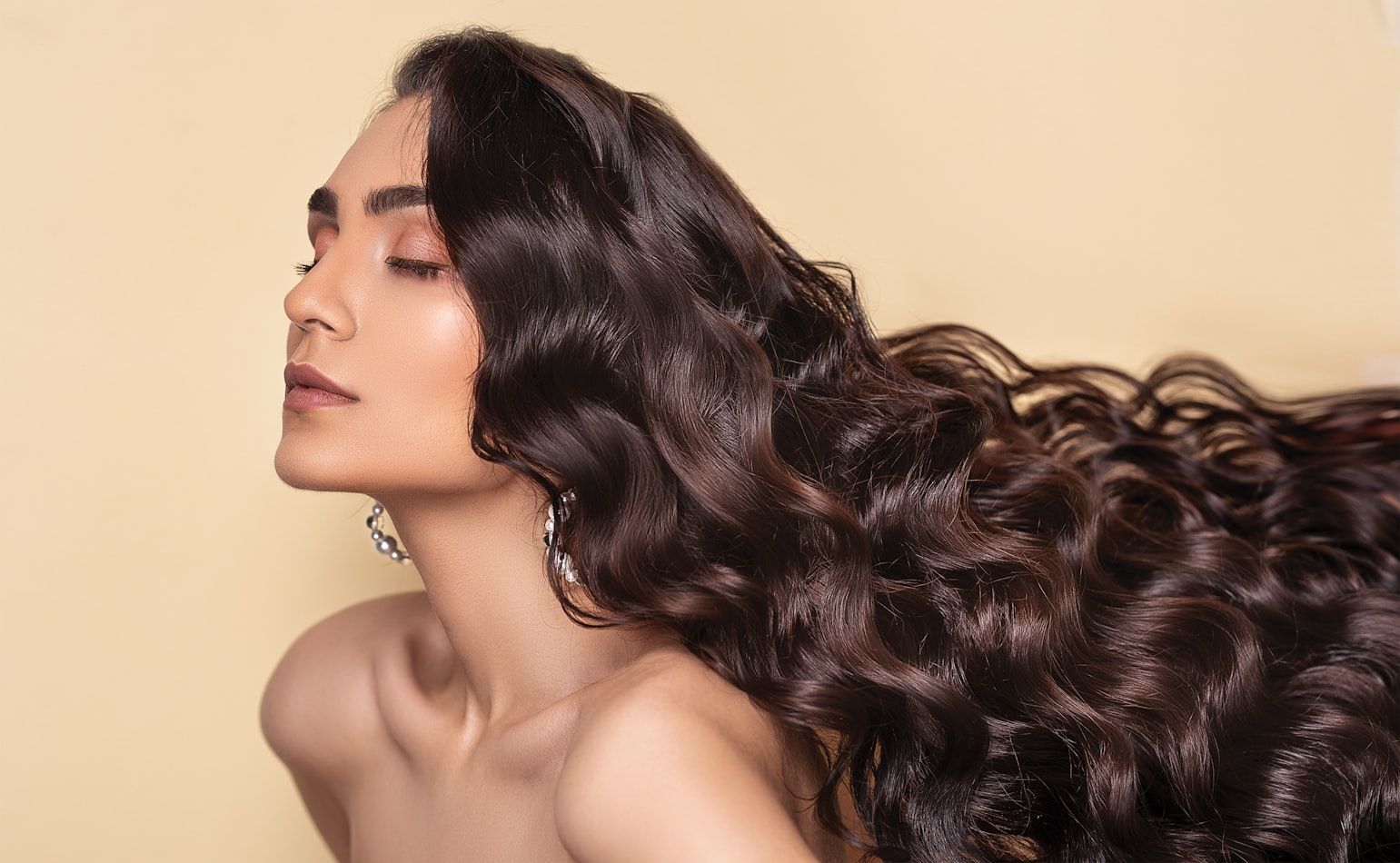

Image: Ali Pazani

The human body is incredible, from its mechanics to its ability to heal and adapt to multiple environments and situations. Hair, as part of our body, is no exception to this complexity and wonder. Let’s take a look at 10 amazing facts about our hair that you may not know!

1

Two things called ‘hair’

Image: Ian Talmacs

The word hair is used to describe two separate and distinct components: the follicle and the shaft. The follicle—what we commonly refer to as the root—is a living organ located in the dermis of the scalp. It’s responsible not only for growing hair but also for helping regenerate skin after a wound.

On the other hand, the shaft—often referred to as the strand—is a filament composed of layers of keratin, the same protein that makes up our nails. Unlike the follicle, the hair shaft is technically dead because it consists of dead cells.

2

The structure of a hair strand

Image: Joyful Bird

Each hair strand is composed of three layers. The innermost layer is the medulla, and even scientists are still uncertain about its exact function. Surrounding the medulla is the cortex, which absorbs water and provides strength to the strand. The cortex also contains melanin, the pigment that determines hair color, and its shape plays a major role in whether hair is straight or curly. The outermost layer is the cuticle, which serves primarily to protect the hair shaft.

3

Hair color and genetics

Image: Tyler McRobert

Hair color is primarily influenced by several genes, including MC1R, which plays a key role in melanin production. However, not everyone produces the same type or amount of melanin. Higher amounts of melanin result in black hair, while varying levels and types of melanin—along with genetic variations—produce brown, blond, and other shades.

Red hair, the rarest natural color, is caused by a mutation in the MC1R gene and is inherited in a recessive pattern. This means a person must inherit two copies of the mutated gene (one from each parent) to have red hair, though many people carry the gene without expressing the trait.

4

Hair growth

Image: William Warby

Growing at a rate of about 0.2 to 0.5 inches per month, hair is the second-fastest growing tissue in the human body—surpassed only by bone marrow. This rate is influenced by factors such as genetics and ethnic background. Other variables, such as age, lifestyle, or health, can also have an impact on our hair growth and density.

5

Hair shedding

Image: Sohan Rahat

We usually think of cats or dogs when it comes to shedding, but humans also shed hair regularly. After all, hair is a trait shared by all mammals. The average person sheds between 50 and 100 strands of hair per day, though this number can increase in response to stressors such as illness, hormonal changes, or emotional stress. Once the stress subsides and the body readjusts, the excess shedding typically stops.

6

Grey hair

Image: Joseph Chan

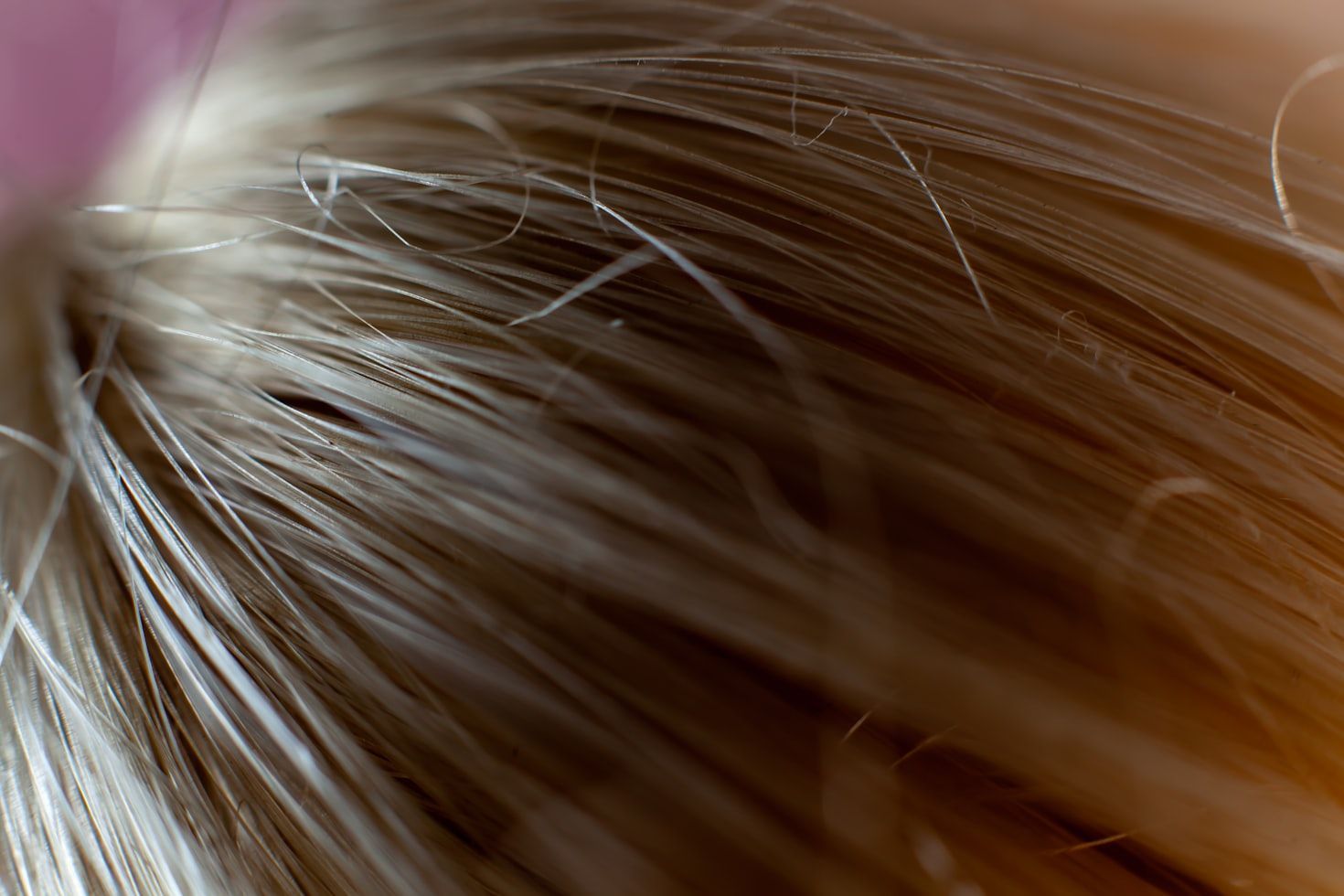
Commonly associated with aging, grey hair isn’t a color in itself but rather the result of a loss of pigment. As part of the natural aging process, melanin production in the hair follicle gradually decreases and eventually stops, causing strands to appear grey or white.

Genetics and ethnic background play a major role in determining when and how the greying process begins. Some people are even genetically predisposed to start greying at a very young age.

7

Hair texture

Image: Jaroslav Devia

Hair texture is commonly associated with ethnic background, but that’s not the only factor involved. Texture is primarily determined by genetics, and while genetics are closely tied to ancestry, all hair textures can be found across different populations.

Scientists believe that hair texture—specifically curl pattern and volume—is a result of the shape of the shaft. A round shaft typically produces straight hair, while flatter or more oval-shaped shafts tend to create curls and waves.

8

Water-repellent hair

Image: Amritanshu Sikdar

Depending on the structure of your hair cuticle, your hair may be more or less water-repellent. Hair shafts with a more porous cuticle absorb water easily but also lose moisture quickly. In contrast, shafts with a tighter-packed cuticle struggle to get wet and are slow to dry.

9

Resting hair

Image: Sonja Langford

Hair doesn’t grow continuously or all at once—each strand follows a cycle with distinct phases. First comes the growing phase, which varies depending on the type of hair (for example, facial hair grows faster and for a shorter period than scalp hair). Eventually, growth slows down, and the strand detaches from the root.

After this, the hair enters a resting phase, during which it remains in place until it is naturally shed. At any given time, we have hairs in all stages of this cycle, which is why we regularly shed hair without going bald.

10

Hair is a data bank

Image: Hans Reniers

Like any other part of the body, hair contains DNA and genetic material, which means a person can be genetically identified from a single strand, provided it includes the root. But hair holds even more information. The analysis of a hair strand can reveal substances that were present in a person’s bloodstream over time, including vitamins, minerals, medications, alcohol, and other substances.


Weird wordplay

Dive into the fascinating origins of these baffling idioms!


Published on January 29, 2026


Image: Leeloo The First

We said it once and we’ll say it again: Idioms are definitively weird. And with how much the English language relies on these strange phrases, you’ll probably find yourself using idioms more often than you think, without taking the time to think how wishing someone to "break a leg" before a big show is not a not-so-veiled threat. In any case, let’s dive into the origins of some of the most baffling idioms out there, with the hope of trying to shed some light onto the inherent strangeness of these sayings. Enjoy!

1

Cute as a button

Image: engin akyurt

Let’s start with a strangely uplifting one. What do you think of whenever you try to picture something cute? Well, in small, round fastening knobs, of course! The idiom "cute as a button" does not make a lot of sense when first heard: After all, we mindlessly clip buttons on dress shirts, pants, and coats without giving a second thought to their adorability. However, a point should be made that, when you think about it, buttons tend to be shiny, small, and round, which in truth tends to check a lot of the boxes of what lots of people consider cute.

2

Eat crow

Image: Tyler Quiring

Crows are definitively remarkable birds: Their shiny, black plumage and imposing presence can only be surpassed by their outstanding intelligence. However, we hope that any crow reading this doesn’t take offense when we say that they don’t really stand out as particularly tasty birds. In that regard, the idiom "to eat crow" does make some sense: We use this idiom to describe those times in which we have to admit our wrongs, no matter how hard they are to swallow. However, we do believe that any number of non-edible objects can be used instead of these majestic birds.

3

Apple of my eye

Image: ABHISHEK VISHWAKARMA

Want to tell someone how important they are to you? Well, you might want to compare them to the fruit that keeps doctors away. But wait, it gets better: Why not compare them to a metaphorical apple stuck in your cornea? Who wouldn’t blush after hearing this?

We should clarify that there’s some reasoning behind the idiom "the apple of my eye": Historians believe that it comes from Old English, when the word "apple" was synonymous with the pupil of the eye, which most of us will agree is a rather precious body part.

4

Cuts the mustard

Image: Pedro Durigan

Being a boss or a manager is definitely not an easy task: It comes with the difficult responsibility of communicating with those you are in charge of that their work is sadly not up to scratch. In that sense, you might want to tell someone they don’t cut the mustard, although that might leave them utterly confused. No one is entirely sure where this idiom comes from, or when the idea of cutting this condiment became synonymous with excellence, but some believe that it comes from the expression "pass muster", which is a military phrase used when a soldier passes military inspection.

5

Take it with a pinch of salt

Image: Jason Tuinstra

This is one of the most fascinating idiom origins we could find. While at first glance the idiom "take it with a pinch of salt", which means to view something with skepticism, doesn’t seem to make a lot of sense, it actually comes from an ancient Latin text from Pliny the Elder. In his Naturalis Historia, Pliny describes a supposed antidote to poison that includes two dried walnuts, two figs, and, of course, a pinch of salt: According to Pliny, whoever takes this mixture would be invulnerable to poison all day. In that sense, this perfectly reflects the meaning of this idiom: Taking dubious information with a pinch of salt would metaphorically prevent these falsehoods from "poisoning" you.

6

Sweat like a pig

Image: Christopher Carson

Pigs definitively have it rough when it comes to idioms: "Eating like a pig" always makes us feel bad while something improbable will happen "whenever pigs fly". In that sense, "sweating like a pig" not only sounds awfully mean-spirited, but it is also factually inaccurate: Pigs famously don’t sweat and take luscious mud bads in order to cool themselves. So, next time you are thinking about using this phrase, please consider that you’ll only spread misinformation about one of the world’s favorite farm animals.

7

Raining cats and dogs

Image: Daniel Tuttle

This one is just downright baffling: When did the world’s most beloved pets become synonymous with bad weather? In case you didn’t know, the phrase "raining cats and dogs" is used to describe a particularly heavy rain, but linguists don’t really know where this idiom comes from. Some point to the Greek word Katadoupoi (which means "waterfall"), since it sounds vaguely familiar to the English idiom.

8

Dog days

Image: Tommy Bond

While we don’t really approve of dogs being associated with any negative idiom, the truth is that the origin of the phrase "dog days" is remarkably interesting. Here’s the thing, this saying is used to describe hot and stuffy summer days, which some consider to be some of the most uncomfortable days in the Northern Hemisphere. This peculiar expression comes from Ancient Greece since these hot days were signified by the rising of the Sirius star system, colloquially known as the "Dog Star".

9

Break a leg

Image: Vika Glitter

You would think that the last thing that a theater friend of yours wants to hear before going on stage is a violent wish for broken bones, and yet, "break a leg" is one of the most commonly said phrases in the world of theater. While we can’t provide you with a definitive origin story of this idiom, many believe that it simply comes from a thespian superstition that states that one should say exactly the opposite of what they are wishing.

10

You can’t have your cake and eat it too

Image: Nick Stephenson

If we were to take this idiom at face value, no one would be able to have a slice of their own birthday cake. The idiom "You can't have your cake and eat it too" is used to describe a situation in which two or more favorable outcomes are impossible: In that sense, the titular cake cannot be owned and eaten at the same time. What feels particularly baffling about this idiom is that, when you think about it, having a cake won’t do you much good if you don’t eat it, so why would anyone choose the first option?

Looking for an extra scoop of literary fun?

Learn more with our Word of the day

alter

/ˈɔltər/