Did you know any of these?

Learn why pilots say 'Whiskey Tango Foxtrot' — and what it really means


Published on April 25, 2026
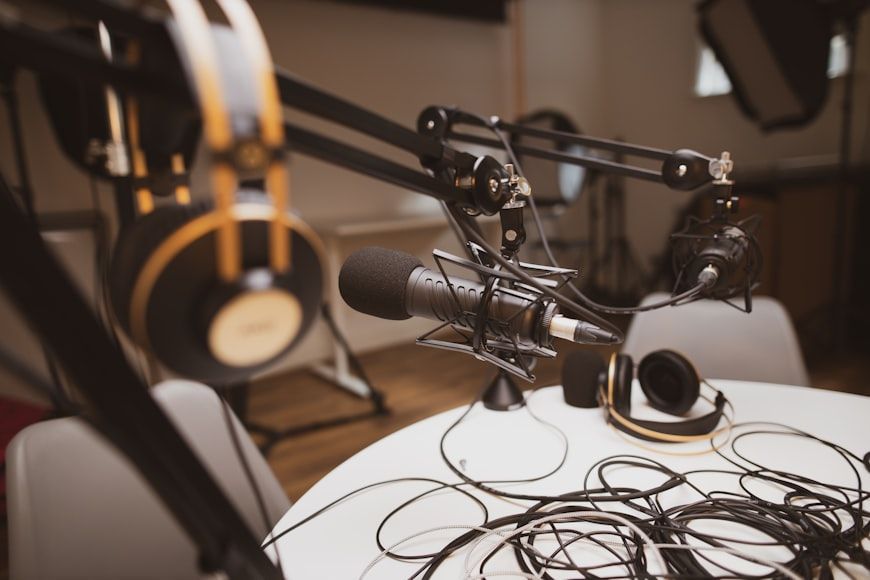

Image: Jonathan Farber

While most people have never heard of the NATO phonetic alphabet, they have likely encountered it in use, at least in movies and television. If you can recall a scene where a pilot says something like "Alpha," "Bravo," and "Charlie" over the radio, then you have heard the NATO phonetic alphabet at work. It is a system designed to ensure letters are clearly understood, even over crackly or noisy connections. It's been around since the 1950s, but its roots go back even further. Take a look at some interesting and cool facts about it!

1

What it is

Image: Sergey Svechnikov

Simply put, a spelling alphabet helps clarify letters and numbers in messages, since many of them sound alike—like B and P, or M and N.

This is especially useful when static or interference affects radio or phone communication. For example, "DH98" would be said as "Delta-Hotel-Niner-Ait" to avoid confusion.

2

The current alphabet

Image: Jason Dent

The following is the complete current NATO phonetic alphabet: Alfa, Bravo, Charlie, Delta, Echo, Foxtrot, Golf, Hotel, India, Juliett, Kilo, Lima, Mike, November, Oscar, Papa, Quebec, Romeo, Sierra, Tango, Uniform, Victor, Whiskey, X-ray, Yankee, and Zulu.

Each word starts with the letter that it represents, and the words were selected to be easily understood by speakers of many different languages.

3

Not every word made the cut

Image: Steve Johnson

The original International Civil Aviation Organization (ICAO) alphabet, the predecessor to the NATO phonetic alphabet, was officially adopted on November 1, 1951, and became effective for civil aviation on April 1, 1952.

However, issues soon arose. Words like Delta and Extra, or Nectar and Victor, sometimes caused confusion, especially in poor radio conditions.

4

Live words only

Image: Christina @ wocintechchat.com

To be included in the NATO phonetic alphabet, a word had to be a "live," or commonly used, word in English, French, and Spanish—the three working languages of the ICAO, which developed the system before NATO adopted it.

This rule helped ensure that the words were easily recognized and understood across different cultures and languages, improving international communication and reducing confusion.

5

Ease of pronunciation

Image: NOAA

The ICAO required each word to be easy to pronounce and recognize by speakers of many different languages.

This helped ensure clear communication between pilots and air traffic controllers worldwide, reducing the risk of misunderstandings.

6

Good radio transmission

Image: Museums Victoria

Another criterion for inclusion in the NATO phonetic alphabet was that a word had to be clearly transmissible over the radio and easy to understand.

This helped minimize confusion caused by static, poor signals, or accents, making communication in aviation safer and more reliable.

7

Similar spelling

Image: Glen Carrie

Each word in the NATO phonetic alphabet had to begin with the letter it represented and be easily recognizable across several major languages, including English, French, and Spanish.

This made the alphabet easier to learn and understand internationally, ensuring consistency and clarity in communication.

8

No objectionable meanings

Image: Andre Hunter

Words in the NATO phonetic alphabet had to be free of any offensive or inappropriate meanings in any of the major languages.

This helped ensure that the words could be used safely and respectfully across different cultures and regions without causing misunderstandings or offense.

9

"X-ray" to "Xray"

Image: Cara Shelton

NATO changed the spelling of "X-ray" to "Xray" early on to make sure it was pronounced as a single word.

The ease of pronunciation goes hand in hand with another crucial aspect: there can be no other meaning interpretations.

10

Alfa for Alpha

Image: Declan Sun

Two words in the NATO phonetic alphabet use non-standard English spellings: "Alfa" and "Juliett."

"Alfa" avoids the "ph" to ensure correct pronunciation by non-English speakers. "Juliett" includes a second "t" so French speakers don't mistakenly drop the final sound.


Front-page worthy

Extra, extra! Read about 10 terms from the journalism world!


Published on April 25, 2026


Image: Hümâ H. Yardım

Journalism plays a vital role in keeping us informed and connected to the world. Like any profession, it has its own unique set of terms that help journalists communicate and get the job done efficiently. These words might seem like insider jargon, but they’re key to understanding how news is gathered, reported, and presented. From "off-the-record" conversations to the "splash" on the front page, let’s explore 10 common journalism terms that are essential in the world of news reporting.

1

Off-the-Record

Image: CoWomen

"Off-the-record" is a term every journalist knows well. It refers to when someone shares information with the understanding that it won’t be published. This material can’t be directly quoted or attributed to the source, but it might guide a reporter’s research or provide background for future stories.

It’s a way for sources to speak freely without the fear of being publicly exposed. The trust between a source and a reporter is crucial here; break it, and you might not get another scoop.

2

Cutline

Image: charlesdeluvio

A "cutline" is the descriptive text that you’ll find under a photo in a newspaper or magazine. It provides the context that tells you who’s in the picture, what’s happening, and why it’s important.

Without a cutline, a photo might be interesting to look at but leave you scratching your head about the details. Think of it as a photo’s partner in storytelling, giving the image a voice. Next time you glance at a photo, don’t skip the cutline; it’s there to make sure you get the full picture.

3

Stringer

Image: Austin Distel

A "stringer" is a freelance journalist who contributes stories to a newspaper or news outlet but isn’t on the full-time staff. They’re paid per story or by the word, making them the gig workers of the journalism world.

Stringers often cover specific areas or beats that the regular staff might not have time for, bringing in fresh perspectives and local stories. It’s a flexible role, perfect for journalists who want to write without the commitment of a full-time job.

4

Tip

Image: Vitolda Klein

Not to be mistaken for a suggestion or advice, a "tip" is the inside scoop—a piece of information passed to a reporter, often in confidence. Tips can come from almost anyone: a source close to a situation, an anonymous whistleblower, or even a concerned citizen. They’re the breadcrumbs that lead journalists to uncover bigger stories.

A good tip can be the spark that ignites a major investigation or an exclusive piece. But tips need to be handled with care; every journalist should verify the details before running with the story, because not every tip pans out.

5

Bulldog

Image: Adeolu Eletu

If you’re thinking of the dog, think again! The "bulldog" edition is the first version of a newspaper printed for the day, often hitting the stands early in the morning. It’s like the early bird of the newspaper world.

The bulldog might not have all the late-breaking stories, but it’s the first to deliver the day’s news to the public. Back in the day, grabbing a Bulldog edition meant you were among the first to know what was happening. Even though it’s an old-school term, it’s still a symbol of the urgency in news reporting.

6

Morgue

Image: Aditya

In journalism, a "morgue" isn’t as creepy as it sounds—it’s simply the newsroom’s archive or library. This is where old articles, photos, and clippings are stored, serving as a valuable resource for journalists looking to dig up past stories or research background information.

The morgue is filled with stories that might have been forgotten but can still offer insights or context. In today’s digital age, the morgue might be more of a digital database, but the name has stuck around.

7

HFR

Image: Adolfo Félix

"HFR" stands for "Hold for Release," and it’s a directive that means you have to sit tight with that story. As you can imagine, this is not a favorite among journalists!

The material is ready, but it can’t be published until a specific time, usually because the source has set a release date or there’s an embargo in place. It’s common in journalism, especially with press releases or sensitive information. Once the green light is given, the story can go live—but not a second before.

8

Pitch

Image: Thought Catalog

This term is common in journalism, but it was actually borrowed from the marketing and sales fields. To "pitch" a story means to sell an idea to an editor, hoping it’ll get the green light to be written and published.

A pitch needs to be compelling, well thought out, and relevant to the publication’s audience. It’s a bit like a mini sales pitch, where you convince the editor that your story idea is worth their time and space. If the editor likes it, you’re on your way to writing the next big piece. So, when journalists pitch, they’re putting their best foot forward, hoping to turn an idea into a headline.

9

Splash

Image: Ewien van Bergeijk - Kwant

A "splash" is the big, bold story that makes it to the front page—the story that will grab readers' attention. It’s the news piece that the editors believe will make the biggest impact or stir the most interest.

The splash is usually accompanied by eye-catching headlines and prominent photos, ensuring it’s the first thing readers see. When your story is the splash, you know it’s going to be talked about.

10

Dummy

Image: Firmbee.com

A "dummy" in journalism isn’t an insult, it’s the layout plan for a newspaper or magazine page. This diagram shows where stories, photos, headlines, and ads will be placed before the final version is printed.

It’s a crucial step in the production process, ensuring that everything fits neatly and looks good on the page. The dummy serves as a blueprint for the issue and helps designers and editors visualize the final product.

Looking for an extra scoop of literary fun?

Learn more with our Word of the day

welfare

/ˈwɛlˌfɛr/