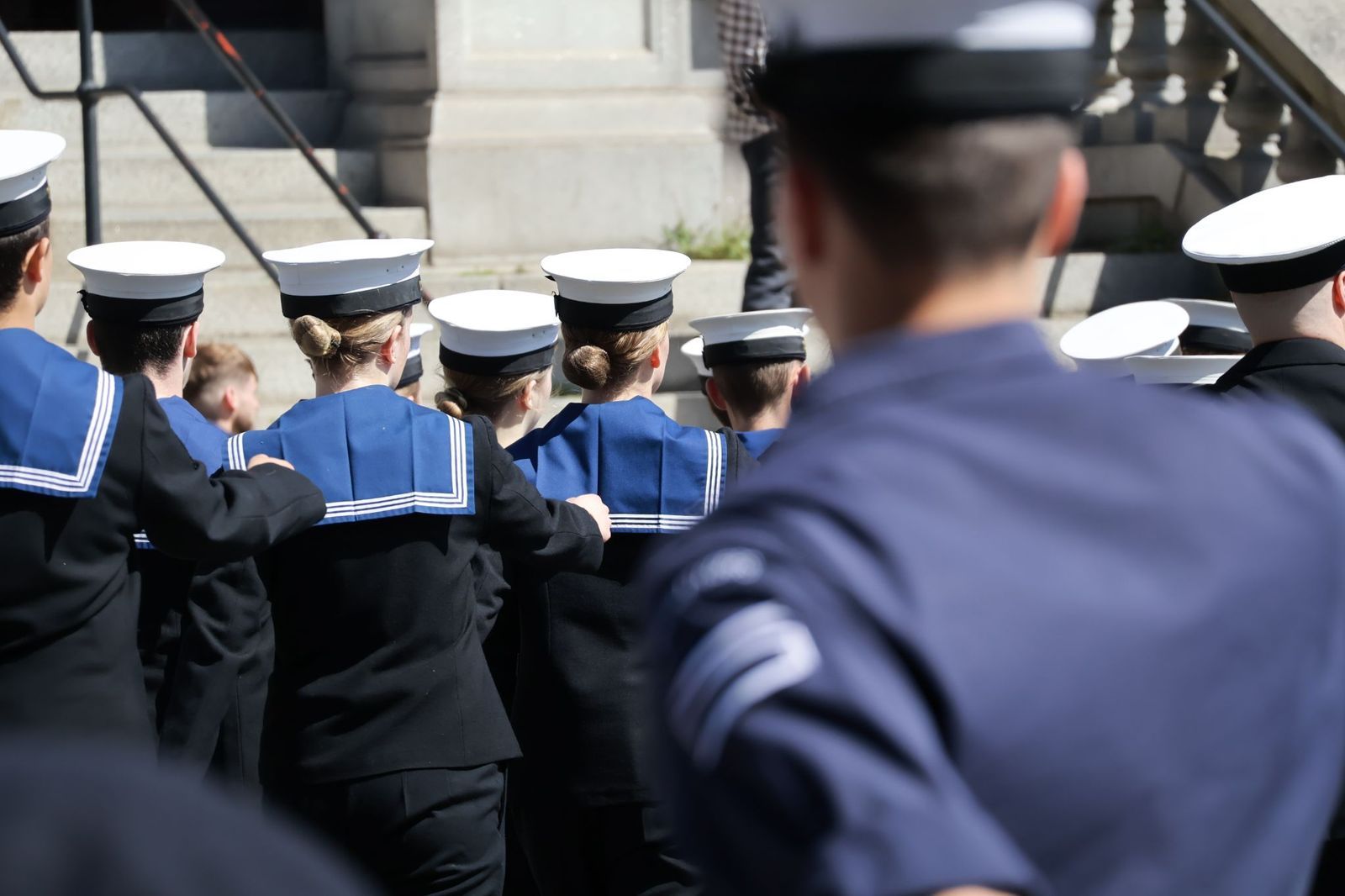
Sailors slang

Learn the ropes: 10 common sayings that came straight from sailors


Published on July 21, 2026


Image: Shuttertsock

Life on ships was all about teamwork and facing the unknown. Sailors dealt with changing weather, rough waters, and threats that weren’t always easy to anticipate. Many phrases that still sound familiar today came out of that world, even though most of us don't use ropes or read the wind anymore. Even far from the ocean, these 10 expressions still describe everyday life.

1

Show your true colors

Image: Shutterstock

Can you imagine what "true colors" meant in sailing slang? It was actually a direct reference to a ship’s flag. Back then, flags could show a ship’s country or empire, loyalty, or even surrender. But ships could also sail under false colors to deceive other ships and hide their real intentions. When those intentions were finally revealed, the ship showed its true colors.

That meaning is not far from the one we use today. Today, the expression is used when someone reveals their real feelings or intentions after keeping them hidden for some time.

2

Learn the ropes

Image: Shutterstock

We’ve all entered a new job or tried a new activity, and had to learn how the whole system works before taking the first steps. That is the moment you get to learn the ropes, before things start to flow naturally. And on a ship full of real ropes, sailors had to learn, one by one, which rope was for which function and where it belonged before starting to sail by themselves.

3

All hands on deck

Image: Shutterstock

When the ship faced a dangerous or urgent situation at sea, everyone’s help was needed, and the call was simple: all hands on deck. In that phrase, "hands" meant the sailors or workers on board. It was a call for when the crew had to act quickly. The phrase keeps almost the same spirit these days. We use all hands on deck when a task is too big for one person, and everyone’s effort is required to get the job done.

4

In the offing

Image: Shutterstock

Imagine standing on the shore and spotting a ship far out at sea, which isn’t close enough to arrive yet. That distant part of the sea was called the offing, so when a ship was in the offing, people knew it was on its way. The phrase made its way from ships to everyday life, and today, "in the offing" means something will happen soon, and you already see it coming.

5

Batten down the hatches

Image: Shutterstock

When getting ready for difficult situations, we often say we’d better "batten down the hatches." Originally, the expression meant getting ready for rough weather. Sailors would close and secure the ship's hatch covers so water couldn’t get below deck. The word "batten" refers to strips used to fasten things down. Years had passed, and the meaning went from protecting a ship from bad weather to protecting yourself before any challenge.

6

Loose cannon

Image: Shutterstock

Cannons were extremely heavy and mounted on wheeled carriages. If the heavy ropes or tackles securing them broke during a battle or a heavy storm, the cannon would become a "loose cannon," sliding and rolling violently across the gun deck, destroying everything and everyone in its path. That dangerous image stuck over the decades, and today, we use the phrase to refer to someone who is unpredictable or to a situation that is dangerously getting out of our control

7

Three sheets to the wind

Image: Shutterstock

In sailing, the sheets were the ropes or chains that controlled the sails, and when the sheets came loose, the sails could flap, and the boat would start to move in a messy, unsteady way. The comparison is easy to imagine: someone very drunk can stumble like a boat that can’t stay steady. Sailors already used that image for a person who was too drunk to walk straight, and to this day, there may be no better way to describe it.

8

By and large

Image: Shutterstock

Out at sea, "by_"_ meant sailing close to the wind, while "large" meant sailing with the wind coming more from behind or from the side. So, when a ship sailed well by and large, it was capable of handling different kinds of wind. Over the years, that idea became a way to express something in a broad sense; it is used when talking about something in general, describing the big picture without getting stuck in every small detail.

9

Taken aback

Image: Shutterstock

Currently, "taken aback" describes a shocking or unexpected situation, but back in the sailing days, it was all about the wind. It described the moment when the wind hit the sails from the wrong side and pushed back against the mast. Now, when people are taken aback, it's probably because they received unexpected news or were caught off guard, leaving them unsure how to react.

10

Smooth sailing

Image: Shutterstock

The phrase smooth sailing comes from the kind of trip every sailor wanted: calm water, good wind, and no major trouble ahead. When conditions were right, the ship could move forward easily. Today, the phrase works almost the same way, but outside the sea. People use it when situations become easier after a problem is fixed. A work project or a trip can become smooth sailing once the hardest part is over.


FANCY WORDS (WITH PURPOSE)

Can You Hold Your Own In Court? 12 Legal Terms Everyone Should Know


Published on July 21, 2026


Image: Sasun Bughdaryan

If you have ever been befuddled by a legal term in a conversation, a document, TV, or elsewhere, you are certainly not alone. The law has a certain way with words and it can be tricky for the layman to fully understand their meaning.

This article serves as a humble guide, shedding light on 12 fundamental legal terms tailored for those who don't hold a law degree. So, let's dive into the realm of legal literacy, making these terms accessible and understandable for everyone.

1

Affidavit

Image: Fabian Gieske

Simply put, an "affidavit" is a written statement voluntarily made under oath, a sworn testimony that carries the weight of truthfulness. It can be defined as a formalized way of saying, "I promise this is true" typically used in legal proceedings or various official documents.

Affidavits are extremely important in providing firsthand accounts, witness statements, or evidence in court without the need for the individual to testify in person.

2

Deposition

Image: Scott Graham

A term often heard in the context of legal dramas, a "deposition" is essentially a pre-trial discovery process where witnesses or parties involved in a case provide sworn out-of-court testimony.

Picture it as a—very—formalized Q&A session, but instead of taking place within a courtroom, it occurs in a more private setting, like a lawyer's office. This process allows both sides to gather information and assess the strengths and weaknesses of the case.

3

Amicus curiae

Image: Jeremy McGilvrey

Amicus curiae is a Latin term that translates to "friend of the court." And, while it might sound like an exclusive legal club, it is an individual or organization that isn't a party to the case at hand but offers expertise or information to assist the court in making informed decisions.

Amicus curiae are legal allies, providing valuable perspectives on complex issues. These friends of the court often submit written briefs, known as amicus briefs, to share insights that could impact the case's outcome.

4

Class action

Image: Robert Linder

In simple terms, a "class action" is a collective lawsuit where a group—or class—of people with similar claims join forces to pursue legal action against a defendant. Class actions are particularly powerful when addressing widespread issues, such as consumer rights violations or product liability.

It should be noted that the district court must find that the claims of the class members contain questions of law or fact in common before the lawsuit can proceed as a class action. But, by consolidating these cases into one, the legal system becomes more efficient, offering a streamlined approach to justice.

5

Appeal

Image: Sebastian Pichler

An "appeal" is the legal version of a second chance. It is a request made to a higher court to review and reconsider a decision from a lower court. It's a mechanism that allows individuals dissatisfied with a verdict to present their case anew, highlighting errors or injustices in the initial judgment.

Appeals are not retrials per se but, rather, opportunities to scrutinize the legal process. When someone exercises their right to appeal, they aim to secure a more favorable outcome or rectify legal missteps.

6

Habeas corpus

Image: Melody Ayres-Griffiths

Coming from Latin, meaning "you shall have the body," the concept of habeas corpus is a powerful safeguard of individual liberty. Habeas corpus is essentially a legal order demanding that a person under arrest or in detention be brought before a court or judge.

It works as a defensive wall against unlawful or arbitrary imprisonment, ensuring that individuals have the right to challenge the legality of their detention. Habeas corpus is a cornerstone of justice, emphasizing the principle that no one should be held captive without proper legal justification.

7

Adjudication

Image: Claire Anderson

An "adjudication" refers to the formal resolution of a legal dispute by a court or judicial authority. Adjudication involves the examination of evidence, legal arguments, and applicable laws to render a decision or judgment.

Adjudication ensures that conflicts are settled fairly and in accordance with established legal principles, including legal reasoning set forth by opposing parties or litigants, to come to a decision which determines rights and obligations between the parties involved.

8

Impeachment

Image: Darren Halstead

"Impeachment" is a term often heard in political contexts but rooted in legal principles. Contrary to common belief, impeachment isn't solely about removal from office; it's a formal process to accuse a public official of misconduct.

Impeachment serves as a constitutional check on the abuse of power, allowing the legislative branch to hold elected officials accountable. It's a legal tool emphasizing the principle that no one, regardless of position, is above the law.

9

Arbitration

Image: Chris Liverani

"Arbitration" is a practical alternative to courtroom battles for dispute resolution. Unlike traditional litigation, arbitration is a private, out-of-court process where parties submit their grievances to an impartial arbitrator or panel.

This neutral third party reviews evidence, hears arguments, and issues a binding decision. Popular in business and contractual matters, arbitration provides an orderly and efficient way to settle disputes without the complexities of a formal trial.

10

Per curiam

Image: Jackie Hope

Coming from Latin, the legal term per curiam means "by the court." This phrase is often used to express an opinion or decision issued by an entire court rather than a single judge.

When a court issues a per curiam opinion, it signifies a unanimous stance taken collectively by the judges, emphasizing a unified judicial perspective. These opinions are typically concise and highlight the court's consensus on a particular matter.

11

Allegation

Image: Tingey Injury Law Firm

An "allegation" is a formal assertion or claim made by one party against another, presenting accusations that may or may not be proven true. It serves as the initial step in legal proceedings, outlining the specific charges or grievances.

An allegation doesn't automatically imply guilt. Instead, it sparks an investigation or legal process to find the truth. Whether in criminal or civil matters, understanding the nature of an allegation is key to navigating legal discussions.

12

Trustee

Image: Tim Gouw

A "trustee" is an individual or entity entrusted with the responsibility of managing and overseeing assets on behalf of others, known as beneficiaries. This role often arises in the context of trusts, where individuals seek to safeguard and distribute assets according to specific instructions.

Looking for an extra scoop of literary fun?

Learn more with our Word of the day

humanity

/hjuˈmænədi/