Do you speak newsroom?

Journalism's oldest tricks: discover what lies behind the newsroom lingo


Published on November 2, 2026

Image: Shutterstock

Iconic movies like All the President's Men (1976) and Spotlight (2015) made us feel like the newsroom was the most exciting place to be, chasing down the most controversial stories and giving the world a chance to know them. And a lot of the time, that really is the exceptional side of a journalist's job. Other times, it's just as bureaucratic and monotonous as any other job out there. Are you a journalism expert? Discover the real meanings behind the newsroom lingo.

1

"Stop the Presses!"

Image: Shutterstock

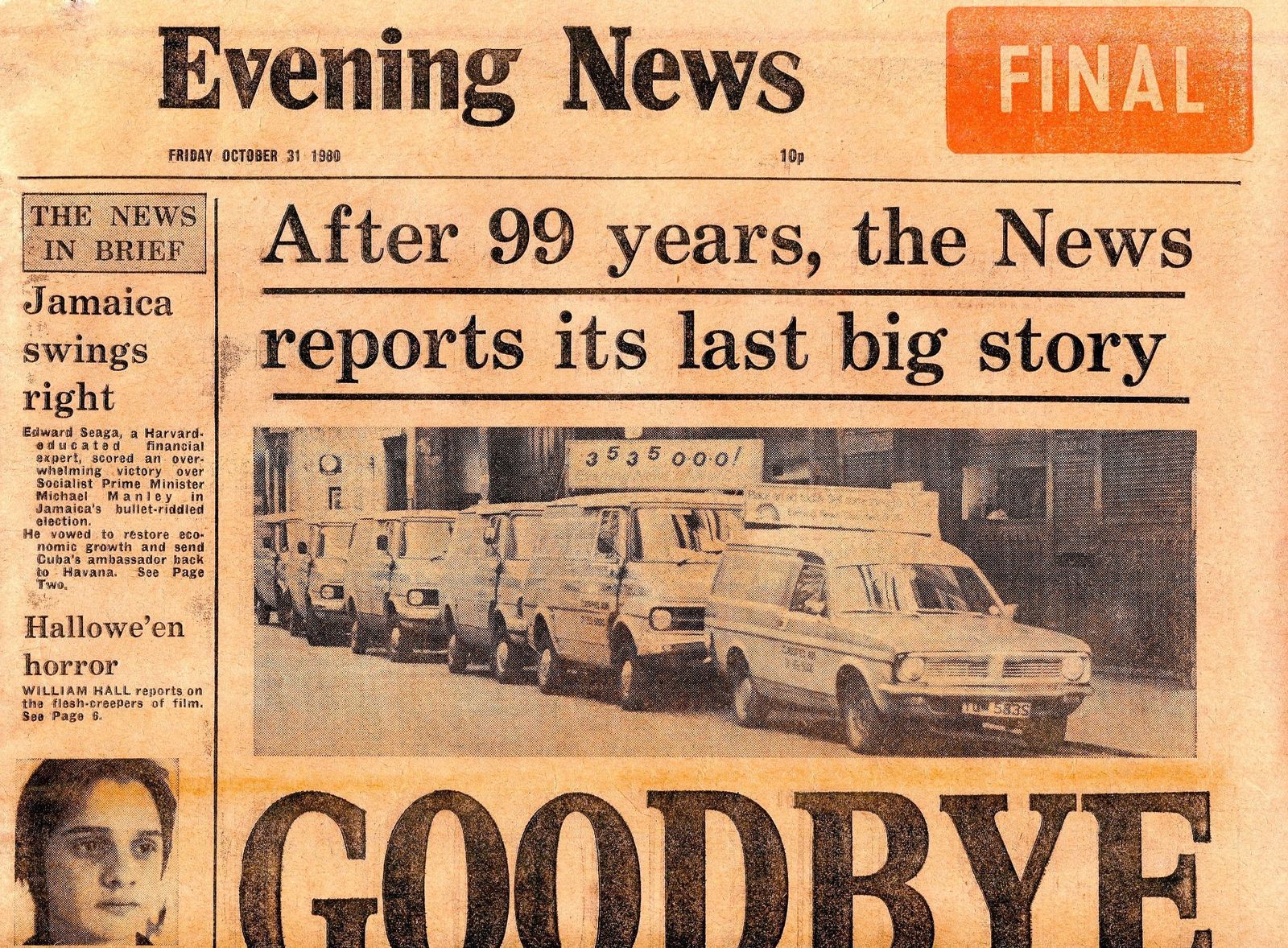
Picture a newspaper rolling off the printing press when a huge story suddenly breaks. An editor yells, "Stop the presses!" The machines screech to a halt, the front page gets swapped out, and whatever's already printed might just get tossed. Newsrooms have hit moments like this again and again throughout history.

It can mean two major things: something huge just happened, or someone caught a serious last-minute mistake. These days, newspapers run on computers instead of setting type by hand, but stopping production can still cost a lot. Editors have to redo layouts, make new printing plates, and get everything running again.

2

"Byline"

Image: Shutterstock

A "byline" tells readers who wrote an article. It usually appears at the beginning of a print or online story, although it may also appear at the end. Most bylines include the writer's name, and some also mention their position at the publication. Before bylines became common, newspapers used signatures to identify outside contributors. This practice dates back to colonial times, when readers assumed the newspaper’s editor wrote most of the unsigned material. If a letter or article came from someone else, a signature showed that the words weren’t the editor's own.

However, many signatures were actually pseudonyms, especially during the colonial and Revolutionary eras. Criticizing British officials could lead to retaliation, and angry readers sometimes challenged writers to duels, attacked their offices, or ambushed them in the street. For journalists facing those dangers, using a pen name was the way to stay safe.

3

"Deadline"

Image: Shutterstock

Every newsroom lives and dies by deadlines. In journalism, a "deadline" is basically the point of no return, the last possible second a reporter can turn in a story before it's too late for print or air.

You've probably heard this word a million times, but you probably didn't know where it came from. Back during the Civil War, a "deadline" was an actual line marked around prison camps like Andersonville. Guards had orders to shoot any prisoner who dared cross it. The term then drifted into factories, where it marked the age cutoff for hiring workers, before newspapers scooped it up around 1919 and gave it the meaning we know today: the absolute last second you could get copy to the printer.

4

"Beat"

Image: Shutterstock

"Beat" reporting means sticking with the same topic. Instead of covering a school meeting one day and a baseball game the next, a beat reporter focuses on one area, such as local politics, education, crime, sports, health, or the White House. Over time, they get to know the people involved, build reliable sources, and notice details that another reporter might miss. They also keep following stories after the first headline. This makes the coverage more useful because readers learn what happened next, not just what was announced.

Helen Thomas is a famous example. She covered the White House for almost five decades, reporting on ten presidential administrations from John F. Kennedy to Barack Obama. After so many years on the same beat, she knew the White House inside and out and became famous for her direct questions. That is the advantage of beat reporting: The more closely you follow a subject, the more of the story you can see.

5

"Scoop"

Image: Shutterstock

Every journalist would die to land at least one major "scoop." A scoop is an exclusive news story no one else has published yet. But a scoop isn't just any news story; it's a really significant one, the kind that gets everyone talking, like a political scandal or classified information.

Landing a major scoop helps a journalist build professional credibility and prestige, both for them personally and for the newsroom as a whole. It means they knew exactly how to track down the story, with caution and professionalism.

6

"Above the Fold"

Image: Shutterstock

"Above the fold" refers to the top half of a newspaper's front page. The phrase comes from the way newspapers were traditionally folded in half and displayed at newsstands. People could only see the upper section, so editors placed their biggest headlines, photos, and most important stories there. Advertisers also paid more for this highly visible space.

The expression carried over online. Today, "above the fold" describes the part of a webpage readers see before scrolling. Unlike a newspaper fold, what appears above the fold changes depending on screen size and device.

7

"Dateline"

Image: Shutterstock

A dateline answers two basic questions: Where did the news come from, and when was it sent? It is the short line that appears before the first sentence of a news story or press release. It usually includes the city of origin, followed by the state or country and the date.

The location gives readers and editors immediate context. Before readers reach the first fact, the dateline has already placed the story on the map and established how current it is. It doesn’t try to persuade the reader; it simply presents essential information in a familiar format.

8

"Masthead"

Image: Shutterstock

The "masthead" tells you who is behind a newspaper, magazine, or website. It usually lists the main people who put the publication together, from the publisher and editor-in-chief to section editors, writers, and designers. It may also include contact details, subscription information, and the name of the company that owns the publication. In print, you will usually find it on one of the inside pages. Online, it often appears on the "About" page.

9

"Op-Ed"

Image: Shutterstock

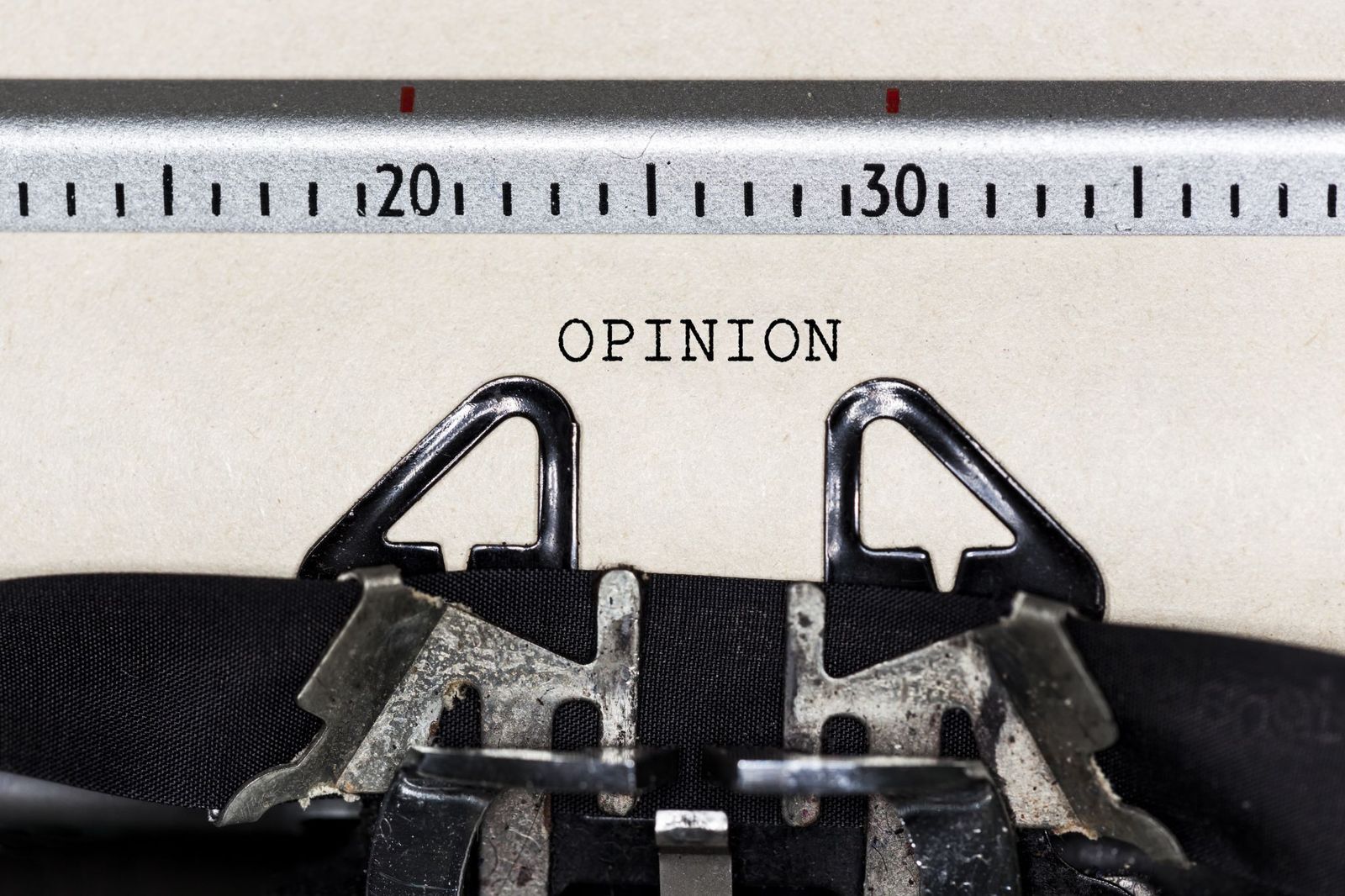
An "op-ed" usually appears when someone has a strong point of view on a current issue and wants to make a public argument. The writer might be an expert, community leader, advocate, or ordinary citizen with firsthand experience. A typical op-ed starts with a timely news hook, presents a clear opinion, and backs it up with facts, research, expert quotes, or personal experience. Strong pieces also acknowledge the other side before ending with a possible solution or call to action.

The term "op-ed" originally meant "opposite the editorial" because these essays traditionally appeared across from a newspaper’s editorial page. The editorial page presented the newspaper’s views, while the op-ed page gave outside writers room to share their own. Today, the term is used more broadly for opinion essays published in print or online, no matter where they appear.

10

"Stringer"

Image: Shutterstock

A "stringer" is a freelance journalist who sends stories, photos, or video to a news organization without working for them regularly. They often cover the position where the outlet doesn’t have its own reporter. Stringers often cover smaller towns and overseas events. Because they live near the story, they may know local people and the language better than a visiting reporter would. When news breaks nearby, the stringer can quickly reach the scene, gather details, and send the material to an editor**.** They are paid for each piece, instead of having a regular salary.


Classic lines

Words that stuck: 10 iconic movie quotes we all remember


Published on November 2, 2026


Image: Denise Jans

Movies give us so much: unforgettable scenes, legendary performances, and even timeless songs. But what defines a movie's place in history are its iconic quotes. Every classic has that line that sticks with the audience, becoming a solid part of pop culture and replicating itself in unimaginable ways. Join us in remembering these 10 movie quotes that still live in our minds and hearts!

1

"Frankly, my dear, I don't give a damn" - Gone with the Wind (1939)

Image: Auke Bakker

When discussing classics, Gone with the Wind (1939) is a must. It is one of the most iconic films in the history of cinema, and for good reason.

It was the actor Clark Gable in the role of Rhett Butler who delivered the famous line that many of us remember: "Frankly, my dear, I don't give a damn."

The quote made a lasting impact for many reasons. Not only was that type of language unusual for cinema at the time, but the line also appeared at a crucial and emotional moment in the movie, making it even more powerful.

2

"I'm going to make him an offer he can't refuse" - The Godfather (1972)

Image: Thomas Park

Unforgettable scenes, shots, characterizations, and dialogues define the incredible The Godfather (1972).

Among its most celebrated lines is the quote delivered by Marlon Brando as Vito Corleone in one of cinema's greatest performances: "I'm going to make him an offer he can't refuse." When you watch the film, the character's expression and demeanor make you completely believe he knows what he's saying. In a single line, Brando epitomizes the ideas of authority, power, and influence that define the criminal organization his character leads.

The line had such an impact that it was repeated in the sequel, 1974's The Godfather Part II, this time delivered by Vito's son, Michael Corleone (played by Al Pacino). And it also appears in the famous mafia series The Sopranos.

3

"You talking to me?" - Taxi Driver (1976)

Image: Lexi Anderson

A great line often comes from a great scene. And, without a doubt, De Niro's iconic "You talking to me?" moment as Travis Bickle in Taxi Driver (1976) is one of those perfect combinations.

The quote is repeated several times in the scene, and while it's phrased as a question, Travis Bickle has no actual interlocutor. Or rather, he's speaking to an imagined one.

The intensity with which the character delivers the dialogue in this scene has made it one of the most replicated and referenced moments in cinema. Do you remember the first time you watched it?

4

"I am your father" - The Empire Strikes Back (1980)

Image: Inkredo Designer

Just like how people can't resist imitating the deep voice of the Dark Knight when they say, "I'm Batman," the same goes for Darth Vader's iconic line.

"I am your father" is not just a powerful quote that encapsulates a lot of drama and complexity in only four words; it's also one of the most intense moments in science fiction history. None other than Darth Vader and Luke Skywalker are the protagonists of this cinema's great twist.

While nothing can replace the surprise of experiencing it for the first time, it's always a joy to revisit the amazing The Empire Strikes Back (1980).

5

"Go ahead, make my day" - Sudden Impact (1983)

Image: Katelyn Greer

It is no coincidence that great actors are the ones who give voice to some of the most remembered movie lines.

And when we talk about great actors, Clint Eastwood is impossible to overlook. Eastwood's tough-guy demeanor can be clearly seen in the delivery of the iconic line "Go ahead, make my day" in Sudden Impact (1983).

In the scene, Eastwood's character challenges a criminal to attack him, without any fear or tremor in his voice. The phrase has become part of popular culture over time and is often used with that tough and defiant attitude.

6

"I'll be back" - The Terminator (1984)

Image: Igor Omilaev

Imagine you're at the office, and a colleague gets up from their desk to go get a snack, saying, "I'll be back." Besides the added touch of unnecessary drama, that phrase probably brings one particular movie character to mind: The Terminator.

The Terminator movie series has some catchy lines, and at least two of them are delivered by Arnold Schwarzenegger. The iconic "I'll be back" and "Hasta la vista, baby" aren't just incredibly cool; they're also universally recognized. You can use them as references, and everyone will get the nod.

7

"You can't handle the truth!" - A Few Good Men (1992)

Image: Justin Cron

Jack Nicholson is one of the most admired American actors, famous for his incredible talent, creativity, and charisma. It's no surprise that he has delivered some of cinema's most memorable lines, including the iconic "You can't handle the truth!" from A Few Good Men (1992).

The intensity of that line is amplified by Nicholson's performance and the tension of the scene. The phrase has been replicated in many movies and shows, including some parodies like the one delivered by Homer in the final episode of The Simpsons' fifth season.

8

"Houston, we have a problem" - Apollo 13 (1995)

Image: Niketh Vellanki

A funny way to announce a problem is to quote the famous line, "Houston, we have a problem."

As you know, Apollo 13 was the third mission intended to reach the moon. But on day 2, an oxygen tank exploded, seriously damaging the spacecraft and endangering everyone on it.

Although astronaut Jim Lovell's actual quote was slightly different, "Houston, we have a problem" became widely known thanks to Tom Hanks in the 1995 movie Apollo 13. The movie recounts the mission's dramatic incident and the successful efforts to rescue its crew.

9

"You had me at 'hello'" - Jerry Maguire (1996)

Image: Melissa McGovern

Romantic scenes have that special "something" that speaks to our hearts, and some of them remain forever in our collective memory. But beyond the glances and kisses, certain lines steal the spotlight, and Jerry Maguire (1996) has one of those unforgettable moments.

Renée Zellweger, as Dorothy Boyd, delivers this memorable line in response to Jerry's confession. After Jerry –played by Tom Cruise– declares his love for her with an emotional speech, Dorothy replies with the simple but powerful, "You had me at 'hello,'" breaking the tension and filling the screen with humor and love.

Has anyone ever "had you at 'hello'"?

10

"I'm the king of the world!" - Titanic (1997)

Image: K. Mitch Hodge

Probably anyone who has boarded a ship after 1997 has wanted to stand at the bow to stretch out their arms, proclaiming themselves king or queen of the world. No explanation needed, as we all recognize the iconic scene from James Cameron's unforgettable Titanic.

Leonardo DiCaprio delivered the famous line that became a classic, just like the movie. The actor pronounces it early in the film, symbolizing the freedom and hope of his young character.

One of the first to make a reference to the quote was Cameron himself when he received the Oscar for Best Picture in 1998. A perfect moment to feel like the king of the world!

Looking for an extra scoop of literary fun?

Learn more with our Word of the day

gladiatorial

/ˌɡlædiəˈtɔriəl/