Who said that?

It happened to Einstein, Marilyn, Washington & more: 12 famous misquotes


Published on June 15, 2025


Image: Hannes Richter

Some of history’s most often repeated sayings were never actually said. At least not by the people we love to credit. You have probably read dozens of quotes wrongly attributed to Albert Einstein or Oscar Wilde, but Marilyn Monroe also made the list. As did Marie Antoinette! Today, we are setting the record straight on some of the most stubborn quote myths.

1

"Let them eat cake"

Image: Karina Kungla

Despite her reputation for extravagance, there’s no evidence that Marie Antoinette ever uttered these words. The quote "Qu'ils mangent de la brioche" is often pinned on her as a symbol of her indifference to the hardships of starving peasants.

However, the phrase first appears in Jean-Jacques Rousseau’s Confessions, which he started writing in 1765, when Marie was just about nine years old and still living in Austria.

2

"I cannot tell a lie"

Image: Maud Bocquillod

The famous story about young George confessing to chopping down a cherry tree is pure fiction, cooked up by biographer Mason Locke Weems after Washington’s death.

There’s no evidence Washington ever said this. Weems simply wanted to craft a moral and visually memorable legend for America’s first president.

3

"The ends justify the means"

Image: Pixabay

While "The Prince" does argue that rulers sometimes need to be ruthless, Niccolò Machiavelli never wrote "the ends justify the means."

The phrase is a simplified (and distorted) summary of much more complicated ideas he discussed about power and politics.

4

"And yet it moves"

Image: Andrii Khrystian

The force of the Roman Inquisition fell upon Galileo, the father of modern astronomy who defended heliocentrism. He supposedly muttered this famous phrase after being forced to counter his views, defending that the Earth did move around the sun.

However, there’s no contemporary record of the defiant line being spoken. It first appeared decades later, in a biography written well after Galileo’s death.

5

"Be the change you wish to see in the world"

Image: Ishant Mishra

Michael Jackson did sustain that he was starting by changing "the man in the mirror," and Mahatma Gandhi probably would have agreed. But the exact words of the famous line were never said by the real Gandhi.

His advice was much more nuanced about personal responsibility and social reform. The polished quote is a bit of a paraphrase meant to capture his philosophy in a nutshell.

6

"Well-behaved women rarely make history"
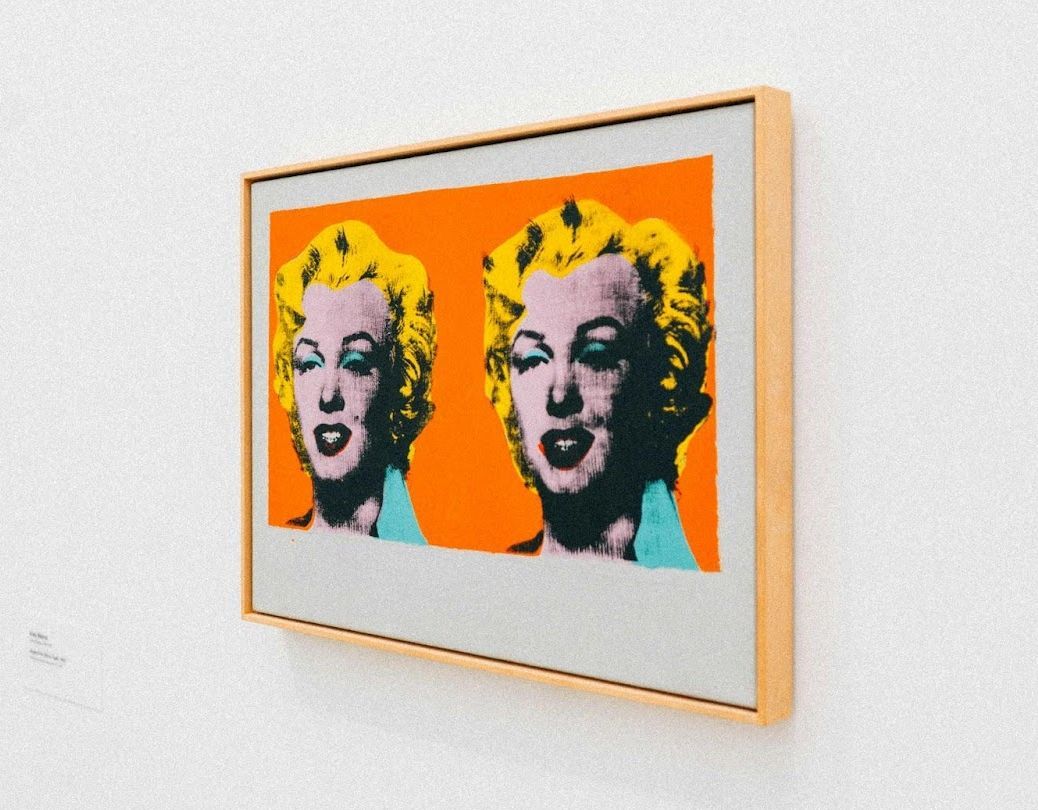
Image: Martin Péchy

You can thank Marilyn Monroe for a lot, but not this quote. Although often typed on posters next to her iconic photos, the line was actually written by historian Laurel Thatcher Ulrich in a 1976 scholarly article.

She wasn’t encouraging rebellion either: She was observing that history tends to overlook women who "color inside the lines."

7

"Elementary, my dear Watson."

Image: Soyoung Han

Sir Arthur Conan Doyle wrote many lines spoken through his famous detective, Sherlock Holmes. But this one –perhaps the most often repeated line– wasn’t among them!

Yes, Watson was Holmes’ dear sidekick, and probably Sherlock used the word "elementary" at some point. Still, the straight line "Elementary, my dear Watson" cannot be found anywhere in the original texts.

8

"Be yourself. Everyone else is already taken"

Image: Lisa from Pexels

Oscar Wilde, a master of aphorisms, had wit to spare. Many lines can be attributed to him. This one, however, doesn’t ring like those by the author of The Picture of Dorian Gray.

The saying doesn't appear in any of his writings or documented conversations. It likely emerged around the end of the 20th century, stitched together by fans who loved the idea of Wilde’s spirit.

9

"Insanity is doing the same thing over and over again…"

Image: Andrew George

"... and expecting different results." You might have read this quote and felt inspired by it. Although often attributed to Albert Einstein, there's no record of him saying it.

Some say that the earliest known appearance is in a 1980s Narcotics Anonymous pamphlet. The internet did its job and blurred the origins of the quote.

10

"Far from the maddening crowd"

Image: Tom Wheatley

This one is only slightly incorrect. Thomas Hardy fans, take note: The correct line is "far from the madding crowd." And, in fact, Hardy borrowed it from Thomas Gray’s 1751 poem Elegy Written in a Country Churchyard, which read "Far from the madding crowd's ignoble strife." "Madding" meant frenzied, not "maddening."

11

"Winning isn't everything; it's the only thing"

Image: Giorgio Trovato

Vince Lombardi gets the credit, but even he said he was misquoted! The original line came from UCLA coach Red Sanders, who reportedly told his team this hard-hitting slogan in the 1950s. Lombardi’s version was similar but way less cutthroat: He said, "Winning isn't a sometime thing; it's an all the time thing."

12

"The British are coming!"

Image: Pixabay

Paul Revere didn’t actually yell this because, back in 1775, that would have been confusing. Most colonial Americans still considered themselves British.

What he likely said was something closer to "The Regulars are coming out" or "The Redcoats are on the move." He also didn’t yell, since secrecy was key for his mission.



Expressions inspired by the body

Terms that use body parts as symbols, handpicked for you


Published on June 15, 2025


Image: Zeynep Sümer

It’s curious how often language uses parts of the body as metaphors for expressing complex or abstract ideas. Can you easily think of a synonym for a "knee-jerk reaction" or for a "brainstorm"? We are well acquainted with the mechanics of our body parts, but when did we decide on the meanings of "heartfelt" or "footnote"? Let’s explore the history of these everyday terms and decode the symbolism of our anatomy.

1

Footprint

Image: Pascal Müller

The marks our steps leave behind have been called "footprints," whether literally or figuratively, for at least a few centuries. The literal meaning first appears in records from the mid-16th century, notably in the work of English lexicographer Richard Huloet in 1552.

The idea that humans, as they move through life, leave behind a "digital footprint" or "carbon footprint" is far more recent, gaining popularity in the last 50 years. The term invites us to visualize the impact of one’s actions as something tangible—like a footprint in the sand. But why choose the feet, and not "handprints" or "fingerprints"? Perhaps because modern society often associates footprints with marks that are both significant and enduring, like those left by the first astronauts on the Moon.

2

Knee-jerk

Image: Ketut Subiyanto

When the tendon just below the kneecap is tapped, the leg’s reaction can surprise even us. This is known as the patellar reflex—an automatic, involuntary response. Over time, an impulsive response—such as abruptly changing the subject, leaving a room, or making a snarky remark—came to be described as a "knee-jerk reaction."

The first medical studies of the patellar reflex took place in the 19th century, and the "knee-jerk" metaphor gained popularity about a hundred years later. Ironically, while the neurological test indicates healthy nerve function, the term "knee-jerk" is often used pejoratively to describe reactions that are far from ideal.

3

Headstrong

Image: Mikhail Nilov

This word suggests that having a "strong head" is synonymous with being stubborn, rigid, obstinate, or even "hardheaded." If you are called bull-headed, pig-headed, or single-minded, you’re receiving a similar critique.

But what about the head made it a symbol of intransigence? These expressions draw on the metaphor of using one’s head as a battering ram—much like a bull charging forward. Unlike "pig-headed," however, headstrong is not always negative; it can also describe someone determined and persistent enough to achieve their goals.

4

Brainstorm

Image: Karolina Kaboompics

When it first appeared in the late 19th century, brainstorm had a very different meaning—it described a sudden, irrational burst of mental activity, or even temporary insanity. Then, in 1948, advertising leader Alex Faickney Osborn gave it a new life in his book Your Creative Power, introducing "brainstorming" as a group creativity technique.

In this new sense, the word stood for a flurry of free-flowing ideas. Osborn’s method encouraged team members to propose solutions without judgment or self-censorship—every idea was welcome. Today, brainstorm has broadened further, describing not only collaborative sessions but also any solo burst of creative thinking and problem-solving.

5

Handpick

Image: Abigail Madison

There was a time when agricultural products had to be not only selected but also plucked one by one, by hand—a symbol of careful, thoughtful selection. That patient craftsmanship gave rise to the word handpick as early as the 1780s.

The adjective handpicked and the figurative use of the verb developed later, in a more modern context. Today, we use handpicked to describe any curated selection—from a guest list to an eclectic arrangement of furniture—even if no actual hands were involved in the choosing.

6

Heartfelt

Image: Engin Akyurt

In ancient times, the heart was believed to be the source of emotion, thought, and love. Even after medicine revealed this to be inaccurate, the idea had already taken deep root in human culture.

The word heartfelt first appears in records around 1703, describing profoundly sincere emotions. Interestingly, the expression is almost exclusively used as an adjective. It never quite evolved into a verb or noun—you’d rarely hear of someone heartfeeling their apologies or congratulations.

7

Brainwash

Image: Karolina Kaboompics

In the latter half of the 20th century, brainwashing captured the public imagination through spy thrillers and dystopian works such as George Orwell’s 1984 (1949) and films like The Manchurian Candidate (1962) or A Clockwork Orange (1972). The image was chilling yet vivid—a mind scrubbed clean of its beliefs, ready to be rewritten.

The term’s real-world origins are far from fictional. Journalist Edward Hunter is credited with popularizing brainwash in his reports on the Korean War, describing how U.S. soldiers captured by Chinese forces were allegedly subjected to intense psychological reconditioning. The expression is a direct translation of the Chinese phrase xǐnăo (洗脑), meaning "to wash the brain."

8

Footnote

Image: Karolina Kaboompics

Marginal annotations have existed for as long as texts themselves. Even handwritten manuscripts bore commentaries in their margins, left by readers, scholars, or dissenters. When such annotated works were transcribed, these remarks were often moved to the "foot" of the page—the very bottom of the text.

The practice proved just as useful after the invention of the printing press. Footnotes allowed authors and editors to add material even after the main body had been set in type. Over time, that space at the bottom became a strategic place for citations, clarifications, or tangential observations. Many languages, including Spanish and German, share with English this same metaphor: the extra note at the foot of the page is a footnote.

9

Heartthrob

Image: Shihab Nymur

How did a beat of the heart come to mean an attractive person? Though heartbeat and heartthrob don’t seem closely related, heartthrob first appeared in the early 19th century, initially describing very strong emotions rather than the literal function of the organ.

By the 1900s, however, it evolved to describe someone who inspired those intense feelings in others. It wasn’t long before the term was applied to glamorous actors during Hollywood’s rise, cementing its meaning as charismatic men who made audiences swoon. Over time, heartthrob has continued to evolve, and today it commonly refers to people of any gender, celebrity status, or occupation.

10

Backbone

Image: Nastya Mind

The backbone has a fundamental function: to carry the weight of our body, enable movement, and keep us upright. The term has been known since at least the 15th century to refer to the literal spinal column—the series of vertebrae. But its figurative use came later.

By the 18th century, backbone had transformed into a symbol of inner strength, willpower, and even leadership or protection within a group. A resilient person might be said to have "grown a backbone," and a dependable worker is often called the "backbone of the team."

Looking for an extra scoop of literary fun?

Learn more with our Word of the day

destitute

/ˈdɛstəˌtut/