Unexpected meanings

In its Latin origin, this compliment was an insult


Published on October 11, 2026
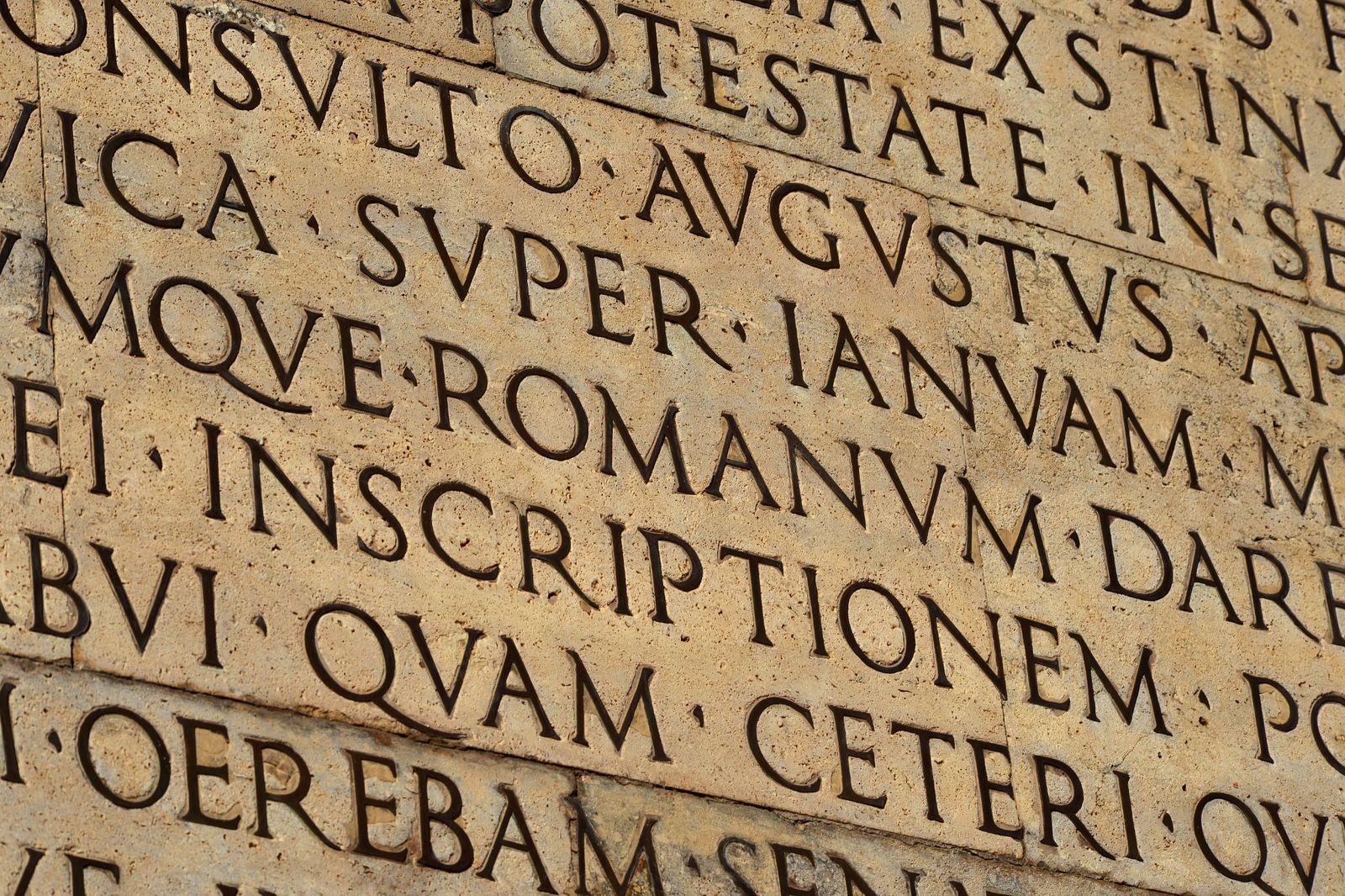

Image: Cris Foto

Words of Latin origin abound in the English language, many of them with an original meaning quite similar to the current one. But some words, however, might surprise us when we look up their etymology. What does being genuine have to do with your knees? Which word comes from people gossiping in a street corner? Which compliment started as an insult? Here are 10 unexpected Latin etymologies.

1

Genuine

Image: Me dia

Some linguists state that "genuine" comes from gignere, "to produce", related to the idea of giving birth. In this sense, something genuine would be something innate, not acquired. But there is an alternative origin proposed that links the term to genu, "knee". In Ancient Rome, newborns would be placed in front of their father to be acknowledged. If the father decided to recognize the infant as their true child, he would pick them up and place them on his knee.

2

Mortgage

Image: Mathew MacQuarrie

Borrowed from French, the term "mortgage" is not completely of Latin origin. Its second half, gage, comes from a Germanic term for "pledge". Mort, however, comes from mortuus, meaning "dead". What do "dead pledges" have to do with real estate loans? In its original sense, mortgages were pledges that resulted in "death": either the pledge died when it was fulfilled, or when one of the parties failed to pay, which "killed" their rights over the collateral.

3

Porcupine

Image: Glen Michaelsen

At first glance, we might not see the Latin roots of this word, but they become quite clear when we separate the two parts that compose it: Porcus, "pig", and spina, "thorn", which makes a porcupine a "thorny pig". English adopted this name through the French porc-espin, which resulted in the Middle English porke despyne. The name had several variations in English (including the Shakespearean porpentine) before settling into its current form.

4

Muscle

Image: AcidFern

What do muscles and rodents have in common? More than you might think. The Latin term for "muscle" comes from the diminutive form of mus, "mouse". For Ancient Romans, the movement of the muscle tissue under the skin looked like a small mouse scurrying around, which made the name musculus, "little mouse," quite fitting.

5

Trivia

Image: Einar Storsul

Trivia lovers might be delighted to learn that, since the time of the Ancient Romans, fun facts were shared just for the sake of sharing them. From the word trivium, "where three roads meet", trivia was used to describe road intersections where people gathered to chat, gossip, and share "trivial" news. Trivia might be of little consequence since its origins, but it has been loved and shared for centuries.

6

Nice

Image: Michael Dziedzic

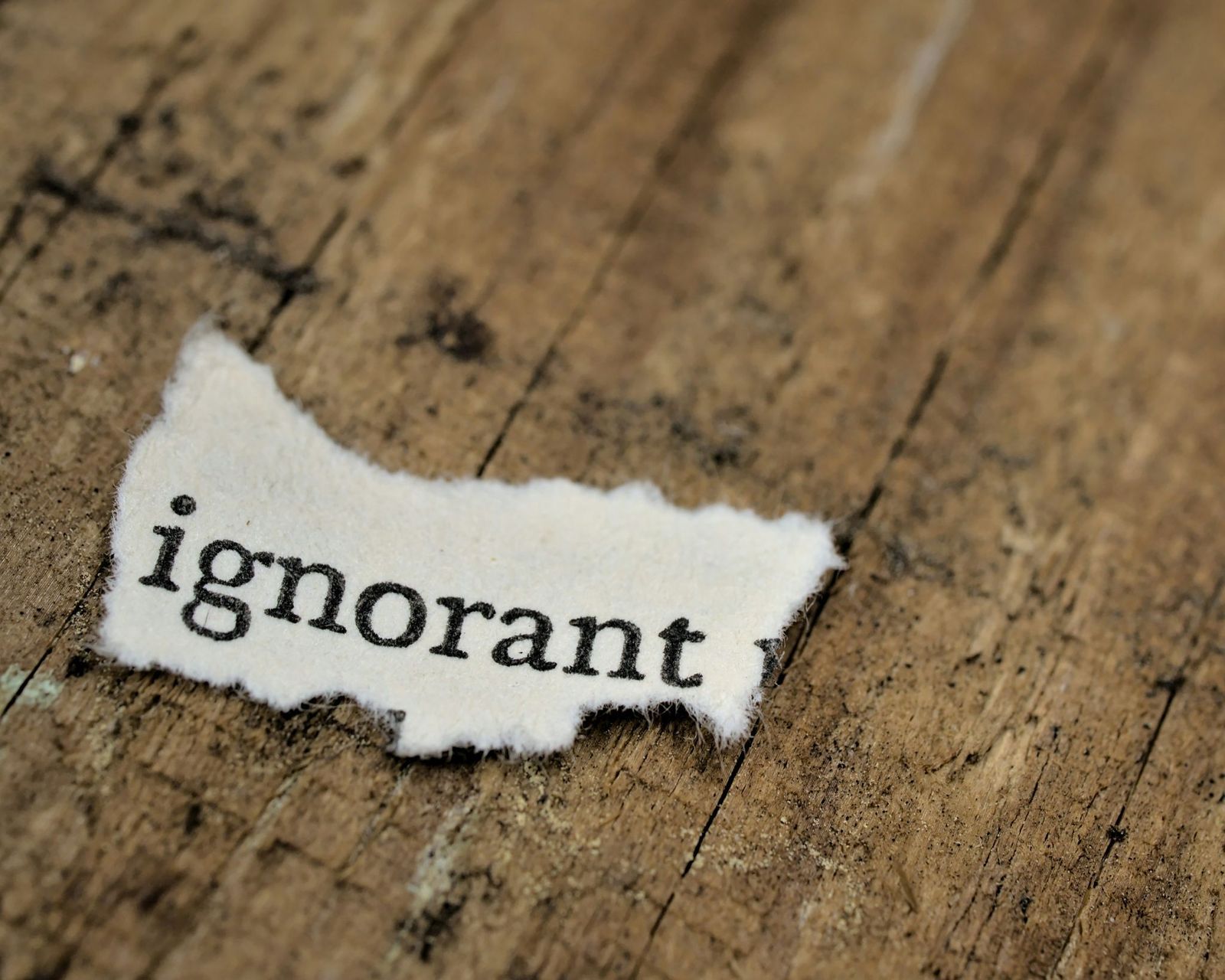
Being called "nice" might not be the highest of compliments, but it is also not a bad thing to be called. That is, in the last few centuries. In its Latin origin, nescius (from nescire, "to not know", "to ignore") was undoubtedly insulting, and it continued to be up until the 15th century, when "nice" lost its meaning of "fool", "ignorant", or "fussy", and adopted the meaning of "precise" and later on "agreeable" and "kind".

7

Placenta

Image: OlgaBombologna

The placenta is an extraordinary and fascinating organ, but its name is almost underwhelming in its simplicity. It was named in the 16th century by Italian anatomist Realdo Colombo, who chose the name placenta uterina, Latin for "uterine cake". Yes, placenta is the Latin word for "cake" or "flatbread". Why did Colombo choose the name? To him, the shape of the placenta resembled a traditional baked flat cake.

8

Uncle

Image: Rod Long

In English, many familiar relations kept their original Old English form, but some were replaced by their Norman-French equivalent. "Uncle" (in Old English, ēam for maternal uncles and fædera for paternal uncles) was adopted from the French oncle, derived from the Latin avunculus. While avunculus was used in Latin for maternal uncles and is often translated as "mother’s brother", it is actually the diminutive of avus, "grandfather", which made your maternal uncle your "little grandfather".

9

Candidate

Image: Sandra Filipe

We are used to suspecting the hidden motivations of political candidates, a reality that makes the etymology of "candidate" sound ironic. The term comes from the Latin candidus, meaning "shining white". Political candidates in ancient Rome would wear a bright white robe or toga candida as a sign of their purity, honesty, and good reputation, and they were known as candidatus or "clothed in white".

10

Desire

Image: Dns Dgn

If you were to look for the Latin root of the word "desire", you would find the verb desiderare, meaning "to long for", "to wish", or "to demand". But what is behind desiderare? While some experts consider this a folk etymology**, others link** desiderare to de sidere ("from the stars"), from sidus ("heavenly body" or "star"), connecting "desire" with something ruled by or wished upon the stars.


Beyond the spotlight

10 unsung heroes who changed history


Published on October 11, 2026


Image: Roman Kraft

History books are filled with the feats of famous figures, yet many unsung heroes are left out of their pages. From fearless explorers to groundbreaking inventors and champions of equality, these individuals have shaped the world in ways that still impact us today. Here’s a look at 10 lesser-known figures whose contributions deserve recognition.

1

Rosalind Franklin

Image: digitale.de

Rosalind Franklin was a chemist whose X-ray diffraction images were crucial to understanding DNA’s double-helix structure. Her meticulous research and pioneering techniques significantly advanced molecular biology and provided insights into the molecular structures of materials like coal and graphite.

Franklin’s work laid the foundation for James Watson and Francis Crick’s discovery of DNA’s structure, for which they later received the Nobel Prize. However, her groundbreaking contributions remained largely unrecognized until recent years.

2

Michael Collins

Image: Brian McGowan

Michael Collins is the often-overlooked third member of Apollo 11, the 1969 mission that landed the first humans on the Moon. While Neil Armstrong and Buzz Aldrin explored the lunar surface, Collins orbited alone in the command module, ensuring their safe return to Earth.

Though he never set foot on the Moon, Collins played a critical role in the mission’s success, operating the spacecraft and conducting experiments while patiently awaiting his crewmates.

3

Hedy Lamarr

Image: Austrian National Library

Hedy Lamarr was a Hollywood actress renowned for her beauty and talent, but few know she was also a brilliant inventor. Despite having no formal training and being primarily self-taught, Lamarr designed various inventions, including improved traffic stoplights and a tablet-based carbonated drink.

During World War II, she co-developed frequency-hopping spread spectrum technology to prevent enemy interception of radio signals. This innovation later became the foundation for modern wireless communication systems like Bluetooth and Wi-Fi.

4

Tenzing Norgay

Image: Kalle Kortelainen

Tenzing Norgay, a Nepalese Sherpa, became a legendary figure in 1953 when he and Sir Edmund Hillary became the first climbers confirmed to reach the summit of Mount Everest. By that time, Norgay had already participated in more than six expeditions to the mountain.

His skill, endurance, and deep knowledge of the treacherous Himalayan landscape were crucial to their success in conquering the world’s highest peak. Despite his vital role, Norgay received less recognition than some of his companions, who were knighted, while he was awarded only an honorary medal. He later dedicated himself to training future Sherpas and climbers, passing on his expertise to a new generation of mountaineers.

5

Bessie Coleman

Image: Shaun Darwood

Bessie Coleman was the first African American woman to earn a pilot's license, obtaining her wings in 1921 after training in France due to racial discrimination in the United States. She not only fought for racial equality but also shattered barriers in a male-dominated field, inspiring many women to pursue aviation.

After earning her license, Coleman performed daring aerial stunts, becoming a celebrated airshow performer known as "Queen Bess" and "Brave Bessie." During her career—tragically cut short by a plane crash in 1926—she even trained with Anthony Fokker, one of the world’s most renowned aircraft designers.

6

Ibn Battuta

Image: Vaida Tamošauskaitė

Ibn Battuta was a 14th-century Moroccan explorer who traveled extensively across Africa, the Middle East, India, and China, covering approximately 75,000 miles across three continents over 29 years. His travels, documented in a detailed account titled The Rihla, provide an invaluable account of the diverse cultures, religions, and societies of his time.

Much like Herodotus, Battuta’s detailed observations offer historians unique insights into the medieval world, enriching our understanding of the places he visited.

7

Virginia Apgar

Image: Tim Bish

Virginia Apgar was an American obstetrical anesthetist who developed the Apgar Score in 1952, a rapid test used to assess a newborn's health immediately after birth. This 10-point evaluation measures heart rate, breathing, muscle tone, reflexes, and skin color to identify any critical issues in the first moments of life, revolutionizing neonatal care.

To this day, the Apgar Score remains a global standard in hospitals, helping to save countless infant lives and improving newborn survival rates worldwide.

8

Karl Schwarzschild

Image: NASA Hubble Space Telescope

Karl Schwarzschild was a German physicist and astronomer who amazingly while serving in the German army during World War I, formulated the first exact solution to Einstein’s equations of general relativity through a series of letters with Einstein.

His groundbreaking discovery laid the foundation for modern astrophysics, influencing everything from theoretical models to space exploration. Though Schwarzschild died soon after, his work remains fundamental to our understanding of the universe.

9

Henrietta Lacks

Image: Drew Hays

Henrietta Lacks, an African American woman, unknowingly changed modern medicine. In 1951, doctors at Johns Hopkins Hospital discovered that her cancer cells had an extraordinary ability—they could survive and reproduce indefinitely outside the body. Known as HeLa cells, they became the first "immortal" human cells, revolutionizing medical research.

HeLa cells have since contributed to the development of the polio vaccine, cancer treatments, and numerous medical breakthroughs. However, her story has also sparked ongoing ethical debates about consent and bioethics in medical research. Despite this, Lacks’s cells remain vital to scientific advancements today.

10

Alexander Mackenzie

Image: Maxime Doré

Scottish explorer Alexander Mackenzie made history in 1793 as the first European to cross North America by land, reaching the Pacific Ocean. His expedition through Canada’s rugged wilderness predated the Lewis and Clark expedition by over a decade, mapping previously uncharted territories.

Mackenzie’s journey provided valuable insights into the continent’s interior and its trade potential. His achievement laid the foundation for Canada’s westward expansion and demonstrated the vast possibilities of traversing North America’s untamed frontiers.

Looking for an extra scoop of literary fun?

Learn more with our Word of the day

coherent

/koʊˈhɪrənt/