A testament of human ingenuity
How did the Ancients wake up? 12 inventions that changed the world
Published on February 22, 2025
 Image: Chiara Vannoni
Surely many of the tools and devices you have in your home seem so common that you never stop to think about their origin. However, despite being somewhat basic, some of the items included in this article are the cornerstone of many other inventions that sustain life as we know it today. And even more interesting, they were developed by ancient civilizations thousands of years ago! Can you think of 12 ancient inventions that survived to modern times? Find out now!
Wheel
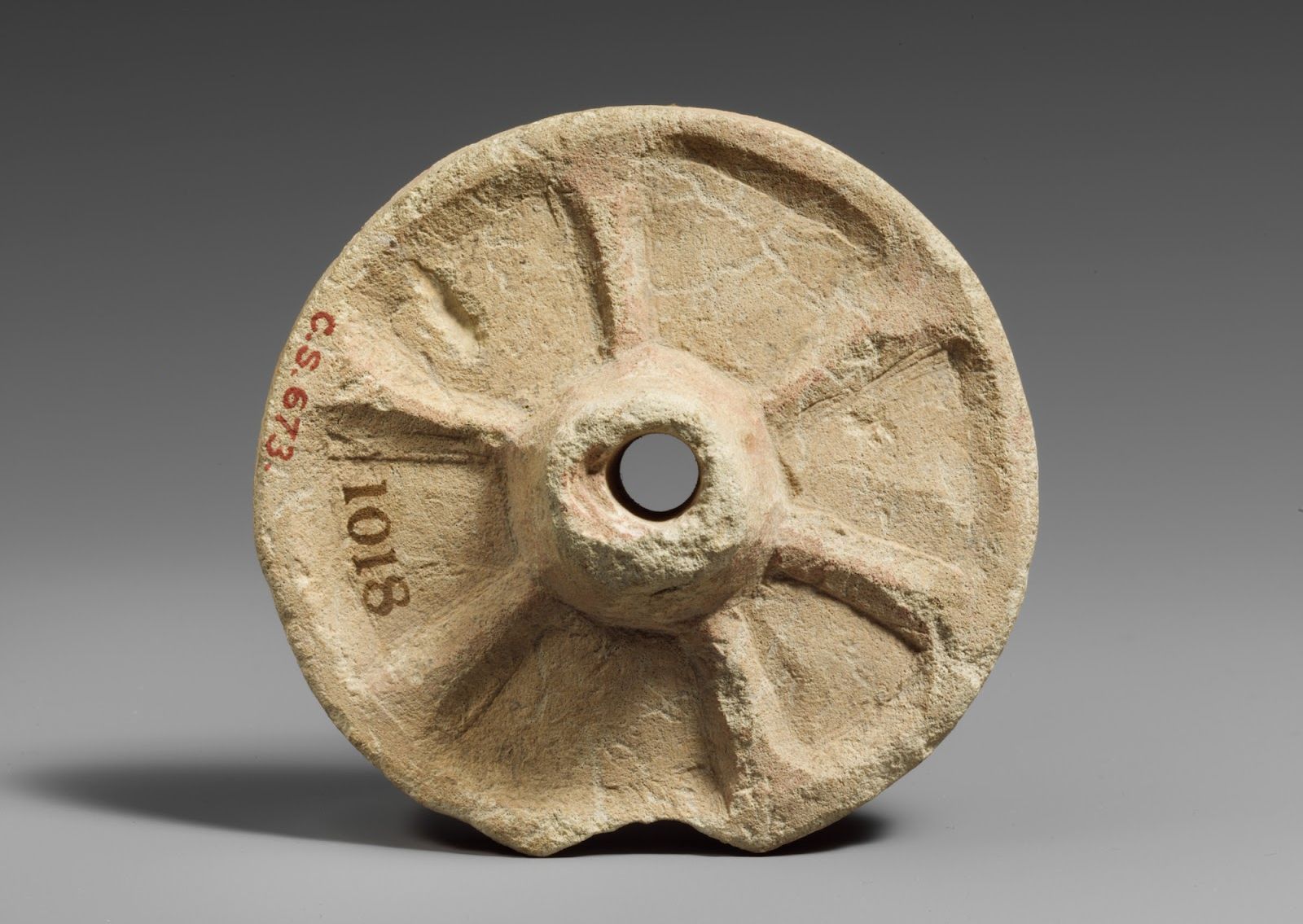 Image: Metropolitan Museum of Art, CC0, via Wikimedia Commons
The wheel is one of the most important technological advances of mankind, however, the details surrounding its origin are still a matter of debate. One of the most widely accepted theories establishes its roots in Mesopotamia around 4000 BC. Others suggest the Pontic coast, in northern Turkey, around 3800 BC, while a more recent theory places its invention in the Carpathian Mountains between 4000 and 3500 BC.
Whatever the exact origin of the wheel, what is certain is that ancient civilizations already knew that the easiest way to move a heavy object was to roll it. The advent of the wheel opened up new possibilities and allowed people and goods to be transported more easily. Since its invention, the wheel has undergone successive improvements and had more and more uses.
Alarm clocks
 Image: Ann H
Nowadays, waking up at a specific time is very simple, you only need to set the alarm on your cell phone. But how did the Ancients do it? The first alarm clock is attributed to Ctesibius, a Greek inventor and mathematician in Alexandria, Ptolemaic Egypt.
This device used water to measure time and was designed to sound a whistle at a predetermined time. Ctesibius' invention represented a significant advance in time measurement technology, illustrating the Ancients' ability to develop practical solutions to everyday problems.
Soap
 Image: Polina ⠀
Just like today, the Ancients also sought ways to keep themselves clean. The earliest recorded evidence of the production of soaplike materials can be traced back to ancient Babylon. A formula for soap consisting of water, alkali, and cassia oil was found written on a clay tablet from around 2200 BC.
Furthermore, an important medical document dating to 1550 BC, indicates that ancient Egyptians bathed regularly and combined animal and vegetable oils with alkaline salts to create a soaplike substance. The first record of soap used as a detergent is described by the Greek physician Galen who made a cleaning substance using lye, and prescribed it to wash the body and clothes.
Umbrellas
 Image: Ryūryūkyo Shinsai, CC0, via Wikimedia Commons
Inclement weather has existed forever, so it is not surprising that the Ancients invented devices that allowed them to protect themselves from the rain or the sun. It is believed that the first umbrellas come from China and date back as far as 3500 BC. However, there are records of the use of these artifacts in other cultures.
In the sculptures at Nineveh, the capital of the Assyrian empire, the parasol appears frequently. In Egypt, the parasol is found in various shapes, sometimes depicted as a fan of palm leaves or colored feathers fixed on a long handle. Its use declined after the fall of the Roman Empire and did not resurface until the 15th century when it was popularized again by the French nobility.
Toothbrushes
 Image: Photo By: Kaboompics.com
Soap was not the only resource used by ancient civilizations to maintain good personal hygiene. People used different forms of toothbrushes since before recorded history. Excavations all over the world have found chewsticks, tree twigs, bird feathers, animal bones, and porcupine quills used for these purposes.
For example, Indian medicine has used the neem tree and its products to create toothbrushes and similar products for millennia. In the Muslim world, a device made from a twig or root with antiseptic properties has been widely used since the Islamic Golden Age. The Greeks and Romans, on the other hand, used toothpicks to clean their teeth.
Toothpaste
 Image: Photo By: Kaboompics.com
If there were toothbrushes, how could there not be toothpaste? Although toothpaste or powders did not come into general use until the 19th century, the earliest known reference of a product used for teeth cleaning appears in an Egyptian manuscript from the 4th century AD that describes a mixture of iris flowers. Other ancient formulations were based on urine.
The Greeks and the Romans, in turn, improved the recipes for toothpaste by adding abrasives like crushed bones and oyster shells. Later, in the 9th century, the Persians invented a type of toothpaste popularized throughout Islamic Spain.
Paper
 Image: Anna Tarazevich
If the wheel helped different civilizations to move and communicate with each other, paper served to leave a testament to these relationships. Historians attribute the invention of paper to Ts'ai Lun, a Chinese dignitary who in the 2nd century A.D. began producing sheets of paper using tree bark, scraps of used cloth, and fishing nets.
Paper was introduced to the West in the 13th century through the city of Baghdad where the Arab world had abundant crops of hemp and flax, two high-quality raw materials ideal for making this material. From the end of the 15th century, with the invention of movable type printing, paper production experienced remarkable growth.
Scissors
 Image: Metropolitan Museum of Art, CC0, via Wikimedia Commons
Scissors are common tools that we tend to take for granted. You've probably never wondered how long they've been around, they've always been there to help you complete the simplest household and gardening tasks. Well, the first known scissors were invented in Mesopotamia nearly 4,000 years ago.
While these scissors were a bit different than the ones we know today, the principle is similar. They had two bronze blades connected at the handles by a thin, flexible, curved strip that served to keep the blades aligned. This type of scissors was in use in Europe at least until the 16th century.
Gunpowder
 Image: Miguel Acosta
The discovery of gunpowder was a milestone in the history of mankind. This formula allowed men to marvel with pyrotechnics but also opened the door to other forms of defense and attack.
Gunpowder originated in the 9th century in China. According to Taoist notes, Chinese alchemists came up with this formula in search of a treatment for eternity. For many years gunpowder was used exclusively for fireworks. It would be some centuries before it was applied in warfare. It is presumed that the formula was taken from China to India and from there to the Middle East. Finally, around 1,200, it arrived in Europe.
Sutures
 Image: MAKY.OREL, CC0, via Wikimedia Commons
Believe it or not, physicians have used sutures to close wounds for at least 4,000 years, and the fundamental principles of suturing have changed little over time. Archaeological records from ancient Egypt mention methods for closing wounds and preventing infections that go back to between 3,000 and 2,500 B.C.
Ancient societies of different cultures used materials such as horsehair, intestines, dried tendons or hair, as well as gold and silver threads as suture material. The oldest well-preserved sutures in a human body were found in a mummy of the 21st Egyptian dynasty (around 1100 BC).
Maps
 Image: Jakob Braun
In an age where we can access a map with a single click and find the route to where we need to go within seconds, it may sound strange that maps have been around for thousands of years. The earliest-known map is a Babylonian clay tablet small enough to fit in the palm of your hand —just like the modern smartphone!
This map-tablet is dated from the dynasty of Sargon of Akkad (2300-2500 BC). The surface is drawn with cuneiform characters and stylized symbols impressed, or scratched, on the clay. These inscriptions allow us to identify some features and places, like two ranges of hills bisected by a water course.
Processed rubber
 Image: Gary Todd from Xinzheng, China, CC0, via Wikimedia Commons
Did you know the name Olmec means "rubber people" in the Aztec language? Ancient Mesoamericans extracted latex from Castilla elastica, a type of rubber tree found in the area. The juice of another local vine, Ipomoea alba, was then mixed with this latex to create an ancient processed rubber as early as 1600 BC.
This rubber had many uses, but rubber balls, both for offerings and for ritual ballgames, were the primary products made by Olmecs and Aztecs way before the Spanish Conquest.


