Myths and misconceptions

History isn’t always right: 10 popular historical inaccuracies!


Published on April 16, 2025


Image: Mr Cup / Fabien Barral

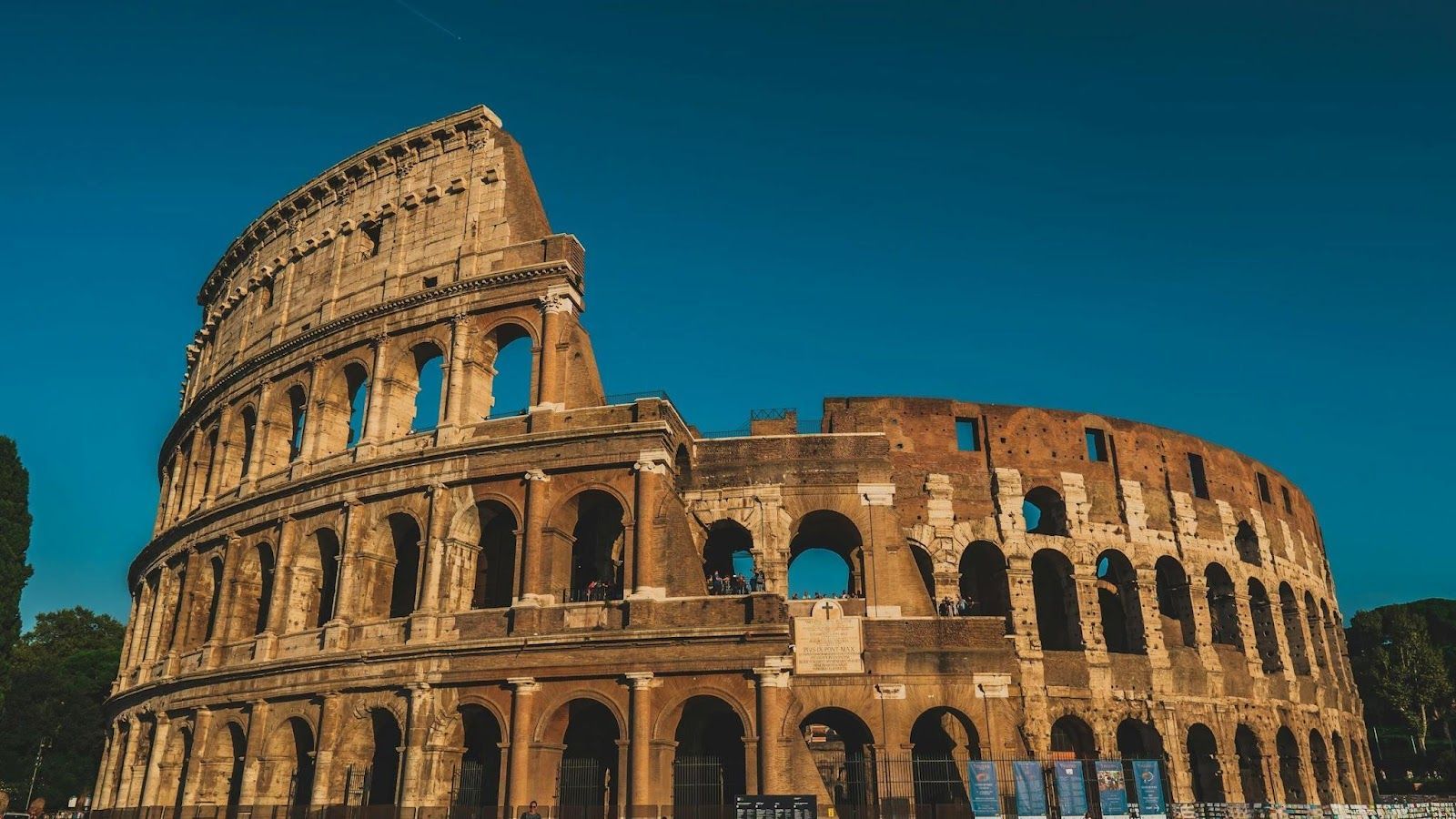
Let’s face it: history is not an exact science. There’s a reason people regularly say that "history is written by the victors": there are more than a few inaccuracies bound to be included in history books around the world. What’s interesting, though, is that sometimes these mistaken pieces of history gain so much popularity that they become indisputable facts. We all know that Napoleon was short (except he wasn’t) or that Roman gladiator fights were bloody matches to the death (except they weren’t). With that in mind, we’ve selected 10 of the most famous historical inaccuracies, hoping to shed some light on these popular myths. Enjoy!

1

Napoleon’s height

Image: Chen Te

We’ll begin with one of the most popular historical myths out there. If you had to describe Napoleon Bonaparte, what are the first three things that come to mind? Perhaps his iconic bicorne hat, or his white war horse, Marengo, forever immortalized in Napoleon’s portrait crossing the Alps. That said, you probably thought of another aspect of this French emperor that we all know too well: his height. Napoleon’s short stature is heavily ingrained in pop culture, with countless shows and movies referencing his height as an explanation for his bad temper. However, standing at 5 feet 6 inches, Napoleon was by no means short. Most historians believe this stereotype stemmed from British cartoons depicting him as a short man dressed in an oversized military uniform.

2

Viking helmets

Image: hao qin

Some historical figures are so ingrained in pop culture that we tend to imagine them in a very distinct way. For example, all pirates have an eyepatch and a parrot perched on their shoulders. In a similar vein, most Vikings depicted in cartoons and TV shows sport majestic beards and horned helmets. However, you might be surprised to learn that horned helmets became associated with Vikings during the 1800s after Richard Wagner included them in his Norse operas. In fact, most historians agree that, while Vikings did regularly use helmets, they weren’t horned.

3

Einstein’s school years

Image: Maks Key

It must be nice for your last name to become synonymous with intelligence—Albert Einstein is truly a testament to this. Whether sarcastic or not, whenever someone is called "an Einstein," they are referring to their intelligence. In this sense, there’s a popular myth that states that, despite his genius, Albert Einstein did terribly at school and was not, by any means, the exceptional student you would expect. However, this is completely false. Einstein was a remarkable pupil, as his Swiss public records prove.

4

Gladiator fights

Image: Chait Goli

Let’s picture a hypothetical gladiator fight: two sturdy and brave warriors in a fight to the death, with a stoic and unmoving Caesar deciding with a thumb gesture which gladiator will live to fight another day. This image has been endlessly portrayed in movies and TV shows since the invention of the medium, but you might be surprised to learn that actual gladiator fights were a bit different. For starters, considering how expensive gladiators were to train and feed, it stands to reason that most gladiatorial fights didn’t end in death. In fact, most matches finished when first blood was drawn.

5

Ich bin ein Berliner

Image: Leon Ephraïm

If you were lucky enough to visit Berlin, you might be familiar with one of the metropolis’ most famous sweet treats: the Berliner, a type of pastry that resembles a jam doughnut. Also known as Krapfen, there’s a popular myth surrounding this pastry that involves President Kennedy. In 1963, our 35th president visited West Berlin and proudly uttered the phrase "Ich bin ein Berliner" at the end of his speech. According to many, the use of the adjective ein changed Kennedy’s intended meaning of "I am from Berlin" to "I am a doughnut," much to the audience’s delight. However, this is not true: the president’s use of the phrase was correct, and the gathered crowd understood it as such.

6

Thomas Edison and the lightbulb

Image: Kai Gradert

Thomas Edison’s contributions to the world are numerous and outstanding, so don’t take this entry as an attempt to discredit his genius. Among his many groundbreaking inventions are the phonograph and the motion-picture camera, but we do have to strike one from the record: despite popular belief, Edison did not, in fact, invent the lightbulb, since the first electric light was created by English scientist Humphry Davy in 1800. However, Edison did reinvent these unreliable and expensive lights into the first commercially viable light bulb, which helped extend the wonders of electricity around the world.

7

George Washington’s teeth

Image: Ben Noble

It stands to reason that George Washington, arguably the most important figure in American history, would be the subject of a number of popular myths and stories. We’ll focus on just one in this article for brevity's sake, but it is one of the most famous: a common story states that "The Father of our Country" used a set of wooden dentures throughout his life. Although this is false (Washington’s false teeth were mostly composed of metals and animal teeth), interestingly, these wooden dentures were widely accepted by historians until the 20th century.

8

Newton’s apple

Image: Louis Hansel

Arguably, the apple that fell on Isaac Newton’s head that fateful day might be the most important piece of fruit in human history. After all, this apple was the final inspiration that this iconic physicist needed to develop his law of universal gravitation. However, not to diminish the impact of this exemplary fruit, there’s a bit of misinformation that needs to be clarified: while Newton was indeed inspired after watching an apple fall from a tree, it most certainly didn’t fall atop his head.

9

Croissants’ origins

Image: Brigitte Tohm

When it comes to bakeries, the good people of France are second to none. From their lovely baguettes to their heavenly pain au chocolat, you know you’ll have a tasty treat whenever you take a bite of a French pastry. In that sense, it might come as a surprise to learn that the croissant, one of France’s most impressive pastries, was actually invented in Austria. Known as a kipferl or kifli, this pastry is involved in a myth of its own: Some historians believe that its peculiar shape was created to celebrate an Austrian victory over the Ottoman Turks.

10

A cow and the Chicago fire

Image: Ryan Song

We’ll end this article by clearing the name of one of mankind’s most beloved animal friends. There’s no denying that cows do a lot for us, from the milk we drink to the beef we eat. In that sense, let’s repay their service by clearing up a common misconception regarding the fateful Chicago fire of 1871: No, this disaster wasn’t started by a cow. According to a popular tale, the fire was ignited by a cow being milked by her owner, Ms. O’Leary. For some reason, the clumsy cow kicked over a lantern, which supposedly grew into the biggest disaster that the city of Chicago had seen up to that day. However, there’s simply no evidence to support that this was the cause of the tragedy, and the cow (and her owner) were officially exonerated by the city in 1997.


LIVE LONG AND PROSPER

Shoot For The Stars: Can You Name These 10 Terms That Originated From Science Fiction?


Published on April 16, 2025


Image: Robs

We truly live in an era of technological marvels. Think back on those futuristic gadgets and gizmos showcased on TV shows and films from your childhood. Perhaps you pretended to communicate through a portable screen like the ones seen on Star Trek, which are eerily similar to the smartphone you are probably reading this article on. Or maybe you were amazed by that amazing virtual shark that leaps at Marty McFly in Back to the Future 2, which would now be made completely obsolete by our current 3-D films.

The world of science-fiction has always provided humankind with new horizons and discoveries to shoot for, in our search for a better and more exciting tomorrow. That’s why today we have gathered a list of terms that have leaped from the incredible minds of science-fiction authors onto our everyday lives.

1

Robotics

Image: Aideal Hwa

We’ll start this list with what’s probably science fiction’s bread and butter. Robots are undeniably an essential component of modern culture: Think of any decade from the past two centuries and you’ll find more than a few iconic robots shining through. The ‘50s had Gort from The Day the Earth Stood Still, the ‘60s were comforted by the Jetson’s loyal maid, Rosie, and the ‘80s were shaken by Schwarzenegger’s relentless Terminator.

While the word robot was coined by Czech writer Karel Čapek in 1920, legendary science-fiction author Isaac Asimov first used the term "robotics" in his 1942 short story Runabout, which introduced his now quintessential Three Laws of Robotics. While the term is still a sci-fi staple, the interdisciplinary study of robotics has become one of the most groundbreaking and exciting career paths today.

2

Zero-gravity

Image: Muzammil Soorma

While the feeling of truly weightlessly floating in space is reserved for only a few selected astronauts, the freedom and wonder associated with the term "zero gravity" is one we can all enjoy. Through good old-fashioned Hollywood magic, movies have shown us both the unbelievable delight and the daring challenges that zero gravity has to offer.

While the origins of this term are still debated, it is believed that comic book artist Jack Binder was the first to use the phrase "zero gravity" in a 1938 article titled "If Science Reached the Earth's Core." In 1952, English science fiction writer Arthur C. Clarke used the shortened term "zero-g" in his 1952 novel Islands in the Sky.

3

Deep Space

Image: NASA

Defining the term "deep space" can be surprisingly tricky. After all, isn’t anything away from the Earth’s atmosphere considered outer space? While that is technically true, referring to the infinite vastness on which this majestic blue marble of ours is suspended simply as "space" seems a bit limited. However uncanny a feat the moon landing might seem when compared with the millions of kilometers that separate us from the sun, a trip to our closest satellite might seem like a quick run through the park. Luckily, we have "deep space" when we want to refer to any of those unreachable (at least for now) corners of our cosmos.

The term "deep space" was coined by American science fiction author E.E. "Doc" Smith in his 1934 novel Triplanetary. Smith, considered by many to be the father of the space opera genre, used the term to illustrate a futuristic age in which humankind explored the Solar system and formed alliances with other planetary governments.

4

Computer Virus

Image: RoonZ nl

This one is a bit controversial, and not only because of the nature of malware. While nowadays computer viruses are an all too real danger to anyone connected to the internet (which is to say, basically everyone), the first popular use of this term was in a 1970 short story titled The Scarred Man written by astrophysicist and author Gregory Benford. In the story, a computer program called VIRUS causes havoc on computers with early dialing capability. However, what’s interesting is that Benford based this story on a real-life computer virus he helped create in the 1960s, as a proof of concept for a lab computer.

5

Ion Drive

Image: Rod Long

Think about a futuristic engine or thruster, filled with flashing lights and bursts of astonishing blue energy, and you might be thinking about an ion drive. This term is one of the many technologies that you might find on your favorite piece of science fiction, right next to hyperdrive, jump drive, or ultradrive. Ion drives were made famous by the iconic Imperial TIE Fighters from Star Wars since their name comes from the "Twin Ion Engines" that fuel the ship.

While the Oxford Dictionary of Science Fiction lists Jack Williamson's 1947 short story The Equalizer as the first usage of the term ion drive, other sources state that the first idea of an ion engine comes from the 1910s book By Aeroplane to the Sun: Being the Adventures of a Daring Aviator and his Friends, written by Donald W. Horner.

6

Warp Speed

Image: Anton Filatov

You might be familiar with this pop-culture staple from watching _Star Trek_’s Captain Kirk ordering "Maximum warp, Mr. Sulu" right before the Starship Enterprise disappeared in a burst of speed. Or maybe you prefer _Star Wars_’ lightspeed, where Han Solo would slowly push a lever on the Millennium Falcon that made every light source in front of the ship’s cabin stretch into beautiful white lines. Whichever franchise you prefer, warp speed refers to a spaceship’s capability of jumping into impossible speeds that allows it to travel millions of miles in mere seconds.

Alongside robotics, warp speed is perhaps the most famous term that entered popular use through science fiction. When the original 1960s Star Trek show aired, audiences were soon enraptured by its many groundbreaking concepts, and warp speed was one of the most enthusiastically debated by fans.

7

Nanotechnology

Image: Praveen Thirumurugan

It’s curious how nanotechnology can be so thrilling and scary at the same time. The concept of complex machines smaller than what the human eye can see might be instrumental in helping us cure diseases. At the same time, the thought of tiny, invisible machines invading our everyday lives is, at the very least, discomforting. In any case, nanotechnology is a particularly popular trope in science fiction. Perhaps its most famous example comes from the 1966 film Fantastic Voyage, in which a submarine crew shrinks down to microscopic size to save an injured scientist.

While the first detailed concepts of nanotechnology were outlined in a 1959 talk given by physicist Richard Feynman, many primitive forms of microscopic mechanisms can be found in previous works of literature. A few years before Feynman’s talk, Arthur C. Clarke described tiny machines that operated at the micrometer scale in his short story The Next Tenants.

8

Clone

Image: Phil Shaw

Before Dolly the Sheep made international headlines in 1996, the concept of cloning a living creature was relegated to the world of science fiction. Artificial cloning has been the subject of many masterpieces of the genre, but it is believed that Aldous Huxley's 1931 classic Brave New World might have been the first to bring this topic to light. In the novel, a futuristic human society chooses to strictly reproduce by an in-vitro method known as the Bokanovsky's Process, which is regarded as a rudimentary method of cloning that produces identical copies in artificial wombs.

9

Cyberpunk

Image: Frank Leuderalbert

Cyberpunk might be both the most recent and obscure item on this list. It was first mentioned in the science-fiction magazine "New Worlds" in the ‘60s and ‘70s when a group of New Wave authors introduced dystopian, futuristic worlds filled with distorted technology and disrupted cultures. Philip K. Dick’s 1968 novel Do Androids Dream of Electric Sheep? is considered by many to be one of the founding stones of the cyberpunk genre.

However niche these origins might be, cyberpunk has evolved to influence many aspects of popular culture. Berlin’s Center Potsdamer Platz (formerly known as the Sony Center), an iconic eight-building complex located in the heart of the German capital, was heavily influenced by cyberpunk culture and aesthetics.

10

Pressure Suit

Image: Unsplash

Long before NASA started thinking about how to put the first astronauts into orbit, science-fiction authors had devised ways on which to send their characters onto the cold, unforgiving vacuum of space. The very first mention of a spacesuit comes from an 1898 science-fiction novel titled Edison's Conquest of Mars, written by American astronomer Garrett P. Serviss. In this story, the Wizard of Menlo Park himself leads a group of scientists to the moon, after a devastating war with Mars leaves the Earth in shambles. For this mission, Edison designs a series of "air-tight suits" for his group, which are now considered to be a rudimentary prototype of the spacesuit.

Looking for an extra scoop of literary fun?

Learn more with our Word of the day

wondrous

/ˈwəndrəs/